Sustainable Sapele Wood

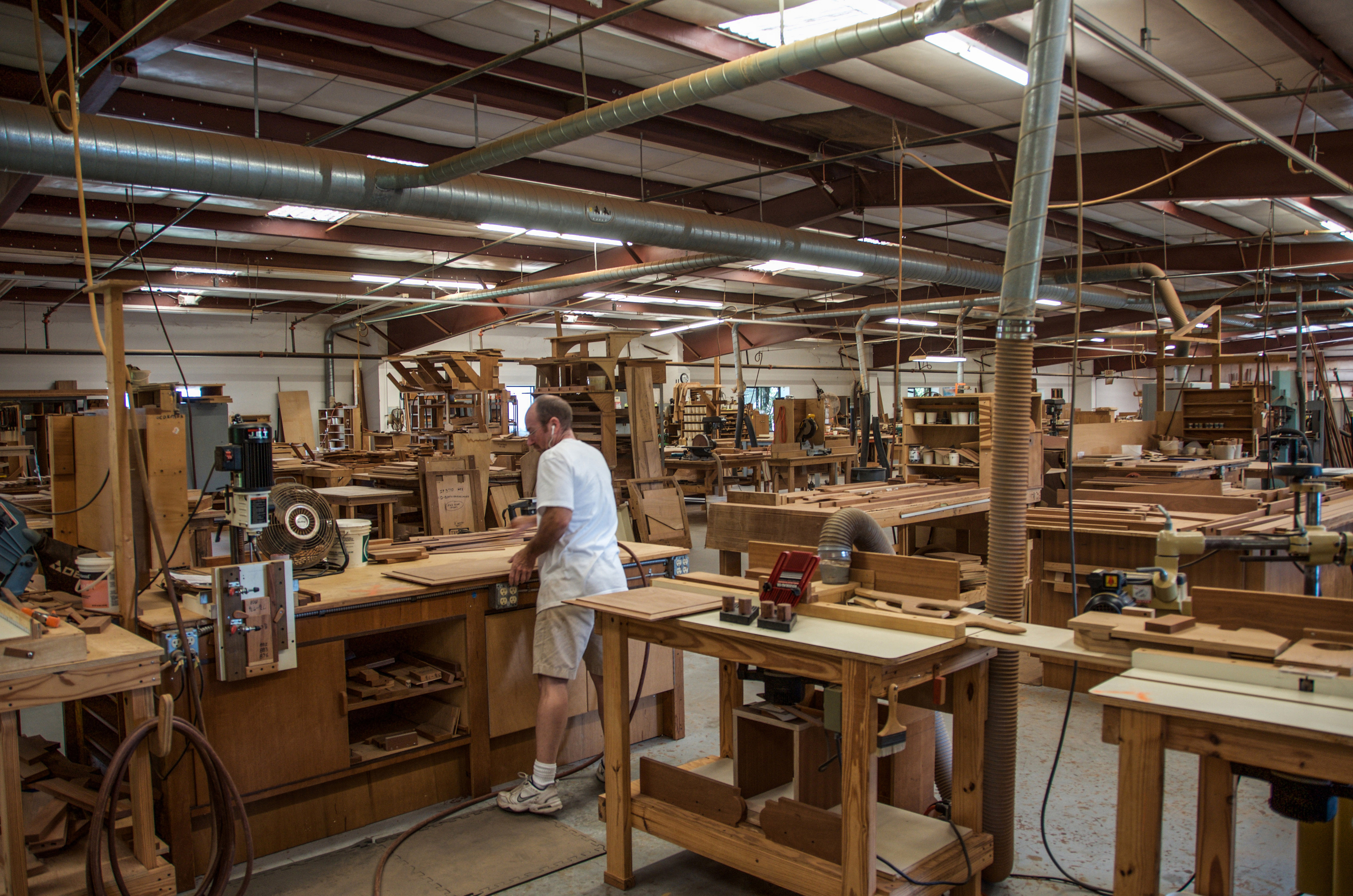
The wood shop at Island Packet Yachts. Most of the finished interiors are now constructed with the beautiful--and sustainable--sapele wood.

The wood shop at Island Packet Yachts. Most of the finished interiors are now constructed with the beautiful–and sustainable–sapele wood.

As the Flying Fish evolves from a bare hull, craftsmen at Island Packet Yachts are transforming the interior of my boat from raw fiberglass into a finish of gorgeous sapele wood.

Sapele is a member of the mahogany family sourced from sustainable growers in Central Africa. In the Island Packet production assembly, sapele has replaced much of the traditional teak wood which often comes from clear-cut, old-growth forests.

Sapele is a highly sustainable, relatively fast-growing hardwood. It comes from a large tree that has a widespread growth range across Africa. It is common for the trunk to exceed 6 feet in diameter on a tree that may reach a height of 150-200 feet with minimal branching. This yields straight-grained lumber that is almost twice as hard as other types of mahogany.

Sapele grows with an interlocking grain pattern where the fibers twist around the tree as they grow.  When quartersawn the interlocking grain aligns to form beautiful ribbon striping. The innate properties of sapele, known as “figure”, can be spectacular. Sapele figure can include bird’s eye, burl, fiddleback, flame, and quilted grain patterns.

Sapele wood produces beautiful wood grain figuring.

The innate properties of sapele wood produces a beautiful wood grain figuring.

Among its more exotic uses sapele is often found in musical instruments. Taylor Guitars uses the wood on the back and sides of their acoustic guitar bodies. It is also used in manufacturing ukuleles and harps. The car maker Cadillac also uses sapele for interior wood trim on some of its vehicles.

The tree is also known as aboudikro. There are protected populations and logging restrictions in place in various countries including Sierra Leone and the Ivory Coast where sustainable sapele plantations have been created. The Congo is one of the largest producers of sapele and while the area is often in political turmoil, logging companies still embrace strict regulation and verification programs like Timber Legality & Tracing Verification (TLTV) and Verification of Legal Origin (VLO).

While TLTV covers all the company processes during harvest, processing and export, VLO takes a closer look at the legal right to harvest the tree in the first place. VLO timbers have an in-depth and highly-maintained chain of custody system that can be audited at any point.

Island Packet Yachts buys sapele from a supplier who provides TLTV and VLO stock offering documentable and verifiable chains of evidence showing that the tree was responsibly harvested from a sustainable area.

Responsible forest management and the verification of legal harvest may not be cost effective with some manufacturing companies but in my eyes this sustainable ethic will make the wood inside Flying Fish all the more beautiful.

Key West Yacht Club

KWYC burgee

I would like to welcome the Key West Yacht Club as the newest sponsor of the Flying Fish Transoceanic Odyssey.

The KWYC was founded in 1938 in one of Henry Flagler’s bridge tenders’ houses on the Garrison Bight. It remains the southernmost yacht club in the United States.

The KWYC members have been part of Key West boating for generations. From the era when members stored their provisions in individual lockers and played cards with wooden chips to today’s full bar and restaurant facility with fully serviced boat slips and dockside facilities, the KWYC has grown with the times. It continues to be the gathering place for those who value strong friendship, camaraderie, food, drinks and waterborne adventures.

I am proud and grateful for the opportunity to represent the Key West Yacht Club as Flying Fish circumnavigates the globe next year.

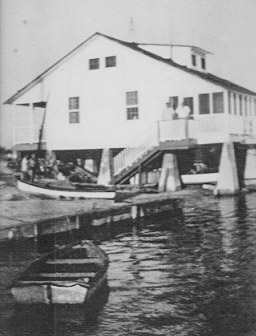
The KWYC original building, Henry Flagler's  bridge tender's house.

The KWYC original building, Henry Flagler’s bridge tender’s house.

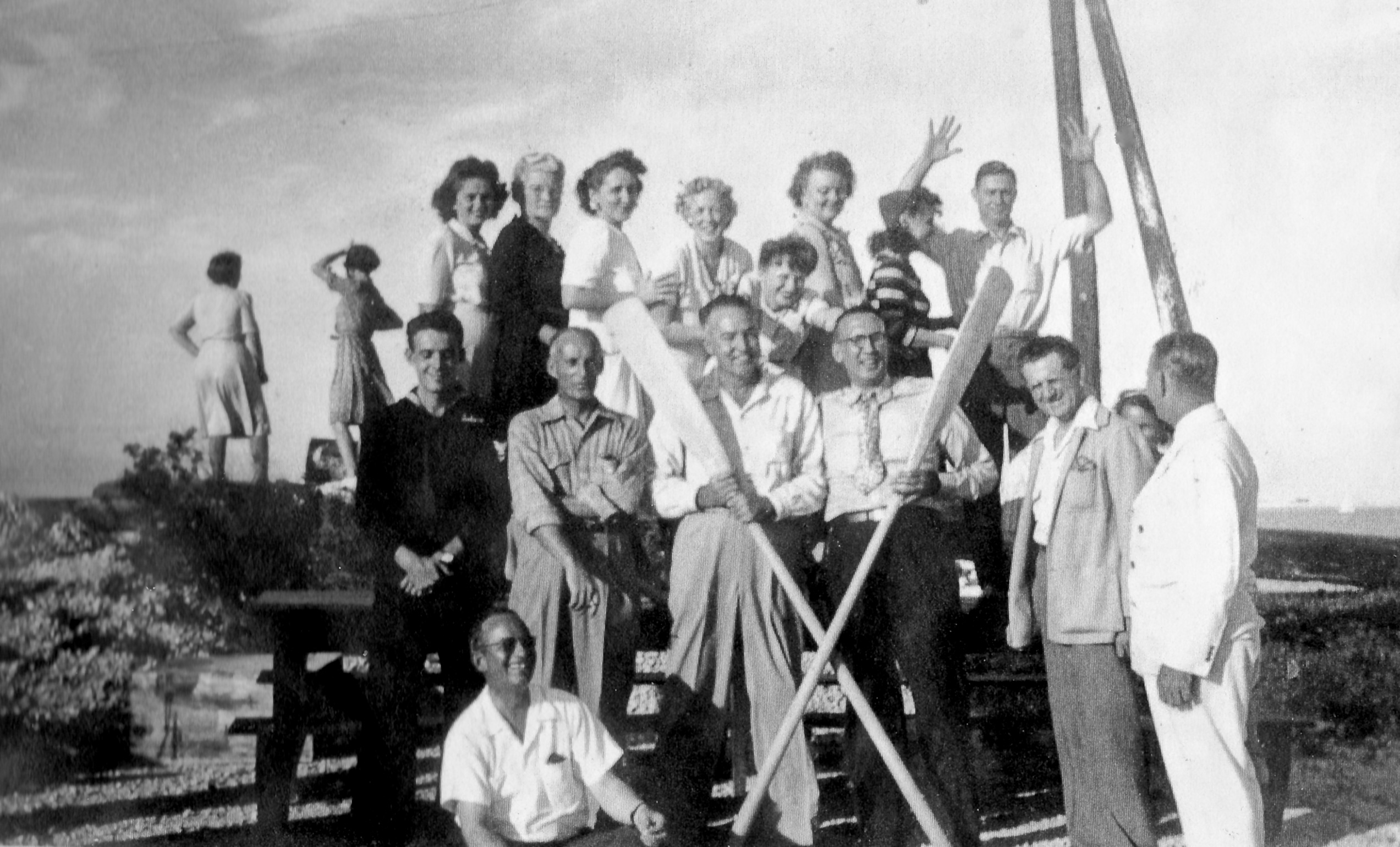
Some original members of the Key West Yacht Club

Some of the original members of the Key West Yacht Club pose on the new site at Garrison Bight.

The aftermath of Hurricane Betsy at the Key West Yacht Club, circa 1965

The aftermath of Hurricane Betsy at the Key West Yacht Club, circa 1965

Dad’s Sailing Log

My father at age 85 on the island of Bimini. He is still ready to set sail for distant horizons.

My father at age 85 on the island of Bimini. He is still ready to set sail for distant horizons.

I am reading the logbook my father wrote of a Pacific crossing he made from Panama to Vanuatu 20 years ago. On the first page Dad has handwritten these words, quoted from an anonymous poet:

A small boy heard the ocean roar,
There are secrets on my distant shore,
But beware my child, the ships bell’s wail,
Wait not to long to start to sail.

So quickly come and go the years,
And a young adult stands on a beach with fears,
Come on, come on, the ocean cussed,
Time passes on. Oh sail you must.

Now it’s business in mid-aged prime,
And maybe tomorrow there will be time,
Now is too soon, it’s raining today,
Gone all gone–years are eaten away.

An old man looks, still feeling the lure,
Yet he’ll suffer the pain, than go for the cure,
The hair is white, the steps with care,
The tide has turned, he is aware.

So all too soon the secrets are buried,
Along with him and all regrets he carried,
And it’s not for the loss of secrets he cried,
But rather because he’d never tried.

These words have affected me because I have never known this sentimental side of my father. He is a tough guy. The son of an immigrant. A WW II veteran. A man who earned his daily bread through hard labor. I have never known my Dad to regret anything.

My mother and father have always provided inspiration within our family to encourage adventure. When I was a 21-year-old college student, our parents surprised us by selling all of their possessions and buying a sailboat. They asked my two sisters, my brother, and me if we would like to join them. Are you kidding? Drop out of college for a few semesters and go sailing across the ocean? You betcha! We all stepped aboard.

We sailed from Ft. Lauderdale to Bermuda, to the Azores and then to Europe in a Cal 43 named Free Spirit. The voyage was a grand event in our lives. We made it as far as the Mediterranean, and then the money ran out. Mom and Dad returned home to work while the kids scattered to all points of the compass. It wasn’t easy for my parents to regroup into mainstream America. Money was tight but their dreams were always right there on the horizon.

Then, all of a sudden, Dad was 69 years old. “So quickly come and go the years…” An invitation arrived from a friend asking for help to sail a 43-foot catamaran across the Pacific. “Time passes on. Oh sail you must…” Mom flew to Fiji to meet up with Dad and the crew, and together they sailed through the South Pacific.

Now, at age 59, I am the one who is hearing that ocean roar.

“Wait not to long to start to sail,” said the anonymous poet.

I cannot wait.

Confidence–and a bike

It IS all about the bike. Allen Sports becomes a product sponsor of the Flying Fish Transoceanic Odyssey.

It IS all about the bike. Allen Sports becomes a product sponsor of the Flying Fish Transoceanic Odyssey.

First of all, these will be the last words written here about knee replacement surgery.

I am not going to be one of those guys who dwells on my infirmities. Boring. This is a journal about a grand sailing adventure not some whiny little blog post about how much my knee hurts. Enough!

To emphasize that point, I want to welcome Allen Sports as a new sponsor of the Flying Fish Transoceanic Odyssey. Allen Sports is a multinational company that had confidence in this project despite the fact that the principal of the venture they were endorsing (me) was lying flat on his back unable to walk, much less pedal a bike.

Last week an incredible carbon fiber folding bike arrived on my doorstep. “It will be your ground transportation as you travel the world,” said CEO Alex Allen. “Our Ultra1 model is made of carbon fiber and aluminum so it should hold up really well in a salty environment. With 20 speeds and high pressure tires it makes for some bad ass transportation.”

This tangible expression of confidence from Allen Sports is better than any medicine. It is also a wake up call for me to get off my ass and out of bed and make my knee bend again. Ocean sailing is all about self sufficiency. If there is a problem, you resolve the problem or the problem doesn’t get resolved. I have been land bound for a few years and I may have forgotten that simple gospel truth about sailing. Likewise, it’s not up to surgeons, or therapists, or narcotics to make me feel better. It’s up to me.

This week my goal is to walk again.

Next week I’m getting on that bike.

This time next year…I’m going overland across Fatu Hiva on my new wheels!

The anchorage at Fatu Hiva, Marquesas. Photo: Mon Odyssée

The anchorage at Fatu Hiva, Marquesas. Photo credit: Mon Odyssée

Sailor Boy

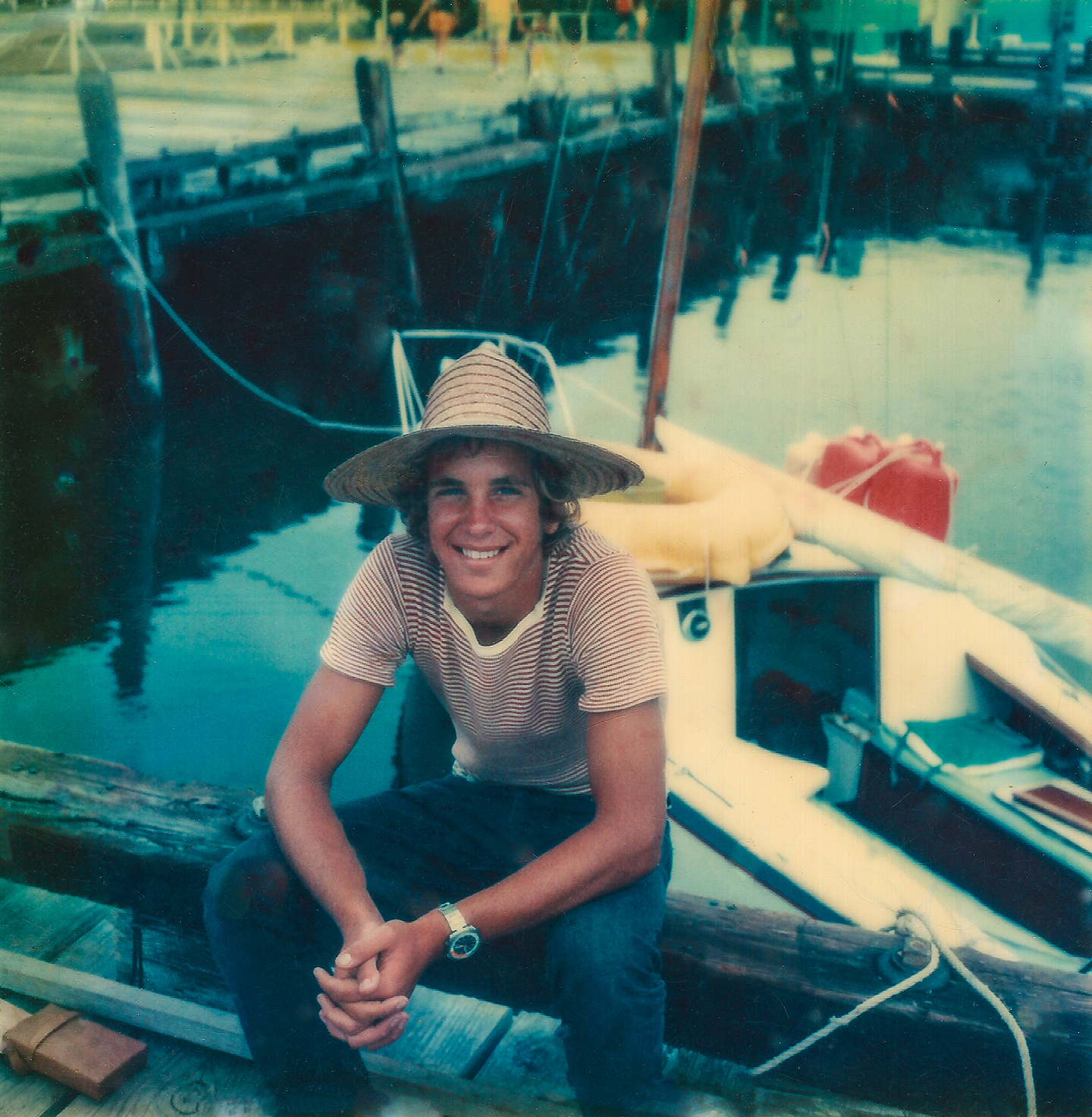
As a boy sailor I was given a long lead to chase my dreams. Here I pose with with 18-foot Icarus during a teenage sailing adventure from Ft. Lauderdale, FL to Newport, RI

As a boy sailor I was given a long lead to chase my dreams. Here I pose with 18-foot Icarus during a teenage sailing adventure from Ft. Lauderdale, FL to Newport, RI

Sailing memories flood my mind as I lay restless in bed today, still unable to walk 10 days after a knee replacement surgery.


I could obsess about the excruciating pain and second-guess my decision to have a prosthesis inserted into one of the most critical parts of my body–but it is better for me to meditate on the positive.


I am remembering myself as a sun bleached 14-year-old South Florida boy. I was restless then, too. With hormones raging and frustrated in school, I was trying to figure out what I wanted from life. All I knew was that I wanted to go sailing.


“I’m running away from home,” I told my parents one day. “I love you, but I gotta go.”


Why? Who knows? No child could have asked for better parents, or for better siblings. My life was perfect. I just needed the time to discover that on my own.


I had a 12-foot wooden sloop that I had named Cutty Shark. I wasn’t thinking about the nautical history of the great clipper ship Cutty Sark when I named my boat. I was thinking about the Scotch whiskey by the same name. I painted the boat bright yellow to match the label on the whiskey bottle. My parents did not think it was nearly as funny as I did.


My Dad said, “Well, if you are running away in that boat let me give you a ride to the boat ramp.” And my Mom said, “I’ll pack up some food for you.” It was not exactly the response to my rebellion that I had in mind.


“I’m going to Key West,” I told them. The year was 1969. Key West was 150 miles away. “Give us a call when you get there,” Dad said, waving goodbye. And that was that. I ran away to sea at age 14 in a tiny yellow boat named after a bottle of whiskey.


The story has a happy ending. A couple of weeks later, Mom and Dad drove down to Key West in our family station wagon towing my boat trailer. There were smiles all around. They even treated me to a seafood dinner at the A&B Lobster House. I was hungry.


What amazing parents I have. To allow their 14-year-old kid to leave home, in the middle of the school year, and just go sailing alone over the horizon. It was remarkable. It was probably the single best example of parenting I have ever known. It cured my restlessness (for a while). I was a better boy because of it.


Right now these memories are better than morphine for the knee pain. I close my eyes and smile as I think of a fresh breeze filling my sails. Those were days when I had the freedom to be anybody I wanted to be.


Those days will come again.