Good news from the ocean: Just when you thought it was unsafe to go back into the water… along comes Cotylorhizatuberculata, commonly known in the Mediterranean as the Fried Egg Jellyfish. There is virtually no sting in its tentacles, and researchers are beginning to study the possibility that specific toxicity from this jellyfish may even eliminate certain breast cancer cells.
In a report from the scientific journal MDPI, “Marine Drugs,” very early studies have shown that elements in Cotylhoriza tuberculata may be a “putative action mechanism for anticancer bioactivity,” selectively killing malignant cells while leaving healthy ones intact.
No one is saying that the Fried Egg Jellyfish cures cancer. Still, additional studies are proposed to further research of its cytotoxicity in targeting breast cancer. The nutraceutical and pharmaceutical potential is also being discussed. The Fried Egg Jellyfish, it seems, may not just be another pretty face in the sea.
Sailing is not just about the wind and the sea; equally important are the places to which this boat takes me.
Please click Follow at the bottom of this page so that you don’t miss a new update, and please consider sharing this post with others who might enjoy following the voyage of Flying Fish. I welcome your comments.I will always respond to your comment when I have an Internet connection. And I will never share your personal information.
You can follow the daily progress of Flying Fish, boat speed (or lack thereof), and current weather as I sail into the Mediterranean by clicking this satellite uplink: https://forecast.predictwind.com/tracking/display/Flyingfish. Click the “Legends and Blogs” box on the right side of the tracking pagefor en route Passage Notes.
Ginny and I have a history together under sail. As kids, we fell in love with each other on boats. We sailed together in the Bahamas and the Caribbean, from the Azores to Portugal, along the Spanish Mediterranean coastline, and throughout our home waters in the Florida Keys. On a sail back from Bimini, she asked me to marry her… at least that’s the way I remember it. That was 40 years ago. We are celebrating that anniversary in Sardinia aboard Flying Fish.
Our partnership allows great latitude in our lifestyles. Sometimes we only see each other for a few weeks each year. It works for us.
In 1976, Ginny and I were students at the University of Florida when we said our first bon voyage. I was sailing across the Atlantic with my family. My mother and father had a dream to go sailing and sold everything to buy a 43-sloop. With my two sisters and my brother already scattering into the wind, Mom and Dad’s plan brought us all back together. We had a glorious passage from Florida to Europe but the money ran out faster than expected and our family voyage was abbreviated. Mom and Dad left the boat in Spain to go back to work and asked me to help bring it home where it could be sold. Ginny joined me in Alicante for a few months as I waited on a weather window for the return ocean crossing. That summer Ginny and I sailed like pirates through the Mediterranean surviving on young love, mountains of fresh sardines, and bodega wine that we drank from goatskin bags. Ginny was always the responsible party in this partnership and after that summer she returned to school while I continued sailing.
In 1981, we had only been married about a week when I set sail again, this time solo across the Atlantic in my 23-foot sloop Betelgeuse. Ginny met me in Horta and we continued to Portugal together. I sold Betelegeuse in Europe and returned to college where it took me 10 years to earn a four-year degree. I was distracted by saltwater; Ginny, however, was focused and working her way through law school.
Our daughter Lilly was born in 1986. In our connubial re-telling of history, the story once again diverges here but I am fairly certain that my “enthusiastic” operation of an open skiff across rough water, with Ginny late in her pregnancy, induced labor and Lilly ultimately entered our world. She is Capt. Lilly now, a 100-ton USCG-Licensed Master.
While I continued to mess about in boats, Ginny created a notable legal career as a State Prosecutor, a City Attorney, and a brilliant lawyer in private practice. I clearly remember Ginny’s face on the dock in Key West as I departed in Flying Fish in December 2017 on this passage around the world. This wasn’t her dream, but in her eyes I saw her confidence and encouragement of my dream. She has given me a generous gift.
As the voyage of Flying Fish progressed, Ginny and I would rendezvous in ports around the world. We celebrated Christmas together in Panama City with a 2 AM supper in the historic quarter of Casco Viejo. Ginny flew to Tahiti and we swam in the natural aquariums of Moorea. In New Zealand, we sailed and road-tripped, and even worked as grape pickers in a vineyard in exchange for a wine-country lunch and a box of vintage Cabernet. At the end of each visit Ginny would return to Key West to a house, friends, and job she loved–and where a dog was always waiting for her. I would trim the sails aboard Flying Fish and set a course for another distant horizon.
It will be interesting to see how our lives will dovetail once this trip around the globe in Flying Fish comes to an end. I suspect that there will be a period of adjustment, at least for me. But for my wife of 40 years, who always sails through life on an even keel, the potential of stormy weather ahead does not concern her. Ginny is an optimist. She has strength and patience, and we are in it together for the long run.
Sailing is not just about the wind and the sea; equally important are the places to which this boat takes me.
Please click Follow at the bottom of this page so that you don’t miss a new update, and please consider sharing this post with others who might enjoy following the voyage of Flying Fish. I welcome your comments.I will always respond to your comment when I have an Internet connection. And I will never share your personal information.
You can follow the daily progress of Flying Fish, boat speed (or lack thereof), and current weather as I sail into the Mediterranean by clicking this satellite uplink: https://forecast.predictwind.com/tracking/display/Flyingfish. Click the “Legends and Blogs” box on the right side of the tracking pagefor en route Passage Notes.
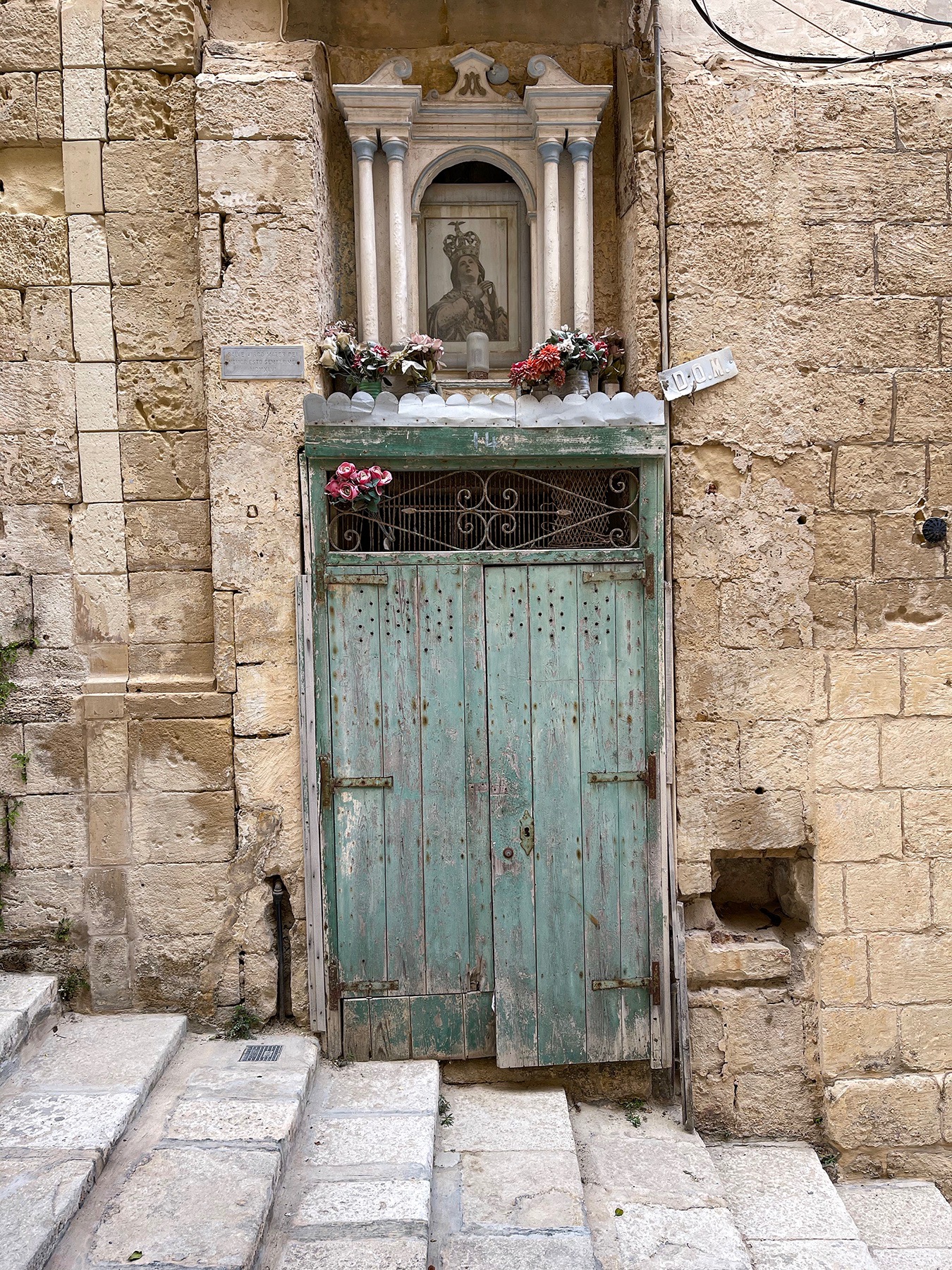
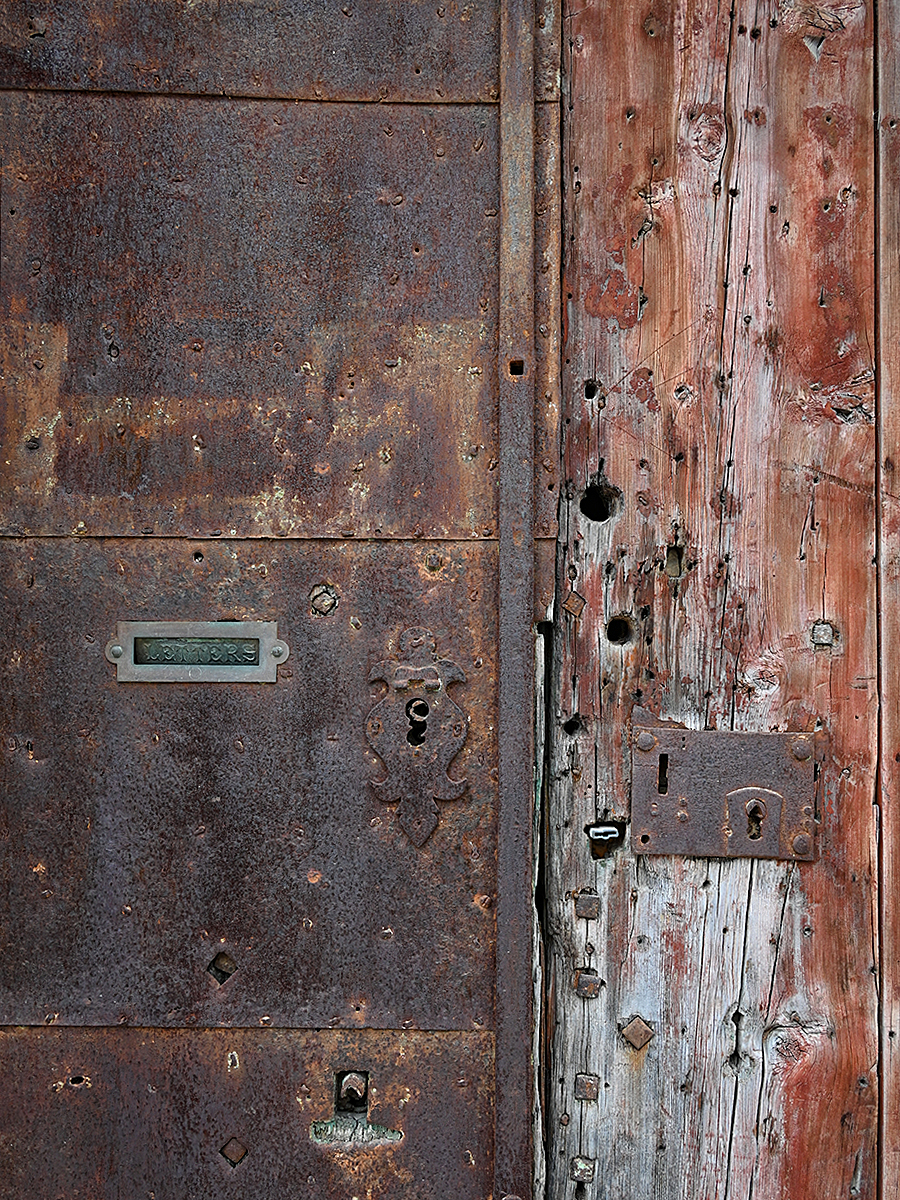
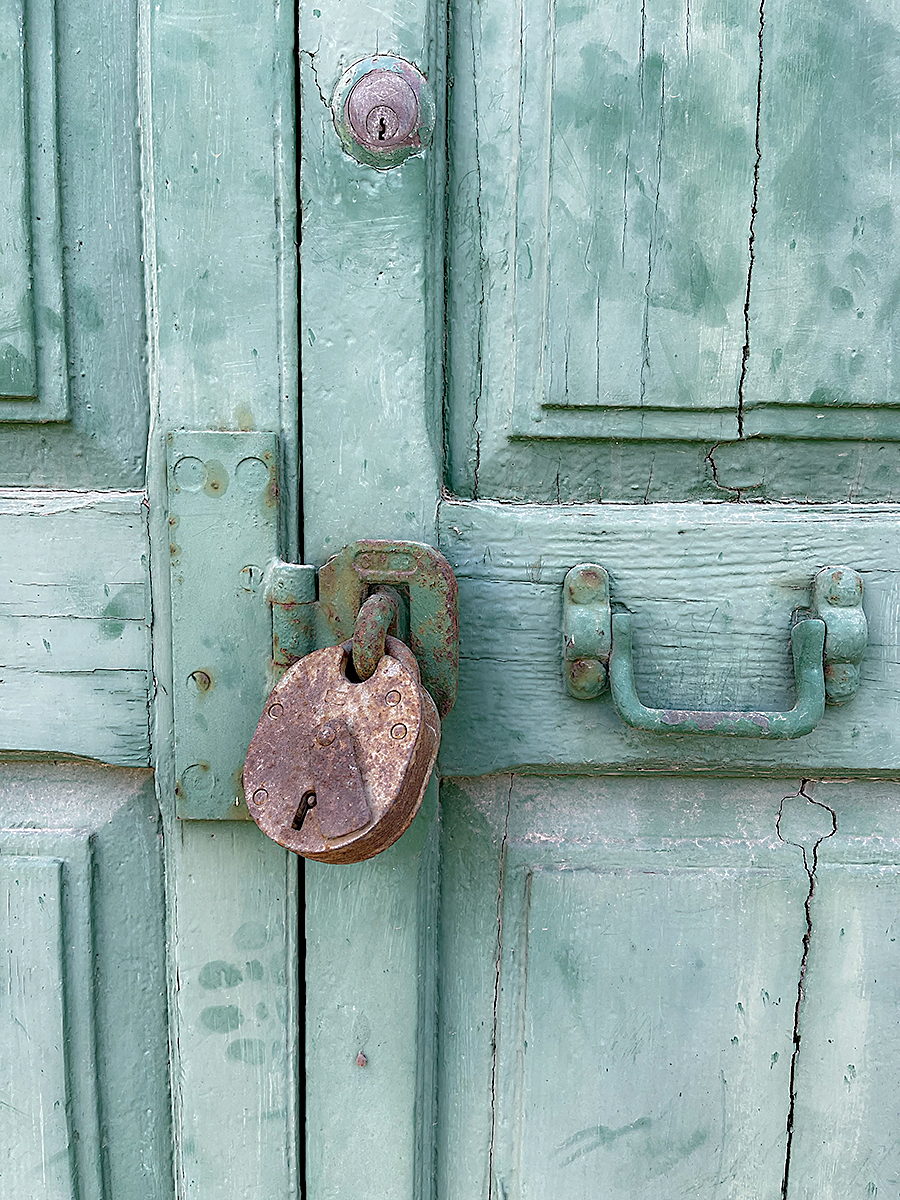
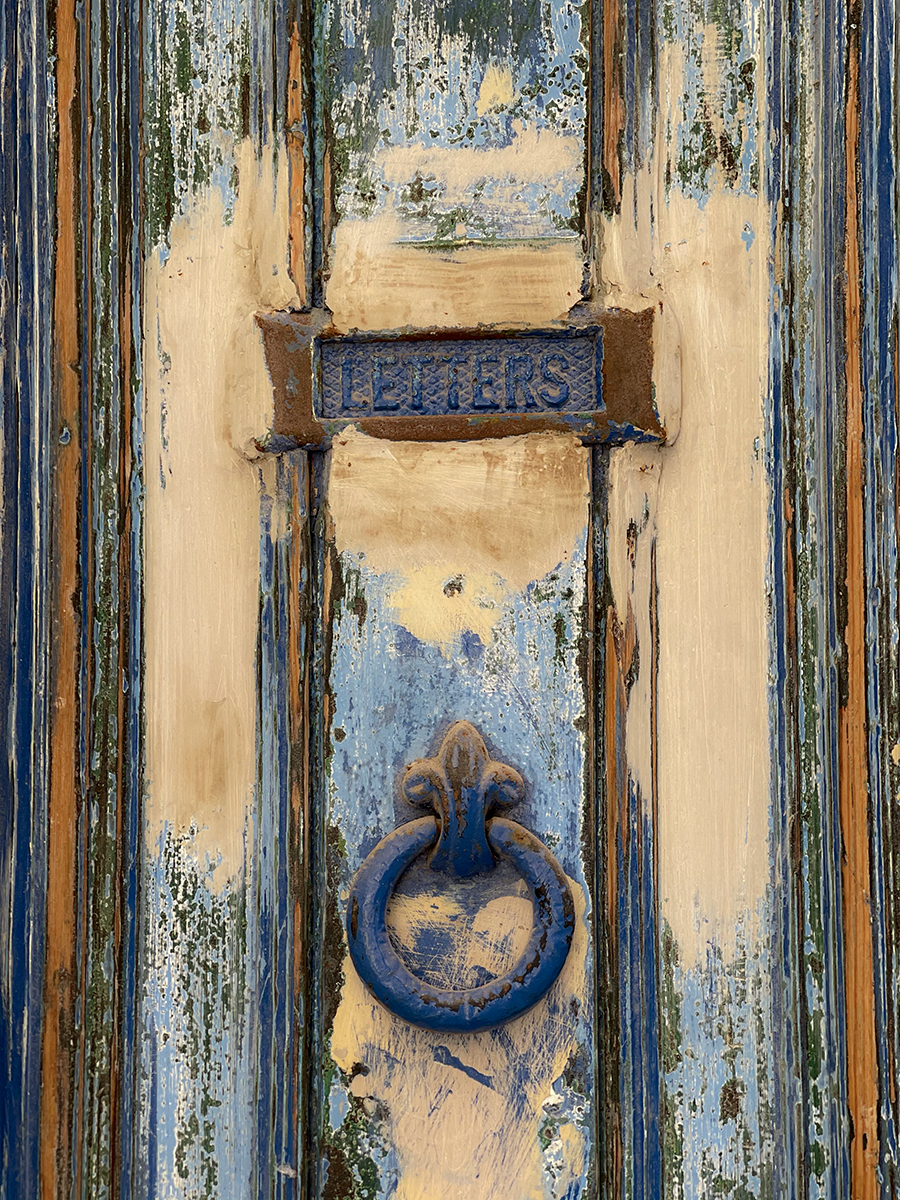
As I sail through a pandemic that seems to have no end, the significance of finding a portal allowing me to move onward has more meaning to me. Mediterranean Europe is on fire again with a new wave of coronavirus. As I prepared for my departure from Malta to Italy, my destination in Sardinia went from COVID Condition White (completely open) to Orange and then to Red (completely closed) in only three days. Much of Malta, where Flying Fish is currently moored, also remains closed. The cure for my restlessness this day is to walk through the medieval city of Valletta… and look at doors.
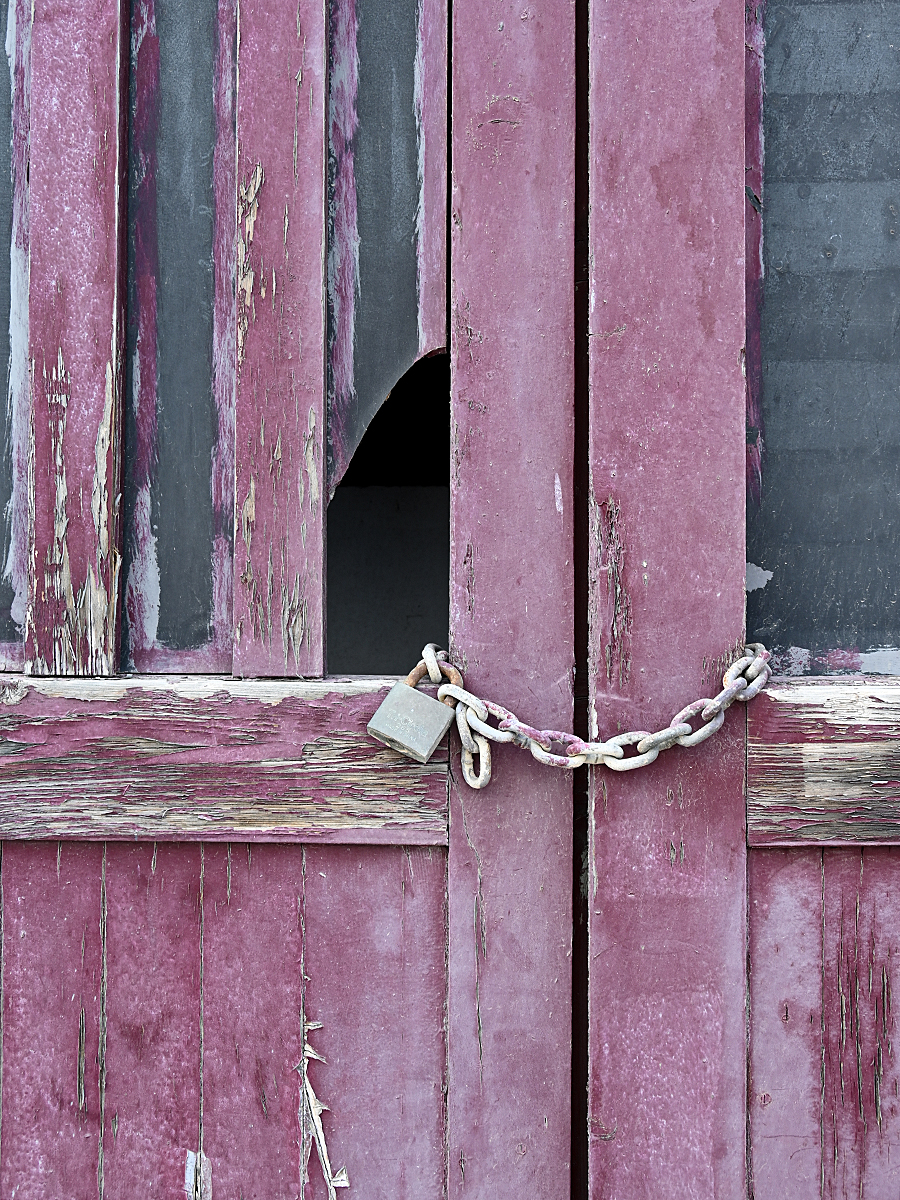
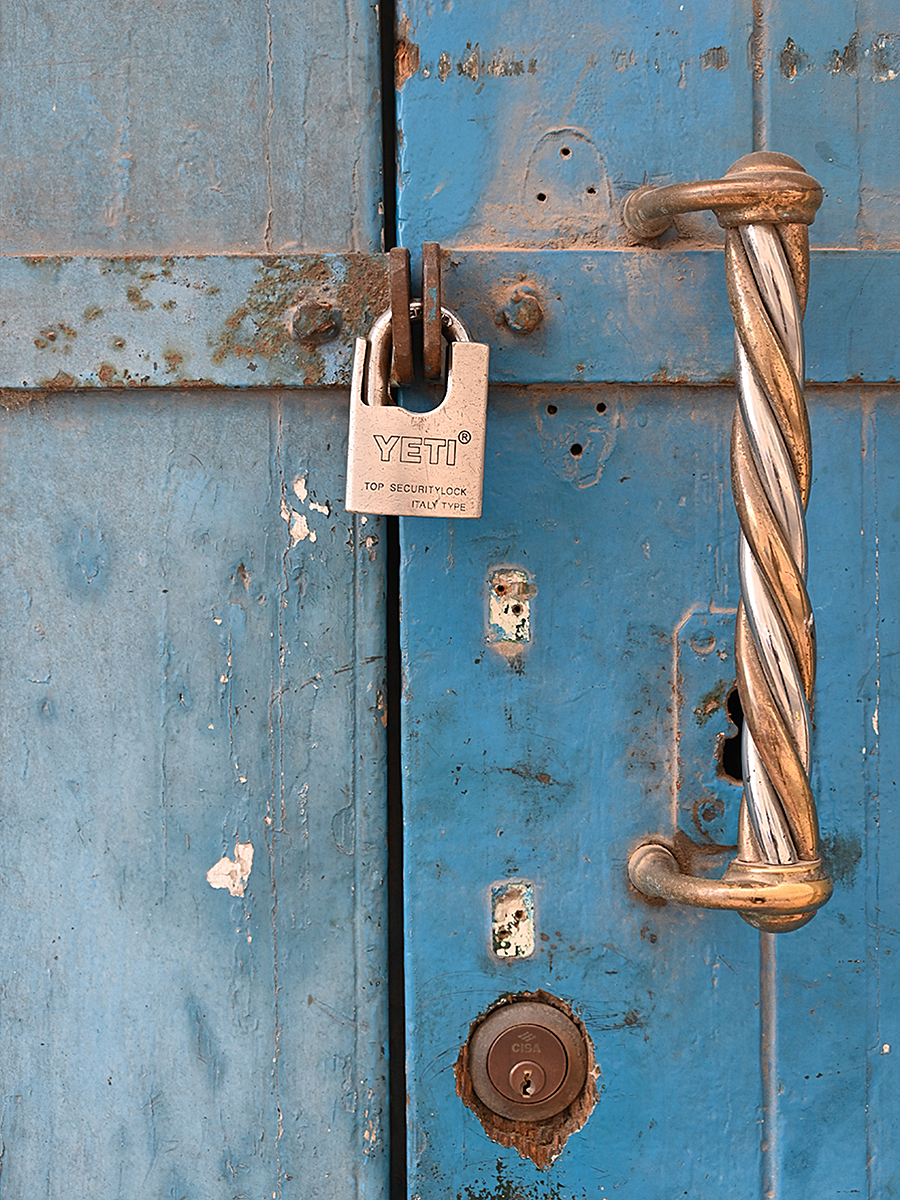
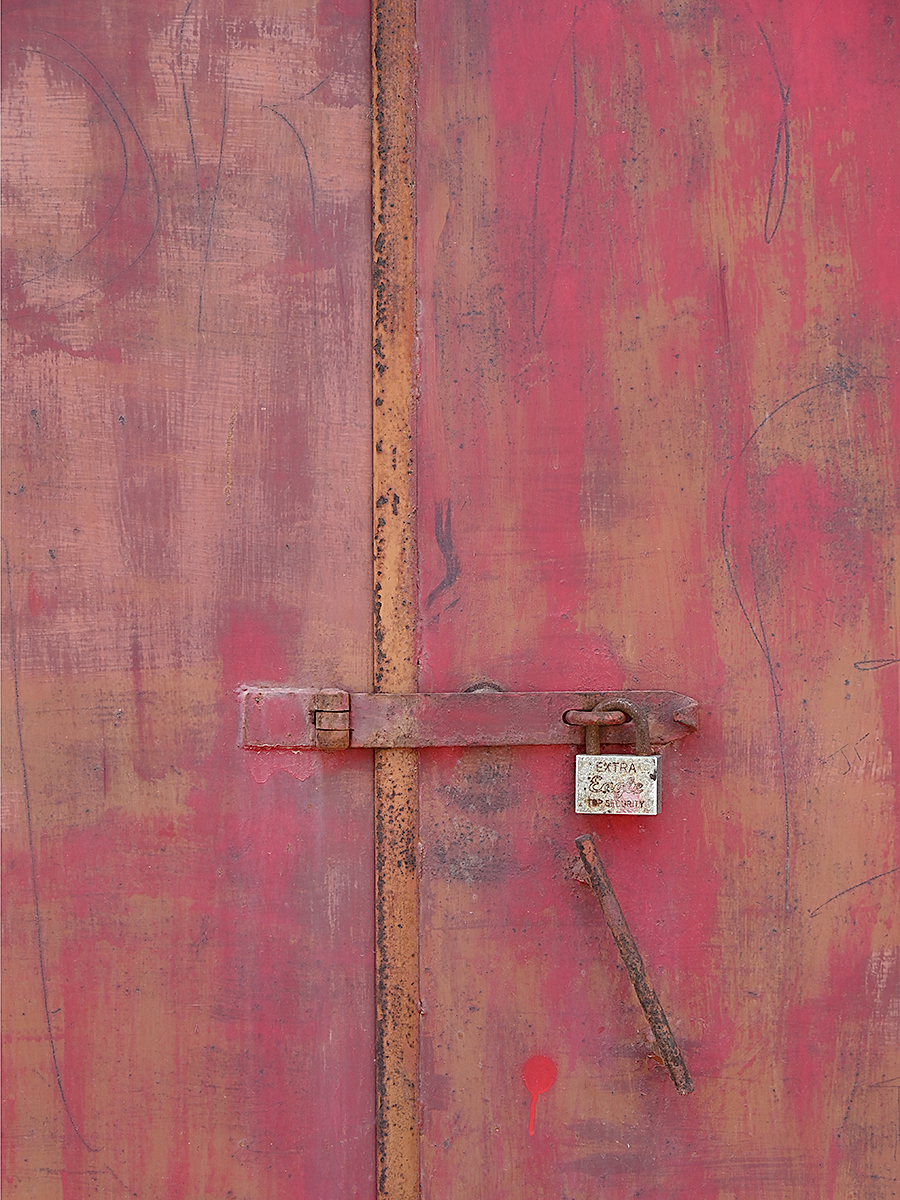
Doors control entry or exit, depending on which side you are on. They represent a border; doors divide and connect two worlds. They provide a passageway for starting something new or leaving something behind. A door is a universal symbol that implies transition, giving way from one domain to another. It is the place of passage between two completely different states. A door can divide a hostile and dangerous space from the comfort of a safe place.
“There are things known and things unknown, and in between are the doors.” –Jim Morrison
In Valletta today, most doors remain closed and locked. Some show centuries of use and wear. Others feature details of pride. All provide protection. And so it is with sailing in a pandemic. One day, the doors will reopen.
Sailing is not just about the wind and the sea; equally important are the places to which this voyage delivers me.
Please click Follow at the bottom of this page so that you don’t miss a new update, and please consider sharing this post with others who might enjoy following the voyage of Flying Fish. I welcome your comments.I will always respond to your comment when I have an Internet connection. And I will never share your personal information.
You can follow the daily progress of Flying Fish, boat speed (or lack thereof), and current weather as I sail into the Mediterranean by clicking this satellite uplink: https://forecast.predictwind.com/tracking/display/Flyingfish. Click the “Legends and Blogs” box on the right side of the tracking pagefor en route Passage Notes.
There is a Maltese expression: bahar jibla’ l-art, which translates as an event “when the sea wants to swallow the land.” It is a perfect description of the Mediterranean gregale that is sweeping over Malta this morning. Weather warnings for gale force winds reaching 40 knots from the northeast add an exclamation point to what has already been a winter of unstable Mediterranean weather.
The wind in Malta should abate by tomorrow, but a gregale is never taken lightly on this island with a rich maritime history. In February 2019, gregale winds in Malta reached Force 8 and 9 (50 knots), flooding streets and uprooting trees. The sea did “swallow the land” in Malta’s worst recorded gregale in 1555, causing waves that inundated the city of Valletta, drowning 600 people.
Today’s wind map for Malta and the Central Mediterranean Sea, with a future course line to Sardinia. Image Credit: PredictWind Offshore
Weather and religion frequently coincide, especially in this part of the world. The gregale is also known as euroclydon, meaning “a violent action.” Euroclydon was the Biblical cyclonic wind that wrecked the ship of St. Paul on the coast of Malta. “…About midnight the shipmen deemed that they drew near to some country; And sounded, and found it twenty fathoms: and when they had gone a little further, they sounded again, and found it fifteen fathoms. Then fearing lest we should have fallen upon rocks, they cast four anchors out of the stern, and wished for the day.“
“And when neither sun nor stars in many days appeared, and no small tempest lay on us, all hope that we should be saved was then taken away.“
Aboard Flying Fish, I have underestimated the severity of winter (now spring) Mediterranean weather. In Turkey and Greece, there was the Meltemi. Ahead lay the easterly Levante that funnels through the Straits of Gibraltar, the summer Sirocco is filled with Saharan sand, the Libeccio raises high seas in Corsica, the violent Mistral of southern France shoots cold air out of the Rhône Valley, and the northerly Tramontane is generally defined as “anything seen as foreign, strange, or even barbarous.”
With all of its idiosyncrasies, the weather is one of the most captivating aspects of sailing across the world’s oceans and seas. Weather can be fascinating (like a cobra coming out of a basket), it can be frustrating, or it can be otherworldly glorious. Weather always reminds me that I am human and that there exists a higher power than me.
Please click Follow at the bottom of this page so that you don’t miss a new update, and please consider sharing this post with others who might enjoy following the voyage of Flying Fish. I welcome your comments.I will always respond to your comment when I have an Internet connection. And I will never share your personal information.
You can follow the daily progress of Flying Fish, boat speed (or lack thereof), and current weather as I sail into the Mediterranean by clicking this satellite uplink: https://forecast.predictwind.com/tracking/display/Flyingfish. Click the “Legends and Blogs” box on the right side of the tracking pagefor en route Passage Notes.
A passage has a life of its own. Like a good book, there is a beginning, various plotlines, drama, and then it ends. The 680-mile passage of Flying Fish last week across the eastern Mediterranean from Turkey to Malta was no exception.
I felt some anxiety about my routing to Malta through Greek territorial waters. Greece and Turkey prohibit transit between their countries, and their war of words has recently escalated to saber-rattling.
Weather became an issue. A ferocious meltemi wind developed, unforcasted, soon after I departed from Turkey.
I experienced a startling “bump in the night” as Flying Fish’s keel met unseen rocks in a dark anchorage.
The meltemi turned into winter with freezing rain coating the deck.
As I continued into the Mediterranean, hundreds of merchant ships were stalled en route to Suez because a massive container ship had gone aground, closing the entire canal.
And in the middle of it all, I once again lost critical onboard electronics. Both the AIS and the autopilot became inoperative. I was electronically invisible to shipping traffic and, with my autopilot gone, I couldn’t even take my hands off the wheel to pee overboard.
Nobody said this was going to be easy.
The route from Turkey to Malta was an initial point of concern. Travel between ports in Turkey and Greece–COVID notwithstanding–has been shut down for months because of territorial sea disputes. Tensions are inflamed over an area of the continental shelf in the Aegean Sea believed to hold rich oil reserves. Territorial waters give the respective state(s) control over shipping. However, foreign ships usually are guaranteed “innocent passage” through those waters. Nevertheless, the Greek military continued a non-stop VHF radio broadcast, warning all vessels from Turkey not to “violate sovereign waters.” Short of heading several hundred miles south toward Egypt, transit through Greek territorial waters would be the only routing option for Flying Fish to sail west.
The passage began with a raging meltemi wind out of the Aegean. Meltemi winds form when a high-pressure system over Greece meets a low-pressure system over Turkey. North winds near gale force are often created in the chute between the two counter-rotating systems. Flying Fish struggled to make forward progress in steep, short-period seas between the islands. Temperatures plummeted as the northerly wind increased. Fortunately, there are abundant sanctuaries for protection from the meltemi among the Greek Islands. I dropped anchor to get some rest in a protected bay at sparsely inhabited Levitha Island, despite the questionable legality of doing so.
At 3 AM, I awoke to the sound of rock meeting fiberglass–never a good sound–and I realized that Flying Fish was not where I had dropped the anchor. In nearly 12,000 miles of sailing since leaving Key West, I had never, until this night, grounded the keel of Flying Fish. As the meltemi roared in the tight anchorage of Levitha, it created a vortex of wind spinning the boat around the anchor and into a rock below the surface. In my state of exhaustion hours earlier, I had made the cardinal error of situational awareness: I did not thoroughly examine my anchorage and allow adequate swing room. Awakened by this startling bump in the night, I sprung out of my berth, started the engine, winched up the anchor, and checked the bilge. There was no water ingress (external inspection would have to wait.) Flying Fish was floating. In pitch-black darkness and violent wind, I reversed my inward GPS track and motored out of the bay to deeper water. Only then I realized that I was half-naked and very, very cold.
“Being from the tropics, I like ice. I’m just not too fond of it when it comes out of the sky.”
By morning there was sleet on the deck of Flying Fish. Temperatures were above 0°C on deck, but freezing rain was falling from the sky. I was still wet from the night’s activity. Being from the tropics, I like ice. I’m just not too fond of it when it comes out of the sky. I needed to find shelter and regroup. The Greek Waters Pilot guide recommends a secure anchorage at Nísos Íos. The book says of the Manganari Bay anchorage: “The island is extremely popular with young sun-lovers. Nude bathing is tolerated here.” A caïque brings beachgoers “topless and bottomless” daily from Íos. But that wasn’t happening today.
News about the blockage of the Suez Canal was scarce over my satellite reports, but I began to see an unending line of merchant ships jamming the shipping lanes toward Port Said. Deciphering lights, radio calls, radar blips, and other electronic information can be like reading code. Why is one ship moving one way while all the others are doing something different? Much of that information transmits by AIS (Automatic Identification System) to my mapping electronics. The AIS tells me who is navigating the same water as Flying Fish, essential information for collision avoidance. Most of the ships noted on AIS were tankers (empty tankers, it turned out, heading to the Middle East for more oil). One vessel was moving much faster than the others. It was listed on AIS as a “Dredging Operator,” expertise much needed considering the current circumstances. The Suez Canal blockage was now a critical event with global economic implications.
And then–poof!–all of the AIS targets vanished from my navigation screens. Simultaneously, Flying Fish turned abruptly to windward as the autopilot disengaged. Not again! A year earlier, as I began a 3,000-mile passage across the Indian Ocean, Flying Fish experienced an identical system failure. Unable to resolve the problem, I diverted first to Sumatra and afterward to Phuket for repairs (and then came COVID and a circumnavigation interrupted… but that is a different chapter for another day.) Now, 150 miles out of Malta, the situation (it always happens at night) was frustrating but manageable. I would sail the final stretch into the historic Valletta harbor the way my forebears did, using my eyes for navigation and my hands to steer. Even at night, every cloud has a silver lining.
Please click Follow at the bottom of this page so that you don’t miss a new update, and please consider sharing this post with others who might enjoy following the voyage of Flying Fish. I welcome your comments.I will always respond to your comment when I have an Internet connection. And I will never share your personal information.
You can follow the daily progress of Flying Fish, boat speed (or lack thereof), and current weather as I sail into the Mediterranean by clicking this satellite uplink: https://forecast.predictwind.com/tracking/display/Flyingfish. Click the “Legends and Blogs” box on the right side of the tracking pagefor en route Passage Notes.















 Stella Maris Sail