“One Hour at a Time…”

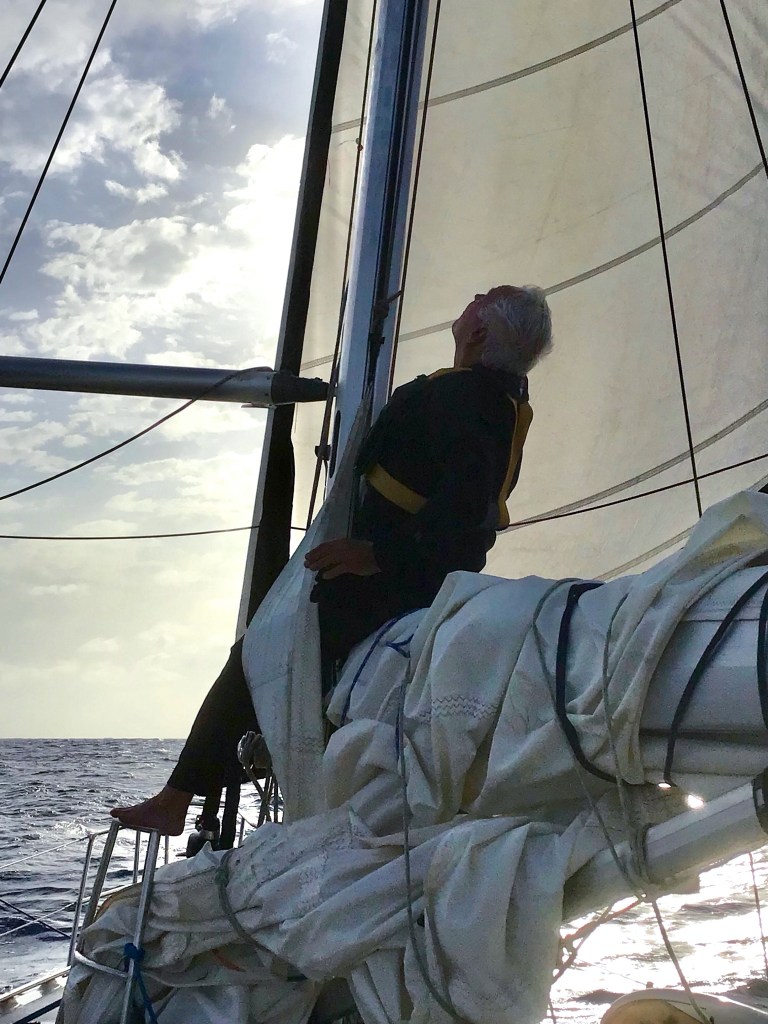
Problem-solving is essential when sailing offshore. Day 1, en route from the Canary Islands to the Caribbean, the mainsail halyard breaks at the masthead of Flying Fish. Photograph: © Ginny Stones

Part 1

19°34′34″ N 24°26′24″ W — 28 November 2021
The Flying Fish dream of a Caribbean transatlantic passage this year is dead in the water. A complete dependency on the technology of a modern sailboat has led to a complete system failure onboard Flying Fish and an intensely disappointing retreat to the Cape Verde Islands for repairs.

Ginny and I had just finished a lovely sit-down lunch as we ran wing on wing toward the NE tradewinds off the West African coast, en route to Antigua. Suddenly, the electric autopilot disengaged, and Flying Fish rounded sharply to weather. Going below to restart the system, I saw that the entire DC panel had no power. The panel had gone black.

Ginny took the helm while I began to troubleshoot. Breakers had not tripped. Fuses had not blown. The was no sign of an electrical short or burned wires. The 1200-amp battery bank and starter battery (both new three months ago) were fully charged at 13.6 volts. Still, there was no power available. None.

Having no 12-volt DC power available on Flying Fish meant:

  • No autopilot. If we could not repair the system we would be hand-steering 2,600 miles–24 hours a day–to Antigua.
  • No engine. Sailboats occasionally need engine power, but ours, like most others, depend upon electricity to start. We had no electricity.
  • No DC power meant no navigation screens or radio communication. We would be sailing in the blind.
  • No lights. The AIS went black with the navigation system, and now we didn’t even have running lights to make ourselves visible to shipping traffic at night. Even the compass light was dark.
  • No stove. Our stove uses an electronic solenoid to open the gas line.
  • All of our electric pumps were inoperable, including the automatic bilge pump, the primary pump that supplies drinking water, and the watermaker pump.
  • An entire ocean passage worth of frozen and refrigerated provisions would now rot in their electric boxes with no power.
  • No toilets. Electric vacuum-flushing heads were installed aboard Flying Fish; now there was no way to flush them. We would be using a bucket for a toilet, crouched over it in the cockpit, dodging 14-foot breaking seas. Welcome aboard, Ginny.

To be clear, this was not a Mayday situation. We had some backups: We could navigate with an iPhone until the battery in the phone went dead. Our IridiumGo satellite tracker and hand-held VHF radio also depended on battery power. We had a hand-operated bilge pump. We could use a flashlight to wave at approaching ships for collision avoidance. A manual freshwater hand pump in the galley could retrieve water at two ounces per stroke.

And we had a sailboat. We could go anywhere if we had wind, right?

We had wind. Lots of wind. A low-pressure system sent 30-knot winds roaring from the north. Severe weather in the North Atlantic pushed a huge and confused sea to our latitude. Two people hand steering a 22-ton sailboat, 24 hours a day, in these conditions was debilitating. Our time at the helm went from two hours on / two hours off to only 15 minutes between watch changes. It was clear that unless Joshua Slocum was on board, we were not likely to succeed at crossing the ocean hand-steering in these conditions.

Further troubleshooting (with long-distance help from family and friends–we love you!) provided workarounds. The generator could be started with an isolated battery, and it not only charged our phone and satellite communicator, but it could fire up the engine if necessary.

That was when we discovered all of the 190 gallons of diesel we took on board for the transatlantic passage was badly contaminated with water. The filters on both the generator and engine were fouled.

With frequent filter changes, the generator functioned enough to partially charge the isolated battery and re-boot the autopilot. Hallelujah! We could finally take our hands off the wheel. But the autopilot only functioned when the generator was running, and the fuel filters were rapidly collecting contaminated fuel that looked like vanilla yogurt. This was clearly not a long-term solution. We had a choice: we could hand-steer the remaining 2,600 nautical miles and 17 days west to our original destination of Antigua. Or, we could turn south toward the remote Cape Verde Islands, 480 nautical miles and four days away.

In near gale force conditions, we decided to divert Flying Fish to Ilha de São Vicente in Cape Verde to repair the boat. It would be four days of some of the most intense sailing of our lives.

Part 2

The diversion to Cape Verde began in conditions that would typically delight any blue water sailor, a broad reach in 25-30 knots. We reefed the sails, double-checked our harness attachments, dogged all hatches and ports, and prepared for nightfall. Conditions quickly deteriorated. By midnight, the boat was vacillating wildly on gusts of 35 knots with two different swells 45 degrees apart that peaked like frosting on massive wedding cakes. When the weather helm became too severe, we reduced the sail even further. Neither of us wanted to eat. We forced ourselves to stay hydrated, but even that was an effort. We had to remind ourselves that the three essentials needed to maintain focus would be nutrition, hydration, and rest.

After an exhausting night of short watches, the first light of morning illuminated the severity of the seas, the tops of which were now hitting the boat broadside and occasionally breaking over the deck. On some deep rolls, the aft end of the boom would reach the water on the lee side of the boat. I began to recall the severe knockdown Flying Fish encountered several years ago by a rogue wave in the Coral Sea. We were now 400 miles away from Cape Verde.

We had basic GPS navigation software on the iPhone, but the battery was nearly exhausted. I prepared for dead reckoning and wished I had not let my celestial navigation skills lapse. Daylight brought some renewal of personal energy, and we both were able to eat a peanut butter sandwich. Ginny’s hands were cramping on the wheel, so she used her feet on the spokes of the wheel to keep the boat on course. I continued to troubleshoot the electrical problem to determine if there were any systems we might get back online. The IridiumGo satellite communicator was still working, but its internal battery was also failing. As I updated our position and intentions, troubleshooting advice began pouring in over the satellite. My brother Bob and our daughter Lilly, both mechanically savvy, offered suggestions. An Island Packet Yachts factory tech sent them wiring diagrams. Island Packet owner, guru, and close friend Hayden Cochran funneled suggestions for workarounds. My sister Susan offered prayers.

We dreaded the night watches. There were now frequent squalls that brought rain and zero visibility. With no lights, I was terrified that we were going to run unseen into a merchant ship or fishing vessel. At regular intervals, I would stick my head out of the zip window in the dodger, staring into the darkness for other boats. It felt as if we were a ghost ship barreling through the night at 8 knots. We saw few stars because of the overcast. We tried to maintain our heading by illuminating the compass with headlamps. The glare off the glass dome of the compass further reduced visibility, and it showed us that we were still vacillating up to 30 degrees off course. If we missed Cape Verde, the next stop would be Africa.

Ginny and I stayed in the cockpit together 95 percent of the time. While one person steered, the other slept harnessed to the boat wrapped in a wet blanket. Exhaustion took various forms. After 20 or 30 minutes, the compass’s white numbers and black background would reverse in my mind – positive would become negative – and instead of seeing a heading number on the compass, I would see black shapes surrounded by obscure white outlines. We both experienced auditory hallucinations. “Did you hear that?” Ginny said after a particularly difficult watch. “Somebody is singing out there,” as she pointed into the darkness. I could hear it, too. To settle ourselves we repeated the mantra: “Take it one hour at a time.”

Mornings brought an end to the tension of sailing fast through the night without lights. It also put a face on the extreme exhaustion of hand steering on short watches with little or no sleep. © Jeffrey Cardenas

After two days, we had a troubleshooting breakthrough. We were able to divert solar power to an isolated battery and charge our devices. This was critical because the IridiumGo had become our lifeline, and the iPhone gave us both navigation confirmation and weather updates. However, the solar power was not sufficient to use the boat’s navigation system, running lights, pumps, or radios – and of course, all solar power ended with the darkness.

Day Three of the diversion was a cruel tease. I cleared enough of the contaminated diesel from the filters and fuel lines, and a bright day of sunshine provided enough solar power, to start the engine. We cheered when it fired up. Now we would also have the engine alternator as a power source. We would leave the engine on day and night, if necessary. Things would return to normal, I thought. Buoyed with optimism, I flipped on the autopilot switch… and everything died, including the engine. We were back to black and 200 miles from shore. The gale raged on.

When will this system blow itself out, I wondered? Heaving-to was a last-resort option because the drift would put us below the lay line to Cape Verde, and sailing to windward in this weather would be brutal. The conditions were relentless. I was amazed that two different and distant storms, one off Newfoundland and one off the UK, could push swells this far south to make such a confused sea. Ginny’s hands (afflicted with Raynaud’s syndrome) were numb from steering. My fingerprints had been rubbed smooth by chafe. Each of us was bruised from being thrown about the cockpit. Fortunately, we avoided injury.

The sun gave us enough watts to power the autopilot for a few hours on the fourth day. It was a relief to be able to take our hands off the wheel. We were able to light the stove, and celebrated by having our first hot coffee in nearly 100 hours. This bizarre electrical failure still prevented us from using both autopilot and the engine, but we had plenty of wind, and we could almost smell land.

Part 3

Cape Verde finally emerged from the ocean in the late afternoon, shrouded by a haze of Saharan dust. We needed to make haste. A night hove-to or tacking offshore was untenable. We were too exhausted to maneuver this close to land in strong weather for the next 12 hours. The other choice was equally risky. We would be making a nighttime landfall in a place new to us, having no current charts, with an engine that may or may not work. A six-mile gap separated our destination, Ilha de São Vicente from its neighboring island Ilha de Santo Antāo. A tidal race was pouring directly into the massive groundswell between the two islands, making steep and unpredictable seas. The engine started, but within minutes the filters fouled with contaminated fuel. We continued sailing with a triple reefed mainsail and a partially furled staysail as I drained and replaced the filters.

With land fast approaching we started the engine again. It fouled. We repeated the filter change process six times while simultaneously trying to make out the lights of the harbor. “We are committed to landfall,” I told Ginny. “If the engine fails again, we will not have time for another filter change. We will need to sail clear and find an anchorage.” The engine stuttered, and the RPMs dropped from 2000 to 500. The motor was gasping, running on water. “I see a fuel dock,” I said, peering into the darkness. “Get some lines ready and secure them to anything solid onshore.

There were no dock attendants when we cleated off to the fuel docks in Mindelo, but a couple of French boys wandering past on their way to a cocktail party said, “Whoa,” and helped secure us. Then it was over. Ginny and I fell into our berths, wet and fully clothed, and passed out.

One week later, as I write this, we have made progress with the repairs. A Senegalese man named Elidio helped us remove and dispose of 190 gallons of contaminated fuel, and make the engine and generator function correctly again.

The bizarre DC failure problem was resolved when a Cape Verde electrician found a defective battery cable that had been replaced three months ago by a prestigious yacht service company in Palma, Mallorca. The technician in Palma had forgotten to crimp the terminal end of the cable (!) With this crucial attachment unsecured, the cable simply separated from the terminal and crashed the entire DC electrical system. Equally at fault, I never noticed the technician’s omission (hidden under an insulator) and assumed that the professional who charged many thousands of dollars had done his job correctly–caveat emptor.

Today, a young Cape Verde man climbed the mast–65 feet above the water–to replace the mainsail halyard that I had jury-rigged with our topping lift. He said, with pride, that it was his first time climbing the mast of a sailboat.

Ginny and I will soon fly from the Cape Verde Islands to Key West to be with our families for Christmas. My mother and father will renew their wedding vows after 70 years of marriage. That is something special. After the New Year, we will see where Flying Fish takes us next.

A technician replacing the batteries three months ago forgot to crimp this one crucial attachment, resulting in a complete DC electrical failure. © Jeffrey Cardenas

I hope to resume the circumnavigation and passage back to Florida in early 2022.

Please click “Follow” at the bottom of this page so that you don’t miss a new update – and please consider sharing this post with others who might enjoy following the voyage of Flying Fish. I welcome your comments, and I will always respond when I have an Internet connection. I will never share your personal information.

You can follow the daily progress of Flying Fish, boat speed (or lack thereof), and current weather as I sail into the Atlantic by clicking this satellite uplink: https://forecast.predictwind.com/tracking/display/Flyingfish

To see where Flying Fish has sailed since leaving Key West in 2017, click here: https://cruisersat.net/track/Flying%20Fish.

Instagram: FlyingFishSail
Facebook: Jeffrey Cardenas

Text and Photography © Jeffrey Cardenas 2021

Let this be a time of grace and peace in our lives   – Fr. John Baker
An Ocean Ahead

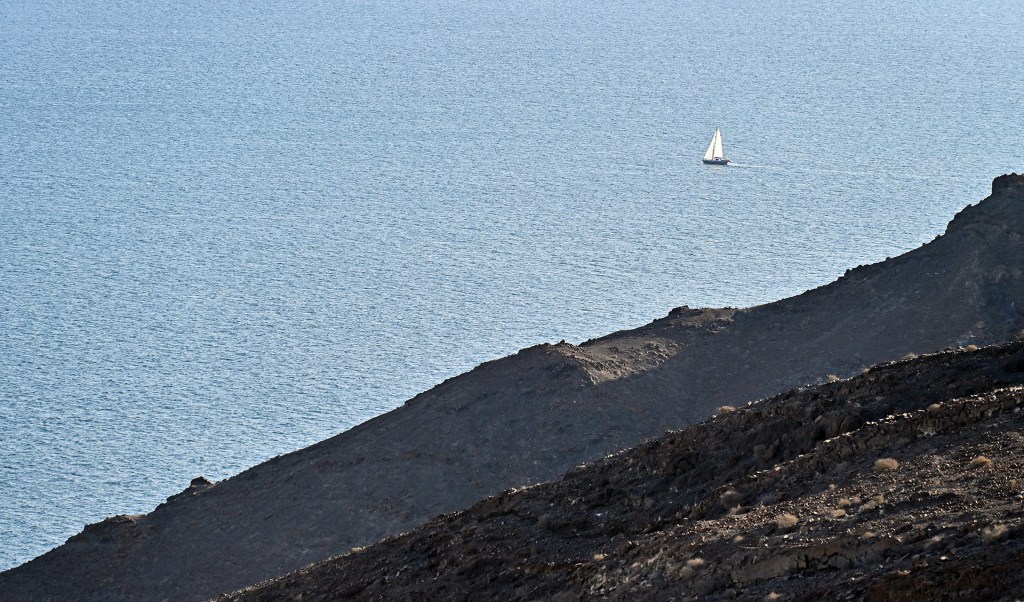
A view from the volcanic landscape of the Canary Islands as a sailboat gets underway in the direction of the northeast tradewinds. © Jeffrey Cardenas

Tomorrow, Flying Fish sets sail for the other side of the Atlantic Ocean. The excitement of an imminent departure has my body and mind vibrating with anticipation. One more ocean ahead.

Onboard for this passage is the inimitable Ginny Stones, mother, dog lover, lawyer, sailor, and my life partner. We haven’t seen a lot of each other in the four years that I have been sailing Flying Fish. I have sailed alone for much of this voyage. Along the way, Ginny has caught up with Flying Fish for visits in Panama and Papeete, New Zealand and Sardinia, but this will be our longest period of time together onboard. Change is good.

Our routing for this passage is Gran Canaria to Antigua, approximately 3,000 miles. Rather than follow a great circle route, we will first head south to the latitude of Dakar before turning west to find the northeast tradewinds. The weather will be erratic during our first week with a strong gale and building seas developing to the north and deep pockets of calm air settled in to the south. Once near the Cape Verde Islands, the forecasting changes to show the consistent east-to-west prevailing winds that will carry us to the Caribbean. If all goes well, the passage will take 18-21 days, and that should give Ginny and me plenty of time to become reacquainted.

This will be the last post until we reach the other side, but you can follow the satellite track of Flying Fish across the Atlantic here: https://forecast.predictwind.com/tracking/display/Flyingfish

There is also a space on that tracking page for passage notes, which I will post daily via satellite. Click the box, Legends and Blogs, for our thoughts and observations as we cross the ocean. Unfortunately, the low bandwidth of the satellite will not allow me to respond to your comments until we reconnect to WiFi again in Antigua.

Thank you for sharing this journey with us. Onward!

Ginny Stones, aboard Flying Fish in 2017, in our home waters of Key West. © Jeffrey Cardenas

Sailing is not just about the wind and the sea; equally important are the places where Flying Fish carries me, and the flora, fauna, and people I encounter along the way.

Please click “Follow” at the bottom of this page so that you don’t miss a new update,- and please consider sharing this post with others who might enjoy following the voyage of Flying Fish. I welcome your comments, and I will always respond when I have an Internet connection. I will never share your personal information.

You can follow the daily progress of Flying Fish, boat speed (or lack thereof), and current weather as I sail into the Atlantic by clicking this satellite uplink: https://forecast.predictwind.com/tracking/display/Flyingfish. A Bonus: Click the “Legends and Blogs” box on the right side of the tracking page for passage notes while I am sailing offshore. 

To see where Flying Fish has sailed since leaving Key West in 2017, click here: https://cruisersat.net/track/Flying%20Fish.

Instagram: FlyingFishSail
Facebook: Jeffrey Cardenas

Text and Photography © Jeffrey Cardenas 2021

Let this be a time of grace and peace in our lives   – Fr. John Baker

We’re Jammin’

Photograph: © Jeffrey Cardenas

Full Disclosure: That’s not me up the mast. There was a time when it could’ve been me, but that ship has sailed. Photographic proof of me climbing a mast does grace (or deface) the cover of an Outside magazine article that chronicles my 1981 transatlantic crossing in Betelgeuse. That picture in Outside, shot from an angle directly beneath me–and up the leg of my shorts–exposes my, um, man parts. And it is published on the cover of a high-circulation national magazine! (And no, I’m not going to post a copy of it here.)

But I digress…

These days, I leave the mast-climbing gymnastics to the pros, and with good reason. My personal history includes a 16-foot fall to the deck of a boat, a severe crack on the head, and a metal knee, all of which now limit my boat work to the deck.

This recent mast work aboard Flying Fish was necessary to resolve a mainsail jam in the mast’s furling mechanism that occurred on passage from Fuerteventura to Gran Canaria. Jamming the mainsail is a serious problem, especially when the sail needs to be reduced in a hurry. I am fortunate that this didn’t happen in mid-ocean, in a gale, or I would have been the guy in the hardhat going up the mast—metal knee or no.

The mainsail furling system has frustrated me since the day I took delivery of Flying Fish, but this is the first time I have had to call in professional help to get it sorted out. A furling mainsail is one of the “conveniences” of a modern sailboat that has turned out to be not so convenient. It used to be that you would pull on a rope and the sail would go up, and when you released that rope the sail would come down. Simple, right? Now, the sail gets wound up inside the mast and it comes out like a sideways window shade. What could possibly go wrong with that? Of course, the sail will jam, and it’s always going happen at the worst time. The mast manufacturer blames the sailmaker, and the sailmaker blames the mast manufacturer. But neither of them is onboard when the sail is stuck.

I spent hours trying unsuccessfully to resolve this jam. I trimmed and winched and yanked, all to no avail. I Googled forums and troubleshooting websites. I pulled out my climbing rig twice, and then common sense prevailed and I put the gear away. If a sailor falls off the mast and no one is around to hear it, does he make a thud?

I finally said fuggit, sailed to Gran Canaria under jib alone. Once I made landfall, I called in the pros. Juan Manuel Santana and Airam “Lolo” Bautista, arrived with a pit bull named Vela (Sail) and agreed to climb the mast for 400 euros. Expensive, but it was Sunday, and the job wasn’t easy. After a couple of hours and several trips up and down the mast, Juan and Lolo cleared the jam. Vela and I just watched. Clearly, there was no way I could have done it alone. But maybe when I was 25 years old…

I never saw the Outside cover before it was published, the one of me climbing the mast of Betelgeuse and exposing my privates for a national audience. But when the magazine hit the newsstands, my wife’s secretary Deborah saw it, and she said, (I’m paraphrasing here) “Your husband is a famous sailor! He’s on the cover of a magazine, hey… wait… is that his…?

###

Juan Manuel Santana is geared up for safety to clear a jam of the mainsail inside the mast of Flying Fish. © Jeffrey Cardenas

Sailing is not just about the wind and the sea; equally important are the places where Flying Fish carries me, and the flora, fauna, and people I encounter along the way.

Please click “Follow” at the bottom of this page so that you don’t miss a new update,- and please consider sharing this post with others who might enjoy following the voyage of Flying Fish. I welcome your comments, and I will always respond when I have an Internet connection. I will never share your personal information.

You can follow the daily progress of Flying Fish, boat speed (or lack thereof), and current weather as I sail into the Atlantic by clicking this satellite uplink: https://forecast.predictwind.com/tracking/display/Flyingfish. A Bonus: Click the “Legends and Blogs” box on the right side of the tracking page for passage notes while I am sailing offshore. 

To see where Flying Fish has sailed since leaving Key West in 2017, click here: https://cruisersat.net/track/Flying%20Fish.

Instagram: FlyingFishSail
Facebook: Jeffrey Cardenas

Text and Photography © Jeffrey Cardenas 2021

Let this be a time of grace and peace in our lives   – Fr. John Baker

.

Siempre te recordaré, Lanzarote

Memory is the product of physical sensation, and what we taste, smell, hear, touch, and see forms the record of our life. The island of Lanzarote, so unique in every aspect, triggers each of the five sensations and maps them onto our brain’s cortex. As I set sail from Lanzarote this morning, I need only close my eyes to relive the past month on this idiosyncratic island in the Atlantic Ocean.

Gustatory, the sense of taste–At Arrieta, the succulent flavor of a grilled fish, still simmering, is served on the sand next to the sea. Along the Ruta de Los Volcanes, a chicken roasts over the raw-earth heat of an open volcanic fissure.

Olfactory–Before the first drops of a young Malvasía Volcánica reach my tongue, the aromatic mineral notes of this brilliant La Geria wine fill my head. Even Shakespeare’s characters longed for a “cup of canary.”

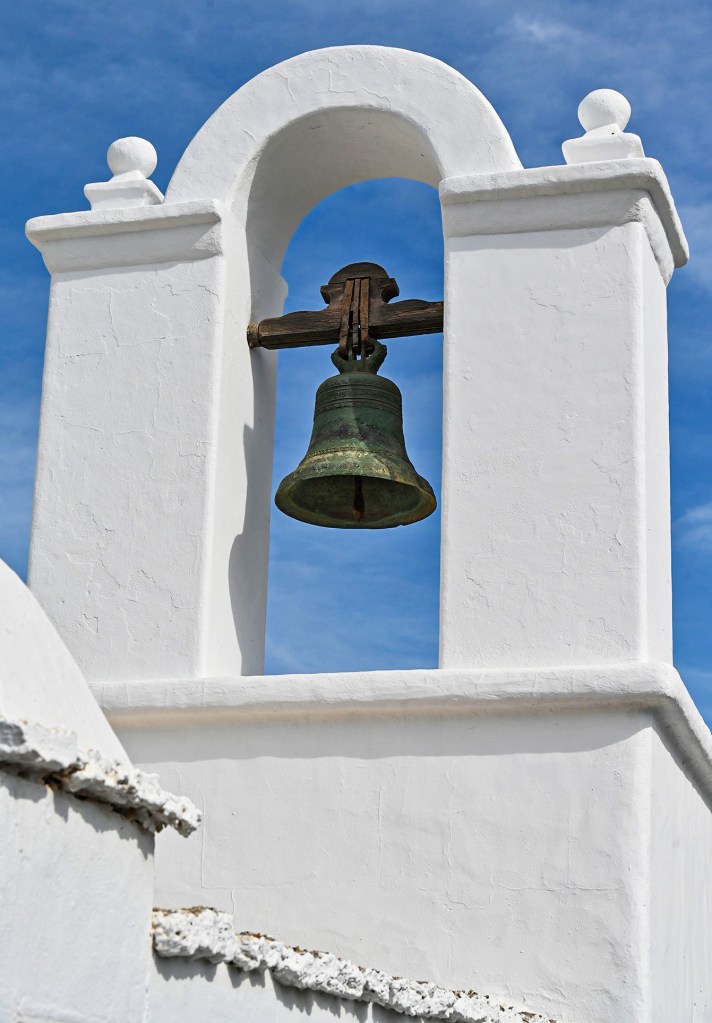
Auditory–Sunday morning church bells ring in the Haría Artesanal announcing the opening of the artisans market.

Somatosensory–In a Guatiza garden, the sensuous touch of a single finger moving along the velvet-textured leaves of aloe and agave terminates in a skin-piercing spine. It’s the age-old seduction of pleasure and pain.

Visual–In the historic quarter of the Villa de Teguise, a pretty girl in a colorful dress seeks shade against a whitewashed wall.

This is the Lanzarote that I will remember.

All images © Jeffrey Cardenas


Sailing is not just about the wind and the sea; equally important are the places where Flying Fish carries me, and the flora, fauna, and people I encounter along the way.

Please click “Follow” at the bottom of this page so that you don’t miss a new update,- and please consider sharing this post with others who might enjoy following the voyage of Flying Fish. I welcome your comments, and I will always respond when I have an Internet connection. I will never share your personal information.

You can follow the daily progress of Flying Fish, boat speed (or lack thereof), and current weather as I sail into the Atlantic by clicking this satellite uplink: https://forecast.predictwind.com/tracking/display/Flyingfish. A Bonus: Click the “Legends and Blogs” box on the right side of the tracking page for passage notes while I am sailing offshore. 

To see where Flying Fish has sailed since leaving Key West in 2017, click here: https://cruisersat.net/track/Flying%20Fish.

Instagram: FlyingFishSail
Facebook: Jeffrey Cardenas

Text and Photography © Jeffrey Cardenas 2021

Let this be a time of grace and peace in our lives   – Fr. John Baker

¡Vamos! Islas Canarias

Flying Fish charging into open water. The challenge, risk, and pure joy of being underway on another ocean passage. Photograph: © Jeffrey Cardenas

Into the blue again, into the silent water
Once in a Lifetime / David Byrne, Brian Eno

Thousands of sea miles have passed under the keel of Flying Fish since I set sail from Key West nearly four years ago. Still, the expectation of a new ocean passage remains as exhilarating as it was on the first day. The next leg of my journey begins soon, from Gibraltar to the Canary Islands, some 700 nautical miles southwest and five days en route.

There will be challenges; I will be 66 years old in a few months. I don’t move as quickly onboard, and I have lost some mobility and balance. These are ordinary issues associated with aging, but they are extraordinary when put into the context of a solo offshore passage.

There will also be risk; the passage along the West African coast is unforgiving and mostly without shelter. I will be traveling on a dark moon. Small Moroccan fishing boats setting nets must be avoided — as well as other boats emerging from the African coastline that may have more sinister intentions. And, in a bizarre twist of nature, there is an issue with aggressive killer whales intentionally colliding with sailing vessels just outside of the Straits of Gibraltar. Since March of this year, there have been more than 50 verified reports of orcas ramming sailboats. Biologists don’t understand why, but half of these encounters have been serious enough to disable boats and require towing to repair facilities ashore.[1]

Regardless of the risk, the pure and absolute joy of setting out on an open ocean passage cannot be overstated. In a world of rapidly diminishing nature, ocean voyaging allows access to one of the few unaltered places remaining on this planet. It is a world of silence and isolation. There can be long periods with no organic sound, generated light, or evidence of other human beings. The ocean provides a sense of timelessness. This is why I go.

I have been landbound for the past month in Gibraltar, but the time ashore has provided a much-needed health and wellness stop for both boat and captain. The sails went to a sailmaker in Tarifa for re-stitching. The captain went into a gym to address added kilos of body weight accumulated from epicurean excesses while cruising Sardinia, the Balearics, and the Costa del Sol. A Hungarian physical trainer in Gibraltar named Rita worked me back into shape.

The passage to the Canary Islands will be one of the final legs of this COVID-interrupted trip around the world aboard Flying Fish. The pandemic took hold of my itinerary two years ago. Now, I am slowly moving again as I anticipate the end of the Atlantic hurricane season. It is an above-average year for tropical cyclone activity. Rapidly warming sea temperatures are spawning stronger and more frequent storms.[2] Most late-season tropical cyclones form over Western Africa, south of the Canary Islands. I will monitor the weather (and the recent volcanic activity) carefully. My favorite sailing partner, Ginny, will join me on the passage from the Canaries to the Caribbean when the hurricane season ends in December. I hope to return home to Florida with Flying Fish in 2022.

Ironically, it is the return home that causes me the most uncertainty. As I sail toward the end of this journey, I wonder how difficult it will be to reckon with life after Flying Fish. In these four years, I floated in a bubble of unreality, immersed in the rarefied air of freedom and privilege while many others around the world could barely hold their heads above the water. I think of the anthem of entitlement, Once in a Lifetime, by songwriters David Byrne and Brian Eno:

“And you may ask yourself, ‘Well, how did I get here?‘”

While I may not fully understand “how I got here,” I am grateful for this time at sea. At the end of this journey, the transition from water to land will be my choice. There will be new challenges ashore during this time of uncertainty; re-socialization, commitment to faith, family, home, and community, and prioritizing my personal health. For me, a greater risk than any danger at sea would be spending the rest of my days in a chair in front of a TV with a cocktail in one hand and a bag of chips in the other. I will not succumb to that life of mediocrity.

I’m getting ahead of myself… For now, it is time to focus on the immediate passage forward. The boat is ready, and I am ready. The weather to Lanzarote looks good. I have route planning to avoid Moroccan nets, and contingencies in place for potential collision with whales. I will keep a sharp mind and maintain situational awareness. And I must stay onboard.

These are days that will sustain me.


Goodbye Gibraltar. The Rock is dissolving into the fog. Photography: © Jeffrey Cardenas

References:

[1] Iberian Orca, Atlantic Orca Working Group, www.orcaiberica.org

[2] NOAA National Hurricane Center

[3] Once in a Lifetime, David Byrne and Brian Eno, https://youtu.be/5IsSpAOD6K8


Sailing is not just about the wind and the sea; equally important are the places where Flying Fish carries me.

Please click “Follow” at the bottom of this page so that you don’t miss a new update, and please consider sharing this post with others who might enjoy following the voyage of Flying Fish. I welcome your comments, and I will always respond when I have an Internet connection. I will never share your personal information.

You can follow the daily progress of Flying Fish, boat speed (or lack thereof), and current weather as I sail into the Atlantic by clicking this satellite uplink: https://forecast.predictwind.com/tracking/display/Flyingfish. A Bonus: Click the “Legends and Blogs” box on the right side of the tracking page for Passage Notes once I am en route to the Canaries. 

To see where Flying Fish has sailed since leaving Key West in 2017, click here: https://cruisersat.net/track/Flying%20Fish.

Instagram: FlyingFishSail
Facebook: Jeffrey Cardenas

Text and Photography © Jeffrey Cardenas 2021

Let this be a time of grace and peace in our lives   – Fr. John Baker