The Eyes Have It!

The Copperband butterflyfish confuses predators with its small camouflaged eye and a more prominent false eye on its posterior fin. Photograph © Jeffrey Cardenas 2024

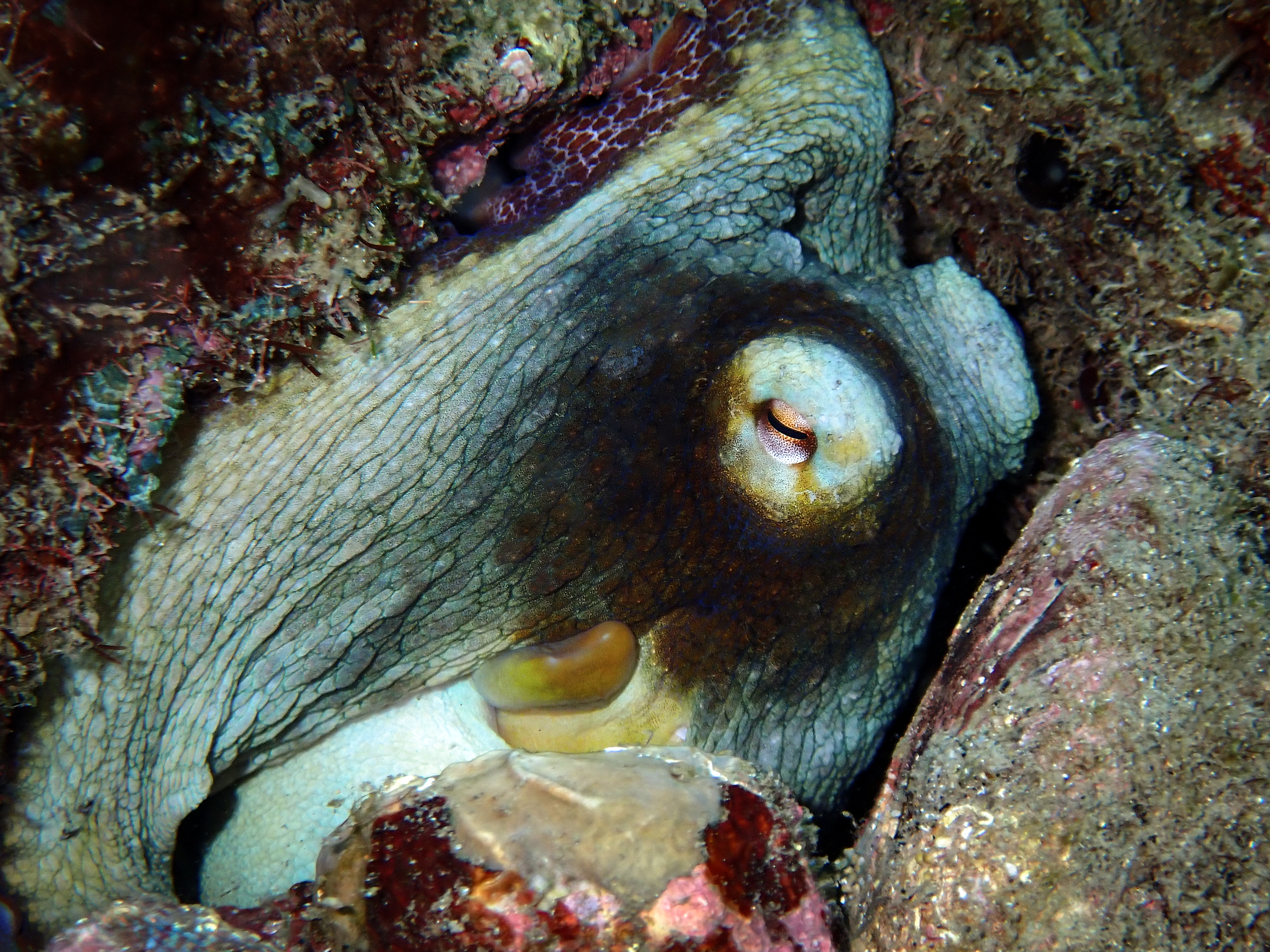
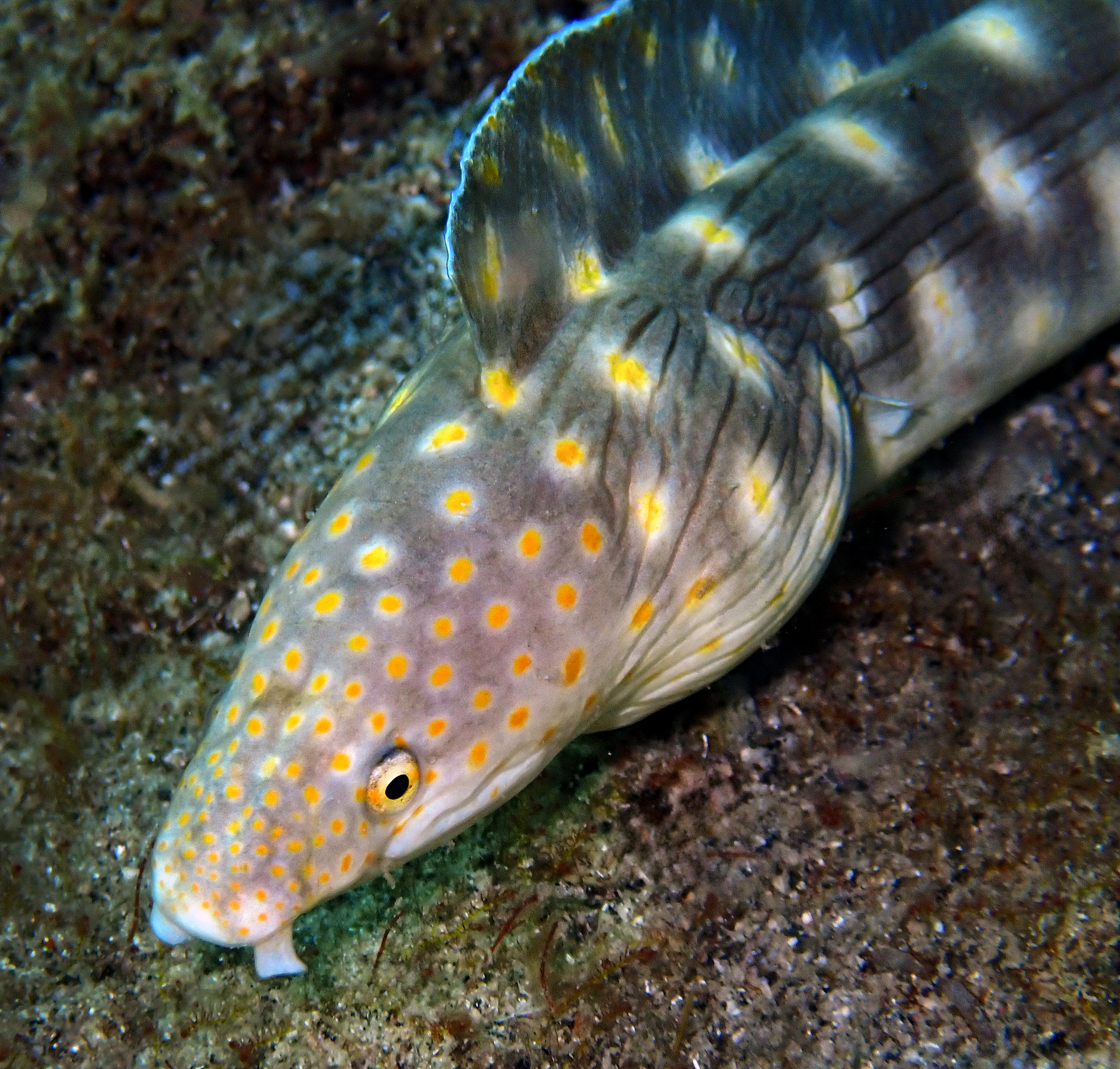
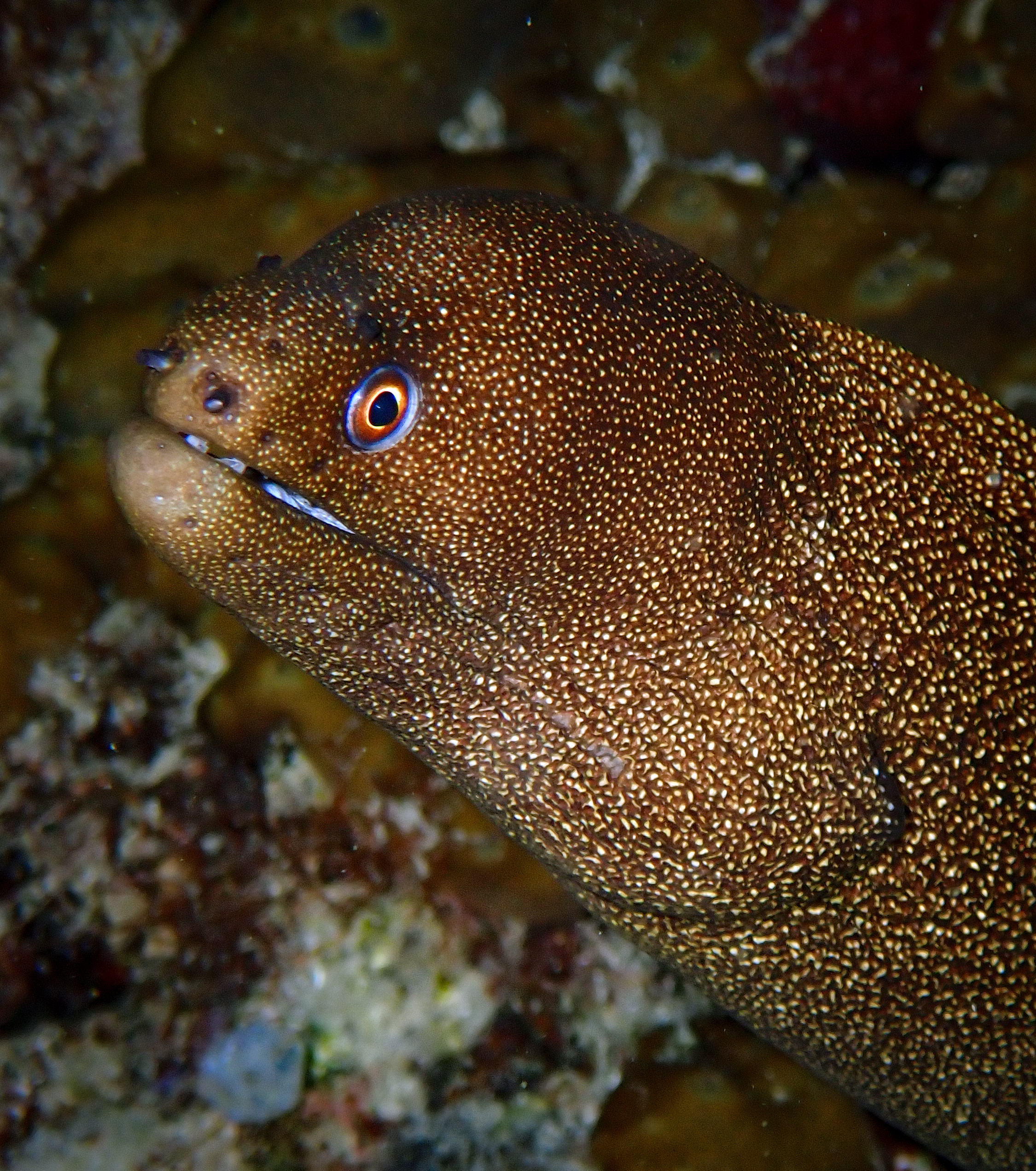
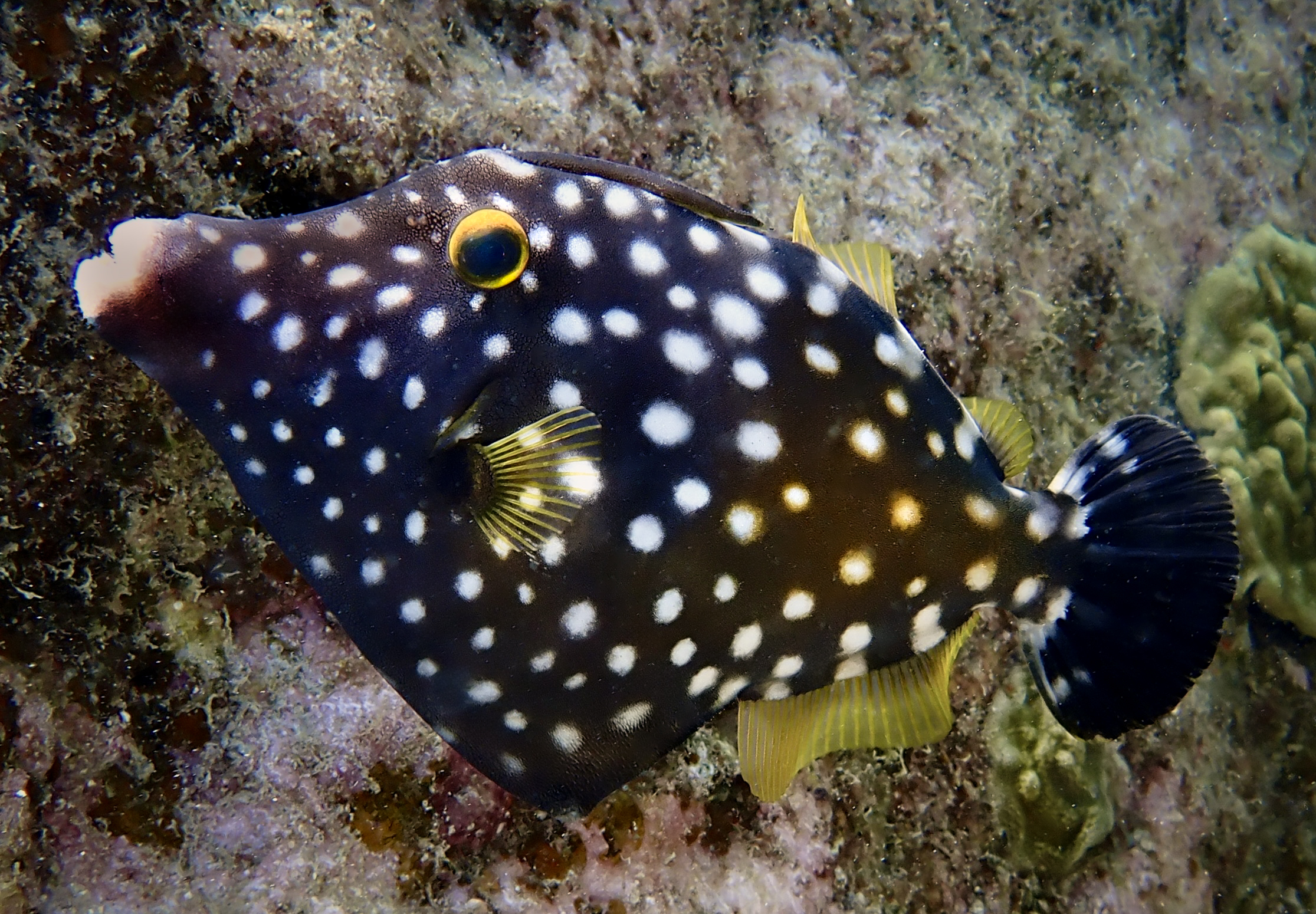
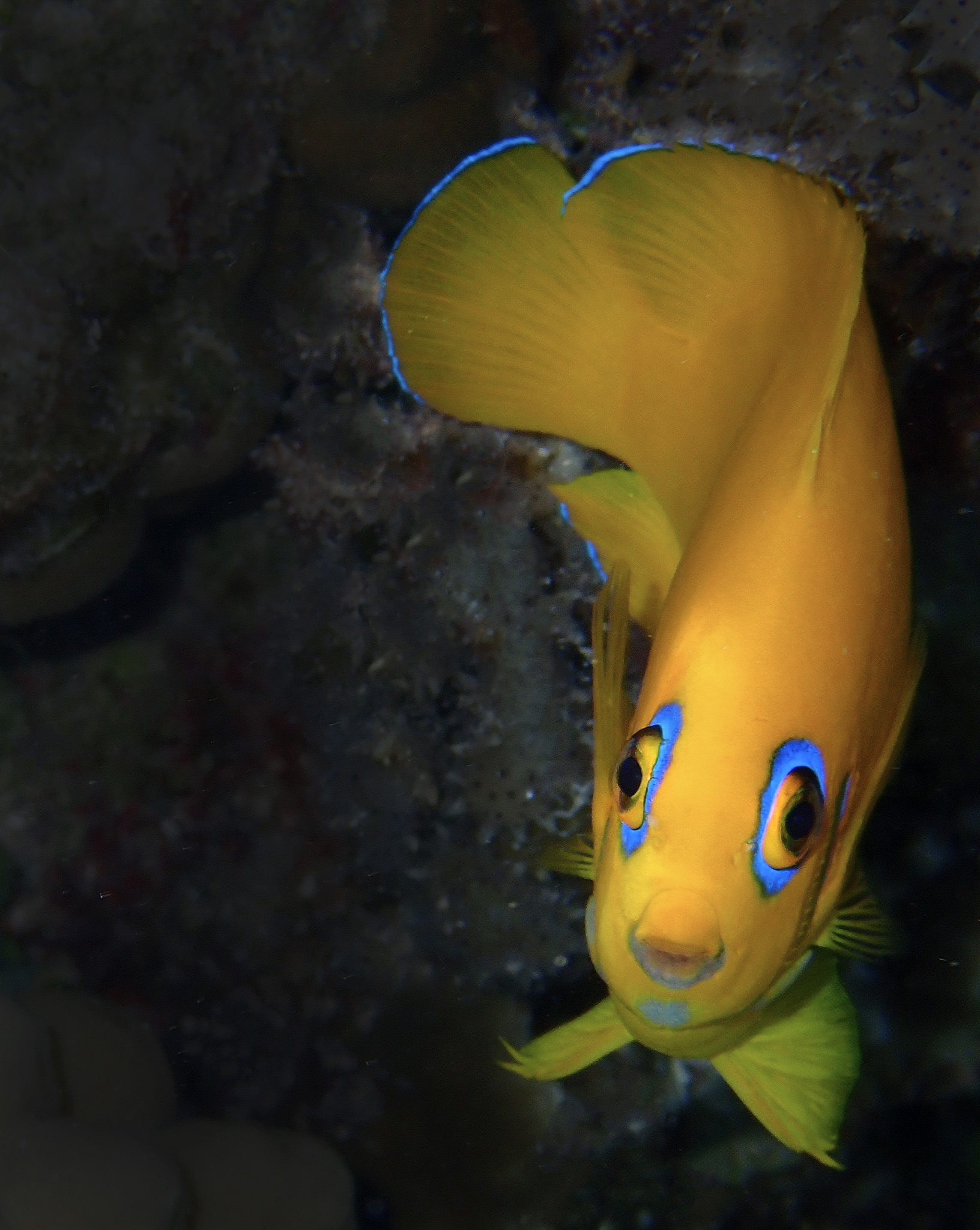
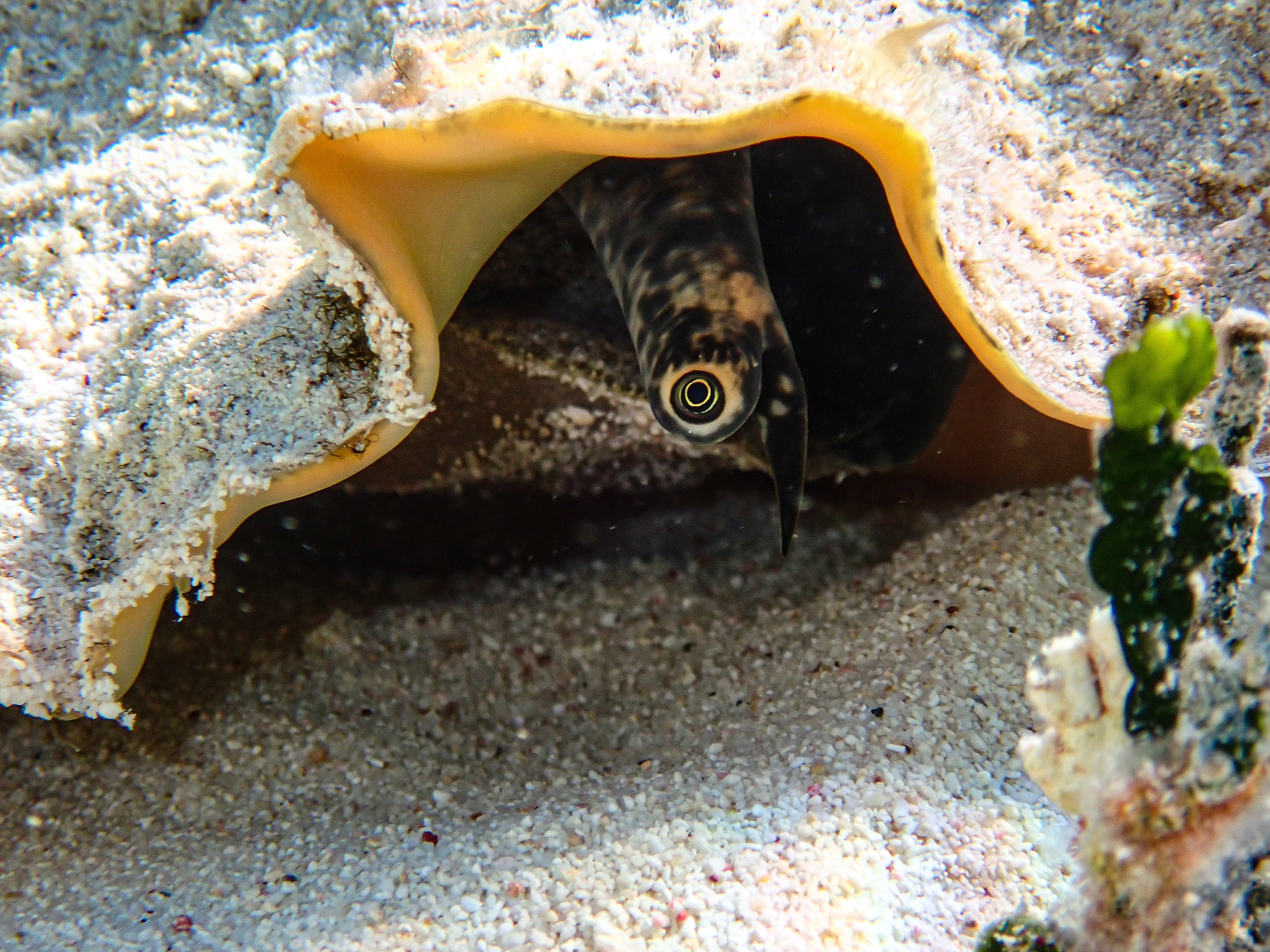
When we dive underwater, we observe a world inhabited by some of the most fascinating creatures on the planet. Imagine what these creatures experience when a terrestrial biped (us) suddenly appears in their environment. Then, it becomes the observer who is being observed. We are, after all, guests in their house.

There is much science regarding what fish and other sea life see underwater. Fish have spherical lenses in their eyes, which provide clarity, whereas human lenses are relatively flat. Our vision is blurred underwater (unless we wear a dive mask), but fish see everything. Fish also see a visible spectrum that is different from humans. Simply put, fish can see things underwater that humans cannot, even when we wear a mask. Marine reptiles are no exception; a sea turtle’s eye allows them to detect the glow of bioluminescent prey. Some fish, like bonefish, have a membrane over their eyes—like a diver’s mask—that allows them to forage in sand and silt to find food. Sharks may rely on scent and sensory input, but their eyesight is also remarkable. Marine biologists suggest that a shark’s vision may be 10 times better than that of humans in clear water.

That’s all fascinating stuff, but I don’t think about science when I put on a mask and snorkel to free dive on a coral reef. Instead, I am grateful for the privilege of sharing this undersea world, so I tread softly. I enter the water quietly, with minimal gear, and move slowly. I know that everything with eyes underwater watches me to perceive what threat I might pose. I de-escalate. When I minimize my presence, fish become as interested in me as I am with them.

The more opportunities I have to interact with the marine environment, the greater my respect is for a world I once took for granted. All it took was a little bit of eye contact.

Select an individual photo for a high-resolution image. Then, click on the information icon for camera data and additional information about the sea life. All images © Jeffrey Cardenas 2024


As always, sailing is not just about the wind and the sea; the places, the flora, fauna, and people encountered along the way are equally important.

Please click “Follow” so you don’t miss a new update, and please consider sharing this post with others who might enjoy connecting with the voyage. I welcome your comments and will always respond when I have an Internet connection. I will never share your personal information.

An additional website, www.JeffreyCardenas.com, features hundreds of fine art images—underwater, maritime landscapes, boats, and mid-ocean sailing photography–from exotic locations worldwide.

Upcoming Exhibition: “On the Reef” will exhibit in The Studios of Key West’s Zabar Project Gallery, on view from January 2–30, 2025.

Instagram: StellaMarisSailing / Facebook: Jeffrey Cardenas

Text, Photography, and Videos © Jeffrey Cardenas 2024

Let this be a time of grace and peace in our lives – Rev. John C. Baker
A Hidden World Protected

Eleuthera’s New Seahorse National Park

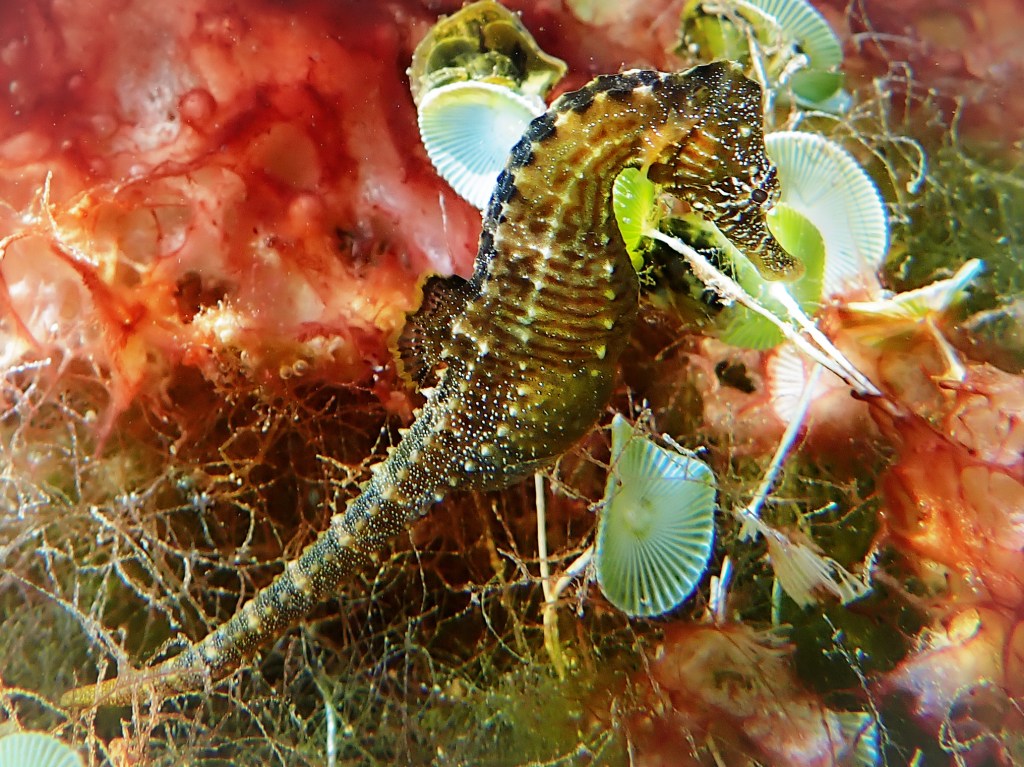
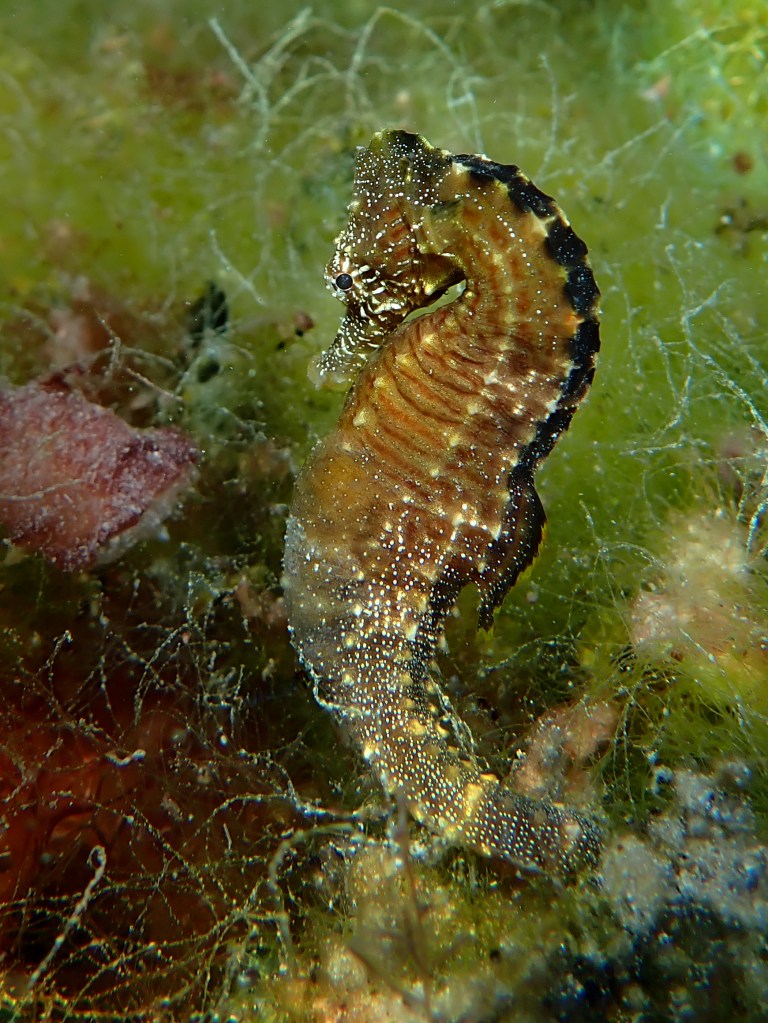
This proud papa, a lined seahorse, flaunts his pregnancy with a swollen brood pouch and will soon give live birth to hundreds of baby seahorses. Photograph: © Jeffrey Cardenas

I am channeling Charles Darwin today as I step out of the thick Bahamian scrub and into a landlocked pool of anchialine water in Central Eleuthera known as Sweetings Pond.

This body of water, fed from a maze of subterranean connections to the ocean, is teeming with bizarre life forms. They include the red flame scallop (which is actually a clam) that can dislodge itself from the seabed and “walk” away from predators by clapping its valves together. And then there is a gelatinous sea slug called a fringeback nudibranch with sharply serrated gill fingers and long tendrils that pulsate in shades of aquamarine. But the show-stopper is a mutated miniature lined seahorse with enough characteristics from two distinctly different types of seahorses that some marine biologists think we could be witnessing the evolution of an entirely new species.

Protecting the 500-acre Sweetings Pond with its unique biodiversity has been a quiet mission for conservationists. Until recently, researchers and locals managed to keep its location a secret. In its anonymity, the pond faced no immediate danger. However, the rampant development of resorts and marinas in the Bahamas, as well as other threats including agricultural runoff and poaching has encouraged marine researchers and governmental organizations like the Bahamas National Trust to push for the preservation of this rare habitat.

One of those researchers, Dr. Heather Masonjones from the University of Tampa, has been studying the seahorse population in Sweetings Pond for over five years. In an interview with BBC Wildlife magazine, she said that the pond may have one of the most densely populated seahorse communities anywhere on Earth. She hopes the protection of the pond brings sustainable tourism that will educate people about seahorses and contribute to improving their conservation worldwide. “If we don’t take action it could be lost forever.”

Several weeks ago, the Bahamian government formally designated Sweetings Pond as its newest National Park. “The declaration of Seahorse National Park is more than just a designation,” said Lakeshia Anderson-Rolle, Executive Director of Bahamas National Trust. “It is our shared promise to our community, to future generations, and to the world that we are committed to conserving our unique and diverse ecosystems.”

Click on a photograph above for a larger, full-resolution image. All photographs © Jeffrey Cardenas


Thanks for sailing along with Stella Maris.

As always, sailing is not just about the wind and the sea; equally important are the places, the flora, fauna, and people encountered along the way.

Please click “Follow” so that you don’t miss a new update,- and please consider sharing this post with others who might enjoy following the voyage. I welcome your commentsand I will always respond when I have an Internet connection. I will never share your personal information.

Instagram: StellaMarisSailing
Facebook: Jeffrey Cardenas

Text and Photography © Jeffrey Cardenas 2023

Let this be a time of grace and peace in our lives”   – Fr. John Baker