A Beautiful Thing

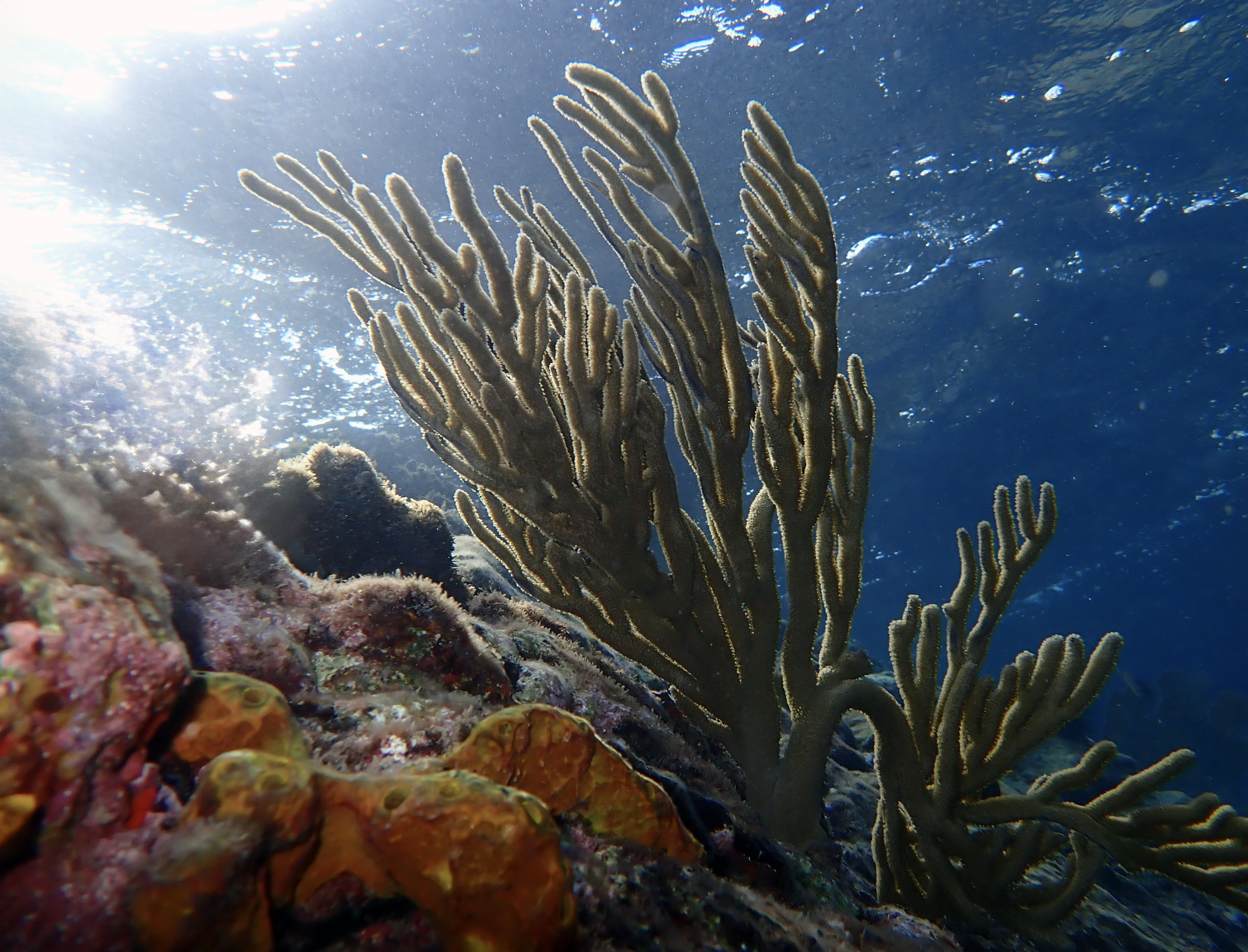
As I sail north out of the Caribbean Sea, I have spent much of the last month diving over dead and dying coral reefs. I try not to focus on this. There is enough despair in the world these days without highlighting any more of it. I prefer instead to acknowledge isolated moments of beauty and hope. This morning, while snorkeling over another reef of broken coral rubble, I was heartened by the sight of a tiny coral farm attached to the bottom of the bay.

Bahía Tamarindo Grande is on the northwest coast of the island of Culebra in the Spanish Virgin Islands. It is an isolated stretch of land with no development and no roads. There are flowering frangipani, a symphony of birdsong echoing in the trees, and a deserted white sandy beach. In contrast, a sign warns visitors not to pick up unexploded ordnance. This area east of Puerto Rico was once a bombing and artillery range for the U.S. military. Nearby, a Sherman tank is rusting on the beach.

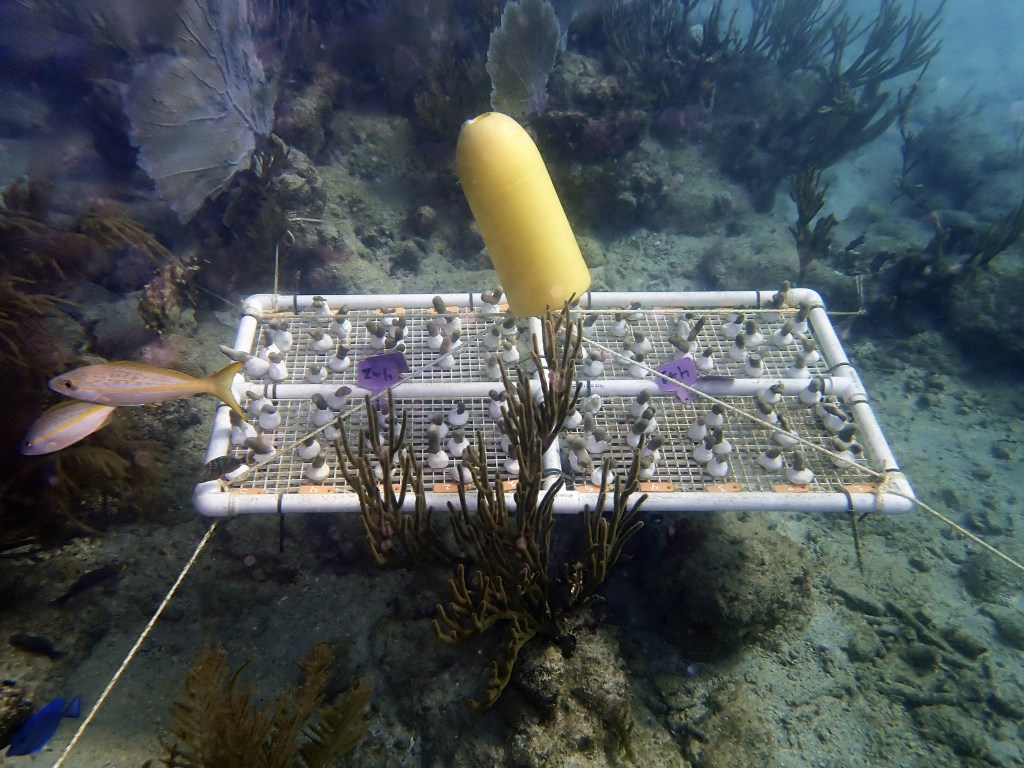
The coral farm, suspended 20 feet underwater, has no identification plate or surface buoy to mark its location. It’s not shown on any nautical charts. It is simply a submerged platform the size of a backyard vegetable plot. Instead of growing lettuce and carrots, some anonymous person has planted branched finger coral. About 80 coral nubs are mounted on a plastic grid, and they are thriving.

There is nothing new about the aquaculture of coral. One of the first successful coral propagation attempts occurred at New Caledonia’s Nouméa Aquarium in 1956. Commercial coral propagation began in the United States in the 1960s. Still, it wasn’t until worldwide coral populations began to crash in the 1980s that the industry focused on propagating coral for oceans instead of aquariums.

Then, in April 2006, the Margara, a 750-foot tanker carrying over 300,000 barrels of fuel oil, ran aground on a shallow coral reef in Puerto Rico’s Bahía de Tallaboa. No oil was spilled, but the grounding and efforts to remove the vessel destroyed 6,755 square meters of reef, including six species of coral protected under the Endangered Species Act. Emergency restoration by NOAA and the Puerto Rico Department of Natural and Environmental Resources saved approximately 10,500 coral colonies in the affected reef by using farmed corals from nurseries and transplanting them back onto the ocean floor.

As coral populations diminish due to human negligence and climate change, it may seem that coral is disappearing faster than it can be replaced. This does not deter the efforts of research and conservation groups such as the Mote Marine Laboratory, which has restored more than 216,000 corals to Florida’s reefs. Notably, some restored corals are now naturally reproducing to create new generations of coral.

The Coral Restoration Foundation in the Florida Keys is also succeeding in growing coral that reproduces both sexually through spawning and asexually through fragmentation (where a small piece of coral can reattach and develop into a new colony). Since 2012, the Coral Restoration Foundation has transplanted more than 220,000 corals onto Florida’s reef, restoring over 34,000 square meters of habitat.

Back in Culebra, local commercial fishermen proposed the establishment of the Luis Peña Channel Natural Reserve to replenish local fish stocks and protect the coral reefs. This reserve encompasses Bahía Tamarindo Grande, home to the coral farming garden plot. It is the first no-take marine protected area designated in Puerto Rico. The mission statement is simple: The health of coral reefs directly depends on strong reef fish populations. Fish and other animals, such as lobsters and shellfish, rely on the health of the coral reef. The livelihoods and culture of the people of Culebra depend on healthy coral reefs.

An image from the NASA Earth Observatory of Culebra Island, located about 17 miles east of Puerto Rico. 

As always, sailing is not just about the wind and the sea; the places, the flora, fauna, and people encountered along the way are equally important.

Please click “Follow” so you don’t miss a new update, and please consider sharing this post with others who might enjoy connecting with the voyage. I welcome your comments and will always respond when I have an Internet connection. I will never share your personal information.

An additional website, www.JeffreyCardenas.com, features hundreds of fine art images—underwater, maritime landscapes, boats, and mid-ocean sailing photography–from exotic locations worldwide.

Upcoming Exhibition: “On the Reef” will be exhibited in The Studios of Key West’s Zabar Project Gallery, on view from January 2–30, 2025. 

Instagram: StellaMarisSailing / Facebook: Jeffrey Cardenas

Text, Photography, and Videos © Jeffrey Cardenas 2024

Let this be a time of grace and peace in our lives – Rev. John C. Baker

Barnacle Sex, Sailors, and Charles Darwin

Giant ribbed volcano barnacles cluster on a boulder at Moonhole Reef in the Grenadines. Photograph: © Jeffrey Cardenas

Welcome to the wonderful world of barnacles…

Wait–before you stop reading–did you know that:

  • Barnacles are related to lobsters
  • Barnacles nearly drove Charles Darwin crazy while he was researching The Origin of the Species
  • Barnacles have no heart
  • Barnacles have the largest relative penis size in the natural world

All true. 

Sailors throughout history have despised the lowly barnacle. They grow quickly on the bottom of a boat, causing hydrodynamic drag that can bring even racing sailboats to a near standstill. Several singlehanded sailors in the most recent Golden Globe race around the world had to dive overboard in the chilly Southern Ocean to remove masses of gooseneck barnacles. Racer Jeremy Bagshaw’s boat, Olleanna, could barely move because of an infestation of barnacles. He said, “I didn’t have enough food to go around the world at three knots.” He could have eaten the gooseneck barnacles. They are considered a delicacy in many parts of the world and sell for as much as $100 a pound. One reviewer said they taste like “eating the sea.” Jeremy Bagshaw didn’t want to eat the sea. He just wanted to sail home.

Barnacles have existed for at least 325 million years, which has a lot to do with the fact that they are really good at making baby barnacles. Described as, among other things, the “genitalia of the sea,” barnacles have had to evolve creatively to survive. They are sessile, meaning they are permanently attached to one place and cannot leave their shells to mate. Some barnacles evolved as hermaphrodites. Another way they facilitate genetic transfer between isolated individuals is with extraordinarily long penises⁠. “Barnacles probably have the largest penis-to-body size ratio of the animal kingdom,” according to a report in New Scientist Magazine. “On exposed shores,” the report continues, “it’s better for barnacles to grow shorter, thicker penises” so that the sexual organ is not damaged in rough sea conditions. Regardless of diameter, the penis of a barnacle only lasts for one mating season, and it is then discarded. Fortunately, it will grow a new one the following year.

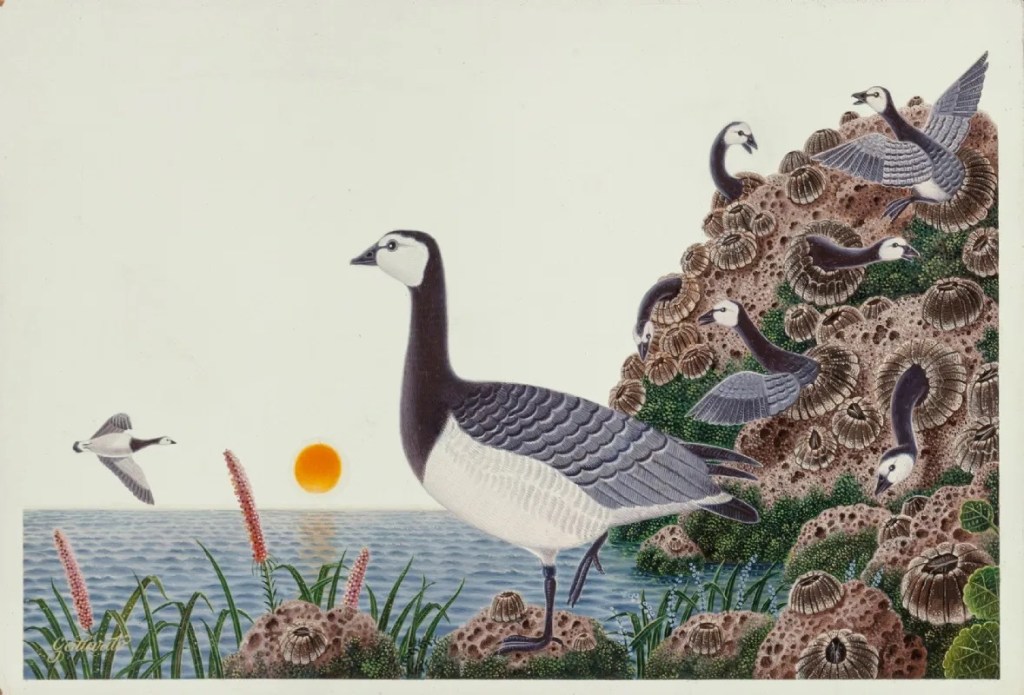
While the science of a barnacle’s sex life is strange, the medieval bestiary folklore about these creatures is downright bizarre. The 12th-century religious historian, Gerald of Wales, proclaimed that geese (yes, birds) hatched from barnacles attached to driftwood. He wrote: “They hang down by their beaks as if they were a seaweed attached to the timber. I have frequently seen, with my own eyes, more than a thousand of these small bodies of birds, hanging down on the sea-shore from one piece of timber, enclosed in their shells, and already formed.” For some reason, there is a statue honoring Gerald of Wales in Britain’s St Davids Cathedral.

In the 1600s, another disreputable English author and illustrator, John Gerard, perpetuated the myth by claiming to have seen geese emerging from the shells of barnacles. The legend persisted through the 1800s, when, even while the Industrial Revolution was occurring in Britain, some people apparently still believed that live birds emerged from the shells of marine invertebrates.

Famed naturalists Carl Linnaeus and Georges Cuvier were more rational in their observations, but they were convinced that barnacles were mollusks. In 1830, a lesser-known naturalist named William Thompson proved them wrong, and, in a radical reinterpretation of taxonomy, barnacles were reclassified as crustaceans.

Still another Englishman of letters—Charles Darwin, no less—became inspired by barnacles. Inspiration turned into obsession, and Darwin spent eight years trying to understand them. Darwin often worked through the night beneath an oil lamp, dissecting barnacles under the microscope in a room thick with the vapors of preserving spirits. He suffered migraines and intestinal distress, even nightmares. Doctors begged him to stop. Darwin refused. He had begun seeing variations in barnacles no one had ever noticed. His work resulted in a 4-volume monograph on barnacles, living and extinct, and it helped him refine his theory of evolution by natural selection.

Afterward, when asked by an old friend about his passion for barnacles, Darwin responded, “I hate a Barnacle as no man ever did before, not even a Sailor in a slow-sailing ship.”

Geese emerging from barnacles by Gervasio Gallardo

As always, sailing is not just about the wind and the sea; the places, the flora, fauna, and people encountered along the way are equally important.

Please click “Follow” so you don’t miss a new update, and please consider sharing this post with others who might enjoy connecting with the voyage. I welcome your comments and will always respond when I have an Internet connection. I will never share your personal information.

An additional website, www.JeffreyCardenas.com, features hundreds of fine art images—underwater, maritime landscapes, boats, and mid-ocean sailing photography–from exotic locations worldwide.

Upcoming Exhibition: “On the Reef” will be exhibited in The Studios of Key West’s Zabar Project Gallery, on view from January 2–30, 2025. 

Instagram: StellaMarisSailing / Facebook: Jeffrey Cardenas

Text, Photography, and Videos © Jeffrey Cardenas 2024

Let this be a time of grace and peace in our lives – Rev. John C. Baker
A Volcano and Murder, Perseverance and Hope

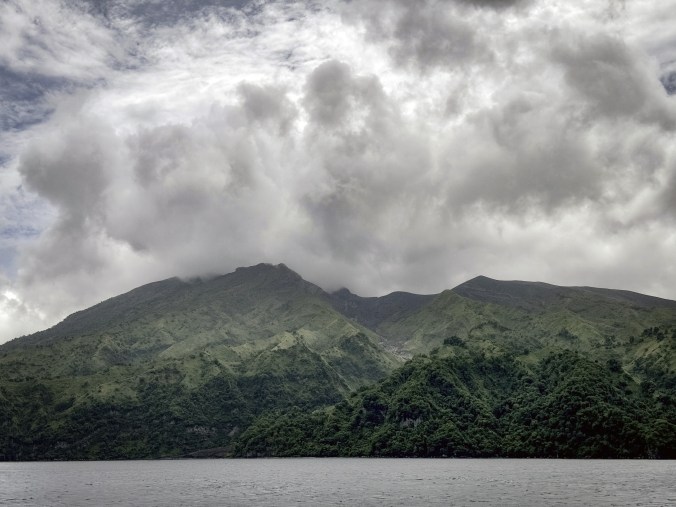
The crater of St. Vincent’s La Soufrière, which erupted in 2021

This lovely coastline of Wallibou, in northwest St. Vincent, has suffered greatly in recent years from both man and nature.

Three years ago, the still-active volcano La Soufrière erupted with a devastating blast that displaced 16,000 residents. Smoke and ash covered the island and closed airspace as far away as Barbados.

Then, only several months ago, the sailing catamaran Simplicity was discovered abandoned here with “copious amounts of blood” covering the interior. Police said the American-owned sailboat was hijacked in nearby Grenada by three West Indian assailants and brought to Wallibou. The bodies of Kathy Brandel, 71, and Ralph Hendry, 66, were never found.

Life continues despite the tragedies here. When I arrived in the Chateaubeliar village yesterday, a fisherman in a rowboat dropped off three avocados as a welcoming gift. Ashore, boys fished with handlines for jack mackerel from the rebuilt village pier. And at midnight, I was awakened by the local church’s gospel singing.

The fishing village of Chateaubeliar. Soft coral thrives on a volcanic reef. This is Deacon; he provides yacht security. Photographs © Jeffrey Cardenas

I could have avoided this small fishing village along Wallibou’s coastline. Guidebooks recommend caution, and not many sailboats anchor here anymore. Instead, my visit to Chateaubeliar gave me a lesson in the power of perseverance and hope.


As always, sailing is not just about the wind and the sea; the places, the flora, fauna, and people encountered along the way are equally important.

Please click “Follow” so you don’t miss a new update, and please consider sharing this post with others who might enjoy connecting with the voyage. I welcome your comments and will always respond when I have an Internet connection. I will never share your personal information.

An additional website, www.JeffreyCardenas.com, features hundreds of fine art images—underwater, maritime landscapes, boats, and mid-ocean sailing photography–from exotic locations worldwide.

Instagram: StellaMarisSailing / Facebook: Jeffrey Cardenas

Text, Photography, and Videos © Jeffrey Cardenas 2024

Let this be a time of grace and peace in our lives – Rev. John C. Baker
Be Like Ike

Photograph © Jeffrey Cardenas 2024

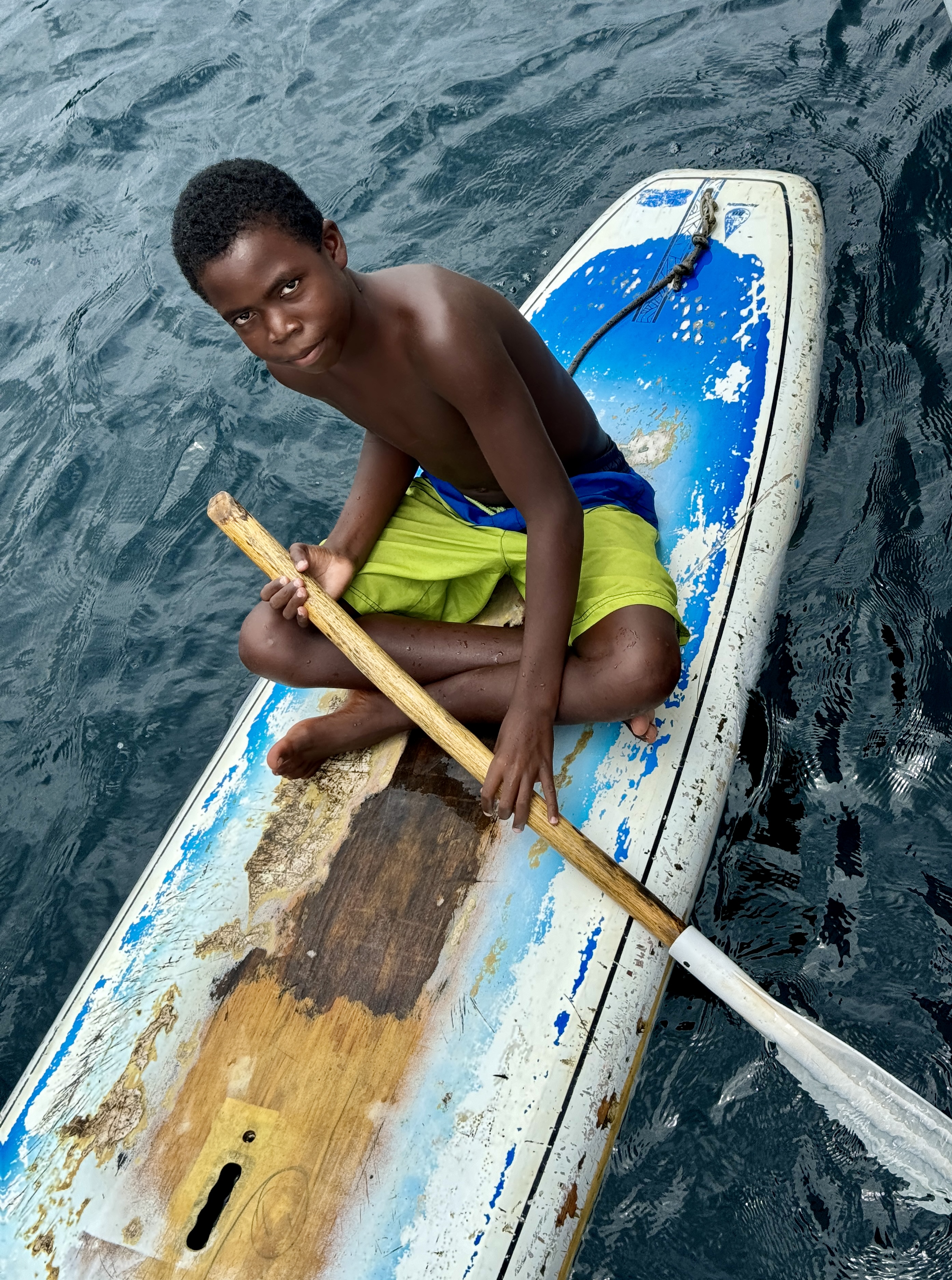
Meet Ike Albert, unofficial yacht ambassador, accomplished net fisherman, and grassroots conservationist. He’s 15 years old.

When foreign-flagged boats arrive in Saint Lucia’s Anse Cochon, Ike is there quickly in his tiny yellow kayak to assist with mooring lines or anchoring help. He will bring mangoes and avocados and freshly baked bread. Unlike other boat boys who aggressively swarm new arrivals with demands for beer and money, Ike knows that a soft sell is more effective.

“Welcome,” he says. “Tell me how I can help you.

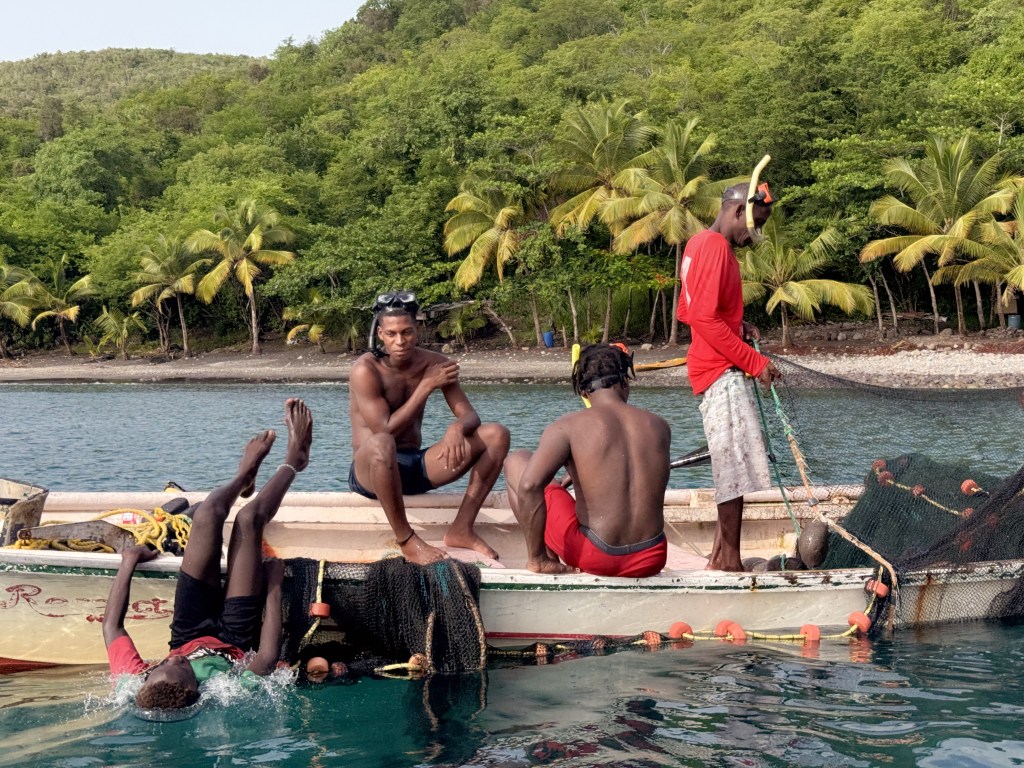
Ike lives in a nearby fishing village called Canaries. On this day, when his family’s relatives arrive in Anse Cochon to fish from a small wooden net boat called Respect, Ike dives in to help. He is the point man pulling the rope of a net that is weighted with boulders. Several hundred feet of net are set to catch sardines, small jackfish, and ballyhoo. This fishing uses no winches or pulleys; it is an art of pure manual labor.

An hour later, when the net is finally at the boat side, it reveals a subsistence catch. The family is delighted. They will eat fresh fish tonight, and maybe have a little extra to sell in the market.

Afterward, covered in fish scales and sweat, Ike climbs back onto his kayak. But before he embarks on the long paddle home to Canaries, he dives back into the water and surfaces with an armful of empty beer bottles, Coke cans, and plastic bags thrown into the water by day trippers on the tourist catamarans.

“The people on these tourist boats think that when they throw garbage into the water, it just goes away.”

That’s progressive thinking for a 15-year-old.

Be like Ike.

All images © Jeffrey Cardenas 2024


As always, sailing is not just about the wind and the sea; the places, the flora, fauna, and people encountered along the way are equally important.

Please click “Follow” so that you don’t miss a new update,- and please consider sharing this post with others who might enjoy following the voyage. I welcome your comments and will always respond when I have an Internet connection. I will never share your personal information.

Instagram: StellaMarisSailing / Facebook: Jeffrey Cardenas

StellaMarisSail.com has spawned a new website: www.JeffreyCardenas.com. This site, Jeffrey Cardenas Photography, features hundreds of fine art images — Underwater, Maritime Landscapes, Boats, and Mid-Ocean Sailing photography from exotic locations worldwide.

Text, Photography, and Videos © Jeffrey Cardenas 2024

Let this be a time of grace and peace in our lives – Rev. John C. Baker

Hispaniola

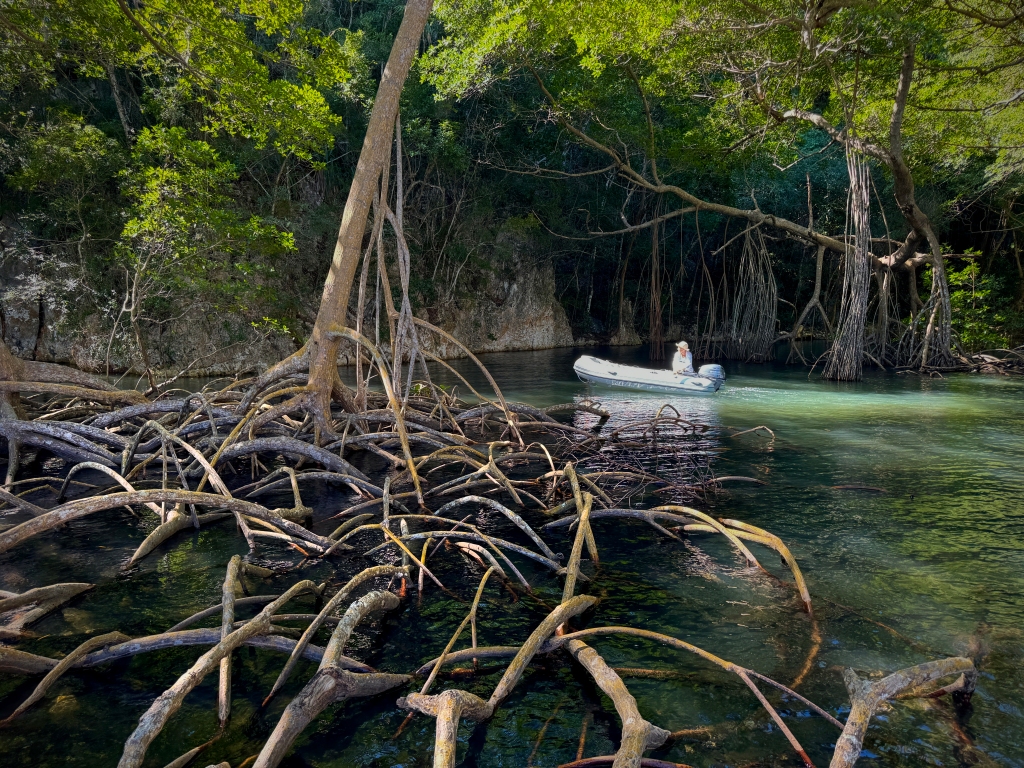
Feeling the life force of the indigenous Taíno among the ancient mangroves roots of Los Haitises
© Jeffrey Cardenas 2024

A thin red line bisects the island of Hispaniola. On one side of the line, there is a world of chaos and rage this week as 4,000 of Haiti’s most notorious inmates escaped prison in a machete-wielding bloody rampage. They are terrorizing the countryside and remain loose in the shadows of the island as Haiti declares a state of emergency.

On the same island, but on the other side of this geopolitical line, is the Dominican Republic. This is a pastoral environment of natural beauty where nature thrives and men and women work peacefully with their hands to feed their families.

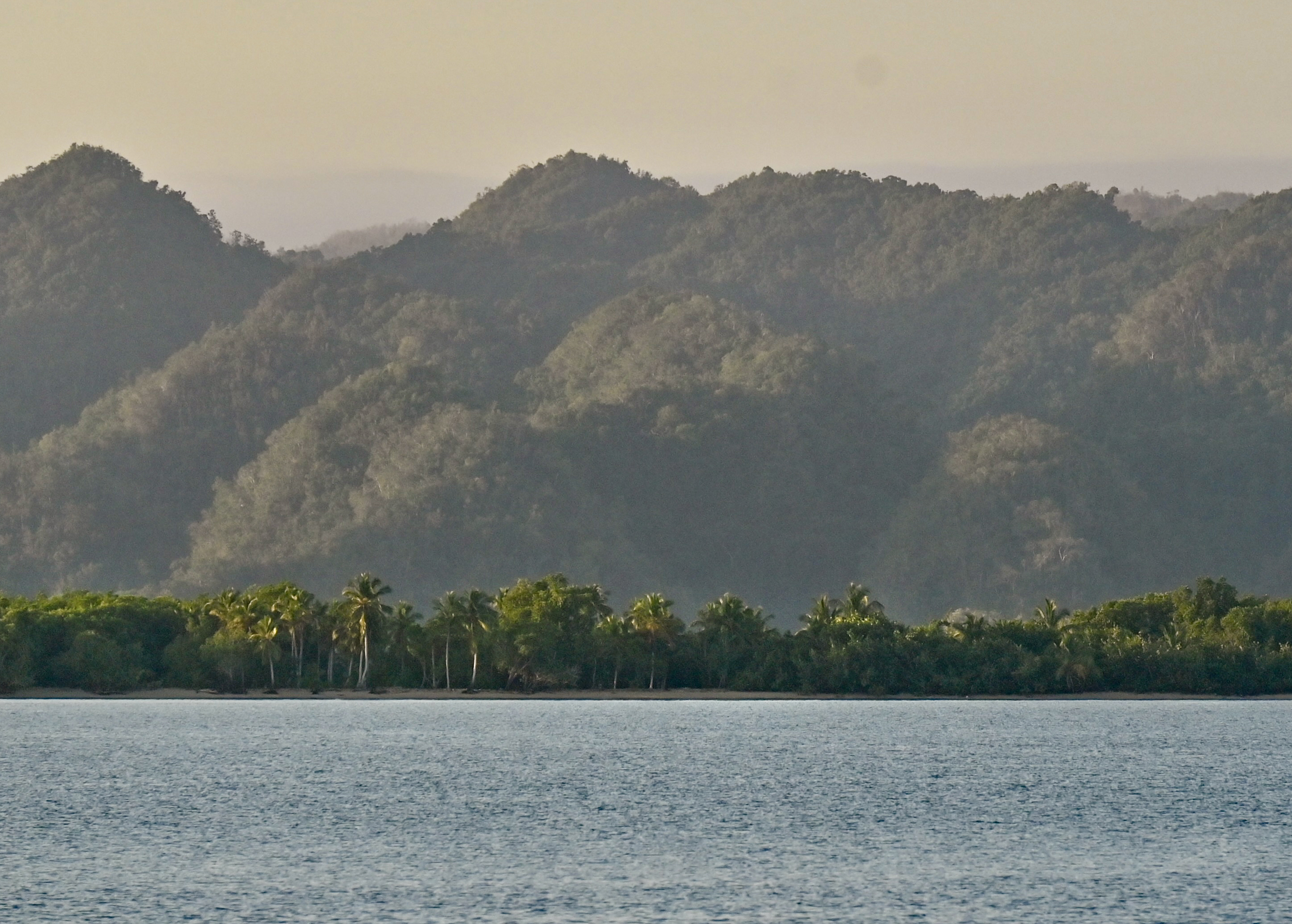
Several weeks ago, Stella Maris ghosted up to an isolated shoreline of Hispaniola–on the Dominican side. Los Haitises National Park is the Dominican Republic’s most important natural and cultural preserve. Amid the quiet pockets of dense mangrove and subtropical forest, spectacular limestone walls rise from the sea. It is difficult to comprehend why one-half of this island is literally and figuratively on fire, while on this half of Hispaniola, there is an undisturbed natural world of calm and tranquility.

One of the reasons I sail to isolated parts of the world is to try to understand this disparity. Sailing is not always just a simple escape from reality; I recognize the hardship, hate, and despair that is consuming so much of the world around us. Sailing helps me find a balance. As I travel, I choose to be a collector of moments that bring joy and hope. I found those moments in the nature of Los Haitises.

Along this wild shoreline, it is also possible to feel the ancient life force of the Taíno inhabitants who settled the entire island of Hispaniola 2,000 years ago. Christopher Columbus colonized the island of Hispaniola during his first voyage to the Americas in 1492. That voyage was the beginning of the end for the indigenous people. The native Taínos quickly suffered a steep population decline due to brutal enslavement, warfare, and intermixing with the Spanish colonizers.

Two hundred and fifty years later, a political division of Hispaniola occurred as France and Spain each struggled to control the island. They resolved their dispute in 1697 by splitting the island into two colonies, France holding what would be Haiti to the west and Spain taking control of the Dominican Republic to the east. Those colonial chains were finally severed on both sides of the island after two bloody wars of independence in 1804 and 1865. Haiti would eventually become the poorest country in the Western Hemisphere, while the Dominican Republic developed into one of the largest economies in the region.

The Taíno indigenous people, meanwhile, were the ultimate losers in this struggle. Some 90% of Taíno civilization was lost to a European genocide of slavery and sickness. Remnants of the lost Taíno culture can still be found in the 618-square-mile Los Haitises National Park.

Click on a picture in this gallery for a high-resolution version of the image

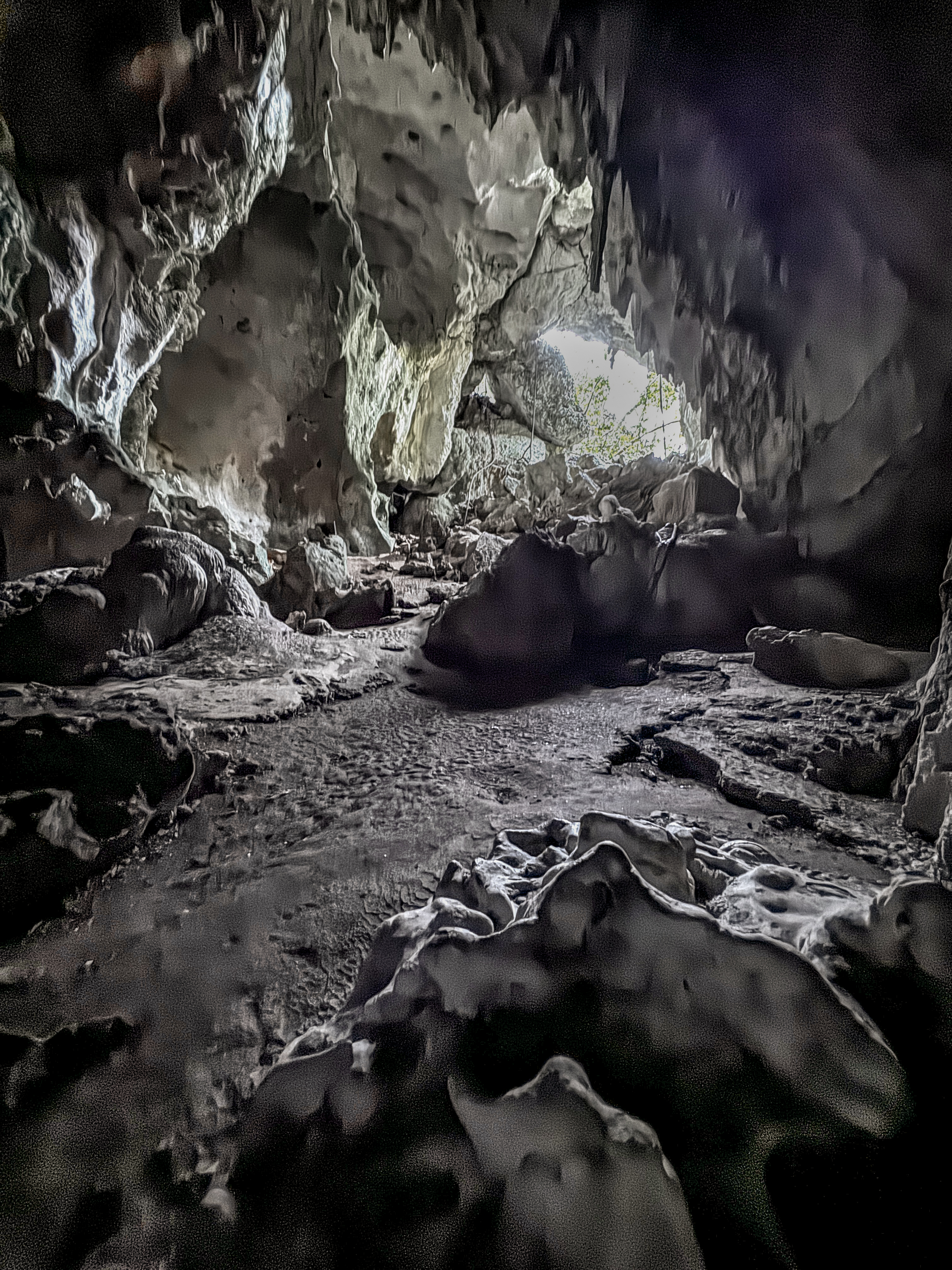
We anchor the Stella Maris to explore the massive caves emerging from the limestone karsts on the rugged southern shore of the Dominican Republic’s Golfo del Samaná. Deep inside the more remote caves there are authenticated petroglyphs and pictographs dating back a thousand years. The images depict birds, whales, and, on one wall, the fading image of an ancient shaman. Sadly, where tour groups have frequented the caves, there is also graffiti and empty soda bottles.

Ginny and I hike an overgrown trail up a steep conical hillside to the ruins of a cacao, ginger, and breadfruit plantation. Nothing remains of the overgrown settlement except a lone, untethered donkey standing in a rare patch of sunlight nibbling at the subtropical understory. A critically endangered Ridgway’s Hawk watches our movement from a high branch. A tiny Vervain Hummingbird hovers near a patch of ginger. Later, I find a rock-polished donkey shoe buried in the mud of the trail.

Author Jared Diamond, Professor of Geography and Physiology at the University of California, writes that there is no simple answer to the conundrum of Hispaniola. In an interview with NPR, he said, “It’s a complex mix of history and environment, plus social and political policy.”

Flying from Miami to Santo Domingo, the border is well defined: On the Haitian side, the earth is a scorched brown with two centuries of deforestation and erosion. The Dominican side, where conservation initiatives are apparent, is a verdant green. Six months ago, the Dominican Republic and Haiti closed the land, sea, and air borders between the two countries. 

Today, gangs in Haiti surround the country’s main airport in the capital of Port-au-Prince, making it impossible for Prime Minister Ariel Henry to return to Haiti after an international trip abroad. Haiti’s most prominent gang leader, Jimmy “Barbeque” Chérizier, issued an ultimatum, warning that “if Ariel Henry does not resign … we’ll be heading straight for a civil war that will lead to genocide.”

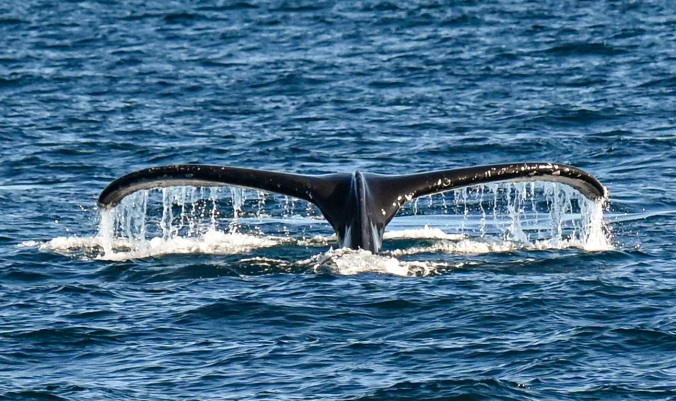
And the moments of joy and hope? Magnificent frigatebirds spiral above the islands of Los Haitises, the chittering of black-crowned tanagers can be heard deep within the forest, and on the water, humpback whales migrating from the Arctic arrive in the spring to give birth and nurture their young in the whale sanctuary of Golfo del Samaná.

In turbulent times like these, Los Haitises can also be a sanctuary for human beings.


As always, sailing is not just about the wind and the sea; the places, the flora, fauna, and people encountered along the way are equally important.

Please click “Follow” so that you don’t miss a new update,- and please consider sharing this post with others who might enjoy following the voyage. I welcome your comments and will always respond when I have an Internet connection. I will never share your personal information.

Instagram: StellaMarisSailing / Facebook: Jeffrey Cardenas

Text, Photography, and Videos © Jeffrey Cardenas 2024

Let this be a time of grace and peace in our lives – Rev. John C. Baker