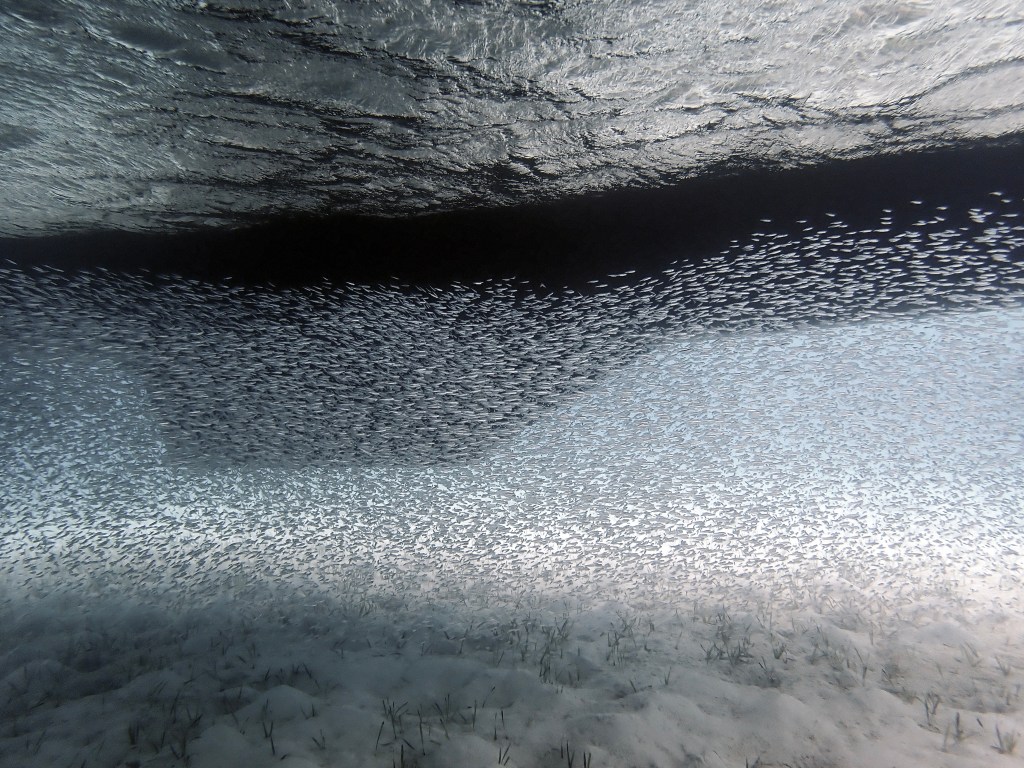
Glass minnows are shape shifters. It is possible to see through their translucent bodies.
Shroud Cay, Exuma—I expected that scraping barnacles and grass from the underside of my sailboat would involve hours of necessary but nasty work. Once, after a particularly messy hull cleaning, I came to the surface covered in algae, and my scalp was crawling with biting sea lice.
Today, however, my sealife encounter was ethereal.
As I worked underwater, a sphere of translucent glass minnows surrounded me in a sanctuary they found under the boat. Glass minnows are shape shifters. En masse, they form a defensive cocoon; a cloud of life that changes its appearance like smoke. It’s a fish version of starlings moving together in an underwater murmuration.
I posed no threat, they showed no fear.
It reminded me of the writings of naturalist John Burroughs: The best place to observe nature, he said, is where you are.
As always, sailing is not just about the wind and the sea; the places, the flora, fauna, and people encountered along the way are equally important.
Please click “Follow” so you don’t miss a new update, and please consider sharing this post with others who might enjoy connecting here. I welcome your commentsandwill always respond when I have an Internet connection. I will never share your personal information.
An additional website, www.JeffreyCardenas.com, features hundreds of fine art images—underwater, maritime landscapes, boats, and mid-ocean sailing photography–from exotic locations worldwide.
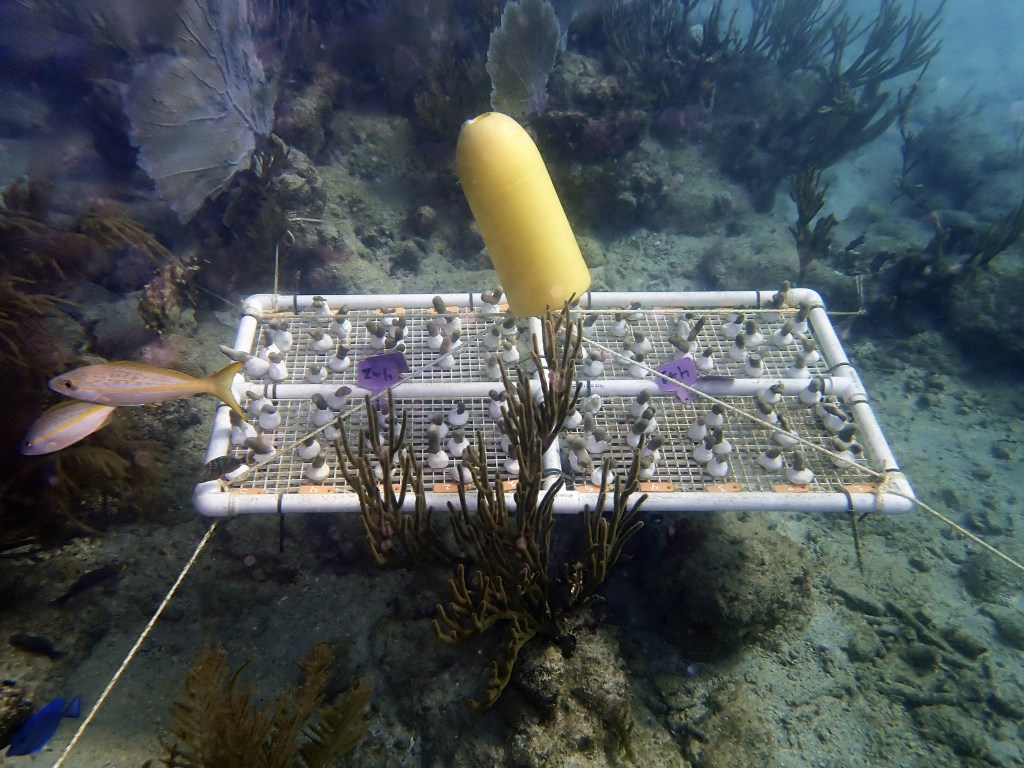
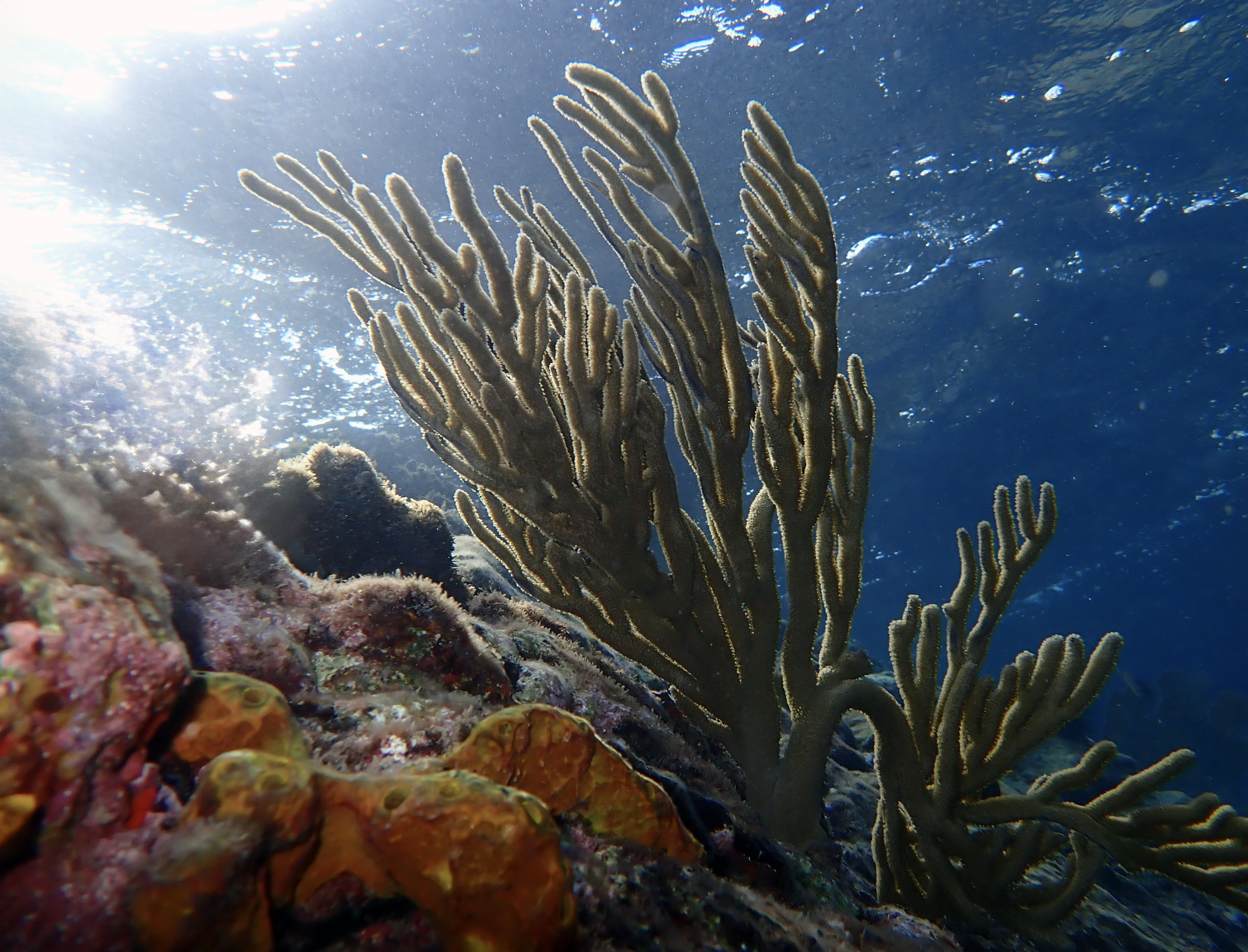
As I sail north out of the Caribbean Sea, I have spent much of the last month diving over dead and dying coral reefs. I try not to focus on this. There is enough despair in the world these days without highlighting any more of it. I prefer instead to acknowledge isolated moments of beauty and hope. This morning, while snorkeling over another reef of broken coral rubble, I was heartened by the sight of a tiny coral farm attached to the bottom of the bay.
Bahía Tamarindo Grande is on the northwest coast of the island of Culebra in the Spanish Virgin Islands. It is an isolated stretch of land with no development and no roads. There are flowering frangipani, a symphony of birdsong echoing in the trees, and a deserted white sandy beach. In contrast, a sign warns visitors not to pick up unexploded ordnance. This area east of Puerto Rico was once a bombing and artillery range for the U.S. military. Nearby, a Sherman tank is rusting on the beach.
The coral farm, suspended 20 feet underwater, has no identification plate or surface buoy to mark its location. It’s not shown on any nautical charts. It is simply a submerged platform the size of a backyard vegetable plot. Instead of growing lettuce and carrots, some anonymous person has planted branched finger coral. About 80 coral nubs are mounted on a plastic grid, and they are thriving.
There is nothing new about the aquaculture of coral. One of the first successful coral propagation attempts occurred at New Caledonia’s Nouméa Aquarium in 1956. Commercial coral propagation began in the United States in the 1960s. Still, it wasn’t until worldwide coral populations began to crash in the 1980s that the industry focused on propagating coral for oceans instead of aquariums.
Then, in April 2006, the Margara, a 750-foot tanker carrying over 300,000 barrels of fuel oil, ran aground on a shallow coral reef in Puerto Rico’s Bahía de Tallaboa. No oil was spilled, but the grounding and efforts to remove the vessel destroyed 6,755 square meters of reef, including six species of coral protected under the Endangered Species Act. Emergency restoration by NOAA and the Puerto Rico Department of Natural and Environmental Resources saved approximately 10,500 coral colonies in the affected reef by using farmed corals from nurseries and transplanting them back onto the ocean floor.
As coral populations diminish due to human negligence and climate change, it may seem that coral is disappearing faster than it can be replaced. This does not deter the efforts of research and conservation groups such as the Mote Marine Laboratory, which has restored more than 216,000 corals to Florida’s reefs. Notably, some restored corals are now naturally reproducing to create new generations of coral.
The Coral Restoration Foundation in the Florida Keys is also succeeding in growing coral that reproduces both sexually through spawning and asexually through fragmentation (where a small piece of coral can reattach and develop into a new colony). Since 2012, the Coral Restoration Foundation has transplanted more than 220,000 corals onto Florida’s reef, restoring over 34,000 square meters of habitat.
Back in Culebra, local commercial fishermen proposed the establishment of the Luis Peña Channel Natural Reserve to replenish local fish stocks and protect the coral reefs. This reserve encompasses Bahía Tamarindo Grande, home to the coral farming garden plot. It is the first no-take marine protected area designated in Puerto Rico. The mission statement is simple: The health of coral reefs directly depends on strong reef fish populations. Fish and other animals, such as lobsters and shellfish, rely on the health of the coral reef. The livelihoods and culture of the people of Culebra depend on healthy coral reefs.
An image from the NASA Earth Observatory of Culebra Island, located about 17 miles east of Puerto Rico.
As always, sailing is not just about the wind and the sea; the places, the flora, fauna, and people encountered along the way are equally important.
Please click “Follow” so you don’t miss a new update, and please consider sharing this post with others who might enjoy connecting with the voyage. I welcome your commentsandwill always respond when I have an Internet connection. I will never share your personal information.
An additional website, www.JeffreyCardenas.com, features hundreds of fine art images—underwater, maritime landscapes, boats, and mid-ocean sailing photography–from exotic locations worldwide.
Upcoming Exhibition: “On the Reef” will be exhibited in The Studios of Key West’s Zabar Project Gallery, on view from January 2–30, 2025.
Barnacles nearly drove Charles Darwin crazy while he was researching The Origin of the Species
Barnacles have no heart
Barnacles have the largest relative penis size in the natural world
All true.
Sailors throughout history have despised the lowly barnacle. They grow quickly on the bottom of a boat, causing hydrodynamic drag that can bring even racing sailboats to a near standstill. Several singlehanded sailors in the most recent Golden Globe race around the world had to dive overboard in the chilly Southern Ocean to remove masses of gooseneck barnacles. Racer Jeremy Bagshaw’s boat, Olleanna, could barely move because of an infestation of barnacles. He said, “I didn’t have enough food to go around the world at three knots.” He could have eaten the gooseneck barnacles. They are considered a delicacy in many parts of the world and sell for as much as $100 a pound. One reviewer said they taste like “eating the sea.” Jeremy Bagshaw didn’t want to eat the sea. He just wanted to sail home.
Barnacles have existed for at least 325 million years, which has a lot to do with the fact that they are really good at making baby barnacles. Described as, among other things, the “genitalia of the sea,” barnacles have had to evolve creatively to survive. They are sessile, meaning they are permanently attached to one place and cannot leave their shells to mate. Some barnacles evolved as hermaphrodites. Another way they facilitate genetic transfer between isolated individuals is with extraordinarily long penises. “Barnacles probably have the largest penis-to-body size ratio of the animal kingdom,” according to a report in New Scientist Magazine. “On exposed shores,” the report continues, “it’s better for barnacles to grow shorter, thicker penises” so that the sexual organ is not damaged in rough sea conditions. Regardless of diameter, the penis of a barnacle only lasts for one mating season, and it is then discarded. Fortunately, it will grow a new one the following year.
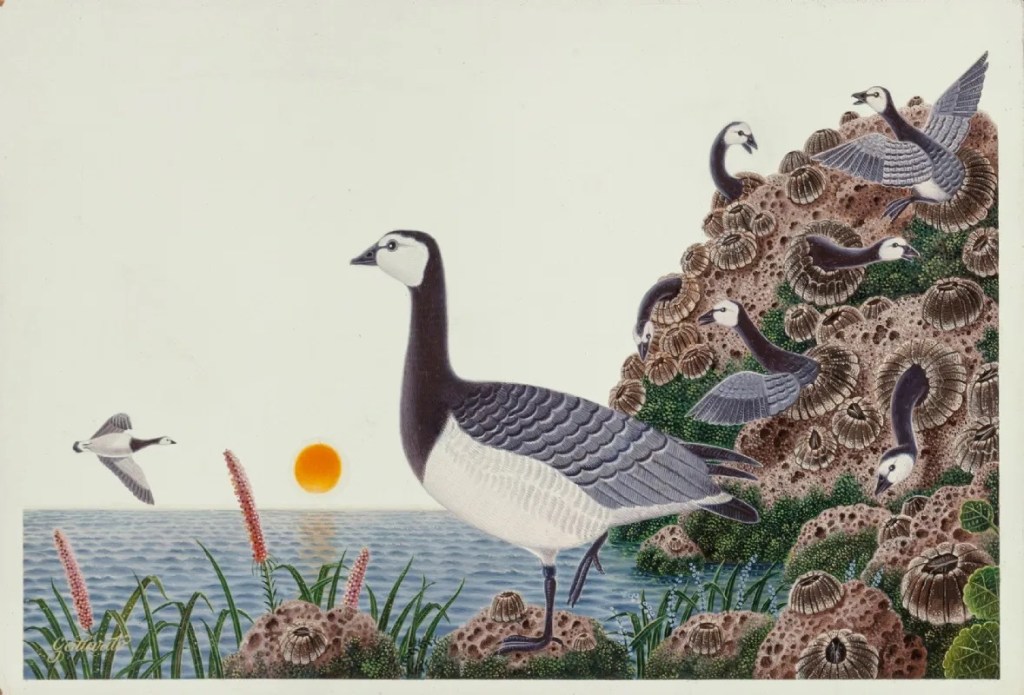
While the science of a barnacle’s sex life is strange, the medieval bestiary folklore about these creatures is downright bizarre. The 12th-century religious historian, Gerald of Wales, proclaimed that geese (yes, birds) hatched from barnacles attached to driftwood. He wrote: “They hang down by their beaks as if they were a seaweed attached to the timber. I have frequently seen, with my own eyes, more than a thousand of these small bodies of birds, hanging down on the sea-shore from one piece of timber, enclosed in their shells, and already formed.” For some reason, there is a statue honoring Gerald of Wales in Britain’s St Davids Cathedral.
In the 1600s, another disreputable English author and illustrator, John Gerard, perpetuated the myth by claiming to have seen geese emerging from the shells of barnacles. The legend persisted through the 1800s, when, even while the Industrial Revolution was occurring in Britain, some people apparently still believed that live birds emerged from the shells of marine invertebrates.
Famed naturalists Carl Linnaeus and Georges Cuvier were more rational in their observations, but they were convinced that barnacles were mollusks. In 1830, a lesser-known naturalist named William Thompson proved them wrong, and, in a radical reinterpretation of taxonomy, barnacles were reclassified as crustaceans.
Still another Englishman of letters—Charles Darwin, no less—became inspired by barnacles. Inspiration turned into obsession, and Darwin spent eight years trying to understand them. Darwin often worked through the night beneath an oil lamp, dissecting barnacles under the microscope in a room thick with the vapors of preserving spirits.He suffered migraines and intestinal distress, even nightmares. Doctors begged him to stop. Darwin refused. He had begun seeing variations in barnacles no one had ever noticed. His work resulted in a 4-volume monograph on barnacles, living and extinct, and it helped him refine his theory of evolution by natural selection.
Afterward, when asked by an old friend about his passion for barnacles, Darwin responded, “I hate a Barnacle as no man ever did before, not even a Sailor in a slow-sailing ship.”
Geese emerging from barnacles by Gervasio Gallardo
As always, sailing is not just about the wind and the sea; the places, the flora, fauna, and people encountered along the way are equally important.
Please click “Follow” so you don’t miss a new update, and please consider sharing this post with others who might enjoy connecting with the voyage. I welcome your commentsandwill always respond when I have an Internet connection. I will never share your personal information.
An additional website, www.JeffreyCardenas.com, features hundreds of fine art images—underwater, maritime landscapes, boats, and mid-ocean sailing photography–from exotic locations worldwide.
Upcoming Exhibition: “On the Reef” will be exhibited in The Studios of Key West’s Zabar Project Gallery, on view from January 2–30, 2025.
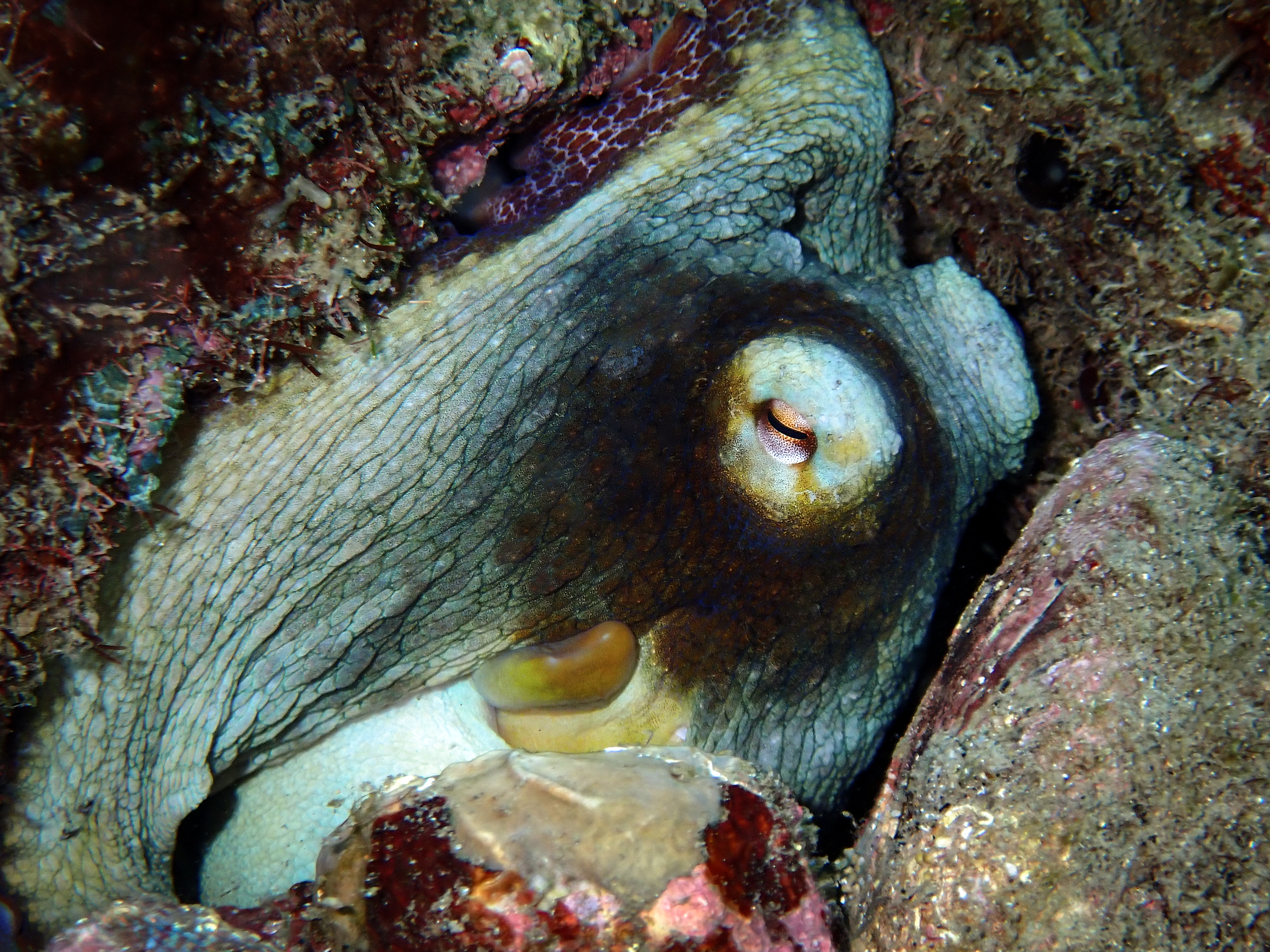
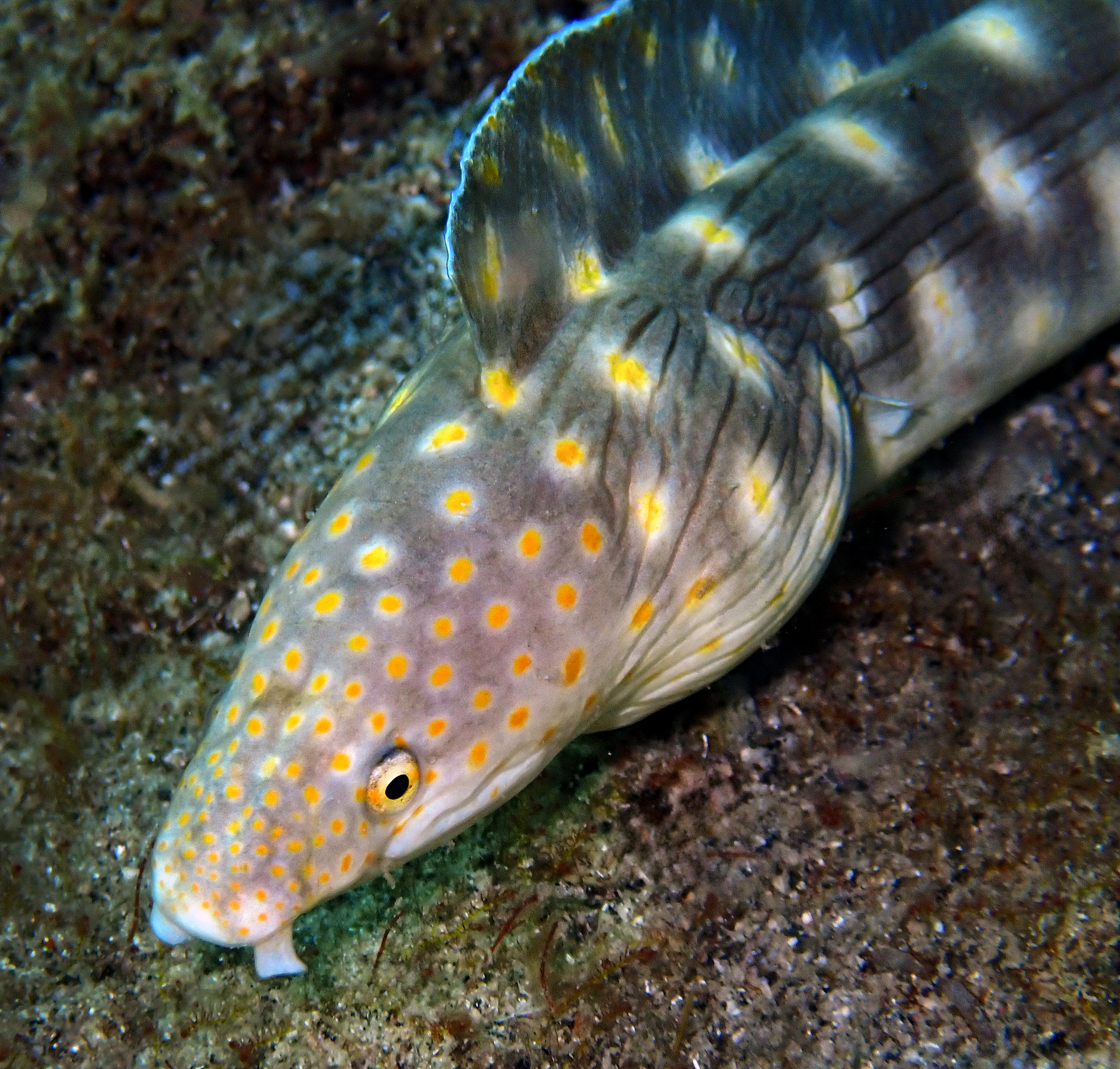
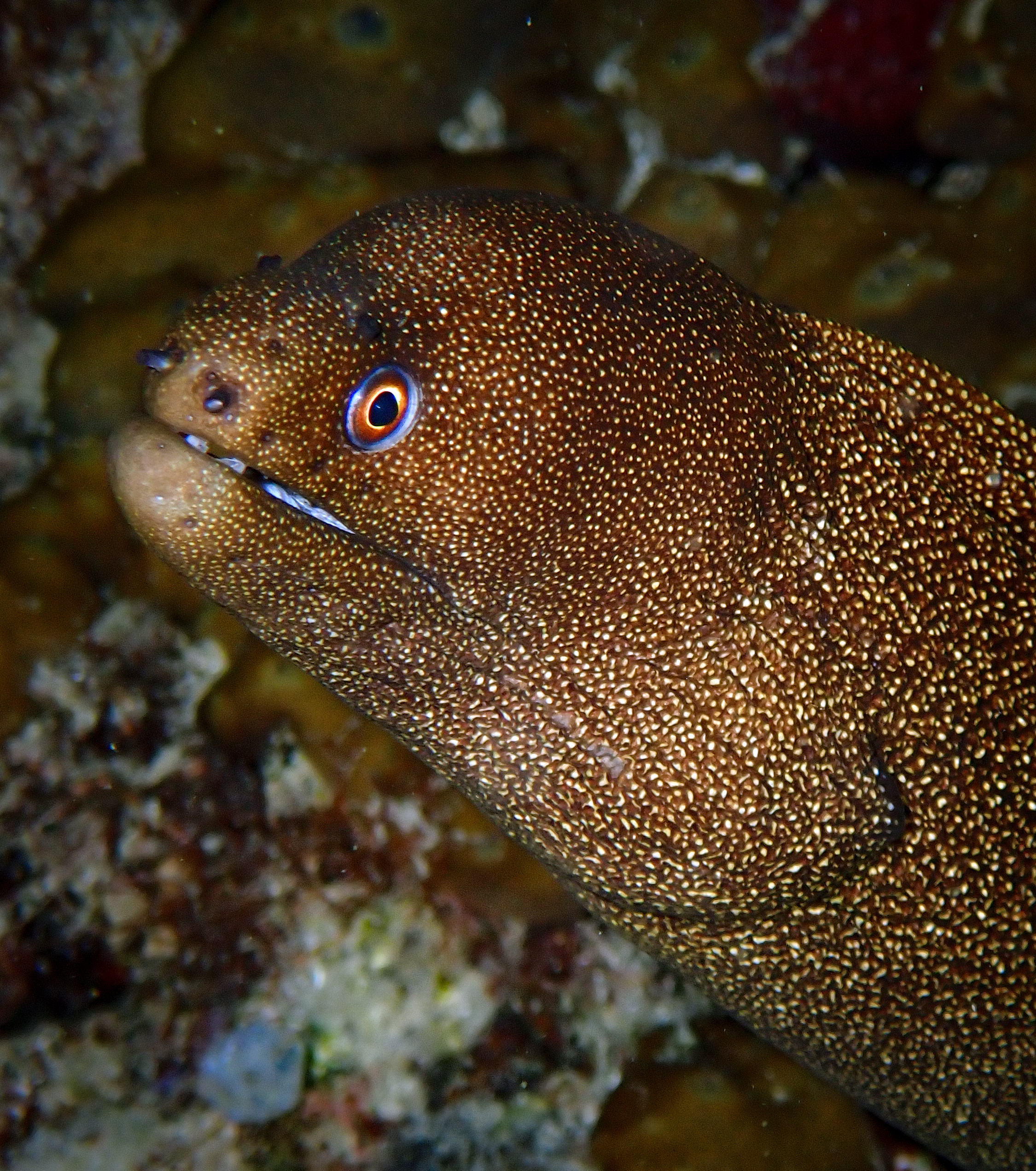
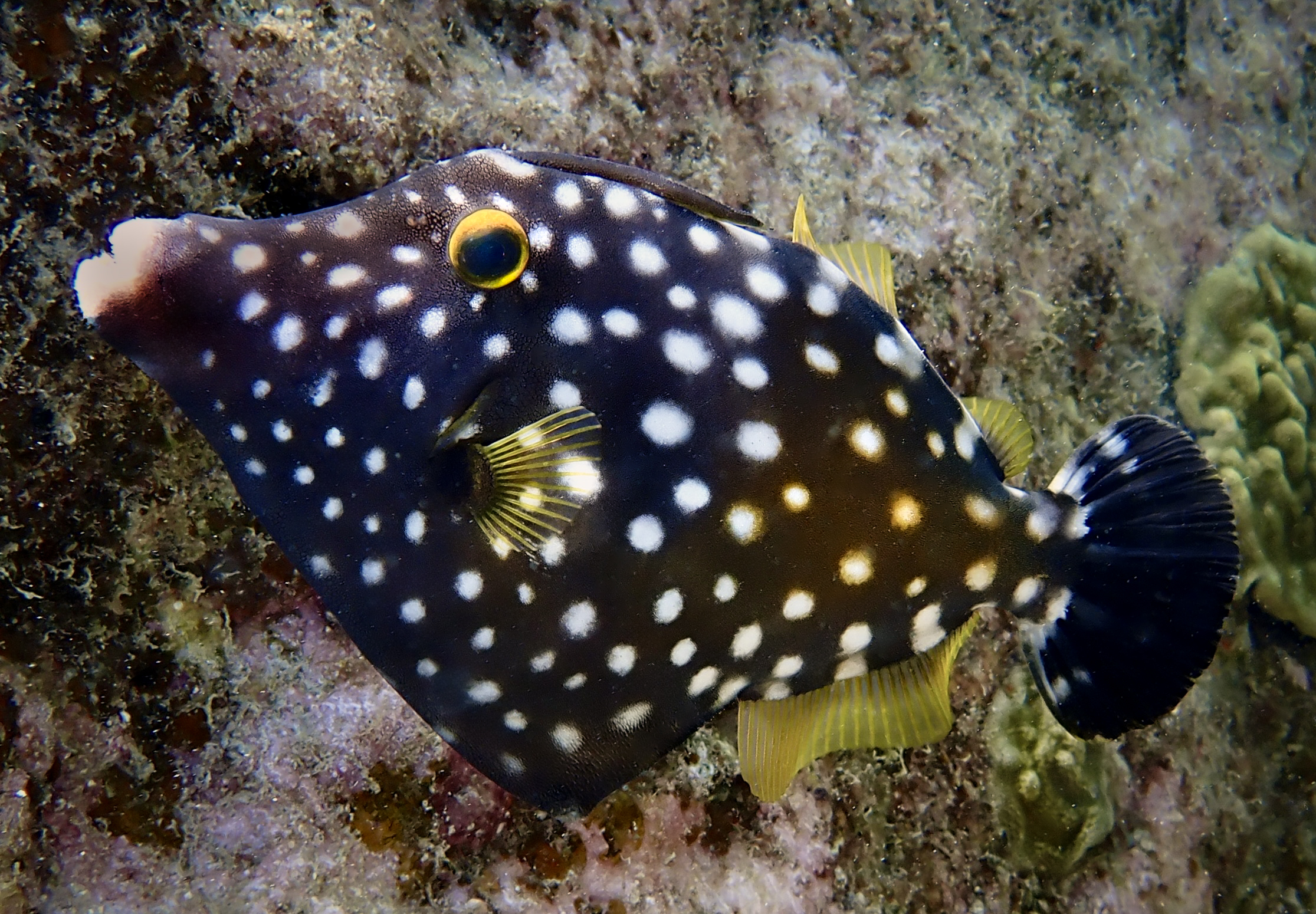
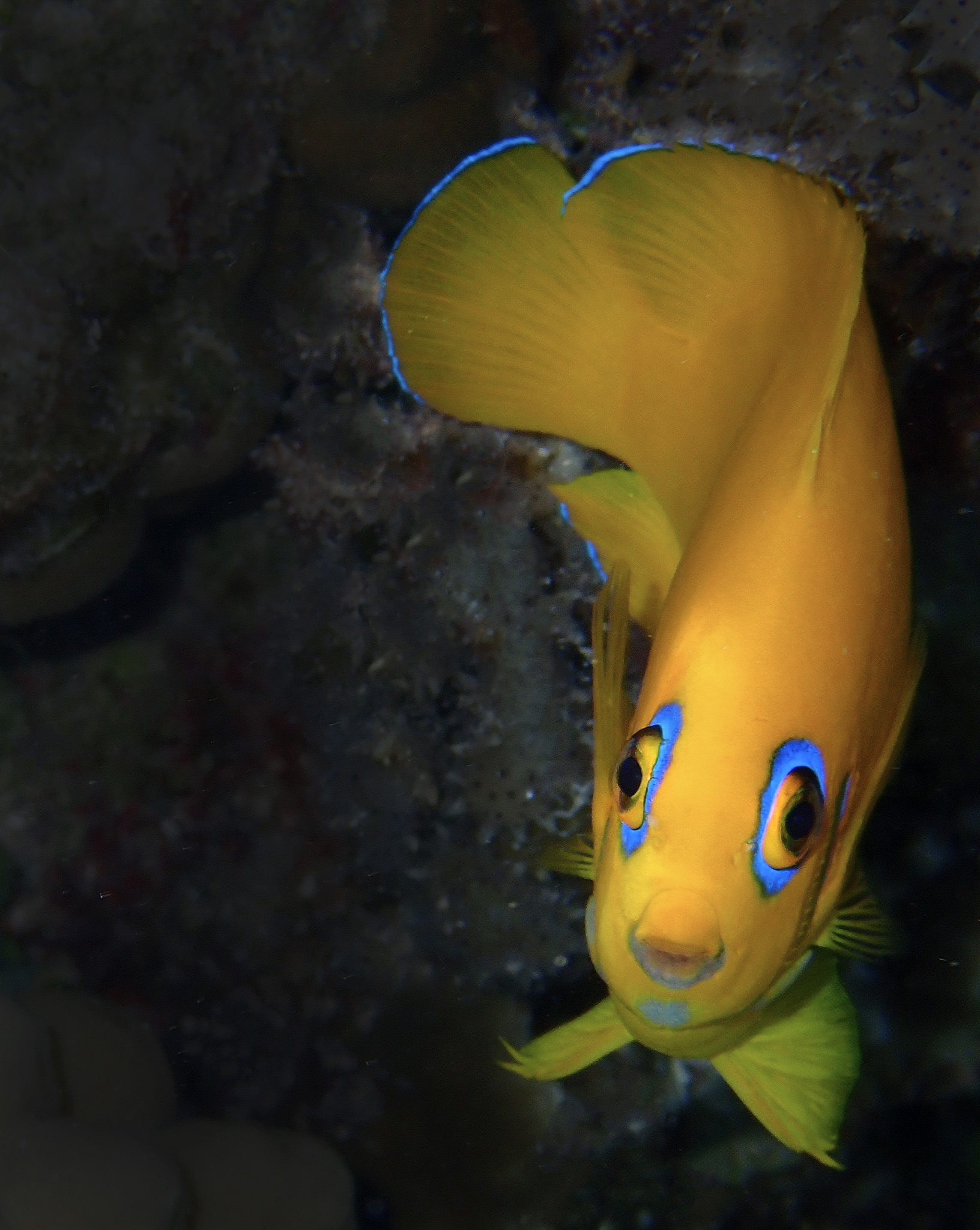
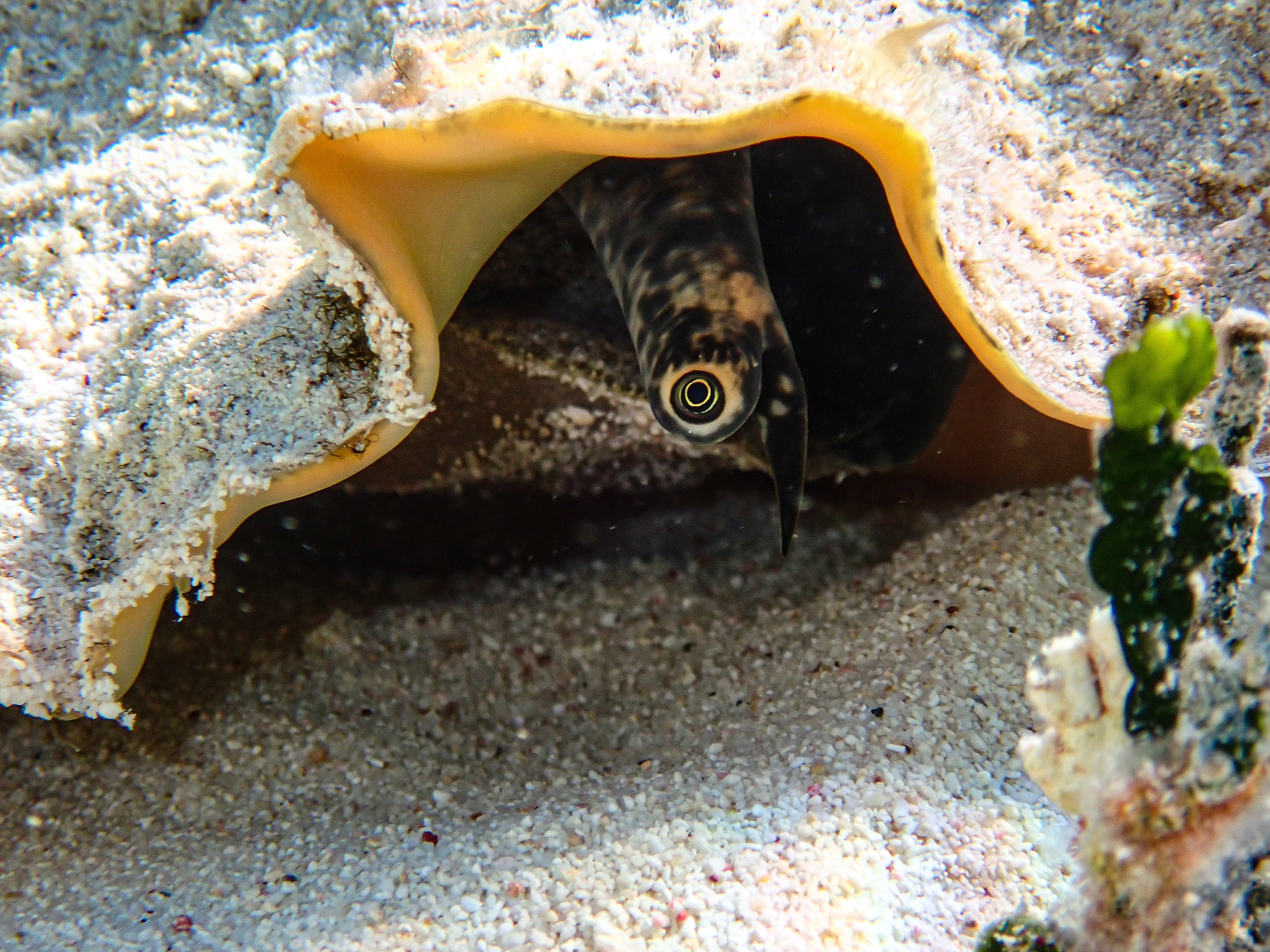
When we dive underwater, we observe a world inhabited by some of the most fascinating creatures on the planet. Imagine what these creatures experience when a terrestrial biped (us) suddenly appears in their environment. Then, it becomes the observer who is being observed. We are, after all, guests in their house.
There is much science regarding what fish and other sea life see underwater. Fish have spherical lenses in their eyes, which provide clarity, whereas human lenses are relatively flat. Our vision is blurred underwater (unless we wear a dive mask), but fish see everything. Fish also see a visible spectrum that is different from humans. Simply put, fish can see things underwater that humans cannot, even when we wear a mask. Marine reptiles are no exception; a sea turtle’s eye allows them to detect the glow of bioluminescent prey. Some fish, like bonefish, have a membrane over their eyes—like a diver’s mask—that allows them to forage in sand and silt to find food. Sharks may rely on scent and sensory input, but their eyesight is also remarkable. Marine biologists suggest that a shark’s vision may be 10 times better than that of humans in clear water.
That’s all fascinating stuff, but I don’t think about science when I put on a mask and snorkel to free dive on a coral reef. Instead, I am grateful for the privilege of sharing this undersea world, so I tread softly. I enter the water quietly, with minimal gear, and move slowly. I know that everything with eyes underwater watches me to perceive what threat I might pose. I de-escalate. When I minimize my presence, fish become as interested in me as I am with them.
The more opportunities I have to interact with the marine environment, the greater my respect is for a world I once took for granted. All it took was a little bit of eye contact.
As always, sailing is not just about the wind and the sea; the places, the flora, fauna, and people encountered along the way are equally important.
Please click “Follow” so you don’t miss a new update, and please consider sharing this post with others who might enjoy connecting with the voyage. I welcome your commentsandwill always respond when I have an Internet connection. I will never share your personal information.
An additional website, www.JeffreyCardenas.com, features hundreds of fine art images—underwater, maritime landscapes, boats, and mid-ocean sailing photography–from exotic locations worldwide.
Upcoming Exhibition: “On the Reef” will exhibit in The Studios of Key West’s Zabar Project Gallery, on view from January 2–30, 2025.
The crater of St. Vincent’s La Soufrière, which erupted in 2021
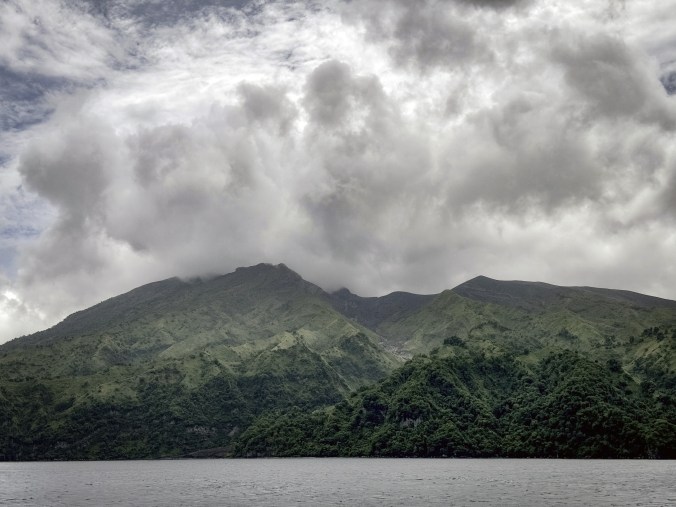
This lovely coastline of Wallibou, in northwest St. Vincent, has suffered greatly in recent years from both man and nature.
Three years ago, the still-active volcano La Soufrière erupted with a devastating blast that displaced 16,000 residents. Smoke and ash covered the island and closed airspace as far away as Barbados.
Then, only several months ago, the sailing catamaran Simplicity was discovered abandoned here with “copious amounts of blood” covering the interior. Police said the American-owned sailboat was hijacked in nearby Grenada by three West Indian assailants and brought to Wallibou. The bodies of Kathy Brandel, 71, and Ralph Hendry, 66, were never found.
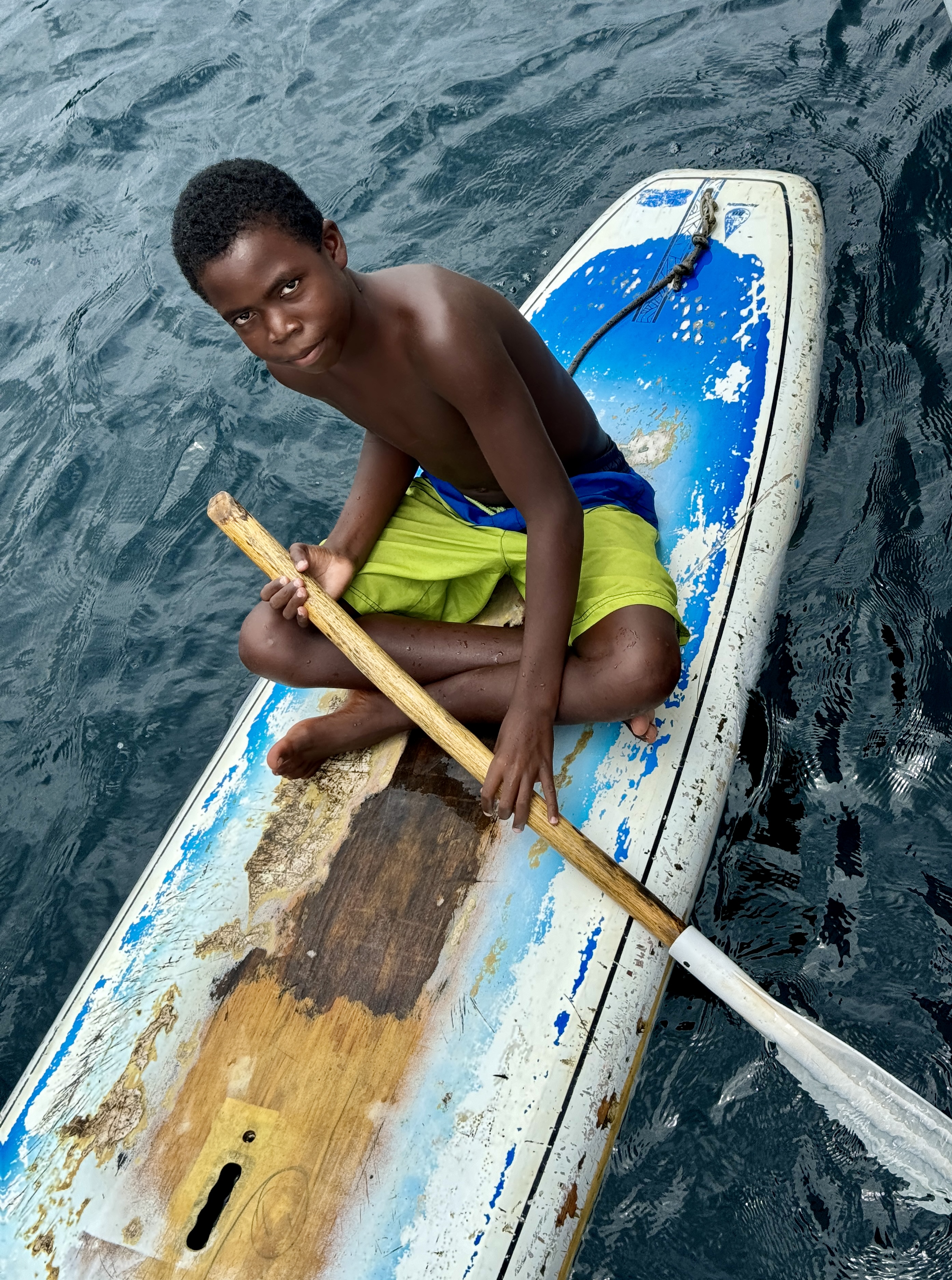
Life continues despite the tragedies here. When I arrived in the Chateaubeliar village yesterday, a fisherman in a rowboat dropped off three avocados as a welcoming gift. Ashore, boys fished with handlines for jack mackerel from the rebuilt village pier. And at midnight, I was awakened by the local church’s gospel singing.
I could have avoided this small fishing village along Wallibou’s coastline. Guidebooks recommend caution, and not many sailboats anchor here anymore. Instead, my visit to Chateaubeliar gave me a lesson in the power of perseverance and hope.
As always, sailing is not just about the wind and the sea; the places, the flora, fauna, and people encountered along the way are equally important.
Please click “Follow” so you don’t miss a new update, and please consider sharing this post with others who might enjoy connecting with the voyage. I welcome your commentsandwill always respond when I have an Internet connection. I will never share your personal information.
An additional website, www.JeffreyCardenas.com, features hundreds of fine art images—underwater, maritime landscapes, boats, and mid-ocean sailing photography–from exotic locations worldwide.








 Stella Maris Sail