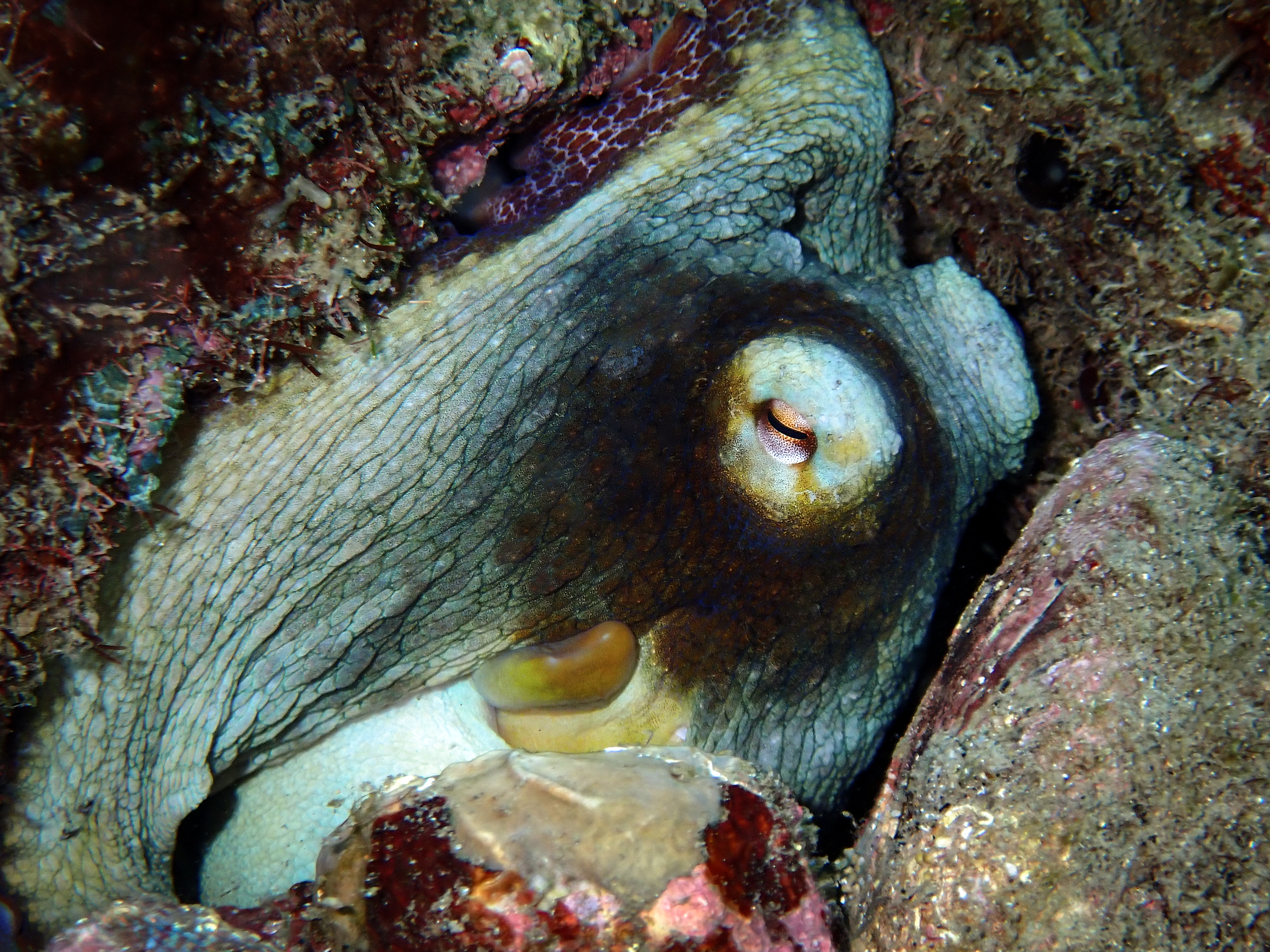
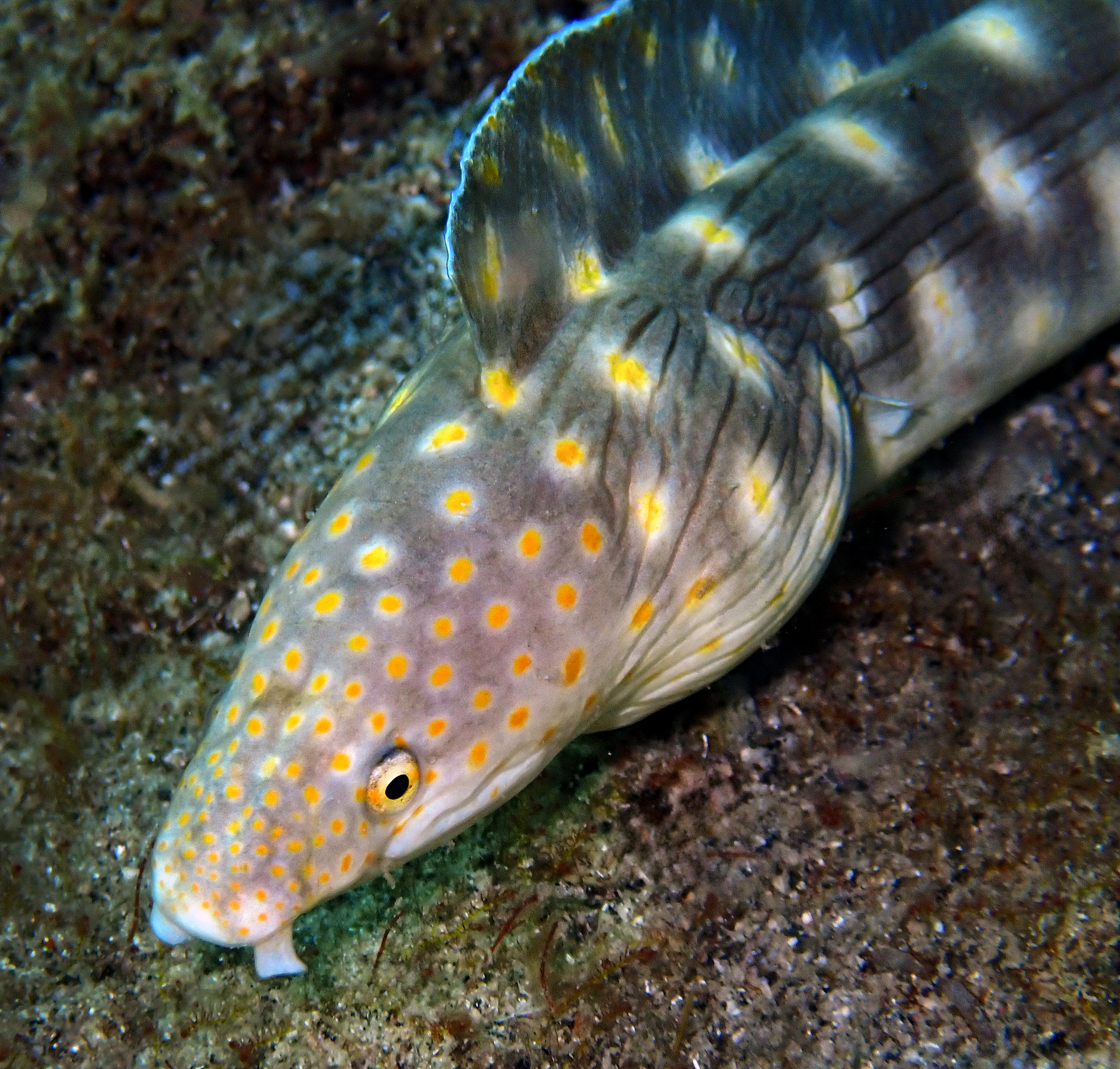
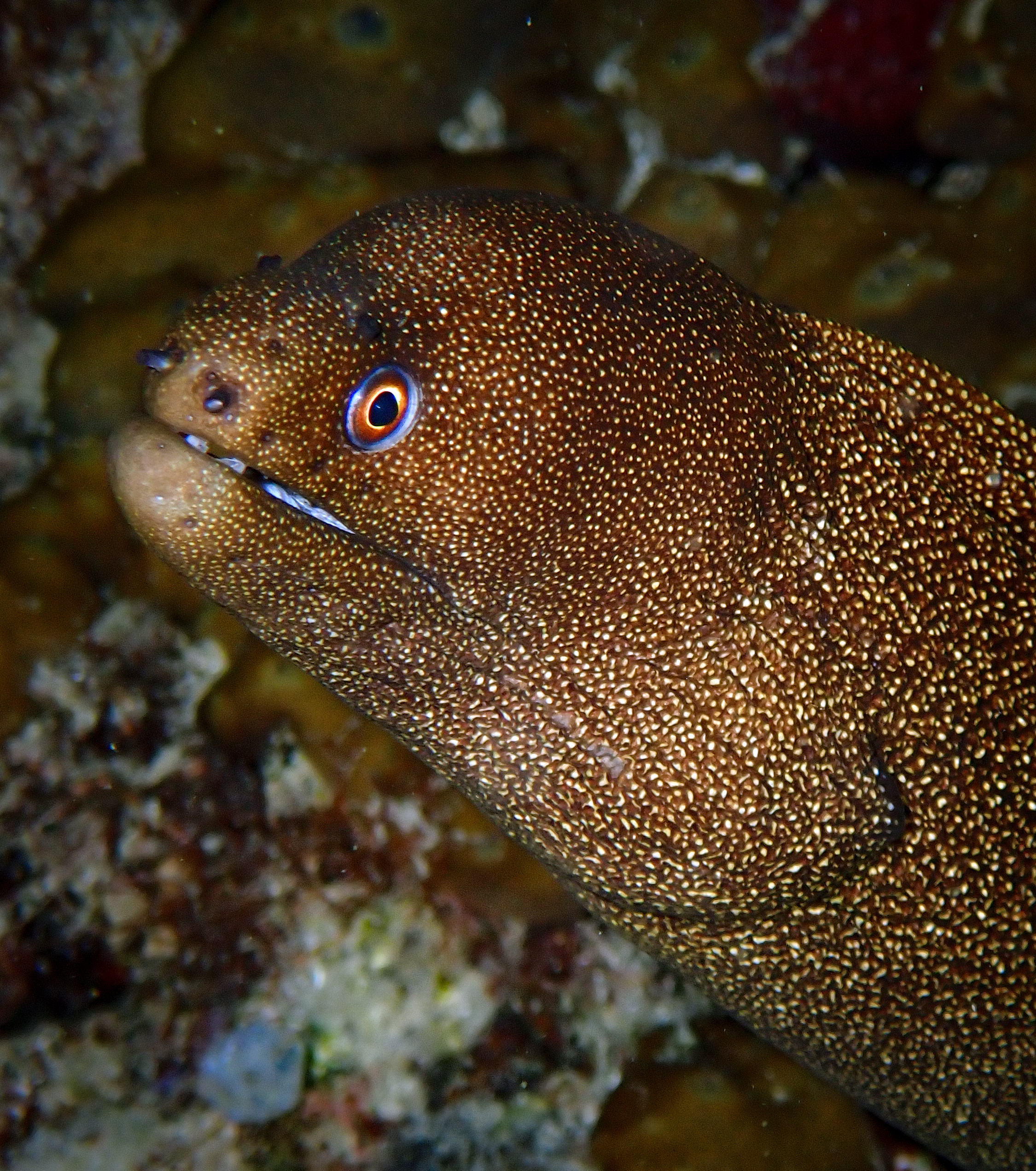
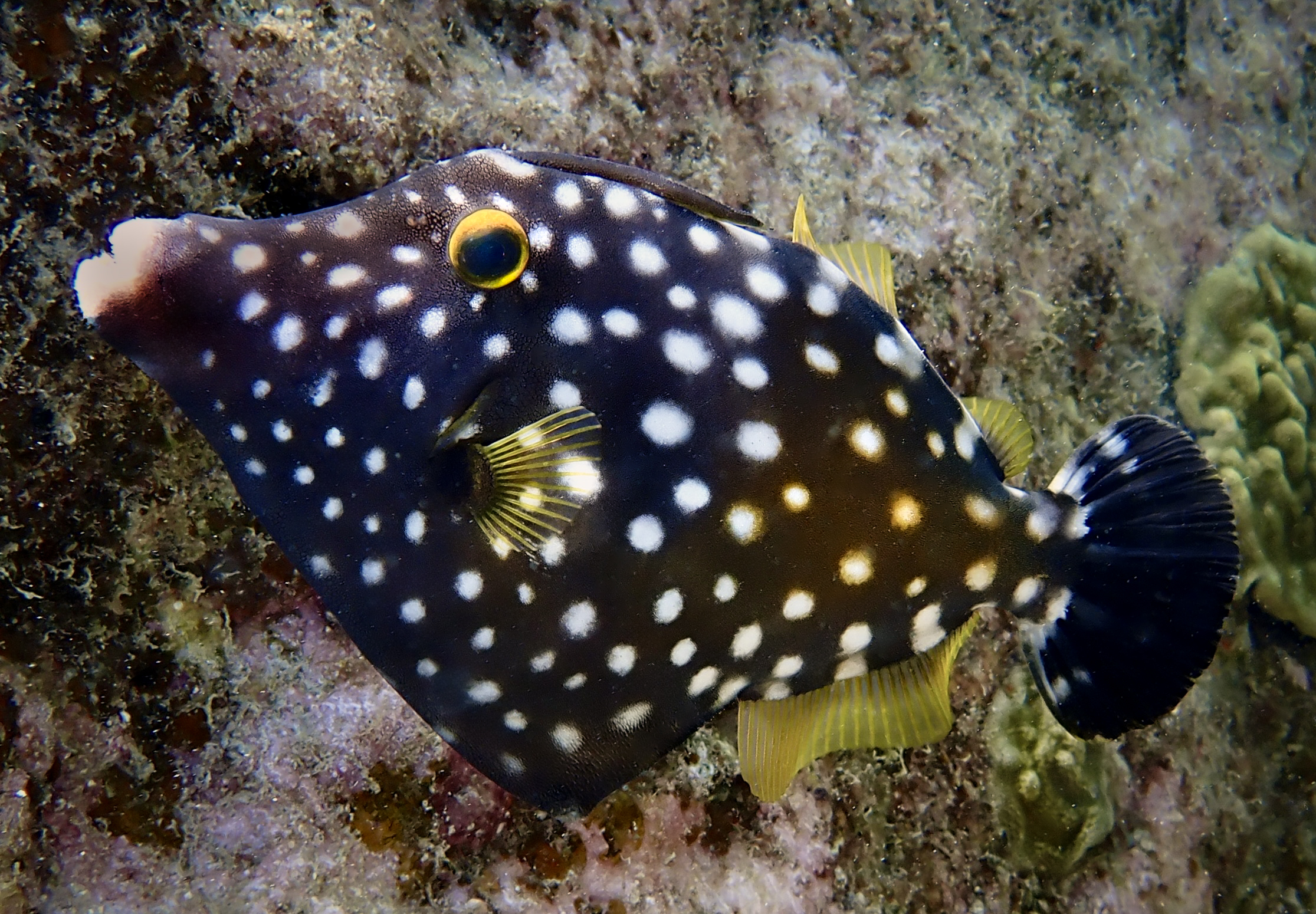
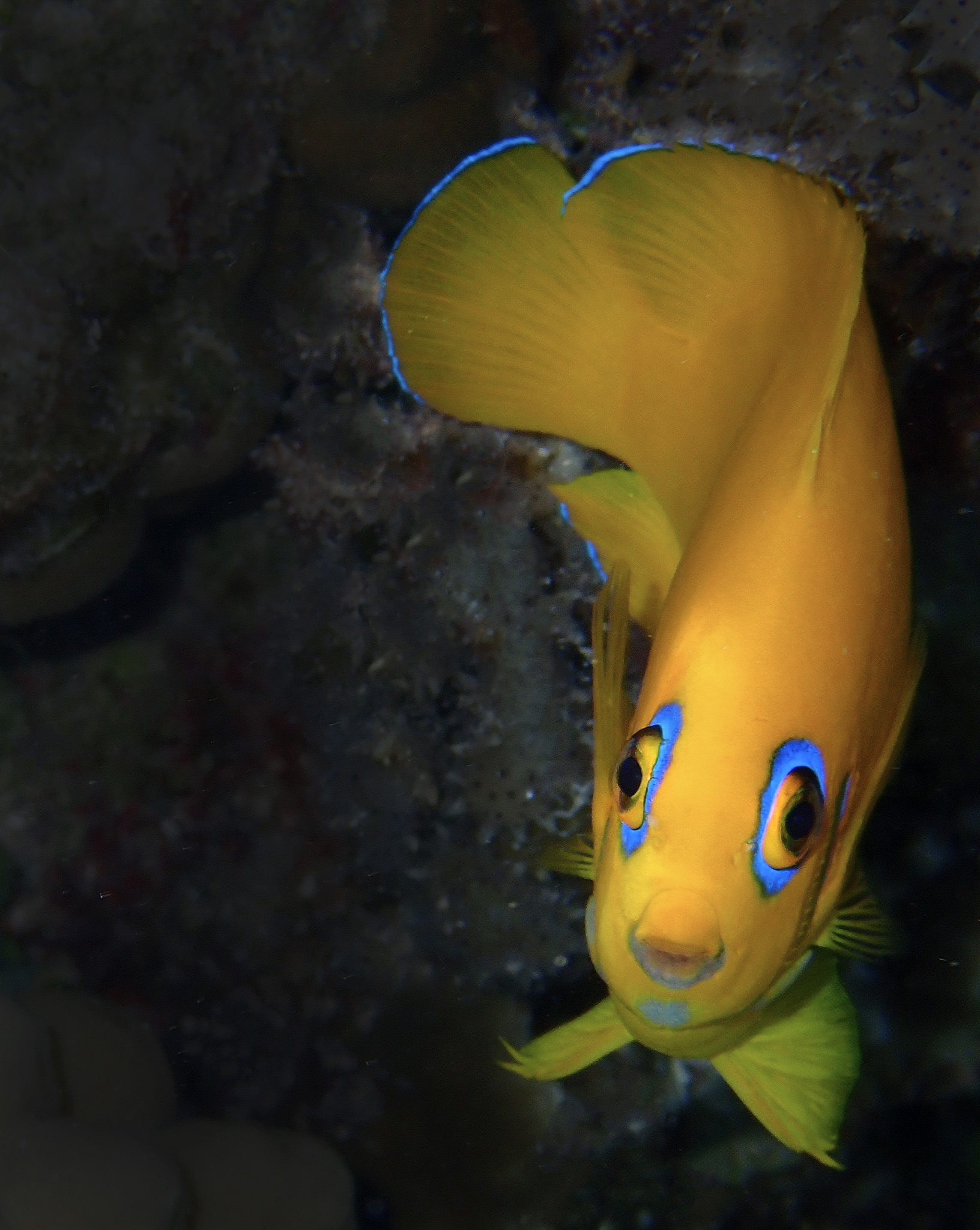
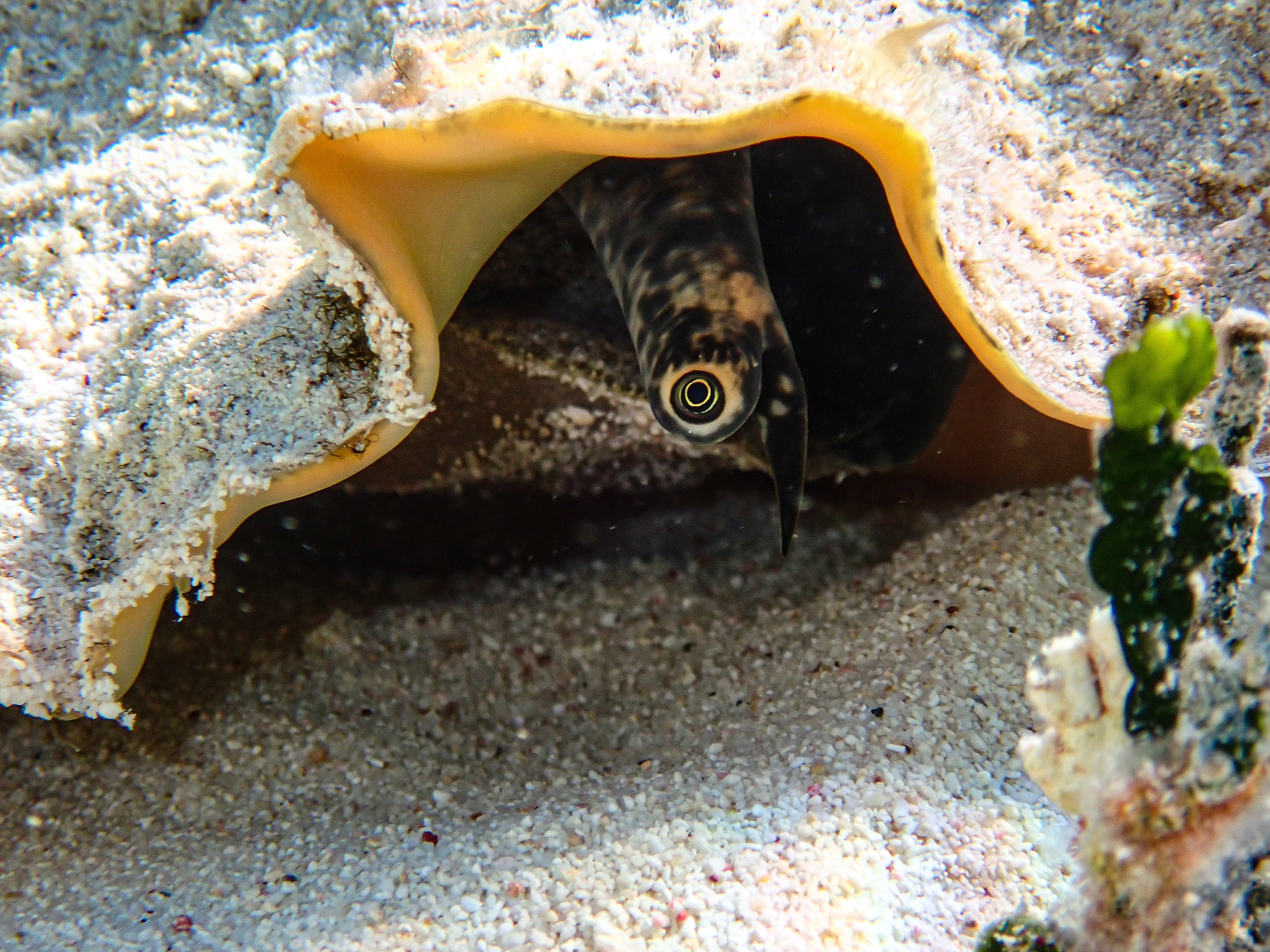
When we dive underwater, we observe a world inhabited by some of the most fascinating creatures on the planet. Imagine what these creatures experience when a terrestrial biped (us) suddenly appears in their environment. Then, it becomes the observer who is being observed. We are, after all, guests in their house.
There is much science regarding what fish and other sea life see underwater. Fish have spherical lenses in their eyes, which provide clarity, whereas human lenses are relatively flat. Our vision is blurred underwater (unless we wear a dive mask), but fish see everything. Fish also see a visible spectrum that is different from humans. Simply put, fish can see things underwater that humans cannot, even when we wear a mask. Marine reptiles are no exception; a sea turtle’s eye allows them to detect the glow of bioluminescent prey. Some fish, like bonefish, have a membrane over their eyes—like a diver’s mask—that allows them to forage in sand and silt to find food. Sharks may rely on scent and sensory input, but their eyesight is also remarkable. Marine biologists suggest that a shark’s vision may be 10 times better than that of humans in clear water.
That’s all fascinating stuff, but I don’t think about science when I put on a mask and snorkel to free dive on a coral reef. Instead, I am grateful for the privilege of sharing this undersea world, so I tread softly. I enter the water quietly, with minimal gear, and move slowly. I know that everything with eyes underwater watches me to perceive what threat I might pose. I de-escalate. When I minimize my presence, fish become as interested in me as I am with them.
The more opportunities I have to interact with the marine environment, the greater my respect is for a world I once took for granted. All it took was a little bit of eye contact.
As always, sailing is not just about the wind and the sea; the places, the flora, fauna, and people encountered along the way are equally important.
Please click “Follow” so you don’t miss a new update, and please consider sharing this post with others who might enjoy connecting with the voyage. I welcome your commentsandwill always respond when I have an Internet connection. I will never share your personal information.
An additional website, www.JeffreyCardenas.com, features hundreds of fine art images—underwater, maritime landscapes, boats, and mid-ocean sailing photography–from exotic locations worldwide.
Upcoming Exhibition: “On the Reef” will exhibit in The Studios of Key West’s Zabar Project Gallery, on view from January 2–30, 2025.
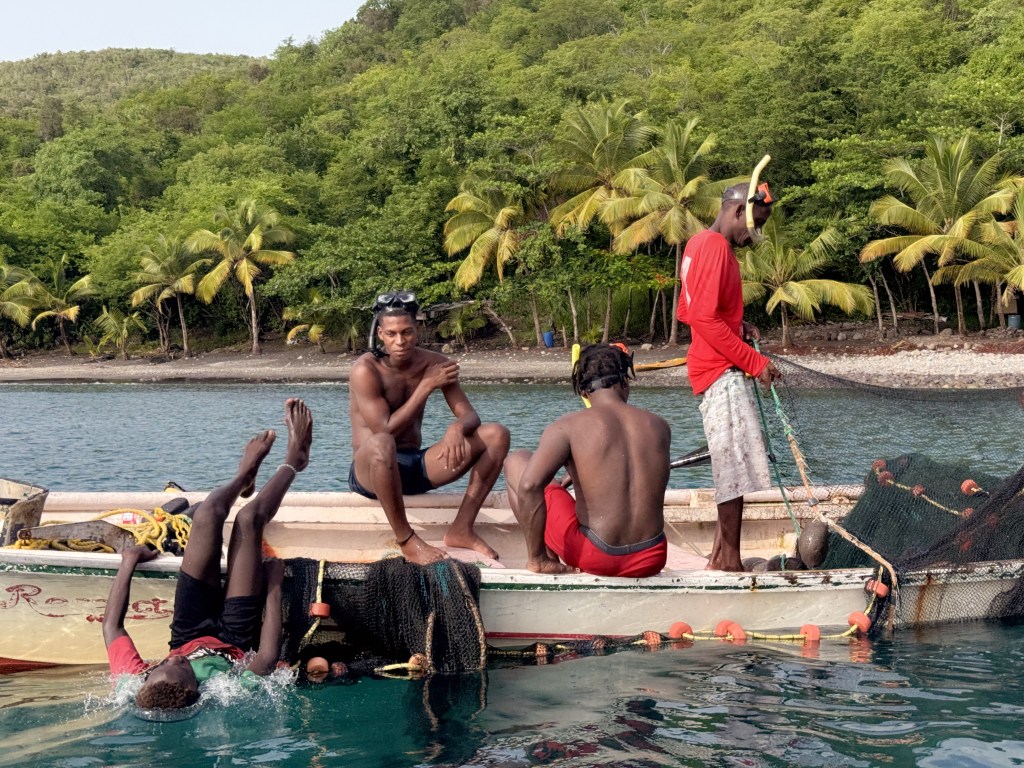
Meet Ike Albert, unofficial yacht ambassador, accomplished net fisherman, and grassroots conservationist. He’s 15 years old.
When foreign-flagged boats arrive in Saint Lucia’s Anse Cochon, Ike is there quickly in his tiny yellow kayak to assist with mooring lines or anchoring help. He will bring mangoes and avocados and freshly baked bread. Unlike other boat boys who aggressively swarm new arrivals with demands for beer and money, Ike knows that a soft sell is more effective.
“Welcome,” he says. “Tell me how I can help you.
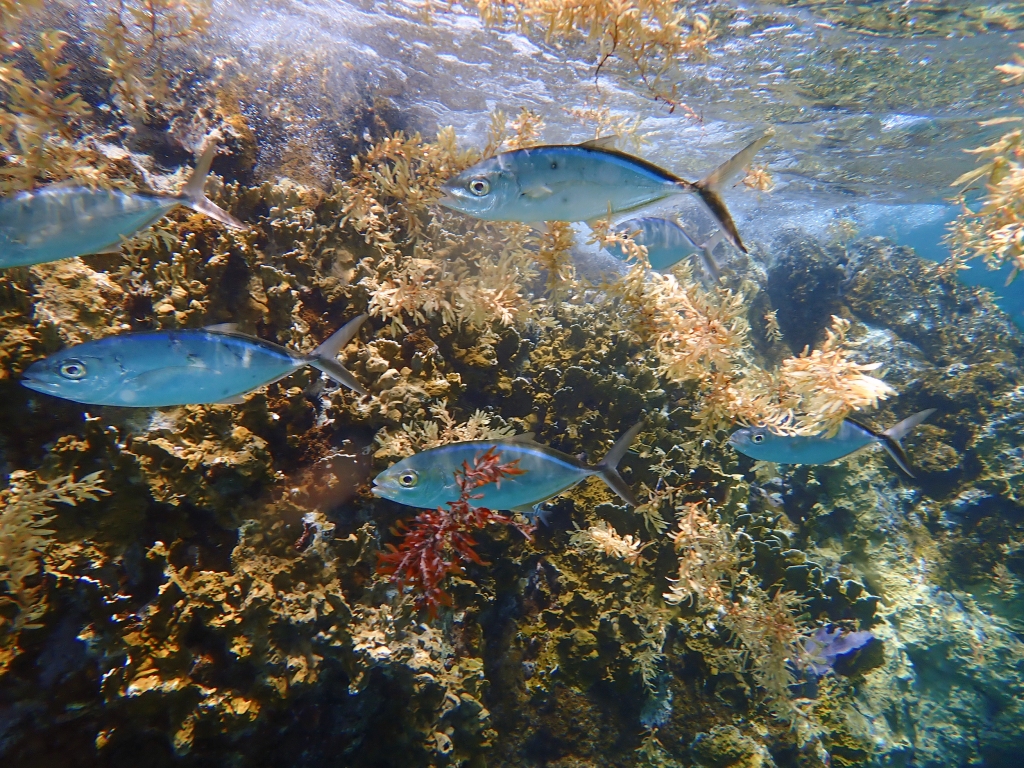
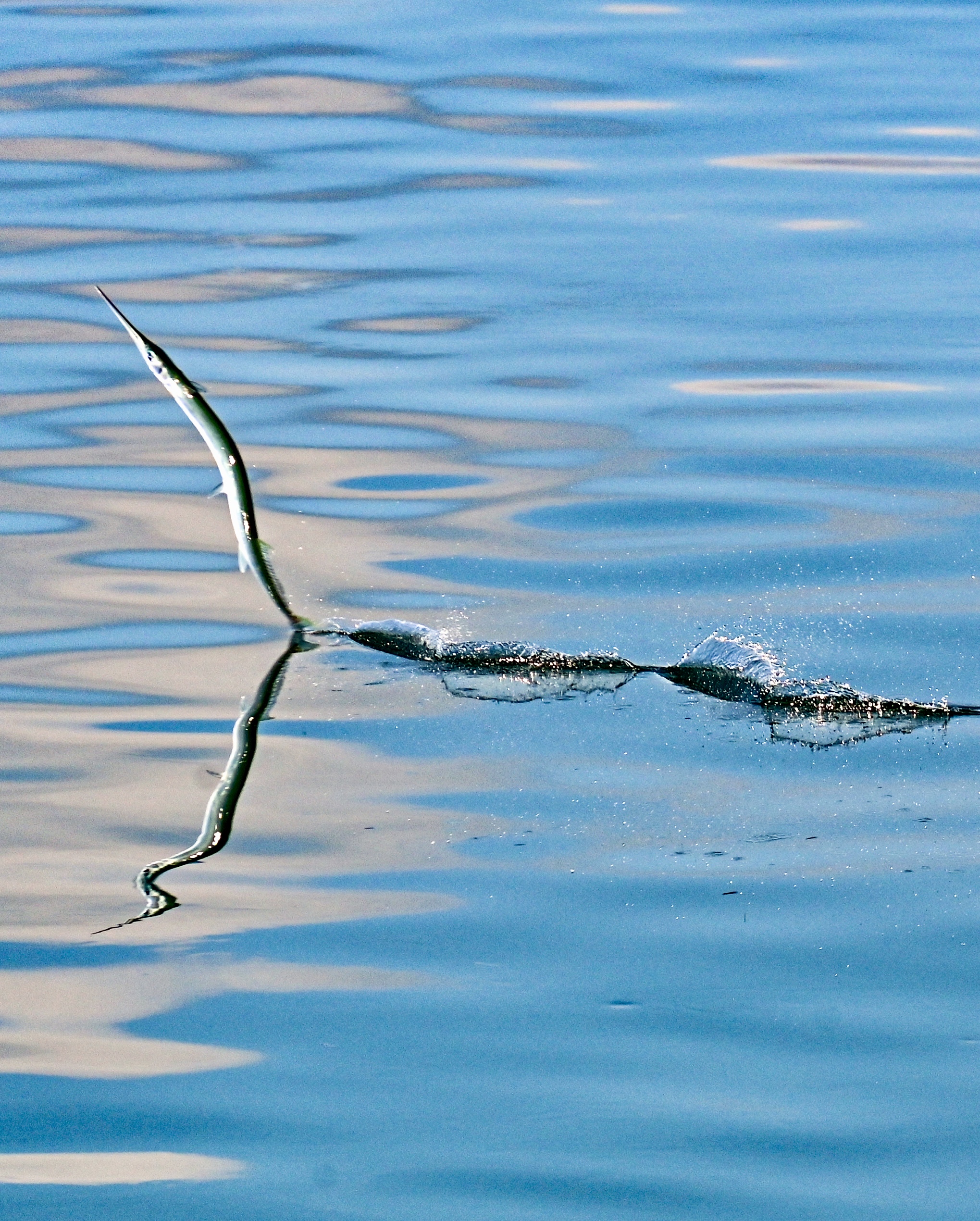
Ike lives in a nearby fishing village called Canaries. On this day, when his family’s relatives arrive in Anse Cochon to fish from a small wooden net boat called Respect, Ike dives in to help. He is the point man pulling the rope of a net that is weighted with boulders. Several hundred feet of net are set to catch sardines, small jackfish, and ballyhoo. This fishing uses no winches or pulleys; it is an art of pure manual labor.
An hour later, when the net is finally at the boat side, it reveals a subsistence catch. The family is delighted. They will eat fresh fish tonight, and maybe have a little extra to sell in the market.
Afterward, covered in fish scales and sweat, Ike climbs back onto his kayak. But before he embarks on the long paddle home to Canaries, he dives back into the water and surfaces with an armful of empty beer bottles, Coke cans, and plastic bags thrown into the water by day trippers on the tourist catamarans.
“The people on these tourist boats think that when they throw garbage into the water, it just goes away.”
As always, sailing is not just about the wind and the sea; the places, the flora, fauna, and people encountered along the way are equally important.
Please click “Follow” so that you don’t miss a new update,- and please consider sharing this post with others who might enjoy following the voyage. I welcome your commentsandwill always respond when I have an Internet connection. I will never share your personal information.
StellaMarisSail.com has spawned a new website: www.JeffreyCardenas.com. This site, Jeffrey Cardenas Photography, features hundreds of fine art images — Underwater, Maritime Landscapes, Boats, and Mid-Ocean Sailing photography from exotic locations worldwide.
“Fire coral will be the last remaining living coral on earth.”
I remember writing those words once, in a bluster of prophetic arrogance. That’s not exactly the most positive Earth Day message to consider as I dive this week on a shallow reef in the French West Indies at Île Fourchue, Saint Barthélemy.
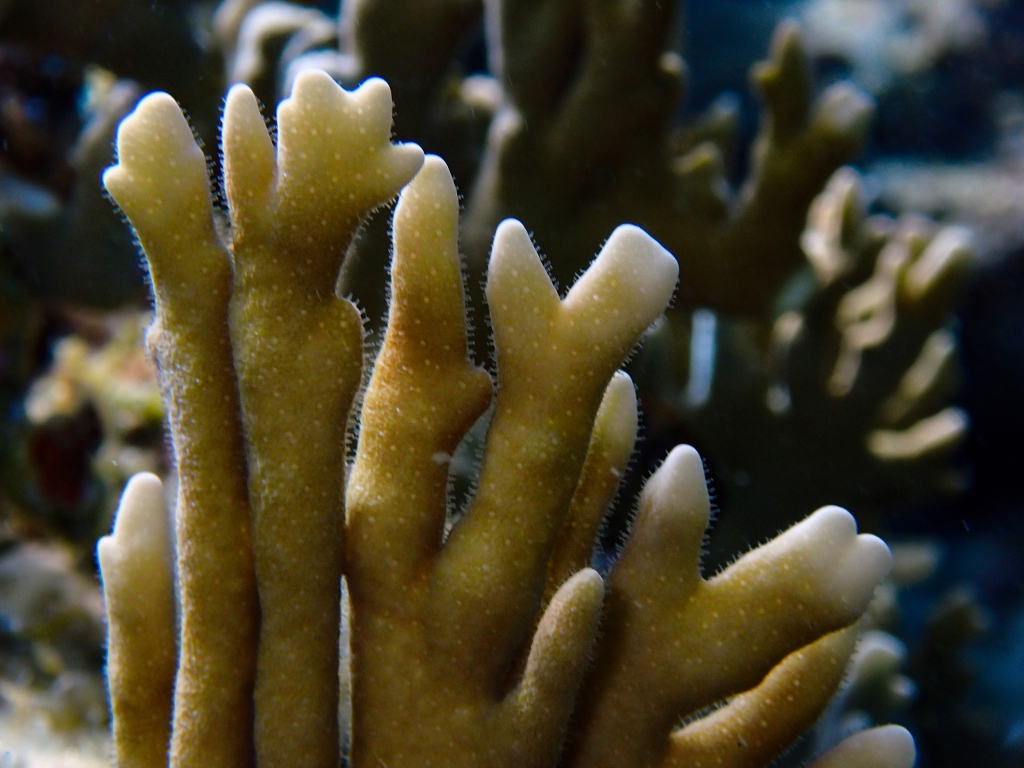
First of all, fire coral is not even a true coral. Instead, it is more closely related to hydra, a very small predatory animal similar to jellyfish and other stinging anemones. But, for the sake of consistency, I will still refer to it as fire coral.
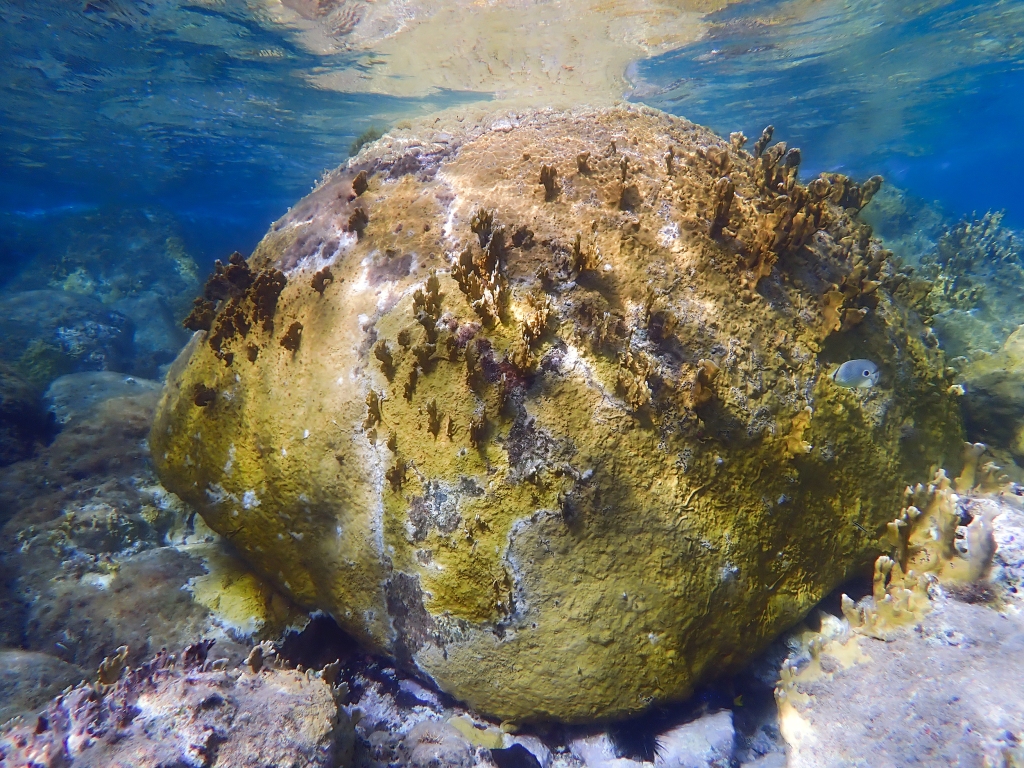
Fire coral can be either blade-like or encrusting. It is colored a mustard-yellow to dark orange, often with white edges. It has strong stinging cells that on contact cause intense pain lasting from two days to two weeks. Relapses of inflammation, itching, and welts are common. Fire coral releases venom through tiny hairs called cilia. It is their only defense mechanism against predators, including thoughtless human beings. Do not touch it, or any coral.
Because fire coral has the unusual ability to grow in two different forms, some marine biologists believe it has a survival edge over other Caribbean corals. It can grow like a bush with a stem and branches sprouting upward, or in sheets that appear as a flat coating across rocks and other surfaces.
“Fire corals have been around for millions of years and what they are doing is pretty darn successful,” says California State University marine biologist Peter Edmunds. For the past 30 years, he has been traveling to the Caribbean to document the life history of fire coral on inshore reefs.
“They are now poised to be… the inheritors of the reef, while other corals, particularly stony corals, die back,” he said. ”When it’s not stormy, they can produce branches and exploit the light and plankton in the water. When it’s storming and everybody gets beaten up, it loses its branches but it still has its sheets, which it can use to spread out and claim more territory.”
Researchers believe this adaptation may help save Caribbean reefs, which have been plagued by hurricanes, global warming, disease, and an overabundance of algae. Because fire corals are thriving as other corals die off, they are creating structures for fish and other organisms. Fire corals “are going to be very important habitat providers because they are able to survive under these stresses,” says Colleen Bove, a marine ecologist at Boston University.
But fire coral is not bulletproof. Some species have brittle skeletons that can easily be broken during storms, by anchors, or by careless divers and collectors who are taking fish for the aquarium trade. I watched blueheaded wrasse spawn over fire coral. Rock beauties, butterfly fish, yellow tangs, and the aggressive beau gregory retreat into branches of fire coral when threatened. In Brazil, fire coral colonies are extensively damaged by divers harvesting yellowtail damselfish. The fire coral is deliberately smashed and the fish hiding among the branches are captured in plastic bags.
Reproduction in fire corals is more complex than in other reef-building corals. The polyps reproduce asexually, producing the jellyfish-like medusae. These contain the reproductive organs that release eggs and sperm into the water. Fertilized eggs develop into free-swimming larvae that will eventually settle on the substrate and form new colonies.
Most divers wouldn’t mind seeing less fire coral on the reef, but I like to think of fire coral as a tactile warning to tread more carefully underwater. When the alternative may be a reef of dead rock, the sting of fire coral is a potent reminder that there is still life on that reef. And, it is one of the few ways the habitat has of fighting back.
As always, sailing is not just about the wind and the sea; the places, the flora, fauna, and people encountered along the way are equally important.
Please click “Follow” so that you don’t miss a new update,- and please consider sharing this post with others who might enjoy following the voyage. I welcome your commentsandwill always respond when I have an Internet connection. I will never share your personal information.
Christening Stella Maris–Star of the Sea–February 2023
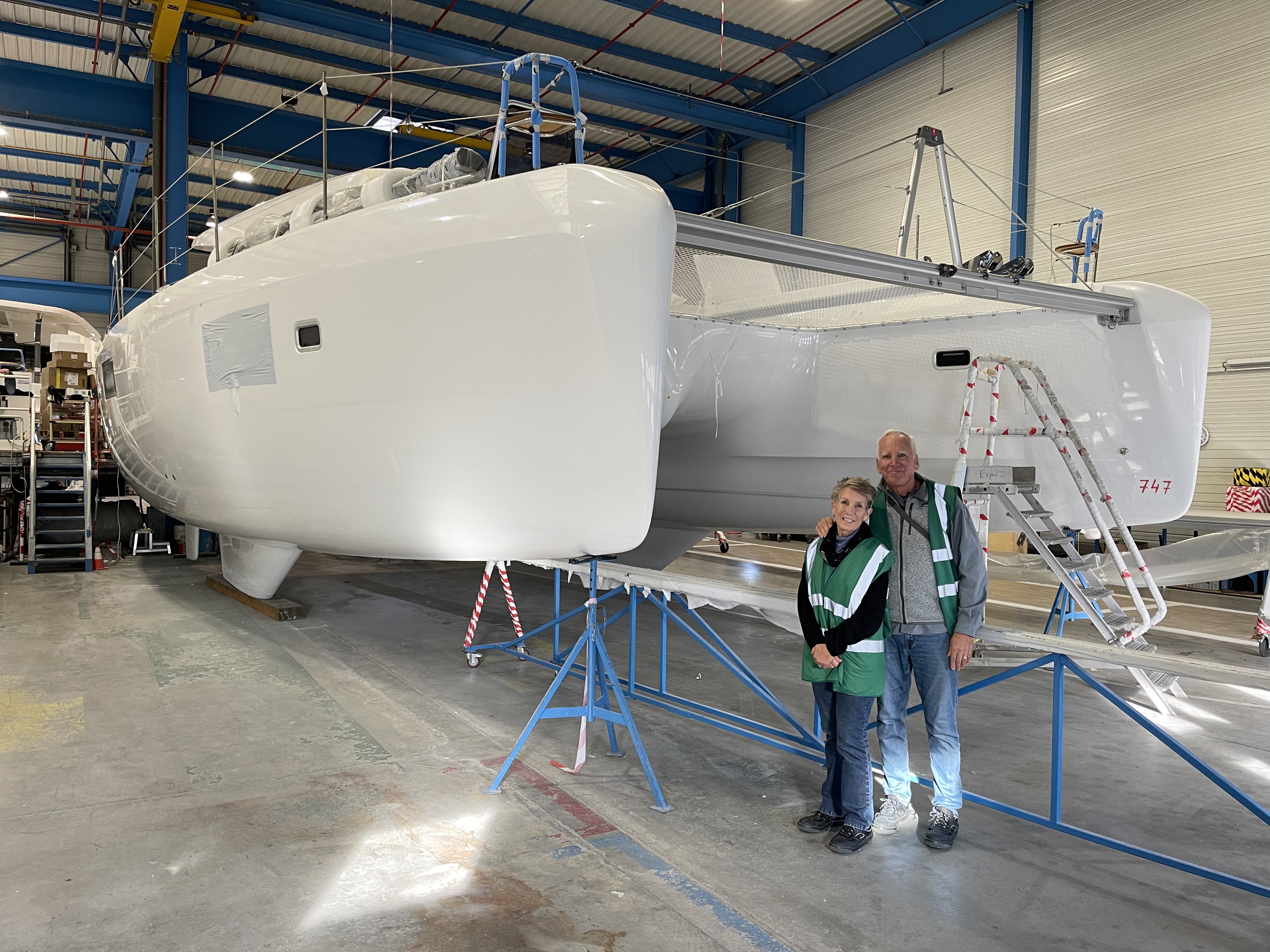
It is essential to know the genesis of a boat. Ginny and I went to the Lagoon Catamaran production facility in Belleville, France, to watch the final build of Stella Maris. She was then shipped from La Rochelle, France, to Florida. The only thing missing was a case of fine French wine that had been stashed onboard. No problem. A bottle of that wine ultimately appeared in a gift basket, and we christened Stella Maris with Mom and Dad onboard. We miss you, Pop, but we are happy that you were able to help christen the new boat.
Sea Trial West of Key West–March 2023
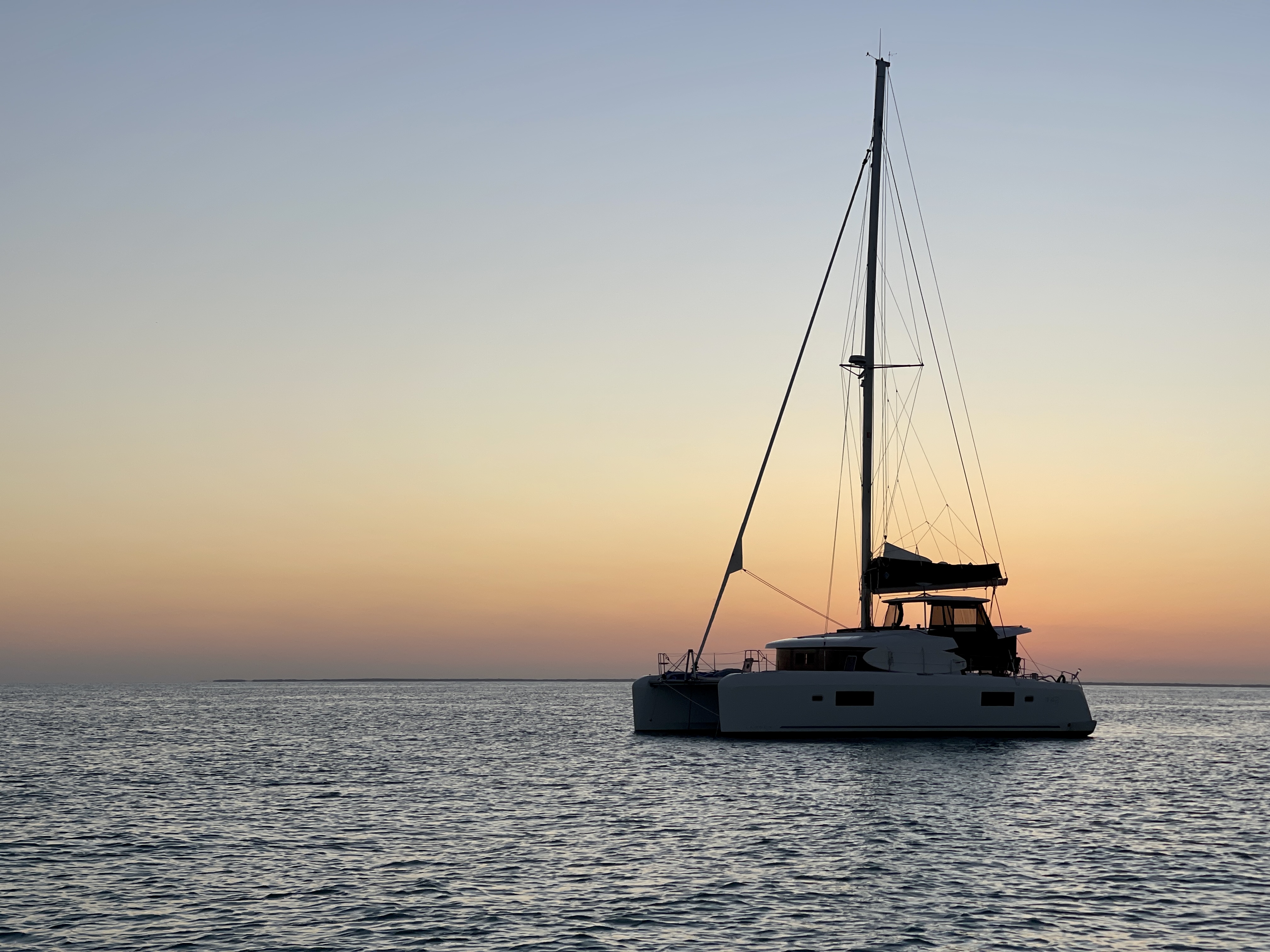
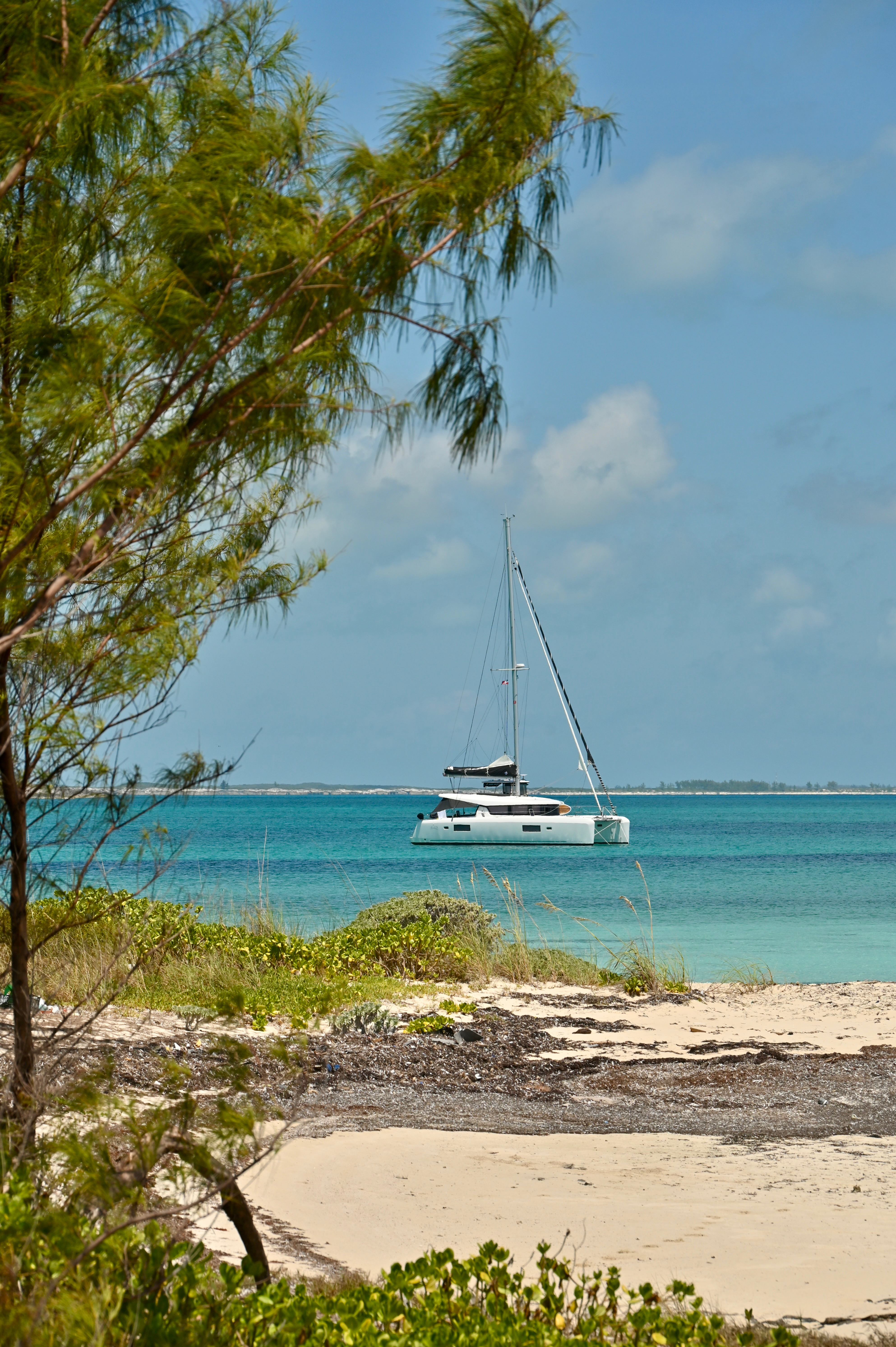
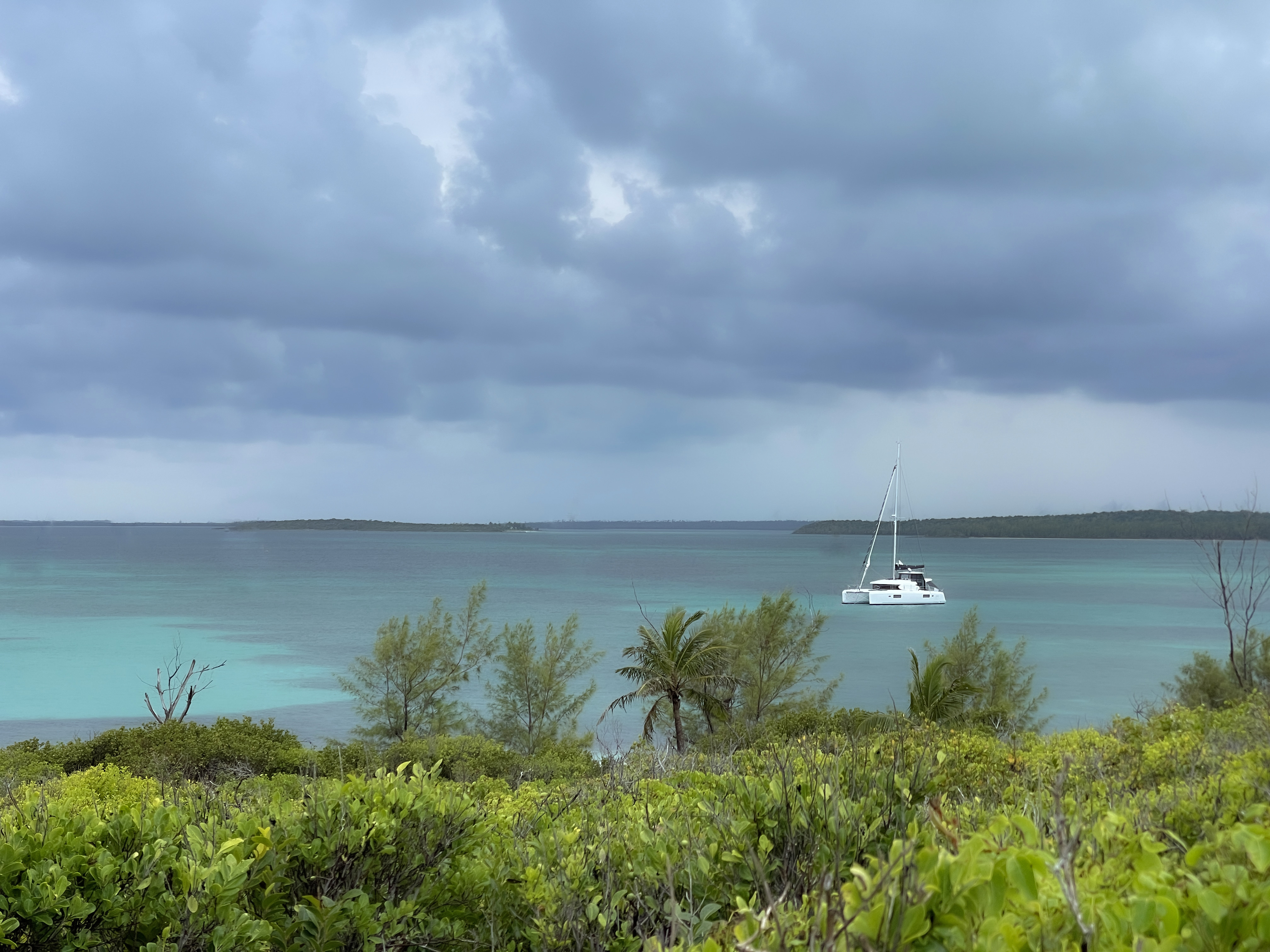
The catamaran, I quickly learned, is a different animal from the monohull that carried me around the world. Stella Maris is like a mobile beach cabin with a sail attached. It is a great platform to explore the islands west of Key West, where I spent so many years working as a charter fishing captain. The difference is that instead of pursuing the fish in these waters, the fish now–out of curiosity, and if I am quiet enough–come out to meet me. I can go to sleep and wake up in the islands, and a new day begins.
Click on individual gallery photos to see a high-resolution image
Shakedown Cruise to Bimini, the Berry Islands, and Abaco–May 2023
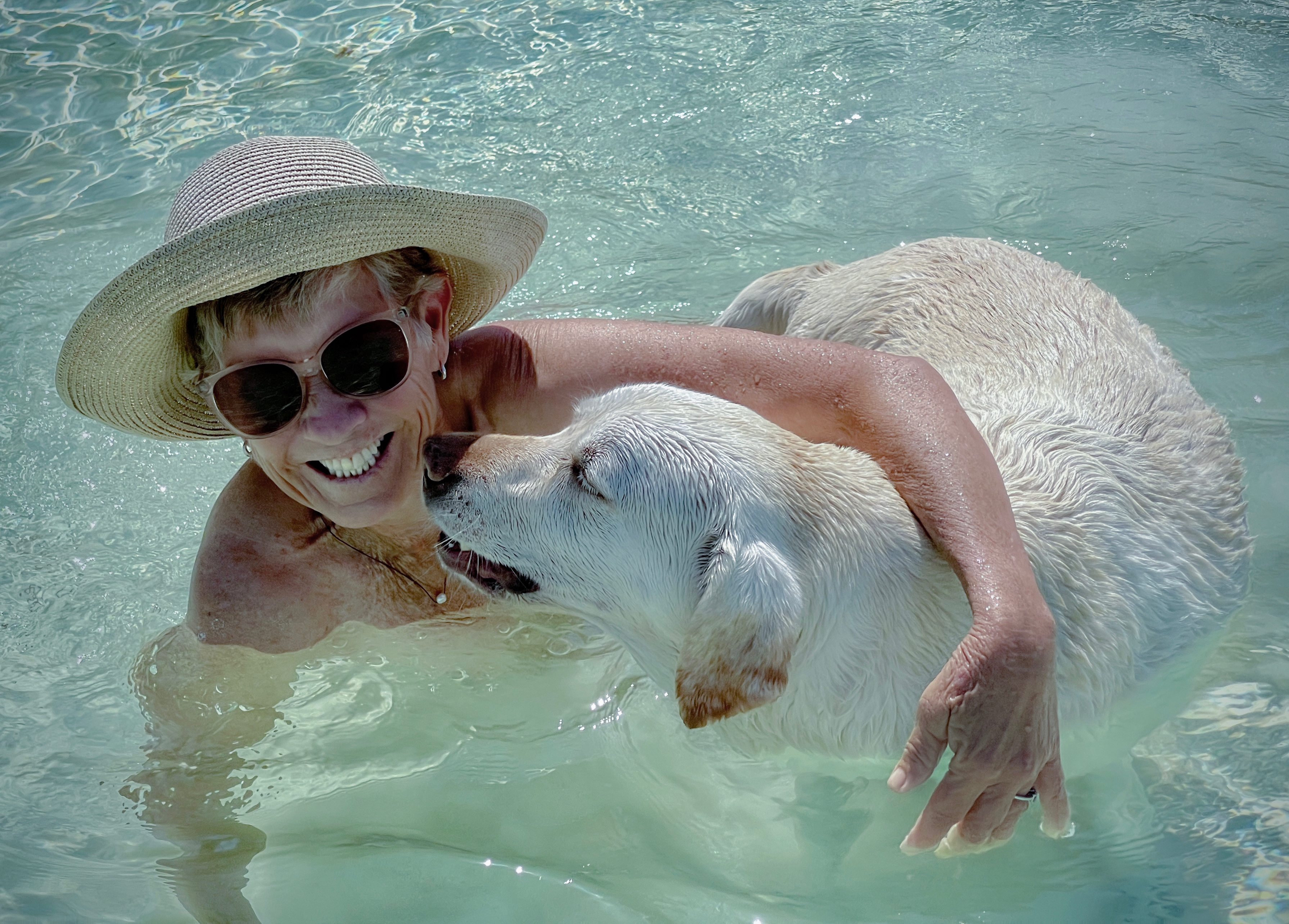
Ginny and Amiga were a welcomed crew on the first significant passage aboard Stella Maris from Key West to the Northern Bahamas. We revisited Bimini, where Ginny and I spent so many glorious days in our youth (she proposed to me there 44 years ago!) Gunkholing through the Berry Islands, we found secluded anchorages and nature trails. There is still some out-island tradition at Man-O-War and Green Turtle Cay in the Abacos. The highlight was a rendezvous with our daughter Lilly, who joined Stella Maris for several days, sharing her local knowledge of the Northern Bahamas.
Dry Tortugas–August 2023
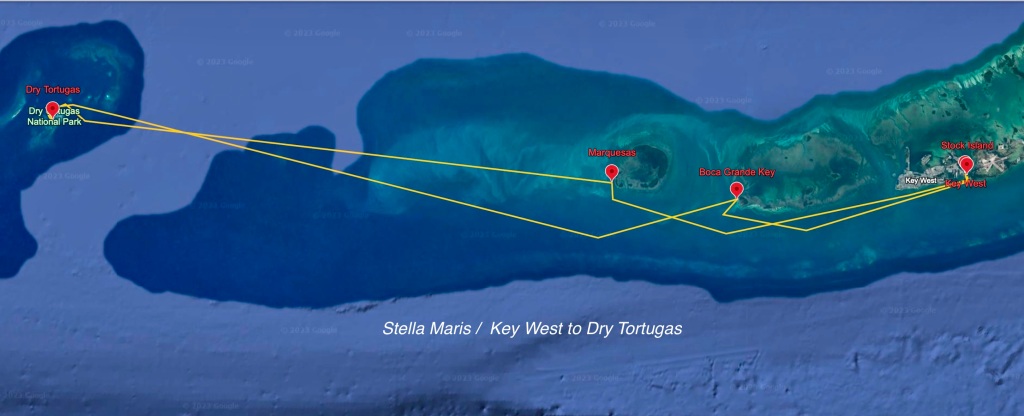
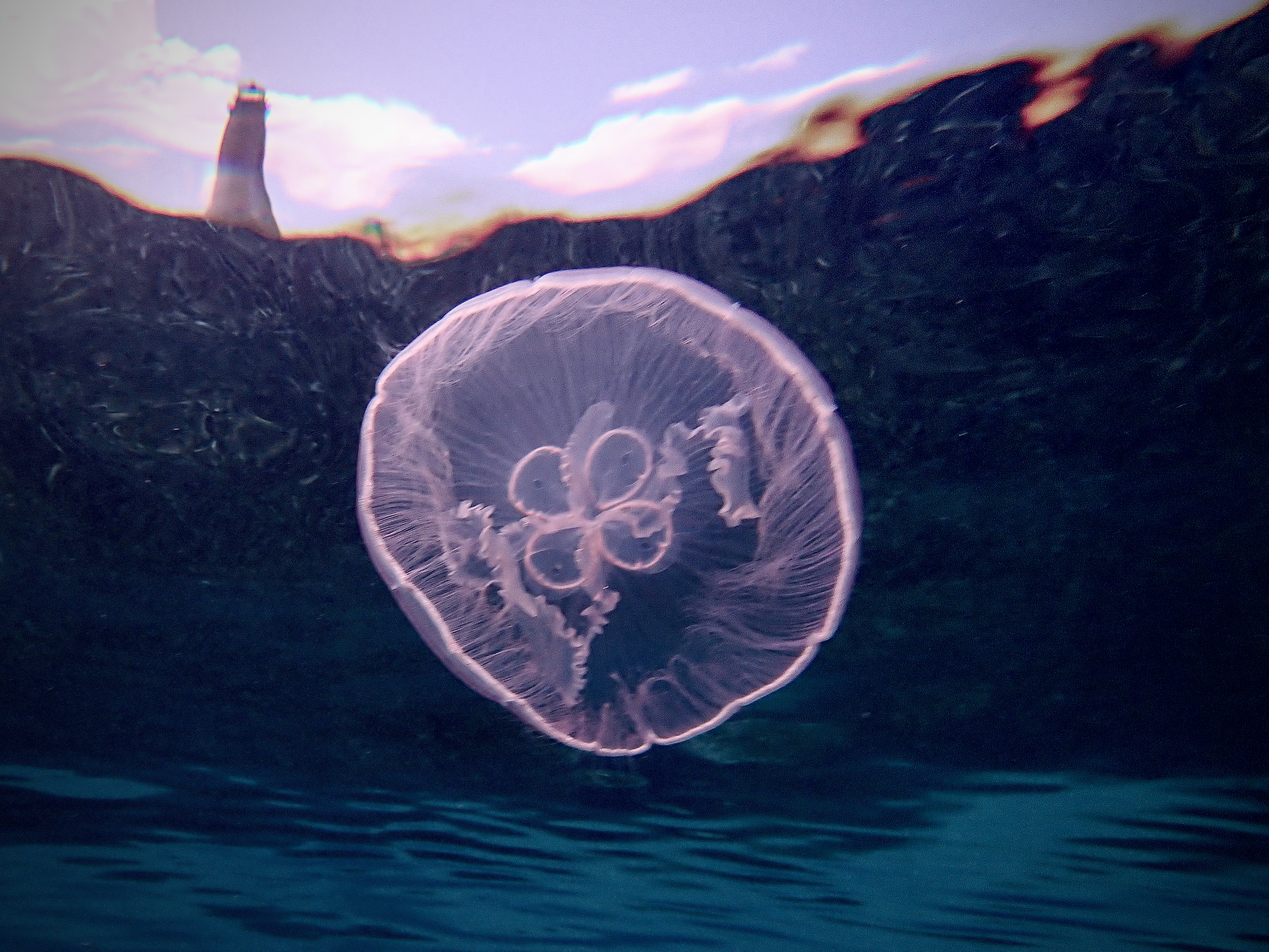
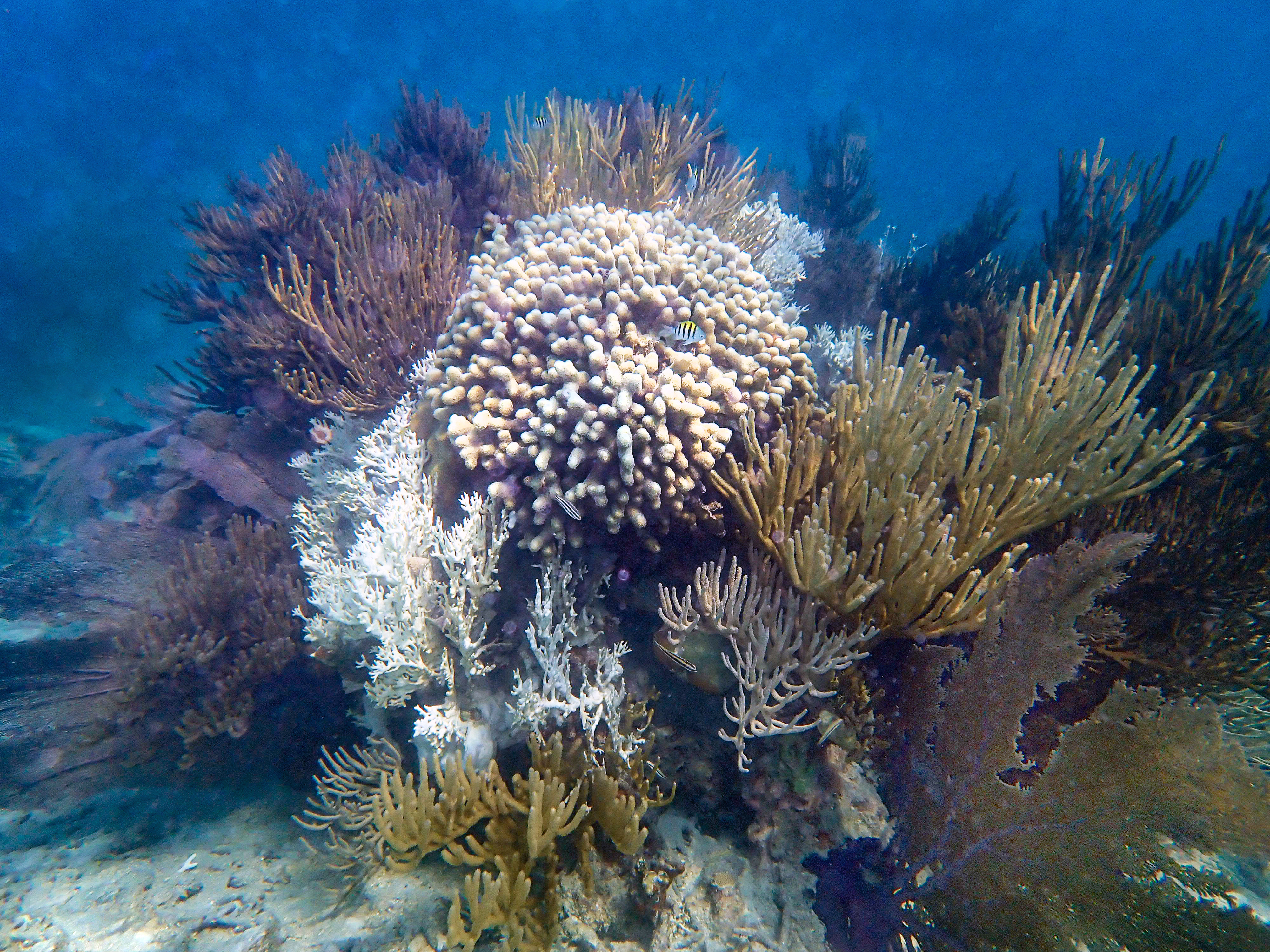
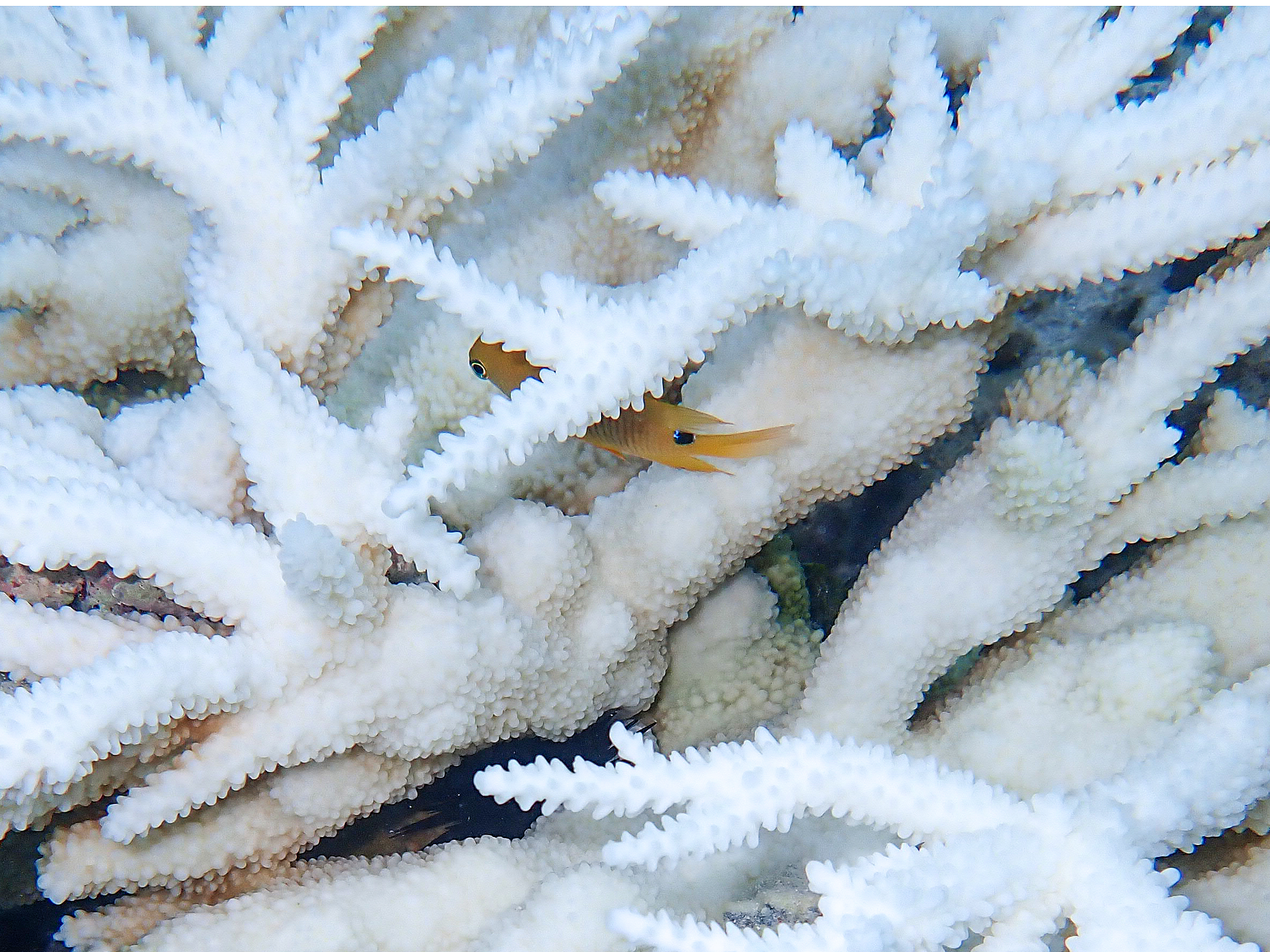
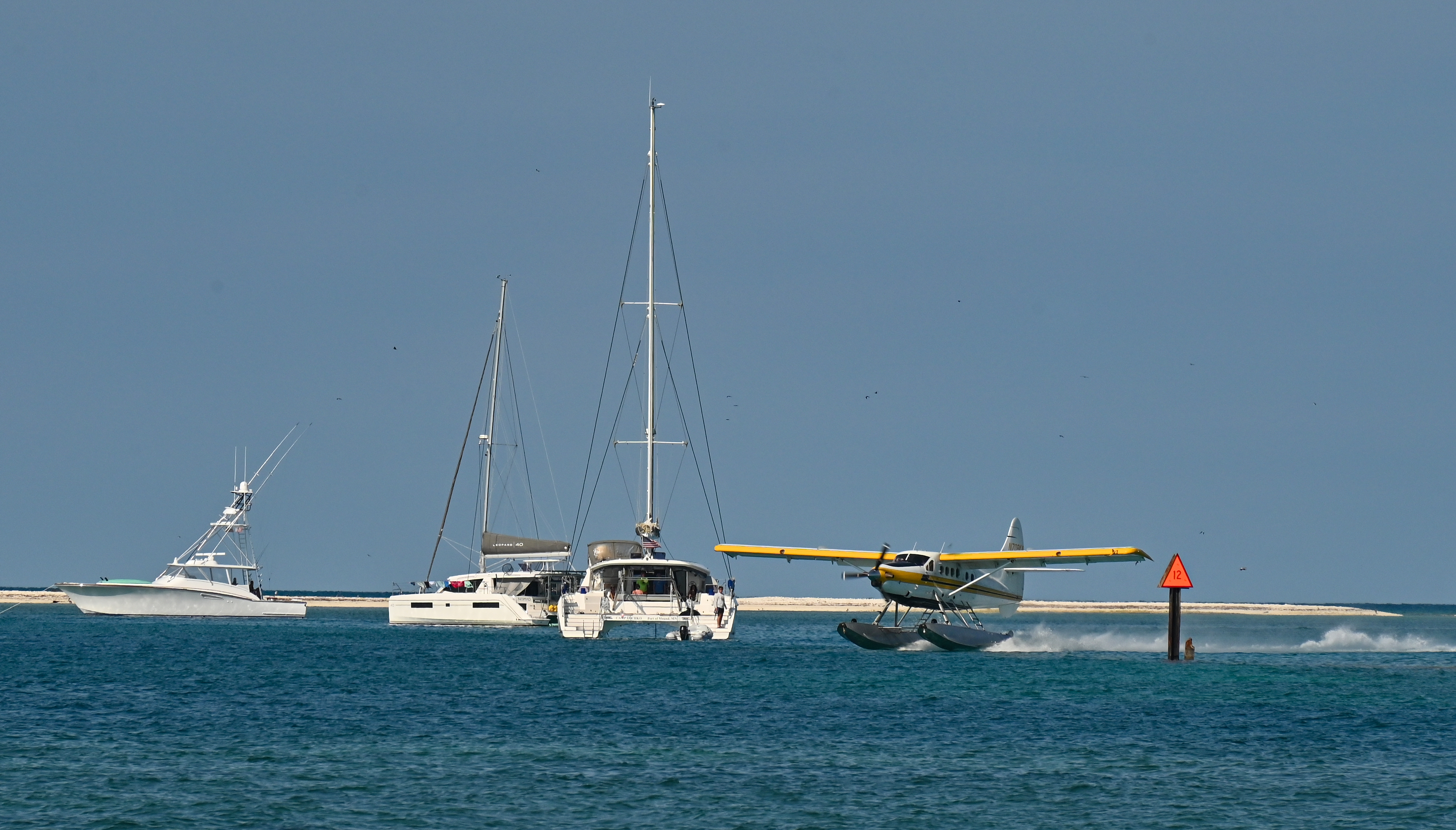
The summer heat of 2023 was frightening. I sailed to the historic Dry Tortugas National Park in light air and torrential rain squalls 70 miles west of Key West. I found some refuge from the heat under the water, but I was dismayed to see the damage done by global warming on the pristine reefs here. Immense brain coral heads and vast stands of staghorn coral, alive only a few months earlier, were now bleached white. The reefs at Dry Tortugas were severely stressed. Still, some indications of hope remained as moon jellyfish began to appear in cooler currents of water. The reef is resilient, but it cannot tolerate many more seasons of abnormally hot water temperatures.
Florida Keys Backcountry–September 2023
I have always loved the Florida Keys backcountry for its pristine habitat and dramatic flow of tides. Wading birds, lobster, and shallow-water gamefish thrive here. Conservationists recognized the importance of protecting this habitat decades ago. They established the Great White Heron and Key West National Wildlife Refuges. We sailed Stella Maris on the full moon into the rich heart of Jewfish Basin, along the extensive sand flats of Snipe Point and Marvin Key, and into Cudjoe Basin and Sawyer Key, where nature has been allowed to reclaim an island that was once developed.
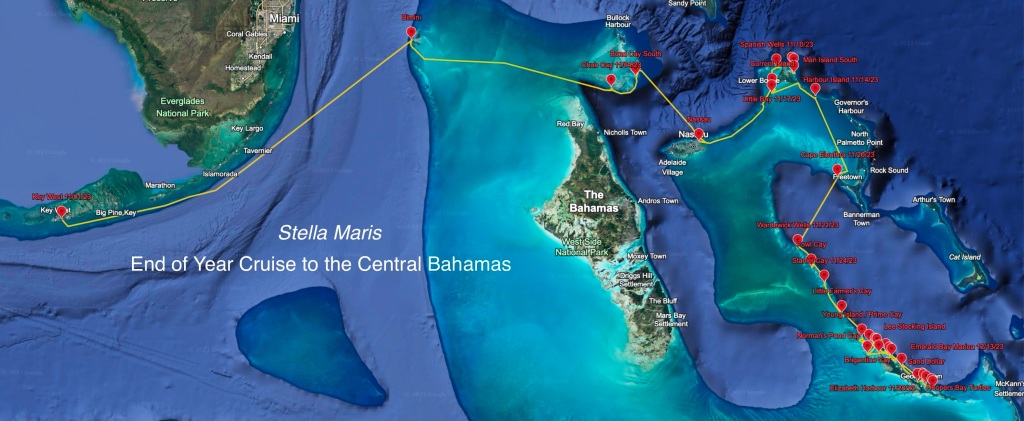
End-of-Year Cruise to the Central Bahama Islands–November / December 2023
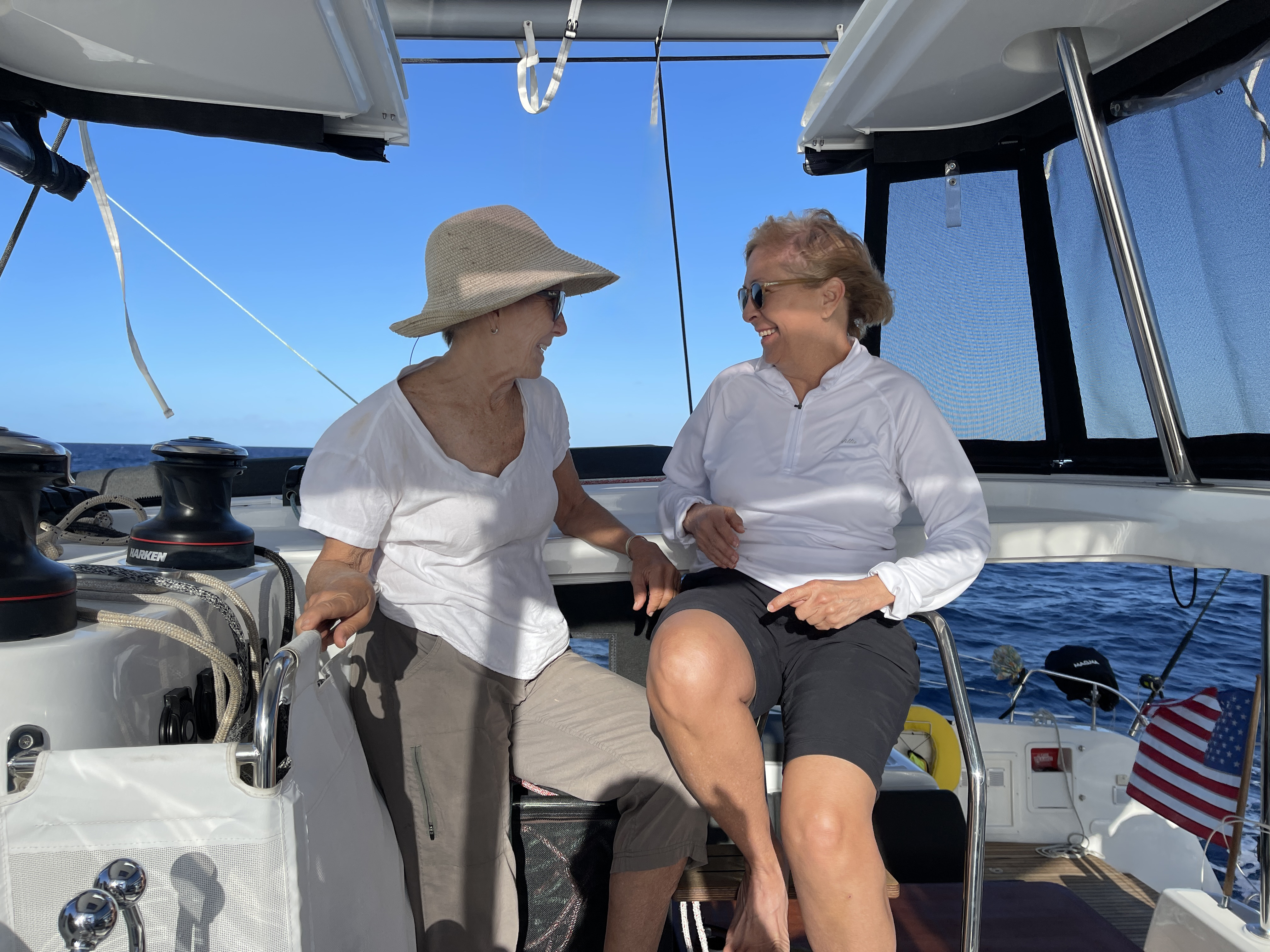
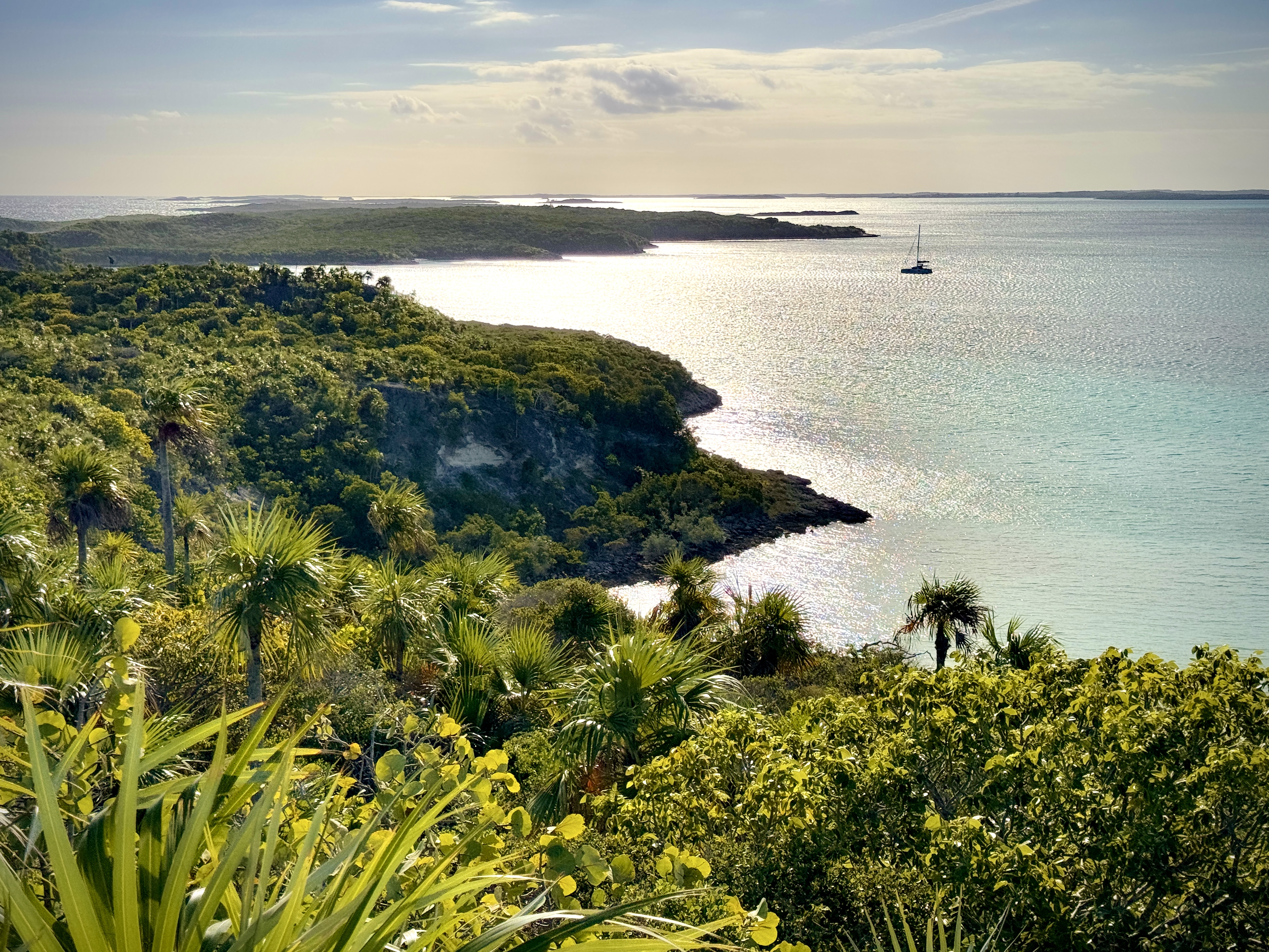
Trimming the sails again for the out islands of the Bahamas, we headed east and south toward Eleuthera and the Exumas Cays. My brother Bob joined me for the crossing from Key West to Nassau. Ginny and two dear friends, Carol and Gerald, joined Stella Maris from Nassau to Exuma. Highlights were food gathering with Bob, an accomplished free diver, standing watch with Gerald, who is focused and enthusiastic, and watching Ginny and Carol sing and dance through the islands like schoolgirls. As principally a solo sailor, I had forgotten the joy of sailing with a good crew. Stella Maris is now moored in Exuma while I spend the holidays with family in Key West. The year 2024 will find us heading south once again. Please join us here to continue the voyage in the new year.
As always, sailing is not just about the wind and the sea; the places, the flora, fauna, and people encountered along the way are equally important.
Please click “Follow” so that you don’t miss a new update,- and please consider sharing this post with others who might enjoy following the voyage. I welcome your commentsandwill always respond when I have an Internet connection. I will never share your personal information.
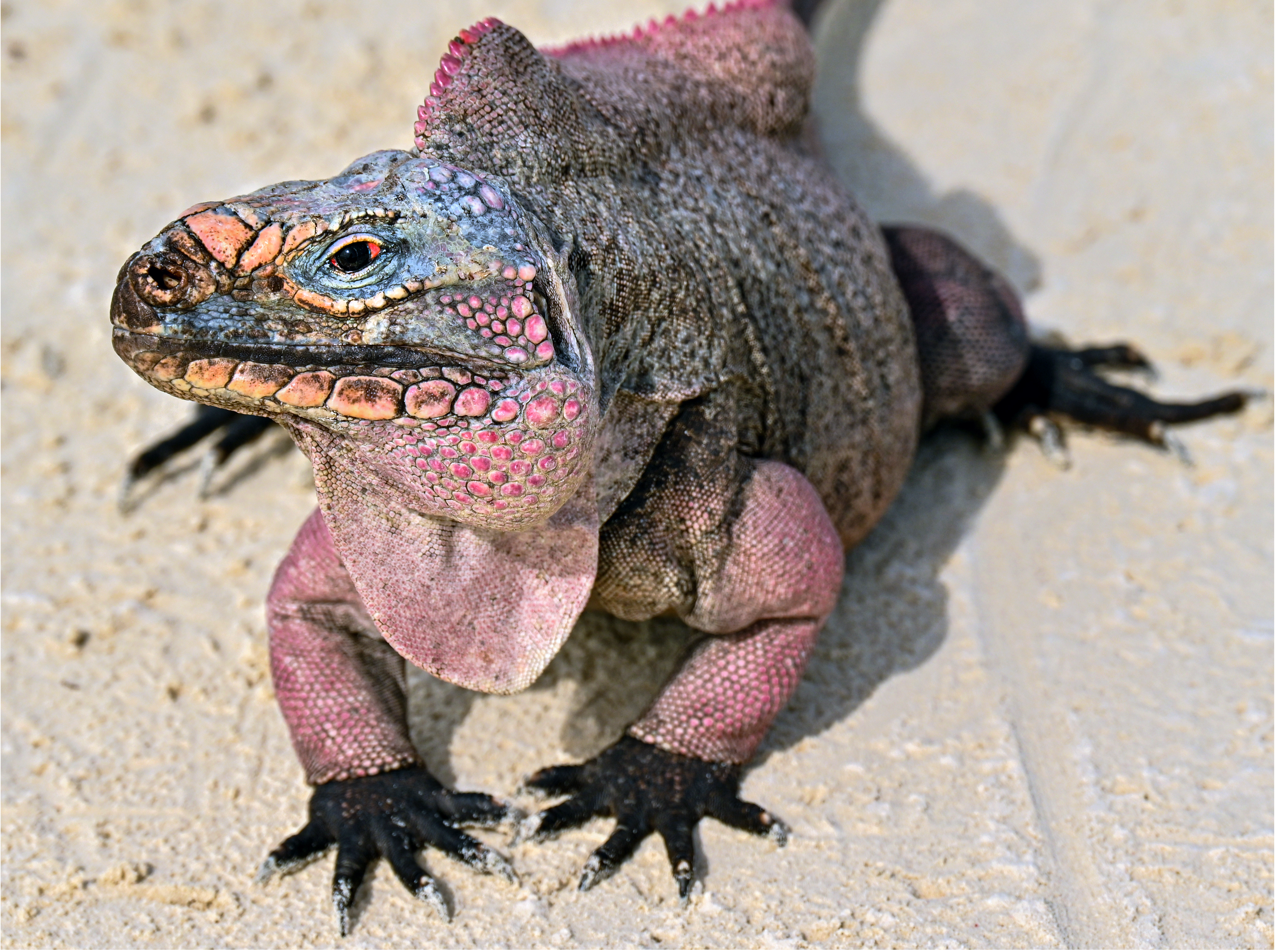
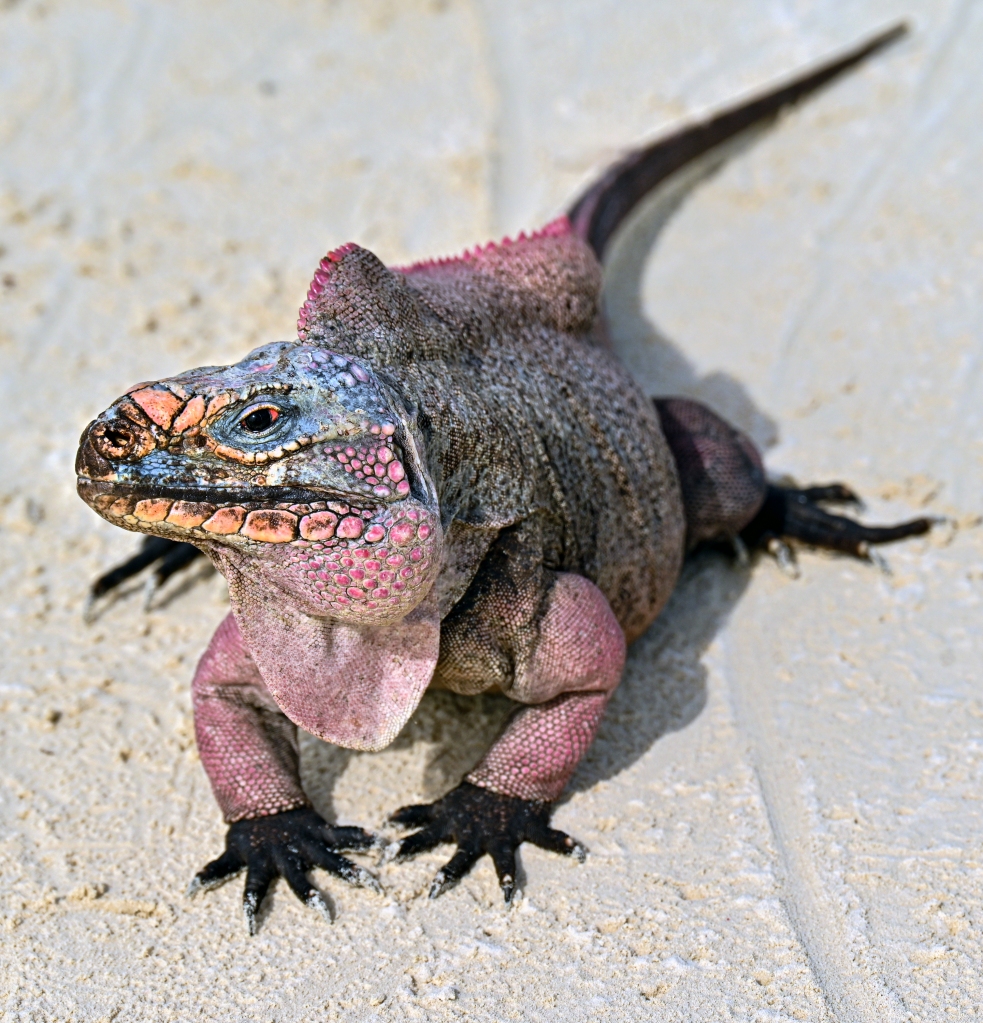
I confess I was entertained the first time I saw a pink iguana trundling out of the scrub to greet me. A pink iguana? It was like a Bahamas Barbie with black shoes and a lizard’s face.
On other beaches in the Exumas, there are swimming pigs, stingrays that nuzzle your toes, sea turtles that want grocery-store lettuce, and nurse sharks the size of linebackers that photobomb your snorkeling adventures.
These wild creatures have become a significant revenue center for Bahamian tourism, and for other destinations worldwide. In Exuma, charter boats carry hundreds of visitors to islands daily for the “wilderness adventure” of getting close–sometimes too close–to wildlife scavenging for human food scraps.
Swimming with the pigs has become one of the “must-do excursions in the Bahamas,” according to one tour operator’s sales pitch. “They (the islands) are visited annually over 6.6 million times. Swimming with the pigs has become internationally famous.”
Whose idea was this, and where did the pigs come from? According to the company Swimming with Pigs, the swine were brought to an uninhabited island in the Exumas “by farmers decades ago to rid Staniel Cay Village of the stench.” Now, tourists pay big money to experience it for themselves. A private eight-hour tour costs $3,900, “excluding snacks, towels, gratuity, and a 5% credit card processing fee.”
There is etiquette for swimming with pigs. Posted rules include:
Feed the pigs only approved foods, which are mostly bread, fruit, and vegetables. Your tour guide will provide you with information about other foods acceptable for feeding.
Don’t feed the pigs on the beach. Keep their survival instincts in-tact [sic] by feeding them in the water.
Be cautious. Don’t feed directly from your hand. Gently toss the food in the water beside the pig. Pigs are not very coordinated creatures.
Do not alarm the pigs. Don’t take advantage of them. Do not harm them. These Exuma pigs are still wild animals and can be dangerous if threatened. (The italics, for emphasis, are mine.)
To corroborate the importance of Etiquette Rule Number 4, Google the phrase, “Venezuelan Instagram model Michelle Lewin Bitten by Wild Pigs.” Ms. Lewin found out the hard way that pigs crave people food when she was chased by wild swine on Big Major Cay. Apparently, it wasn’t too traumatic for her because she laughed and posted a close-up image of the raw-looking pig bite on one globe of her buttocks. She now has 16 million followers on Instagram.
And then there was this pandemonium when the television show The Batchelor filmed an episode on Pig Beach:
For those who don’t know, the premise of The Batchelor is a single, handsome guy who entertains a bevy of attractive young ladies from whom he is expected to select a fiancée. This guy in this episode entertained the girls on Pig Beach. I wonder how that worked out for him.
But it’s not just pig swimming that you get for $3,900 a day. The tour also includes visits to harbors where you can (for an extra fee) swim with nurse sharks. These are large, docile creatures that usually eat crustaceans, but they have become accustomed to being fed fish parts when humans are present. Some tourists forget that these sharks are also wild animals.
Katarina Zarutski, a 19-year-old nursing student at the University of Miami, was bitten by a nurse shark while vacationing in Exuma. According to an account in Business Insider, she posed for a photo in the water, and one of the sharks bit her arm and dragged her underwater for nearly eight seconds. She healed from the shark bite after undergoing multiple rounds of antibiotics to prevent infection, and surgery to remove pieces of nurse shark tooth embedded in her arm.
“I respect wildlife tremendously,” she told Business Insider. “They’re wild animals, and it’s an uncontrollable situation. It’s important to remember to be careful.” The magazine reported that after the story of her shark bite went viral, Zarutskie’s Instagram went from having around 13,000 followers to 46,000 followers.
Another Exuma charter company promotes their tours this way: “After experiencing eye-catching scenic views, you meet with friendly sharks and iguanas trained by professional instructors to create your custom experience by touching, feeding, and interacting with our pleasant marine mammals. During the tour, our captivating team not only creates an ambiance with relaxation for body, mind, and soul but prepares a special blend of our secret ingredient, ‘Bahamas Experience,‘ while sipping aromatic cocktails and beers with notes of mango on the open waters, admiring a panoramic view of the picturesque waters, sandbank, and cays. Can your vacation taste any better? Like Dunkin Donuts… ‘It’s worth the trip.'”
I also wanted to “taste the experience,” but I don’t like crowds, so I pulled my dinghy ashore on Leaf Cay late in the day after the tours had ended. I had watched a dozen boats, commercial and private, land on the beach of this gorgeous 30-acre undeveloped island. Leaf Cay may be undeveloped, but it is inhabited–by hundreds of Bahamian northern rock iguanas.
As I stepped onto the island, the underbrush rustled, and dozens of fat pink iguanas suddenly surrounded me. They looked at me with shifty red eyes, and when they saw that I didn’t have food in my hands, one by one, they turned away to find a warm stone and wait for a more generous visitor.
The Bahamian northern rock iguana is a colorful species of lizard that has seen its numbers decline in recent years. Less than 5,000 animals still linger in the wild, and Leaf Cay remains one of the best places in the Bahamas to see them. On its website, a yacht management company writes: “Say hello to the rock iguanas, a local and endangered species. They are friendly and welcoming to visitors – especially if you come with grapes! Once your yacht tender touches the shore, you’ll be greeted with masses of grey and pink iguanas waiting for their fruity snack.”
The problem is biologists have found iguanas fed by tourists on remote islands in the Bahamas have developed a sweet tooth and high blood sugar because tourists feed them grapes. A National Geographic article on Bahamian wildlife tourism notes that iguanas might be losing their normal appetite for grazing on local plants (wild dilly, black torch, darling plum, and blolly) as they flock to the places where they’re more likely to get high-calorie treats. Chuck Knapp, a scientist from the Shedd Aquarium in Chicago who has made a career studying Bahamian iguanas, told National Geographic that he worries some rock iguanas may be showing signs of diabetes. He has noticed iguanas have begun to poop sand. He thinks this might be from eating food like grapes left on the beaches.
It is not just in the Bahamas where tourism is affecting marine wildlife. In the Florida Keys, dockside tarpon feeding has become a carnival sideshow, turning one of the world’s most magnificent gamefish into bait-eating beggars by tourists who hand-feed them fish pellets and rancid sardines. In Boca Raton, a woman was bitten on the forearm by a small nurse shark, and it refused to let go even after it was killed. Witnesses told the Sun Sentinal newspaper that a group of people had been harassing the shark and pulling its tail when it turned on the woman and bit her. She was admitted to the hospital with the shark still attached to her arm.
Astonishingly, we have not evolved to the point where humans no longer need to dominate other living things for pleasure and entertainment, even if they are pink iguanas. Learning how to tread more respectfully in nature has taken me decades. I understand that we all must earn our daily bread, but if there is an option to earn that dollar through observation and appreciation instead of manipulation, why not follow a more ethical path?
Bahamas National Trust, (2008), Endangered Species of the Bahamas: Bahamian Rock Iguana
National Geographic, (6 Aug 2018), Can the Bahamas Keep Wildlife Tourism in Check? Sarah Gibbens
Phys.org, (22 April 2022), Ecotourism giving rare iguanas a sweet tooth, Kelly MacNamara
Iguana Specialist Group, Iguanas are among the world’s most endangered animals
Yacht Management, (28 Sep 2018), Things to Do: Visiting the Animals of the Exuma Cays
YouTube, (8 Feb 2016) Swimming with Pigs! – The Bachelor
Washington Post, (16 May 2016), ‘It wasn’t letting go’: Woman rushed to hospital with a shark attached to her arm, Lindsey Bever
Business Insider, (12 July 2018), A 19-year-old model was bitten by a shark while she was on vacation in the Bahamas, Nian Hu
As always, sailing is not just about the wind and the sea; the places, the flora, fauna, and people encountered along the way are equally important.
Please click “Follow” so that you don’t miss a new update,- and please consider sharing this post with others who might enjoy following the voyage. I welcome your commentsandwill always respond when I have an Internet connection. I will never share your personal information.



































 Stella Maris Sail