The Dangerous Middle

AA6A9CCC-B467-4C3B-B033-E0851CF9A04E

A mid-winter squall thrashes the coconut atoll of Maupihaa, a last outpost of French Polynesia. Photography: © Jeffrey Cardenas

Winter has arrived in mid-June as Flying Fish negotiates the changes in longitude on its journey westward around the globe. Here the solstice on June 21 is the shortest day of the year. After a lifetime in the northern hemisphere I feel like I am upside-down.

For many sailors the departure from French Polynesia to points west—the Cook Islands, Tonga, Samoa, and Fiji—marks the end of the Coconut Milk Run, the forgiving passage of trade wind sailing from the Americas to Tahiti. The party is over in Bora Bora.

The South Pacific Convergence Zone (SPCV) dominates the weather now in the Central South Pacific. Even though the cyclone season is months away the fierce winter storms passing well south bring an unsettled climate here. At this longitude Flying Fish has sailed into an area of the Pacific Ocean known as The Dangerous Middle.

West of Tahiti, weather windows must now be more carefully consulted. Mid-winter fronts arrive every seven to 10 days. When they descend upon these waters the ocean is anything but pacific. I am sailing solo again. This brings everything into sharper focus. There is no margin for error.

I waited nearly two weeks in Bora Bora for the inclement weather to pass (not exactly hardship duty Bora Bora) and finally seeing an opening on the weather charts I departed for the island of Maupiti, a short 25 miles west. Maupiti is a French Polynesian island of soaring cliffs, luxuriant vegetation, and magnificent beaches. There are braserries and warm baguettes. But within hours of my departure from Bora Bora the wind returned to near 30 knots and seas increased to 12 feet. Squalls reduced visibility. Maritime navigational notes warn against attempting an entry into the exposed south pass of the Maupiti atoll when seas exceed two meters. The warning is well founded. As I approached the pass I could see set waves breaking completely across the only entrance to the lagoon. A current of five knots was flowing out of the narrow cut between two spurs of the coral reef.

Maupiti may be one of the most scenic landfalls in the South Pacific, an island not to be missed. Maybe, but for me it will have to be in another lifetime. I took one last look; I could almost smell the French pastries. However, running this pass in Flying Fish under these conditions would be certain disaster. There was also no turning back against the wind and seas to Bora Bora. I continued on, a night passage of more than 100 miles, to the atoll of Maupihaa.

Maupihaa is a low coconut atoll with virtually no radar return. Arriving in a torrential rainstorm I was first able to make visual contact only because of the massive swells breaking again the reef. This is also a “single pass atoll”, meaning all of the water that flows over the reef and into the lagoon has only one pass from which to exit. In stormy weather this creates a raging outgoing current. Although the pass is located on the protected northwest corner of the atoll the navigation notes state, “Passe Taihaaru Vahine is one of the trickiest passes in French Polynesia. Currents can reach six knots with whirlpools and rips that can make this entrance impassable.” An Australian sailor in a boat already anchored in the lagoon (he had been waiting there for nearly 10 days for better weather) talked me through the pass over the VHF radio like an air traffic controller guiding a plane in on an instrument approach. “Look for a break in the coral shelf,” he said, “and then come in hot because any hesitation will sweep you sideways onto the rocks and there is not enough width in the pass to turn around.”

Hours later after my heart rate returned to normal, I learned that Maupihaa was unlike any other island I had sailed into in French Polynesia. In 1998, Cyclone Martin swept over the island destroying 75% of the trees and vegetation, and all but one of the houses. Now less than 10 families live here in open-air huts sustained by a hard-scrabble life of harvesting copra (coconut meat for oil). A supply barge arrives only a couple times each year. There are no hotels, no roads, no shops. Barter among the inhabitants is the only currency. Thousands of seabirds inhabit the atoll and the lagoon abounds with sharks, turtles, and colorful tropical fish. Aside from the constant roar of seas breaking on the atoll reef, there are no other sounds–except for the incessant barking of dogs.

“The locals have invited you to dinner ashore,” the other sailor said once I had secured my anchor. “Expect to be served tern eggs, coconut crabs, and dog stew. Bring liquor.”

Dog stew?

We are not in Kansas anymore, Dorothy. And in the Dangerous Middle, Toto is on the menu.

Track the passage of Flying Fish here: https://forecast.predictwind.com/tracking/display/Flyingfish
 

The Coral Gardens of French Polynesia

To be among the coral gardens of French Polynesia is like swimming in the Garden of Eden. The coral has been growing here for 500 million years. But this paradise could vanish by the end of this century. In our lifetime we may be cast out of the garden along with everything that swims within it.

OLYMPUS DIGITAL CAMERA

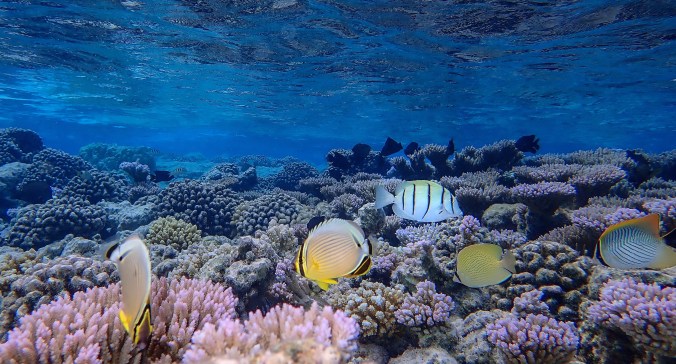
The coral gardens of French Polynesia are extraordinary in color and diversity.   Photo: © Jeffrey Cardenas

OLYMPUS DIGITAL CAMERA

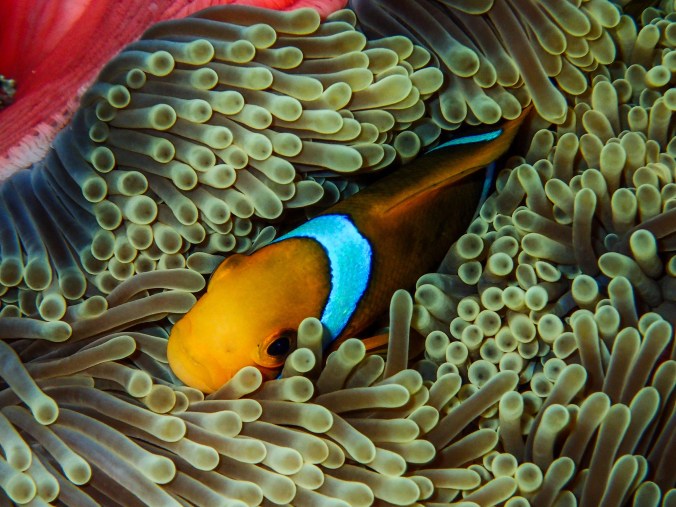
A clownfish hides in a bed of stinging anemones off the island of Mo’orea.   Photo: © Jeffrey Cardenas

Tropical reefs have lost more than half of their reef-building corals in the past 30 years, according to a 2015 WWF report. It is a fact that since the beginning of the 20th century, sea surface temperatures have steadily increased. Coral polyps unable to cope with unusually warm temperatures become stressed and expel the colored microscopic algae living in their tissue. Without the algae the coral dies of starvation and what is left is a skeleton of white bleached rock.

OLYMPUS DIGITAL CAMERA

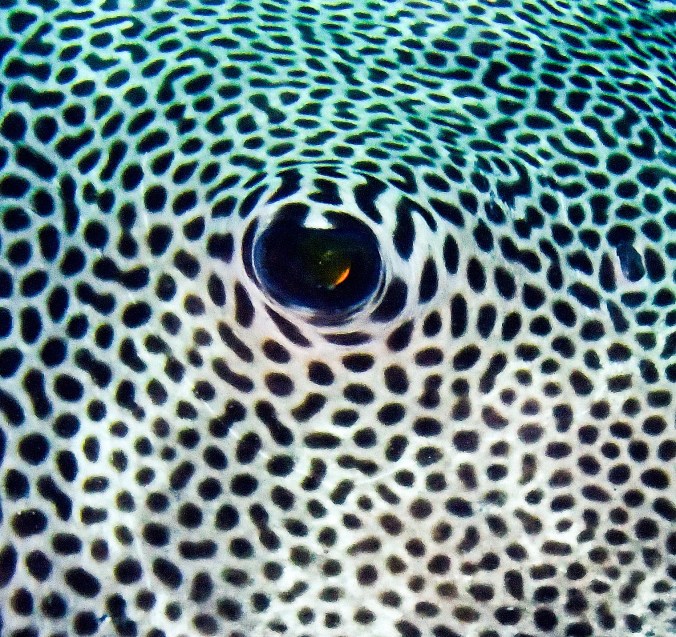
The friendly eye of a pufferfish belies the fact that some species have a toxin called Tetrodotoxin, which can be 1,200 times more deadly than cyanide.   Photo: © Jeffrey Cardenas

OLYMPUS DIGITAL CAMERA

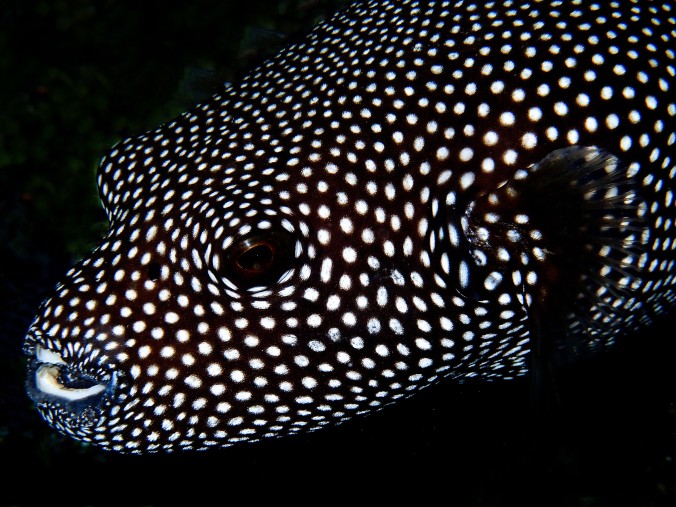
A Pacific Guineafowl Pufferfish, in its black phase, the jazz musician of reef fish.   Photo: © Jeffrey Cardenas

There is hope, however, for coral in French Polynesia because of a concerted effort here to protect and manage marine areas. From the Marquesas to the Tuamotos and the Society Islands there are a series of UNESCO reserves, protected maritime landscapes, and regulated fishing and anchorage areas. And they are enforced. When I inadvertently dropped the anchor of Flying Fish in a patch of sand in a restricted area of the lagoon of Mo’orea, the maritime gendarmerie were quickly on the scene to suggest a different anchorage.

OLYMPUS DIGITAL CAMERA

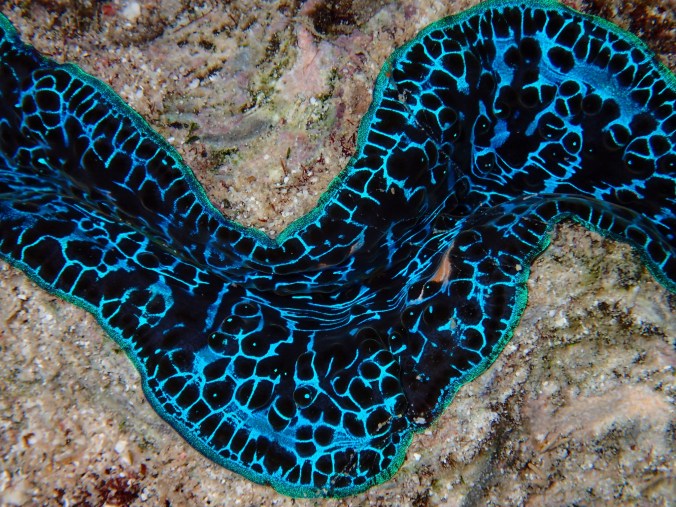
The flange of a Giant Pacific Clam undulates with iridescent color.   Photo: © Jeffrey Cardenas

What can one solo traveller do to preserve this underwater Garden of Eden? Aside from the obvious (like dropping your anchor in the correct spot) the effort of awareness on all levels is essential. It is in that spirit that I offer these images of the coral gardens of French Polynesia.

For a compendium of reef awareness issues and programs log on to: http://www.CoralGuardian.org

OLYMPUS DIGITAL CAMERA
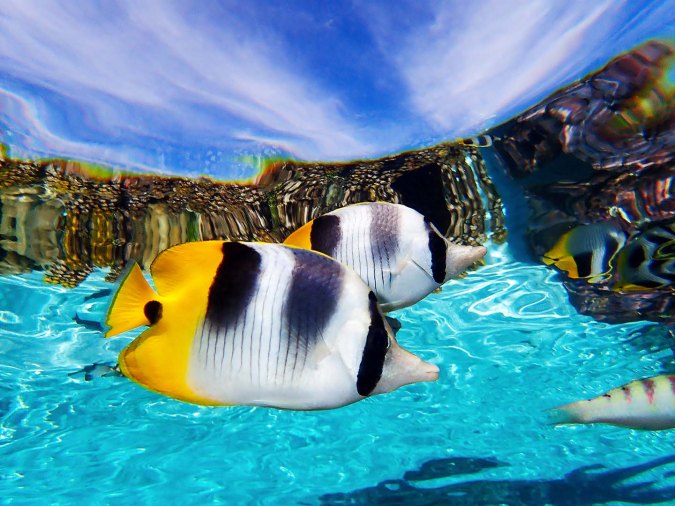
A pair of Blackwedged Butterflyfish swim in a shallow tidal pool reflecting the surface of the water.   Photo: © Jeffrey Cardenas
OLYMPUS DIGITAL CAMERA

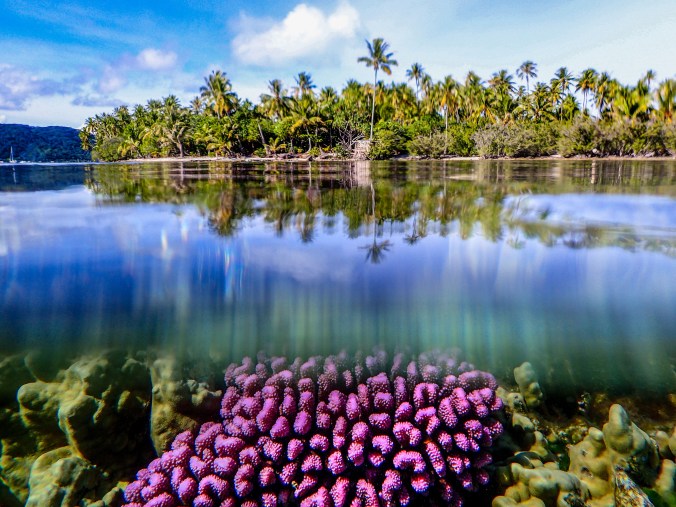
The coral gardens of Taha’a are spectacular above and below the surface of the water.   Photo: © Jeffrey Cardenas

Tahaa sunset bora bora.sm

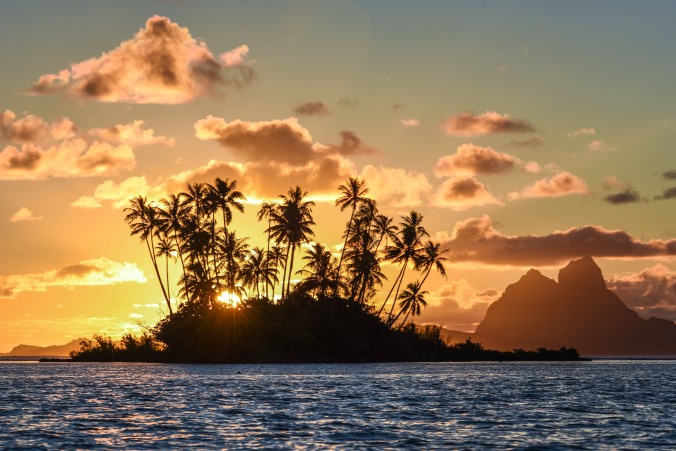
A small motu off the Polynesian island of Taha’a, with the caldera of Bora Bora at sunset.   Photo: © Jeffrey Cardenas

Track the passage of Flying Fish here: https://forecast.predictwind.com/tracking/display/Flyingfish
The Many Faces of the Marquesas

OLYMPUS DIGITAL CAMERA

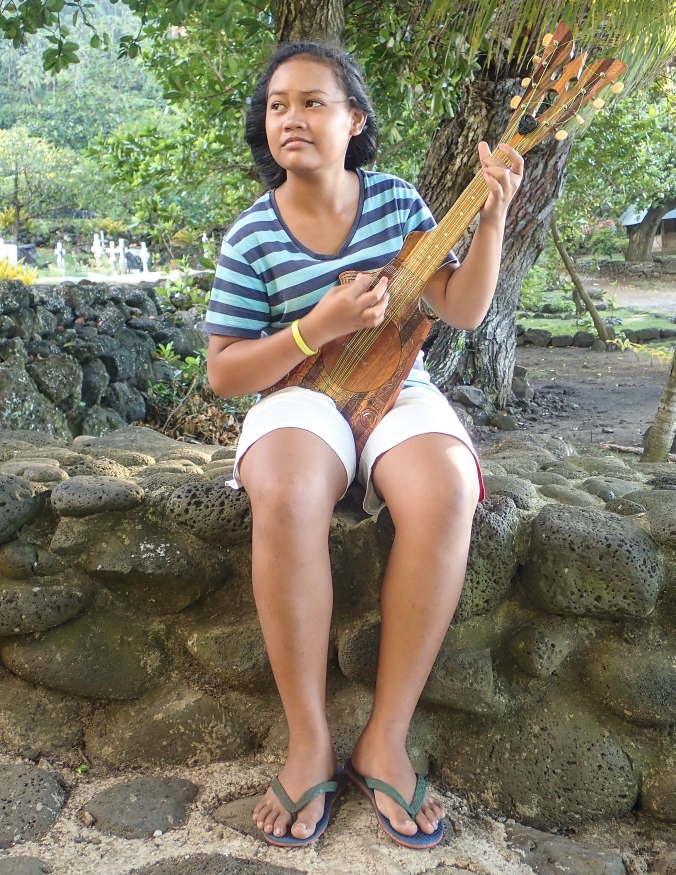
She could have just walked off the canvas of a Paul Gauguin painting.     Photo: © Jeffrey Cardenas

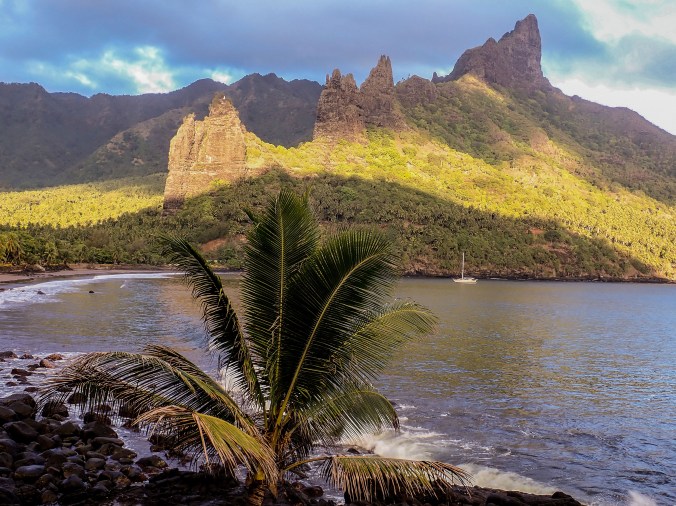
For nearly a month it was as if Flying Fish had been sailing off the face of the earth. Then, at sunset on one clear afternoon, the peak of Fatu Hiva in the Marquesas was outlined on the horizon. By morning our anchor was secure at one of the great landfalls of ocean voyaging, the exquisite Bay of Virgins. Towering basalt cones resembling giant phalluses mark the entrance to the bay. French sailors originally named it the Baie des Verges (Bay of Penises). When the missionaries arrived they were outraged so they inserted the letter “i” making it the Baie des Vierges, which translated to Bay of Virgins (as if somehow that made the name less provocative.) Meanwhile, the indigenous Marquesans must have thought all of this was hilarious. Until, of course, they realized that the arrival of outsiders was literally wiping their civilization out of existence.

The Marquesan name for this group of 10 islands is Fenua Enata (Land of Men). The archipelago covers over 1,500 square miles of the South Pacific. It is a land of crenellated mountains, waterfalls, deep fertile valleys, and a dark coastline pounded by relentless surf. As early as 500 AD, seafaring Marquesans sailed and paddled their oceanic canoes thousands of miles to the islands now known as Hawaii, Easter Island, and New Zealand. A thousand years later, Europeans were following the same sea routes. In 1595, Spaniard Don Alvaro de Mendaña y Neyra sighted the Marquesas by chance. He thought the islands to be uninhabited but near Tahuata hundreds of light-skinned natives, naked, tattooed, and unarmed, paddled out in canoes and boarded the ship. Mendaña ordered a gun fired and the frightened natives jumped overboard. Then the Spaniards began shooting the Marquesans as they swam to shore. To be certain that nobody would forget his legacy Mendaña carved his name and date into a rock—and then left three bodies hanging from trees in a nearby village. When he departed, Mendaña left three large crosses and over 200 dead Polynesians in his wake. In the years that followed slavery, alcohol, firearms, and syphilis would further reduce the population until 95 percent of the indigenous people of the Marqueseas had died.

It is with this history in mind that I pull the dinghy of Flying Fish quietly into the bay at Tahuata where Mendaña had caused so much mayhem on his visit a half a millennium ago. A corridor of banyan, cashew, and wild almond trees shade a cobblestoned walkway. A lazy dog barely twitches an eye as I walk by. The foundation of a me’ae, an ancient Marquesan place of worship, is situated on high ground overlooking the bay. This me’ae would have most certainly been here when Mendaña arrived. Nearby, I hear the soft sound of sweet music from a ukulele. A young girl who seems to have stepped directly out of a Gauguin painting is playing the instrument. She sits on a rock wall near the cemetery of a Catholic church. A three or four-year-old boy, naked, dances soundlessly to the music. I sit nearby and the girl acknowledges me with a smile. Then she continues to play an enchanting set of chords as if she is the only person in this world who can hear the music.

The island of Fatu Hiva was impossibly scenic. Tahuata was spiritual. But Hiva Oa was the island where Paul Gauguin would choose as his final resting place. The life and death of Gauguin has fascinated researchers for over a century. He arrived in the Marquesas in 1901. Gauguin had quit his job in France as a stockbroker; he abandoned his wife and five children, and then sailed to Polynesia where his artistic genius blossomed. He built a two-story house in Hiva Oa with wooden frames on which he carved his favorite epigrams including “Soyez amoureuses et vous serez heureuses (Be in love and you will be happy). Gauguin wore shoulder length hair, a velvet cowboy hat, and reportedly had repulsive manners. And, he was plagued by bad health. He drank to excess, took drugs, had syphilis, and despite the attentions of his 14-year-old mistress Vaeoho, he died 1902. There is a post-mortem legend in Hiva Oa that on the day he died his Marquesan neighbor, Tioka, went into Gauguin’s house and found him lifeless. Following a Marquesan custom, Tioka bit Gauguin’s head, but the great artist was dead and he did not stir. The faces in his paintings can be seen everywhere in the Marquesas.

henri & wife.sm

The Marquesan people–and their dogs–possess the spirit of mana.  Photo: © Jeffrey Cardenas

school dancers.sm

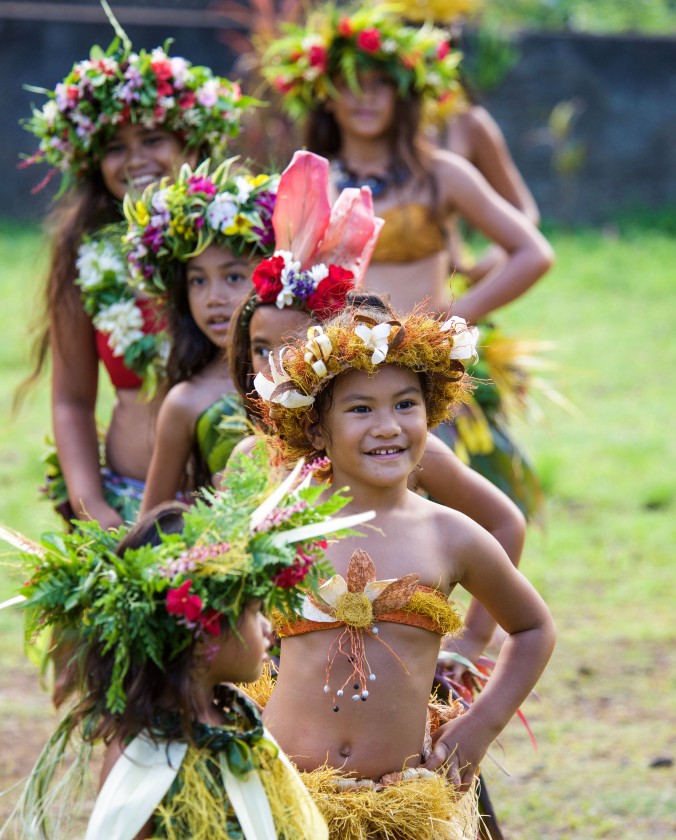
As these children prepare for a school presentation their faces reflect the purity of their island heritage.     Photo: © Jeffrey Cardenas

On the island of Nuka Hiva is Baie Hatihue, a remote and lovely spot that captured the attentions of Robert Louis Stevenson. I anchor Flying Fish in the bay and go ashore in search of fruit. An entire stalk of bananas costs me the equivalent of $5 in Polynesian francs. With the bananas on my shoulder I catch the eye of two lovely Marquesan girls braiding each other’s hair and giggling at the sight of me. I set down the bananas and point to my head. I cannot speak French or Marquesan but I needed a haircut and with a pantomime of scissors I convince the girls—to their great humor—to open a makeshift barbershop for me under a breadfruit tree. One of the girls runs to her house and brings out a pair of scissors with rounded tips, the kind that would commonly be used by children to cut construction paper. She sits me on a tree stump next to a crowing rooster and piglet on a rope, and starts whacking away at my mop of gray hair. She is laughing so hard that I think she might put my eyes out with the little rounded-tip scissors. The commotion causes a dozen people in the village to come out of their houses and share in the merriment of a white-haired foreigner with a stalk of bananas getting a haircut next to a piglet on a rope. It is one of the most terrifying—and erotic—moments of my life.

The eroticism of the Marquesas, and French Polynesia in general, can be as innocent as a haircut under a breadfruit tree. Or it can be as contrived as the paintings of Gauguin or the literature of Melville. In 1842, Herman Melville, then only 23 years old, deserted his whale ship in Nuka Hiva and went native. He was only off the boat a month but the island inspired his classic book, Typee, a loosely autobiographical first novel that includes the usual literary drama of getting chased by cannibals, ect,. But the passage in the book that endures is when Melville’s character Tommo describes the rapture of an idyllic canoe ride with his young island lover Fayaway. She stands in the canoe and using her naked body as a mast and her tapa cloth robe as a sail. The book was a huge success, particularly the uncensored first edition. Gauguin and Melville “invented” the Polynesia that those of us who had never visited the islands had come to know. And in the modern media this invention continues.

OLYMPUS DIGITAL CAMERA

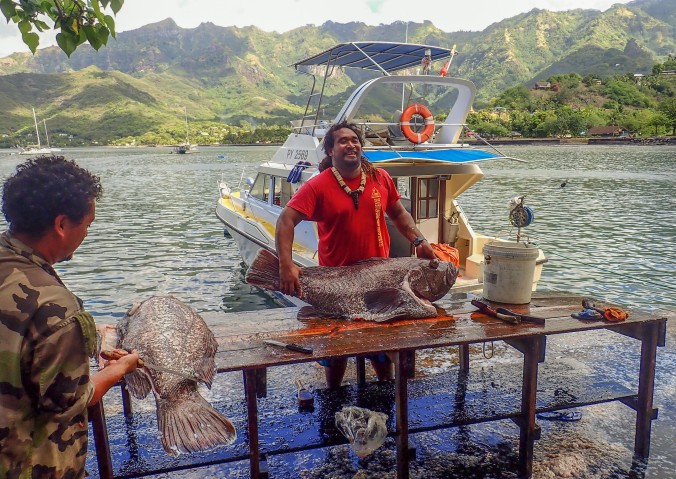
On the dock at Nuka Hiva, these grouper will feed a dozen families.     Photo: © Jeffrey Cardenas

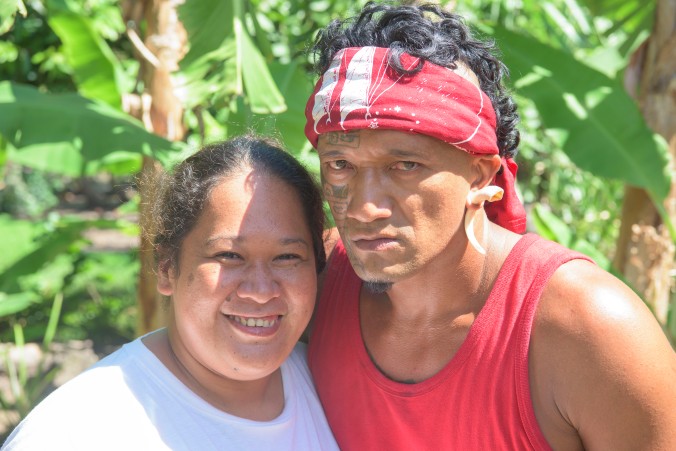
Lilly and I visit Baie Hakatea to hike the royal road in Hakaui Valley and to visit the ancient sites of pae pae and tahua. The trail terminates at the remote and wild 1,500-foot Vaipo waterfall. Along the trail we are stopped by Teiki and Kua Matio, a young couple who offer to make us, for a fee, a traditional Marquesan lunch when we return from the hike. We agree. The ancient road and me’ae are spectacular. The waterfall is stunning. The home of Teiki and Kua is situated in manicured grove of fruit and coconut trees. They have roasted goat and miti hue (river shrimp) prepared for us along with traditional taro and breadfruit. Teiki is like a character out of central casting: half of his face is tattooed and a large boar’s tooth is pierced through his ear. It is all too … perfect. I am told later that this was the site of the television show Survivor Marquesas. A film crew spent months here making it look, well, Polynesian. I feel something inside of me deflate. It is as if we have finally stumbled across something raw and untouched—and then it turns out to be a movie set.

marquesan couple2.sm

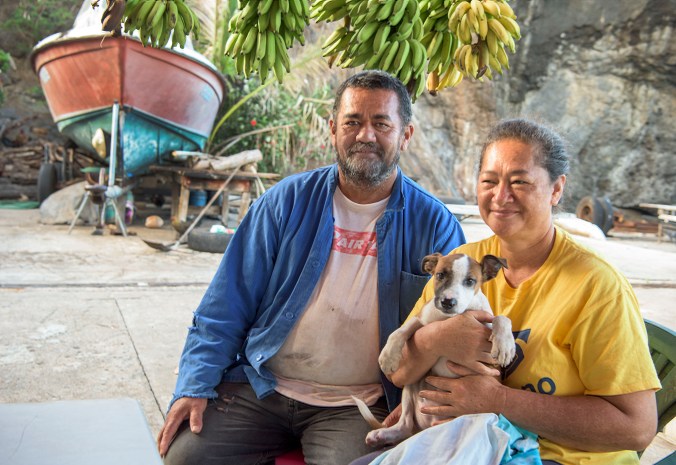
A boar’s tooth in the ear and the scowling face tattoo of Teiki Matio can do nothing to harden the the beauty of his wife Kau’s smile.     Photo: © Jeffrey Cardenas

The Marquesas, I discover, is full of ironies like this. The islands are among the most isolated in the world and the inhabitants have learned, like all of us, to do what is necessary to survive (no pun intended). Nonetheless, we see a place the way that we want to see it. In the Marquesas I will remember poisson cru made with raw coconut milk being squeezed through cheesecloth. I will remember scalloped hammerhead sharks and mellon-headed dolphins. I will remember the sacred me’ae with massive 600-year-old banyan trees growing among the ancient foundations of moss covered basalt rocks.

And especially, I will remember the many faces of the Marquesan people who have endured a dark history of warfare, occupation, and disease brought about by those of us from the outside. The Marquesan people exist because they possess the spiritual power known as mana.

Track the passage of Flying Fish here: https://forecast.predictwind.com/tracking/display/Flyingfish
OLYMPUS DIGITAL CAMERA

Flying Fish at anchor in Baie Hatihue on Nuka Hiva.     Photo: © Jeffrey Cardenas


Pacific Ocean Reflections

It is only with a calendar that I am reminded it has been nearly six months since my departure from Key West aboard Flying Fish. My reality now is that I have lost track of time. On the ocean, under the sun and stars, I don’t know the date or even the day of the week. This is not as frivolous or irresponsible as it might seem. It is simply a new way of living. Complete and present. It is a privilege and I am grateful.

DCIM100GOPROGOPR0981.

The passage of time becomes less defined on a transoceanic passage

The 4,000 miles and 24 days from Panama to Fatu Hiva, Polynesia were never counted individually. Each day blended into the next in a smooth transition determined by the celestial cycle. The sun would rise and it would set, the moon would wax and it would wane. There was none of the drama of scheduling and itineraries that can sometimes be all consuming in land-bound life. When the wind shifted we adjusted our sails.

DCIM100GOPROG0621468.

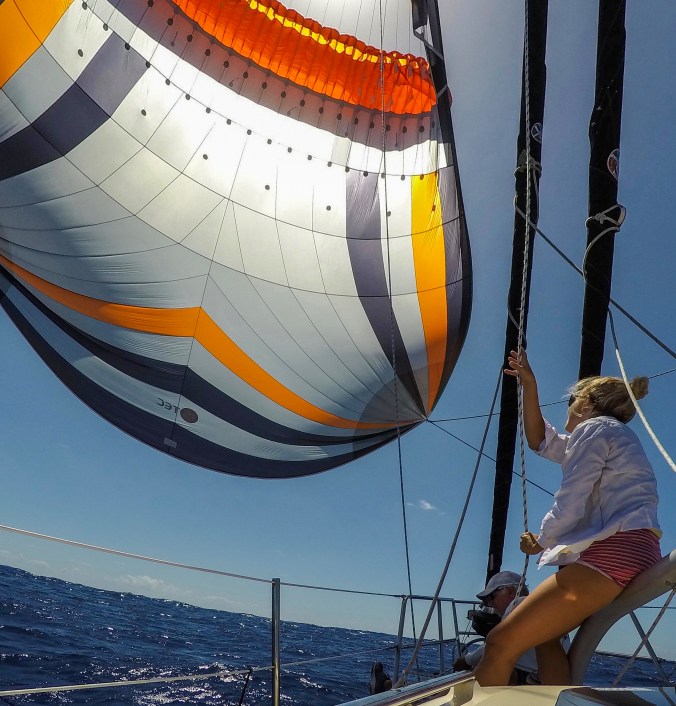
Lilly wrangles the spinnaker aboard Flying Fish on the downhill run to Fatu Hiva

I sailed with my daughter Lilly. The passage was pure tradewind sailing. The wind blew from the east and Flying Fish sailed west. After five days we passed the Galapagos to starboard. The islands have become an expensive cruise ship destination that discourages unguided visits aboard sailboats. Flying Fish continued on toward Polynesia. We confronted none of the tumultuous seas and violent storms that Flying Fish will certainly encounter later during her circumnavigation. For these 4,000 miles and 24 days Lilly and I were given the gift of tranquility at sea.

OLYMPUS DIGITAL CAMERA

Crossing the Equator, becalmed, nearly 1,000 miles from land

Sailing with Lilly was a gift. She understands the rhythm of the wind and ocean, and their resulting dynamics on the performance of a sailboat. She is strong and determined. But there was a wide gulf of 31 years between father and daughter aboard Flying Fish, and it was exacerbated by the fact that Lilly and I live on opposites sides of the earth. The relationship between the two of us occasionally chafed like a rope against a sail: Her Dad was hard of hearing, he couldn’t see clearly, he was cognitively slow and responsively sluggish. For Lilly it was like sailing with the Old Man and the Sea–Come on already, pull the fish in and let’s go home! Still, Lilly had my back on this passage. She kept me onboard the sailboat. She made beautiful, creative meals every night. She outlined a program of exercise and yoga for us. She even tried to teach me French. I will miss the time that Lilly and I spent together crossing the Pacific Ocean.

sailfish4.sm

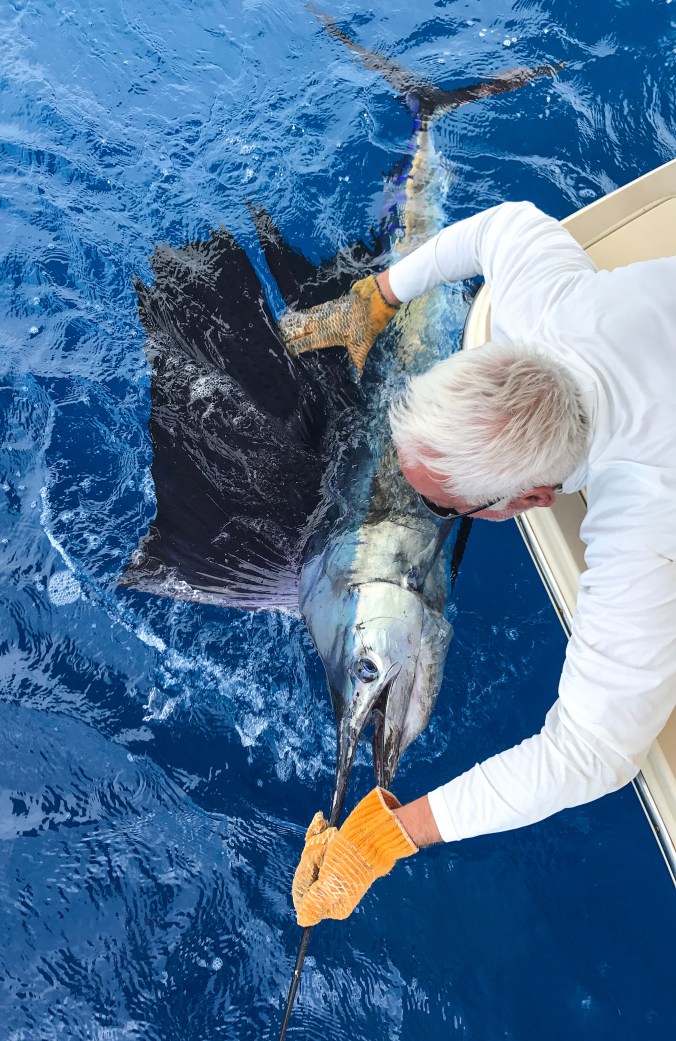
Eye to eye. This Pacific Sailfish was far too beautiful to kill for supper

There is a wealth of riches that come from moving slowly. The feeling of wind on the back of your neck is a caress. Stars are crystalline. When a porpoise surfaces close to the boat on a calm night it is possible, literally, to breathe in the scent of her exhale. Landfall came too quickly for me at the end of this passage. It was like awakening from a good dream. But, awakening from a good dream and finding yourself in French Polynesia… that is a very fortunate reality.

DCIM100GOPROG0260842.

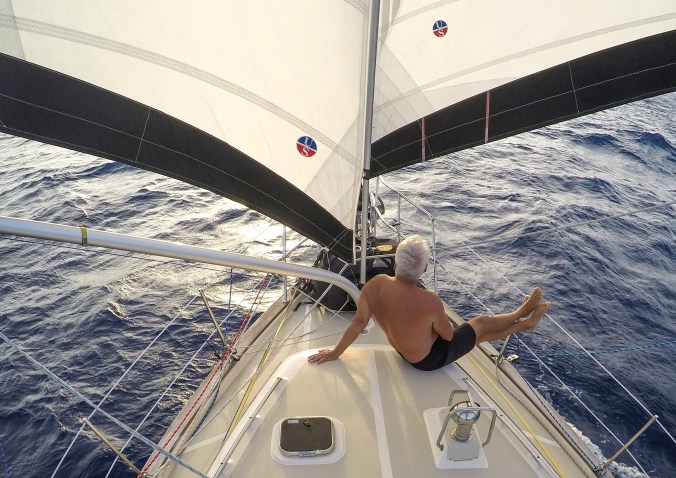
Sailing the tradewinds and looking for land 

NOTE: One the many wonderful things that take becoming accustom to at sea and in French Polynesia is the disconnect from Internet, email, and social media. I am overwhelmed by the outpouring of love and encouragement from those of you who follow the voyage of Flying Fish. Please understand that my lack of communication and response to your comments and correspondence does not reflect any lack of gratitude. Thank you for being here with me.

Track the passage of Flying Fish here: https://forecast.predictwind.com/tracking/display/Flyingfish
Landfall: French Polynesia

bay of virgins horizontal.sm.new

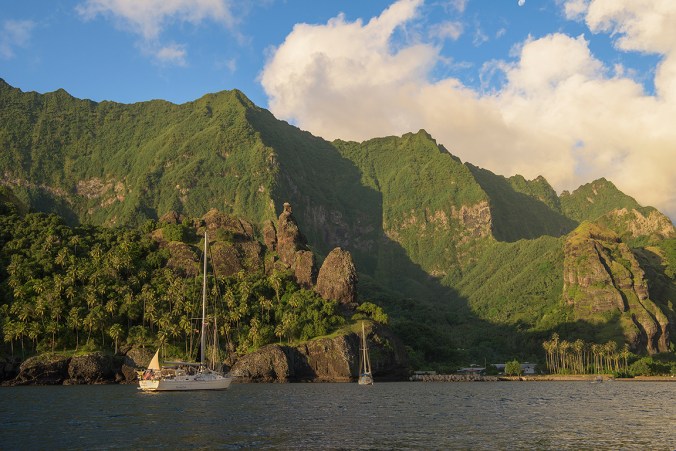
Flying Fish at anchor in the Bay of Virgins, Fatu Hiva, Marquesas Islands.                                    Photo: © Jeffrey Cardenas

After 4,028 miles and 24 days at sea, Flying Fish has made landfall on the Marquesas Island of Fatu Hiva in the spectacular Bay of Virgins.

There is much to report on this journey but Internet connections are rare among these beautiful and isolated islands. We will post photos of the passage when we can.

For those who have followed the Pacific passage of Flying Fish, know that Lilly and I are grateful for your love, encouragement, and prayers.

Track the passage of Flying Fish here: https://forecast.predictwind.com/tracking/display/Flyingfish
school dancer2.sm

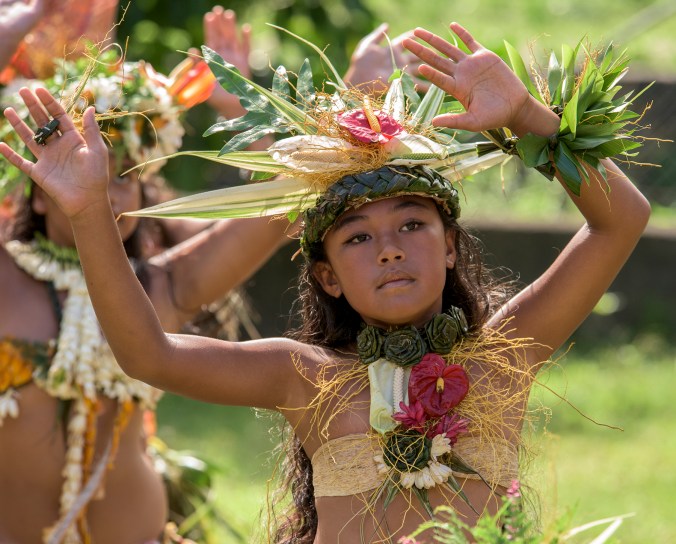
School children in the village of Hanavave in Fatu Hiva practice for an upcoming ceremony.     Photo: © Jeffrey Cardenas