Two Seas and Ancient Spirits

Cape Reinga

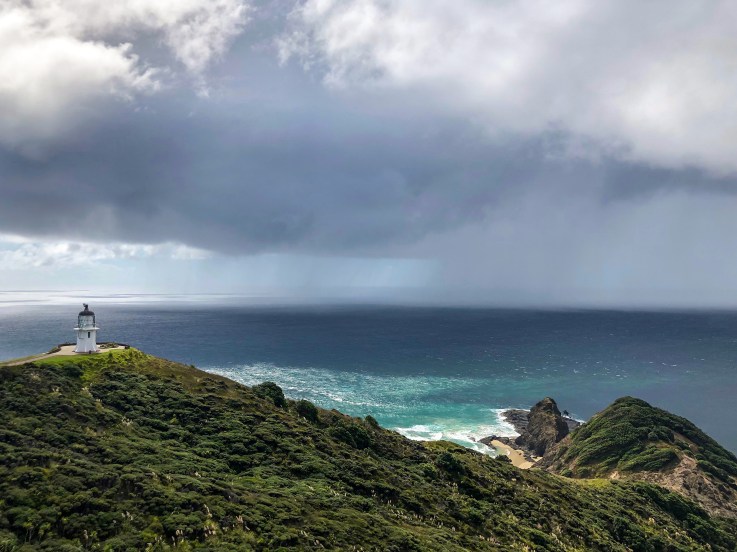
At Cape Rēinga on the northern end of New Zealand, where water from the Tasman Sea mixes with the Pacific Ocean, Māori spirits depart to the underworld. Photography: © Jeffrey Cardenas

Cape Rēinga at the top of New Zealand is one of the great headlands of Oceania. It was used as a waypoint by the earliest Polynesian sailors, ancestors to Māori, on their voyages of exploration. It is off this point of land that the Tasman Sea to the west and the Pacific Ocean to the east meet in a tumultuous mixing of counter currents and confused seas.

And it is this landmass that will be my final view of New Zealand as Flying Fish sails north tomorrow en route to Fiji.

Like so much of New Zealand, Cape Rēinga is rich in Māori tradition. According to legend, these turbulent waters are where the male engendered sea, Te Moana Tāpokopoko a Tāwhaki, meets a female body of water called Te Taio Whitirela. Their love affair arouses a dance of whirlpools and currents that initiate the Māori creation of life.

But just as there is love and life in the meeting of these seas, there is also a specter of death. For Maori, Cape Rēinga means the leaping-off place of spirits. It is Māori belief that the cape is the point where the spirit of the dead enter the underworld.
Cape pōhutukawa.sm

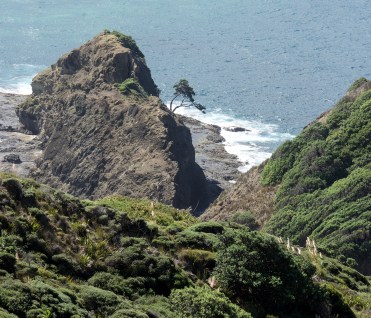
In mythology, these spirits travel to Cape Rēinga on a final journey to the afterlife, then leap off the headland from the roots of an 800-year-old pōhutukawa tree. That tree exists today. Its roots tenaciously cling to bare rock just above the breaking seas. According to New Zealand’s Department of Conservation, pōhutukawa are known for their brilliant red flowers, but this particular tree–growing out of the rock where the spirit of the dead enter the underworld–has never flowered.

Visitors who journey to the cape are asked not to eat, drink, or smoke out of respect for this sacred place. And, it is not only humans who journey to Cape Rēinga. Just below the mystical pōhutukawa tree is Scratching Rock where whales sometimes enter the bay to rub their flanks against dark red rocks formed by undersea volcanic eruptions.

Maōri had occupied this land hundreds of years before explorer Abel Janszoon Tasman dropped anchor looking to replenish his ship’s fresh water supply. On the eve of Epiphany in 1643, Tasman named a group of rocky islets he encountered as the Three Kings Islands. But these rocks already had a name. Historian Percy Smith wrote that a Maōri chief named Rauru, once swam across the treacherous 50-mile passage from Cape Rēinga to one of the islands. In the state of exhaustion upon his arrival Rauru named the island Manama Tāwhi, Maōri meaning “panting breath.”

Cape Rēinga is said to be the most sacred place in New Zealand. It is a landscape of death and rebirth, a tableau of creation and destruction. As a foreigner I will never understand the full spiritual significance of this place but I will always have a personal connection here. In New Zealand that connection is known as Hawaiki. It is both a mythical location and a template for everything that is good, powerful, and benevolent in the world. Hawaiki is where fullness of life is envisioned and experienced. This helps me to understand a little more clearly why I wander the world in search of places like Cape Rēinga.
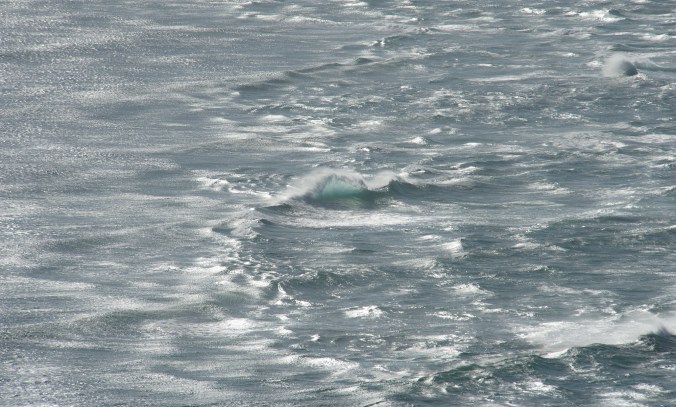
Cape Seas Meeting.sm

This is the exact moment when the Tasman Sea meets the Pacific Ocean. In Maōri tradition this is the encounter, seduction, and conception of two spiritual entities. Photography: ©Jeffrey Cardenas


Please subscribe at the bottom of this page so that you don’t miss a new post, and please share this post with others who might enjoy following the voyage of Flying Fish

To see where Flying Fish has sailed in the past year click here: https://cruisersat.net/track/Flying%20Fish

For current weather along the route click here: https://forecast.predictwind.com/tracking/display/Flyingfish

Text and Photography © Jeffrey Cardenas 2019

All rights reserved
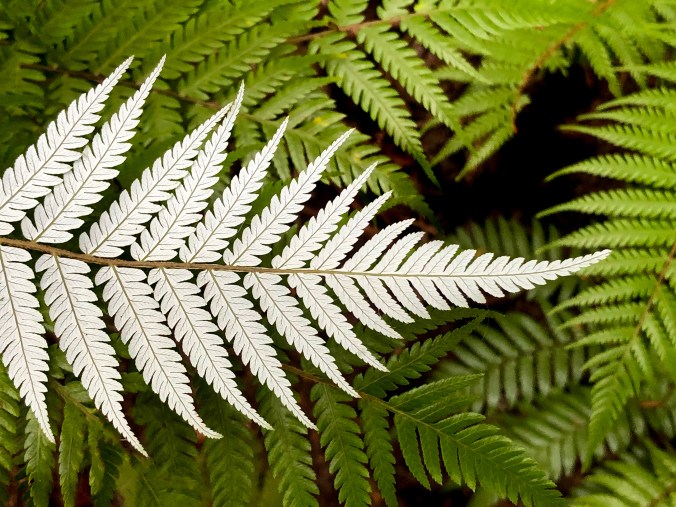
 

The New Zealand Fern

Silver ferns, with their leaves turned upward to reflect moonlight, helped Māori hunters and warriors to find their path homeward. Photograph: © Jeffrey Cardenas

As I begin this long goodbye to New Zealand I am focused on the ocean passage ahead. Yet, in these final weeks ashore, I am also inexorably drawn back to the terra firma of this lovely country.

Click on the individual photos for high resolution images

New Zealand’s ferns are an iconic symbol of this country. To Pākehā (New Zealanders of non-Māori descent), the fern symbolizes a sense of attachment to their homeland. It represents the national identity of this country. The symbol was first used in the 19th Century by New Zealand troops fighting in South Africa and it continued to be used to identify New Zealand units during both world wars and subsequent conflicts. All Commonwealth war graves of fallen New Zealand soldiers have the silver fern engraved on their tombstones.

To Māori, the elegant shape of the fronds stands for strength, stubborn resistance, and enduring power. There are hundreds of varieties of ferns in New Zealand. Ferns were used by Māori for their medicinal properties. The mouki and parako were used for skin rash, kiwakiwa was chewed to alleviate a sore mouth or tongue, the root of rahurahu was used to prevent seasickness. The silver frond of the ponga has long been used for marking tracks in the bush, springy leaves of waewaekoukou form a good bush mattress, and stems were used by Māori as a binding twine for making eel traps.

The magnificent silver fern is a variety of tree fern found only in New Zealand. It grows to over 10 meters high in the verdant forests on both islands. Māori hunters and warriors used the silver underside of the fern leaves to find their way home. When bent over, the fronds would catch the moonlight and illuminate a path through the forest.

According to Māori legend, the silver fern once lived in the sea until the plant with its sacred power entered the forest to help guide the Māori people on their travels.

At the navigation station aboard Flying Fish, I have placed a silver fern leaf next to the compass. It is a talisman that I hope will also help guide me on the long journey home.

Fiddlehead.sm

Fiddlehead, the new growth of a New Zealand fern.

Please subscribe at the bottom of this page so that you don’t miss a new post, and please share this post with others who might enjoy following the voyage of Flying Fish

To see where Flying Fish has sailed in the past year click here: https://cruisersat.net/track/Flying%20Fish

For current weather along the route click here: https://forecast.predictwind.com/tracking/display/Flyingfish

Text and Photography © Jeffrey Cardenas 2019

All rights reserved


Beach Tramping New Zealand

Beach Ginny

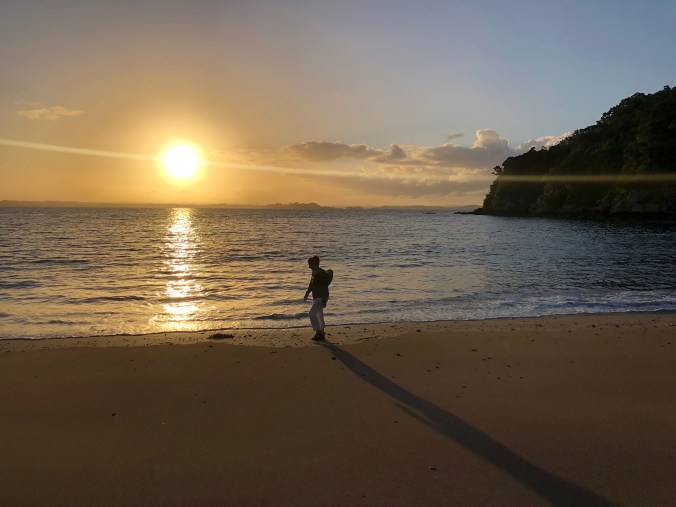
Ginny Stones wanders along an isolated beach track on Moturua Island. Photograph © Jeffrey Cardenas

New Zealand has more than 15,000 kilometers of coastline bordered by the Southern Ocean, the Tasman Sea, and the Pacific Ocean. James Cook mapped the entire coastline. My explorations have been more modest.

Flying Fish arrived in the Bay of Islands five months ago. Much of the time here was devoted to refitting and repairs. The tradesmen and services for ocean-going voyagers are excellent in Opua. Once the work was done, I took off my shoes and began wandering the many beachside tracks of the Bay of Islands.

These are not the sugar sand beaches of Polynesia shaded by coconut palms. New Zealand is recently born geologically. Evidence of volcanic activity, earthquakes, and geothermal areas can be seen throughout the landscape, especially along the shoreline. The beaches vary dramatically from cold fiords in the South Island to towering hot sand dunes in the north. For the most ambitious walkers the Te Araroa Trail is a 3,000 kilometer route of spectacular New Zealand landscapes featuring beaches and volcanoes, forests and cities. The walking track stretches from Cape Reinga on the North Island to Bluff on the South Island.

A person could spend a lifetime walking in New Zealand, but aboard Flying Fish I am beginning to feel the pull of time and tide. Winter is fast approaching. In the coming month as the cyclone season ends in the South Pacific, I will watch for a weather window that will provide safe passage for Flying Fish over the next horizon.

Click on individual images for high-resolution display

Below, a meditative ebb and flow along New Zealand’s Bay of Islands. Add a little volume and enjoy the sound of the shoreline.

Please subscribe at the bottom of this page so that you don’t miss a new post, and please share this post with others who might enjoy following the voyage of Flying Fish

To see where Flying Fish has sailed in the past year click here: https://cruisersat.net/track/Flying%20Fish

For current weather along the route click here: https://forecast.predictwind.com/tracking/display/Flyingfish

Text and Photography © Jeffrey Cardenas 2019

All rights reserved

After Christchurch

Comfort in Nature

New Zealand is in mourning.

This is a country that has become insulated to the incidents of mass murder that are commonplace in so many other parts of the world. For reasons of isolation, or politics, or simply its tolerance of other human beings, New Zealand is a sanctuary from hate.

And then hate appeared in the doorway of a house of worship with a semi-automatic weapon.

How does one reckon with such unexpected tragedy?

Prime Minister Jacinta Arden has been praised for her leadership in the aftermath of the shooting. She said that although many of the victims of the shooting are migrants, “New Zealand is their home. They are us.”

She said New Zealanders were not chosen for this act of terror because they condone racism but rather that they represent diversity, kindness, compassion, and a refuge for those who need it. “And those values, I can assure you, will not and cannot be shaken by this attack,” she said.

For those of us who are visitors in this country, especially those of us who come from a nation where mass shootings have become frequent, there is a feeling of profound sadness. In those  15 minutes of sustained gunfire in Christchurch it was as if the innocence of an entire nation had been lost.

New Zealanders, however, will respond with typical strength. Christchurch was magnificently rebuilt following the devastating 2011 earthquake. It will recover from this tragedy, too. All of New Zealand will heal again.

But on this day, the sky is dark in Aotearoa, the Land of the Long White Cloud.

Text and Photography © Jeffrey Cardenas 2019

All rights reserved

New Zealand Harvest

Harvest Sarah.sm

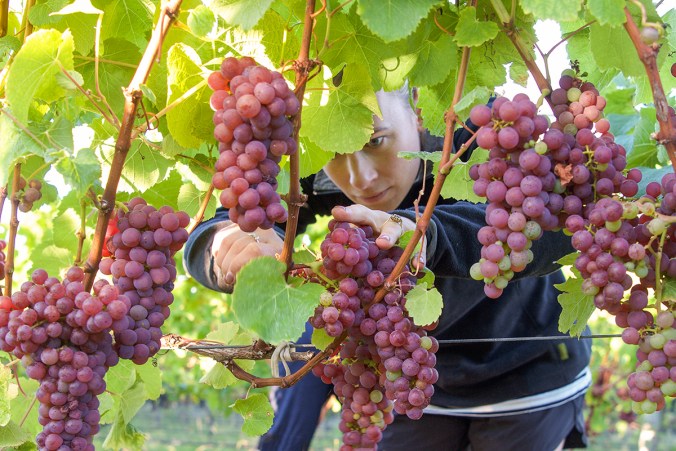
Omata Estate Vineyard Manager Sarah Cashmore harvests the 2019 Pinot Gris grapes in Russell, New Zealand. Photograph: © Jeffrey Cardenas 2019

In the cool autumn air of New Zealand’s Northland wine country the Omata Estate Pinot Gris grapes have reached a perfect sugar content of 23° Brix. It is time to harvest. Sailors from the Russell community, and international vagabonds such as the crew of Flying Fish, have been invited to help with the harvest. Considering the amount of wine that sailors consume, this is not hardship duty.

At 7:30 AM, Vineyard Manager Sarah Cashmore summons the group of about 18 pickers and dispenses essential tools of the trade–razor sharp cutting shears and a large box of “plasters”, known in America as Band-Aids. “We’ll take a break in a couple of hours for tea and cakes,” she says, “and then a vineyard meal will be served after the harvest.” Our cadre of grape pickers include backpackers and grandparents. We are now all officially Woofers (Willing Workers On Organic Farms), or laborers who are happy to work for their supper.

Omata Estate is a small family vineyard producing about 8,000 bottles annually from harvests of Chardonnay, Pinot Gris, and Syrah. The vines are nurtured by the sea breezes off the Bay of Islands and long hours of New Zealand sunshine. Each of the varieties has been planted in carefully selected sites within the vineyard to maximize the individual microclimates. All of the vines are carefully tended by hand and the resulting wines are full-bodied and stunning. The grapes we pick today will be blended to make Omata Estate’s delicious Rosé and Sparkling wines. 

After the last clusters of Pinot Gris grapes are clipped and put into the harvesting baskets we Woofers amble up to Omata’s outdoor kitchen with its spectacular views overlooking vineyard and bay. Gourmet food including local produce platters, artisanal cheeses, and wood-fired pizza overflow the tables of the outdoor kitchen. Sarah announces that our Pinot Gris harvest is 4.5 metric tonnes, a record for Omata Estate. She then stacks the tables with bottles of the vineyard’s finest vintages. We are happy Woofers and with our nipped fingers taped in bright blue plasters we toast a job well done.

This slideshow requires JavaScript.

Please subscribe at the bottom of this page so that you don’t miss a new post, and please share this post with others who might enjoy following the voyage of Flying Fish

To see where Flying Fish has sailed in the past year click here: https://forecast.predictwind.com/tracking/display/Flyingfish

Text and Photography © Jeffrey Cardenas 2019

All rights reserved