What is Wild?

It is becoming more difficult these days to determine what is a truly wild experience. I am thinking about this after a day swimming among sea turtles in the Exuma Islands.

The Navionics charts aboard Flying Fish have a notation that indicates a nearby bay known for its population of green turtles. I love turtles, wild sea turtles. (I am unsettled when I see them on display in enclosures). So, without delay, I grab a mask and snorkel, my underwater cameras, and navigate up the Exuma island chain in my dinghy to find the green turtles.

They find me instead.

Moments after I flip over the side of my little rubber boat, I feel something close its mouth on my upper thigh. It’s nothing dramatic; just a little nip and it lets go. When my mask clears, I see that the nip came from a green turtle the size of a garbage can lid. Adult green turtles only eat grass. Perhaps this one thinks taking a little taste of my ham hock will get my attention. It does.
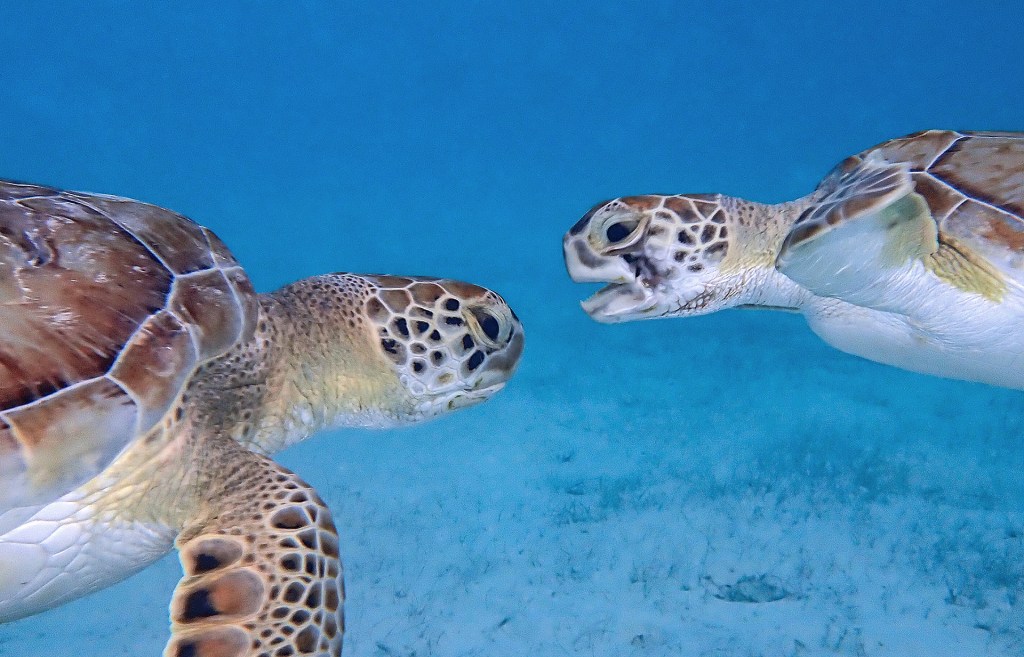
Quarreling green turtles. All is not perfect in paradise. Photograph: © Jeffrey Cardenas

Unlike a mature green turtle, I’m not vegan. I love seafood. I have memories as a kid eating green turtle steaks in the old Compleat Angler Inn at Bimini (before it burned down during the drug years). Many years before that, Key West also had a thriving green turtle trade. The A. Granday Canning Co, manufactured Fine Clear Green Turtle Soup in Key West in 1930 and claimed that its turtle meat came from the waters around the Florida Keys. “Caught in the neighborhood,” the marketing said, but by the 1930s the green turtle population “in the neighborhood” was already diminished and the turtles arrived in Key West on schooners, captured primarily in the nets of turtle hunters from the Cayman Islands.1
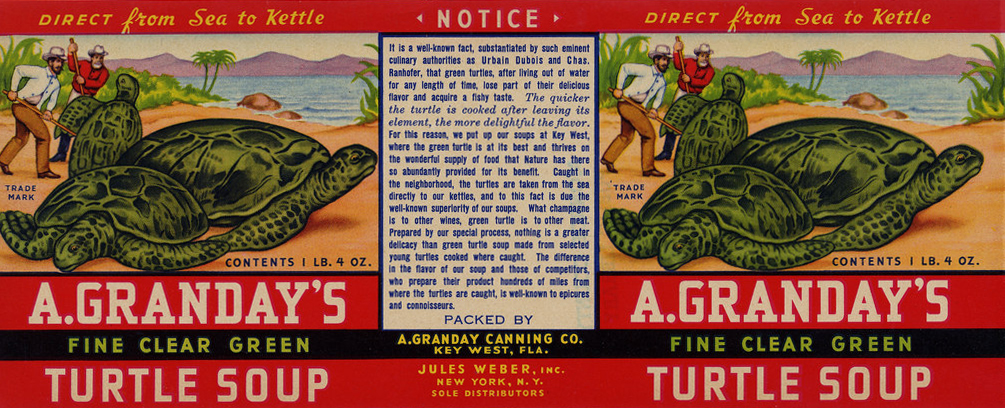
Turtles were easy targets to net or spear, and their eggs–sometimes 100 in each clutch–were stripped from beachside nests. By the middle of the 20th century, the green turtle population worldwide had crashed.

With the passing of the 1973 Endangered Species Act, the US joined international conservation efforts to stop the trade in endangered species, including green turtles. (In the Bahamas, it took another 36 years before the harvesting of green turtles was finally outlawed.) The population of green turtles rebounded. There were fewer than 300 nests in 1989 at 27 of the main beaches in Florida where the animals come to lay eggs. In 2019, that number reached 41,000.2
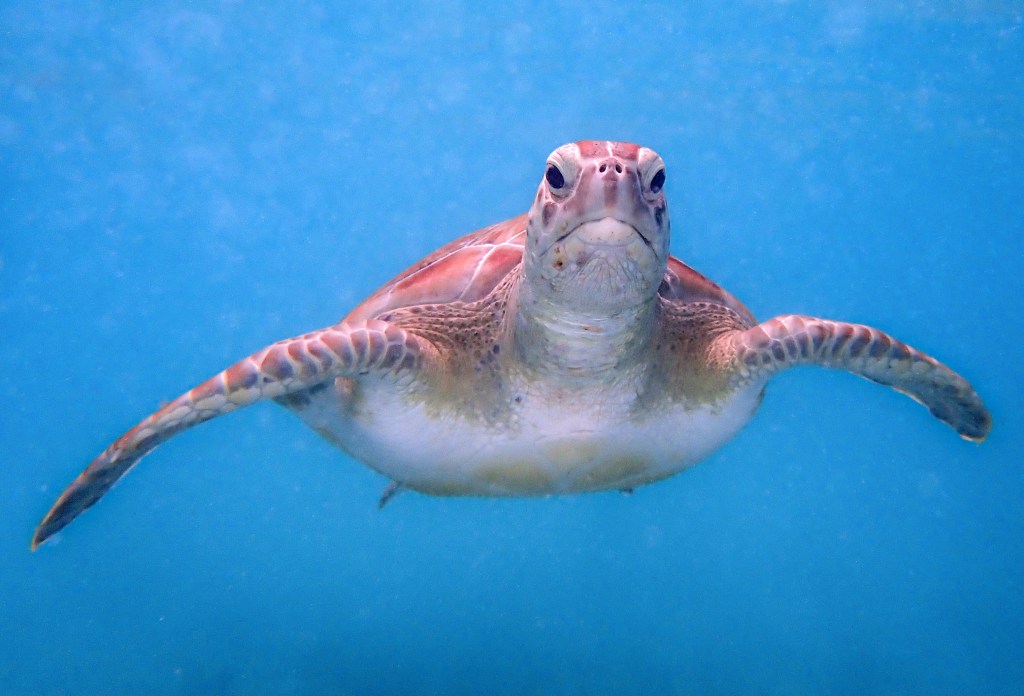
A juvenile green turtle, fearless at a young age. Photograph: © Jeffrey Cardenas

For a couple of hours, I snorkel alone with the green turtles. This particular bay is not a part of the Exuma Land and Sea Park. There are a few homes and docks here, but the water is clean and clear. Mature turtles spend most of their time in shallow, coastal waters like these with lush seagrass beds. The turtles here are unthreatened by my presence. In fact, they swim directly toward me and nudge my camera. They are fearless in their curiosity, making eye contact with me, occasionally rising to the surface for a breath, and then lowering their heads to see if I am still there. I hover motionless as at least 10 different individuals come calling. I resist an overwhelming temptation to reach out and touch them. Most of the turtles are in perfect physical condition, although some have scratches and wear marks on their carapaces, and one has a scalloped bite mark deforming its shell. Tiger sharks are the only creature, other than man, known to eat green turtles.

A pair of remoras hitch a ride on the plastron of a green turtle. Photograph: © Jeffrey Cardenas

I am surrounded by turtles as I float in this wonderland. But what is it that makes them so tolerant of my presence? And why are they here and not in other places?

Then, the first tour boat arrives in the bay. Two more follow, and I have the answer to both questions. The boats are filled to capacity with tourists holding bottles of Kalik beer and gyrating to onboard hip hop music so loud that I can hear it underwater. The guides on these boats have plastic bags of lettuce and squid parts that they fling like confetti into the water. The green turtles suddenly leave me as if I am toxic. They swarm around the tour boats instead. It’s a party to which I suddenly feel uninvited.

I quickly realize that the turtles were not hovering around me because they thought I was interesting; they thought that I was going to feed them. What seemed to me to be a wild experience was nothing more than being in the presence of once-wild animals that have now been conditioned by human behavior to beg for food. It’s like seeing brown pelicans waiting for handouts at a fish cleaning table. Or, tarpon being fed processed food pellets at a marina dock. These creatures do not need to eat handouts… until, of course, the day comes when these creatures forget how to forage in the wild.
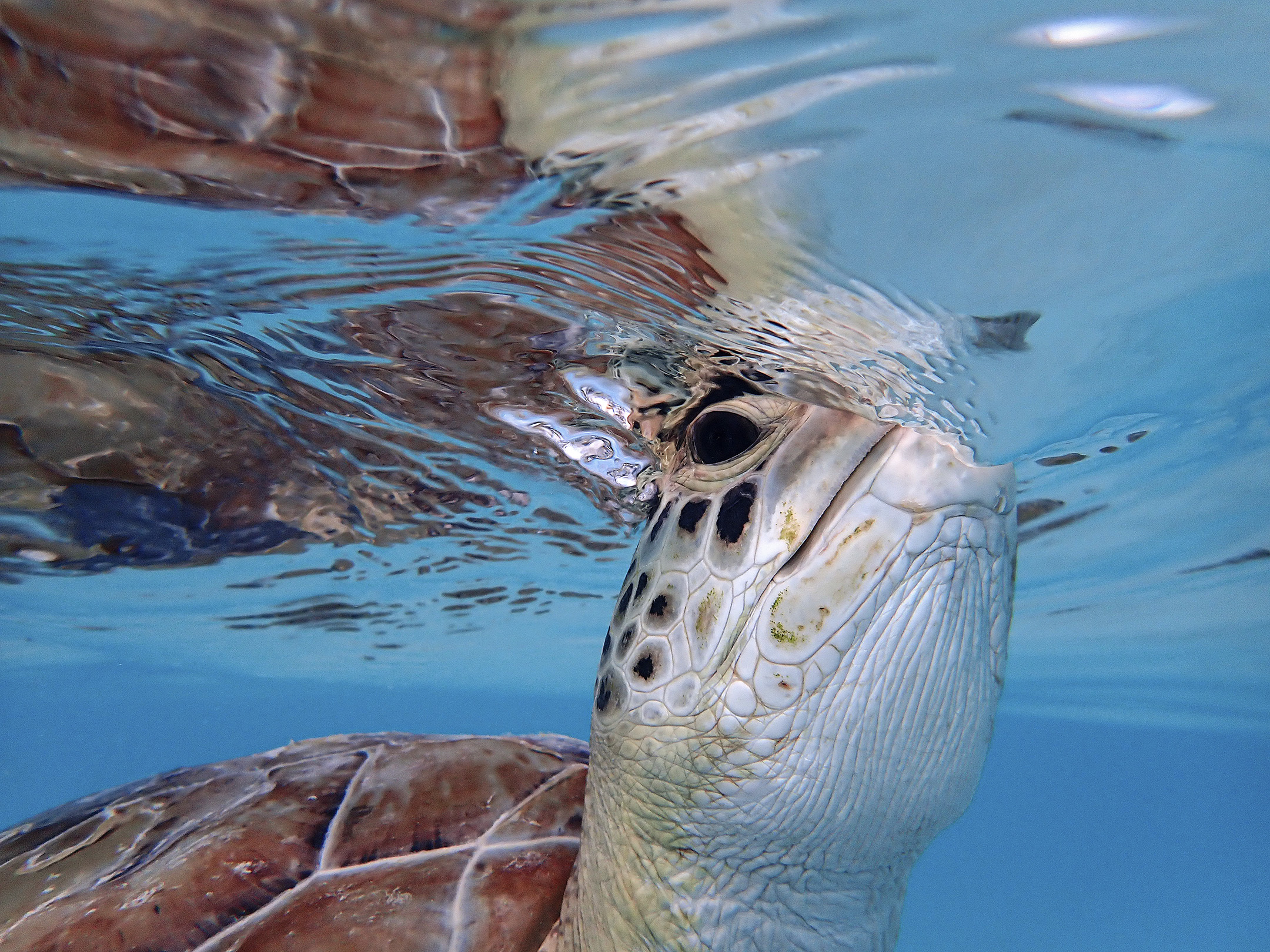
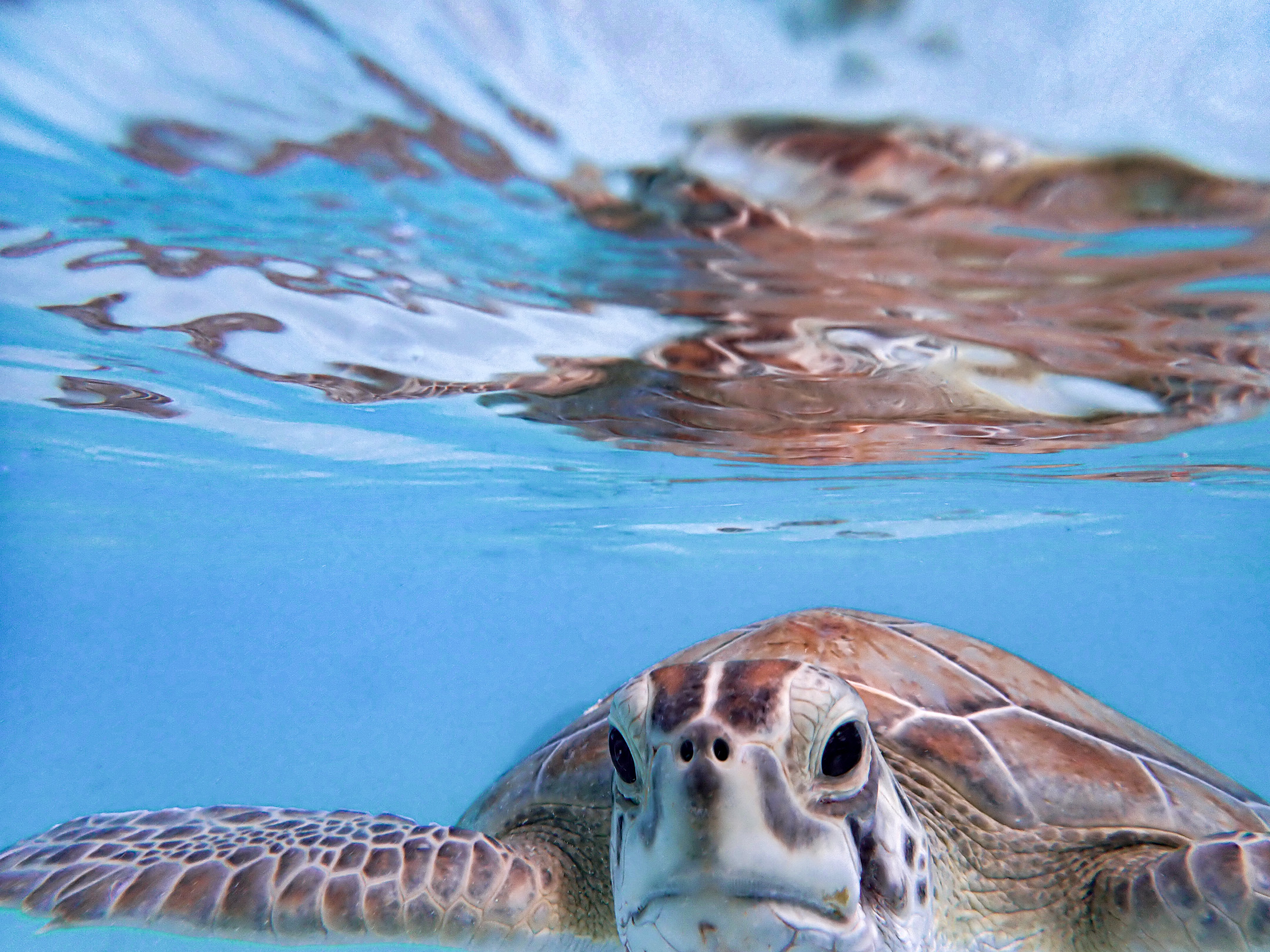
Unknown to me until now, there has been much published about feeding Exuma’s green turtles. And it doesn’t happen only in the Bahamas. Human interaction with sea turtles is big business wherever turtles thrive. In Exuma, the island industry bills itself as Eco-Tourism. “Come experience wild sea turtles in their natural environment,” one company advertises. The website Exuma Online writes: “The local sea turtles are a must see. Where else can you swim so close to these wild animals? (my italics).

“Keep your fingers in check,” the tourist website continues, “bring some squid, and get ready to take some amazing photos! Just be sure that you respect these animals and the surrounding environment.”3

Could anything be less respectful of these “wild animals?” Green turtles don’t even eat squid in the wild4 –they’re herbivores–but these “Eco-Tourism” turtles have been conditioned to eat this bait like there’s no tomorrow. And for some of them, there may be no tomorrow.

Dutch scientists of Wageningen University & Research used Turtle Cams5 to see how ecotourism affects green turtles in the Bahamas. The cameras were mounted on the shells of five turtles and disconnected automatically after five hours. The footage shows people in the water feeding the turtles, and the frenzy that ensues. There is aggression and biting among the turtles (which may explain the turtle nip on my backside). Green turtles are seen in the video dodging the thrashing arms and legs of squealing tourists as they battle each other for squid and floating lettuce.

I understand that for some people this may be the only way they will ever have a close encounter with a sea turtle. But does that make it right to participate in changing the diet and behavior of these animals? There may not be any fences or walls in this bay, but these hand-fed green turtles are no different than those that are captive in zoos or aquariums.

As I drift away from the hip-hop Eco Tourism boats, I see a solo green turtle has also eased away from the melee. I keep my distance, and for 30 minutes I slowly follow it into the bay. This is odd, I think. Is this turtle healthy? Why isn’t it behaving like the other squid-and-lettuce junkies? It is clearly aware of my presence, but the turtle ignores me. Then it sinks down to the sea bottom. Oh God, I think, please don’t let it die right here!

Instead, the green turtle extends its neck, opens its finely serrated jaws, and takes in a mouthful of grass. Turtlegrass. This lone green turtle chews with what I interpret as a look of contemplation and satisfaction. Suddenly, all seems right in the natural world.

It is gratifying to finally see a green turtle foraging naturally in a wild environment. Photograph: © Jeffrey Cardenas

Resources:

1 Image credit: Monroe County Public Library of the Florida Keys

2 Index Nesting Beach Survey Totals 1989-2021–Florida Fish and Wildlife Conservation Commission

3 7 Recommendations For Swimming With Sea Turtles–Exuma Online

4 Green Turtles–World Wildlife Fund, WWF.org

5 Caught on film! TurtleCams show how tourists feed (and influence) turtles–Wageningen University & Research 


Thanks for sailing along with Flying Fish.

As always, Sailing is not just about the wind and the sea; equally important are the places, the flora, fauna, and people encountered along the way.

Please click “Follow” at the bottom of this page so that you don’t miss a new update,- and please consider sharing this post with others who might enjoy following the voyage of Flying Fish. I welcome your commentsand I will always respond when I have an Internet connection. I will never share your personal information.

You can follow the daily progress of Flying Fish, boat speed (or lack thereof), and current weather as we sail into the Atlantic by clicking this satellite uplink: https://forecast.predictwind.com/tracking/display/Flyingfish

To see where Flying Fish has sailed since leaving Key West in 2017, click here: https://cruisersat.net/track/Flying%20Fish.

Instagram: FlyingFishSail
Facebook: Jeffrey Cardenas

Text and Photography © Jeffrey Cardenas 2022

Let this be a time of grace and peace in our lives   – Fr. John Baker

2021 Year in Review: Flying Fish Images

Eastern Mediterranean to The Cape Verde Islands

“To live is the rarest thing in the world…” -Oscar Wilde

Life aboard Flying Fish in 2021 featured a year of obstacles, astonishment, and kindness.

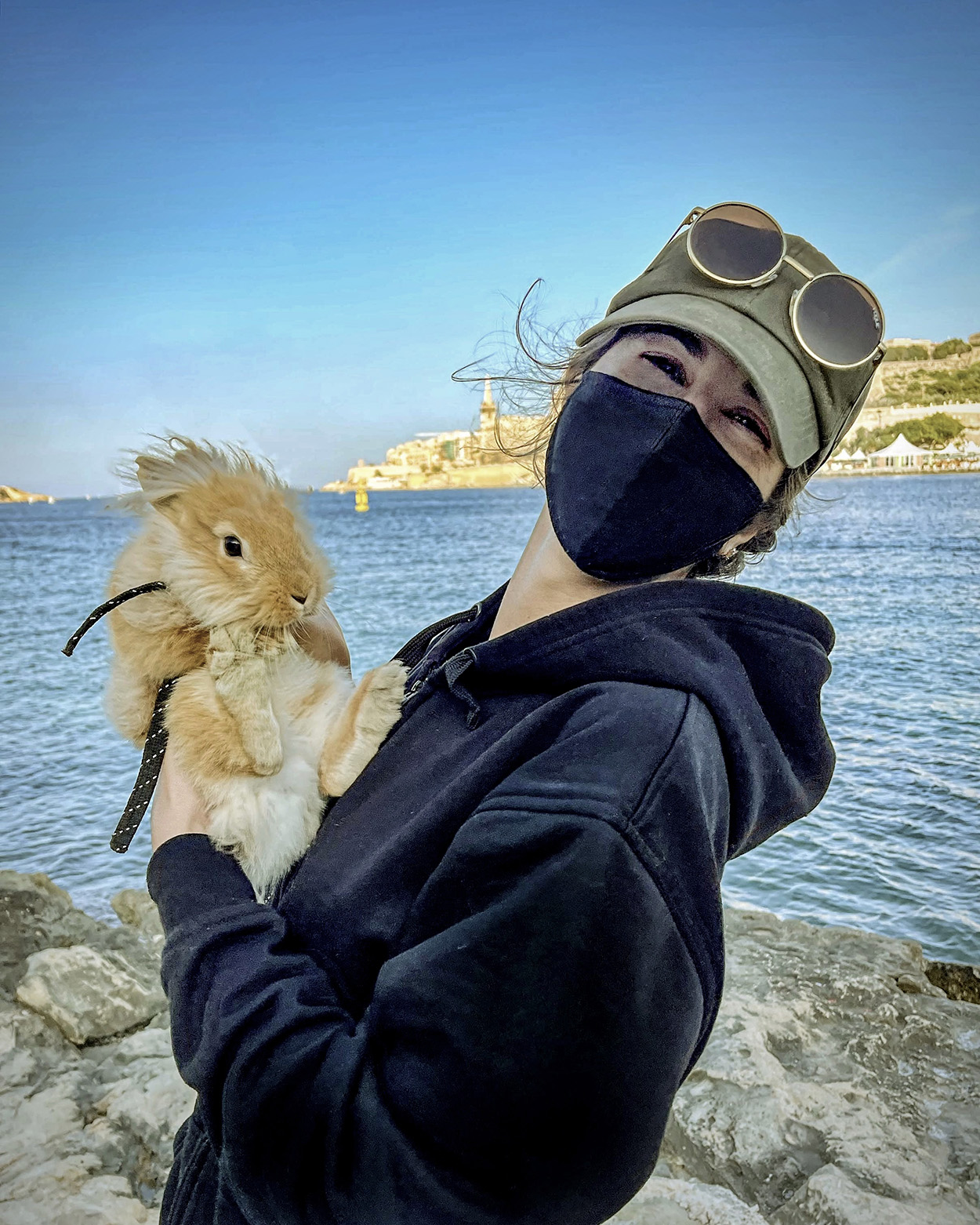
COVID still raged worldwide, but vaccines kept many people from dying. Generous souls in Malta found a way for me to receive a vaccination from one of the country’s thousands of unused doses, despite a bureaucratic edict prohibiting foreigners from receiving the jab.

As climate change accelerated, storms became more potent. Sahara Desert winds filled the sky with sand. Voyaging sailors banded together, helping one another with repairs and brainstorming solutions for staying safe in the changing conditions at sea.

On shore, despite another year of pandemic and political uncertainty, many people found solace in nature and creativity. On the salon bulkhead of Flying Fish, I kept a crayon drawing by Charlie Vialle, a spirited six-year-old French girl who was sailing the world with her parents. The drawing is of Flying Fish skipping across waves under a bright sun in the company of birds and porpoises. Charlie said, “Flying Fish is a good boat.”


Mid-Winter Departure

Mid-Winter sailing in the Mediterranean is for the (snow) birds

The 2021 sailing itinerary for Flying Fish was ambitious: I would depart the Turkish coastline in the eastern Mediterranean and sail to America. This was the beginning of my fourth year en route around the world, and it was time to think about closing the circle. To accomplish this, I would have to get started early.

The Eastern Mediterranean in January is cold. Temperatures dropped below freezing. On the first leg of the journey from Turkey to Malta, I encountered sleet onboard for the first time in my tropical life. I didn’t like it.

Shipping traffic in the Mediterranean backed up because the massive container ship Ever Given was stuck sideways in the Suez Canal, blocking the passage of 369 ships and causing billions of dollars of world supply chain delays that continue to affect global trade. Flying Fish dodged the traffic and bypassed the lovely Greek Islands, which remained closed to tourism because of COVID.

After 750 miles, Malta was a welcome landfall, but a series of storms known as gregales reminded me that it was still mid-winter in the Mediterranean.

Click a photo in the gallery below and scroll for captions and high-resolution images © Jeffrey Cardenas


Places of Wonder

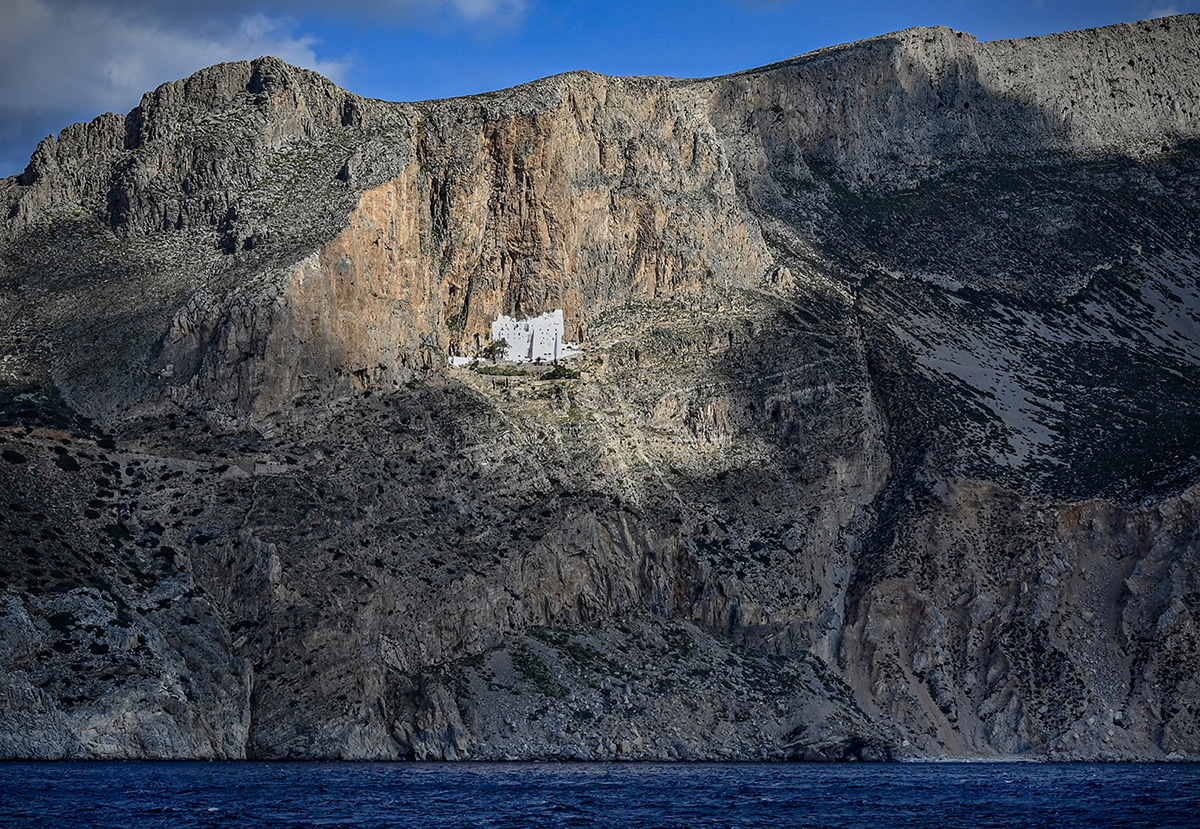
The engineering feat of Porto Flavia, Sardinia, cut into the sheer rock, made it unique at the time of its construction in 1923

I was continually in a state of wonder at the history surrounding this leg of the passage around the world.

I sailed in the wakes of the ancient Egyptians, Julius Cesar, and Admiral Horatio Nelson. In the Middle Sea, the Hellenic ruins of the Eastern Mediterranean were gradually replaced by surviving relics of the Renaissance and the ascension of Europe. At Malta, 2021 Easter services in the stunning St John’s Cathedral were cancelled because of the pandemic, but a generous security guard opened a side door, allowing me a glimpse of the cathedral’s Baroque grandeur.

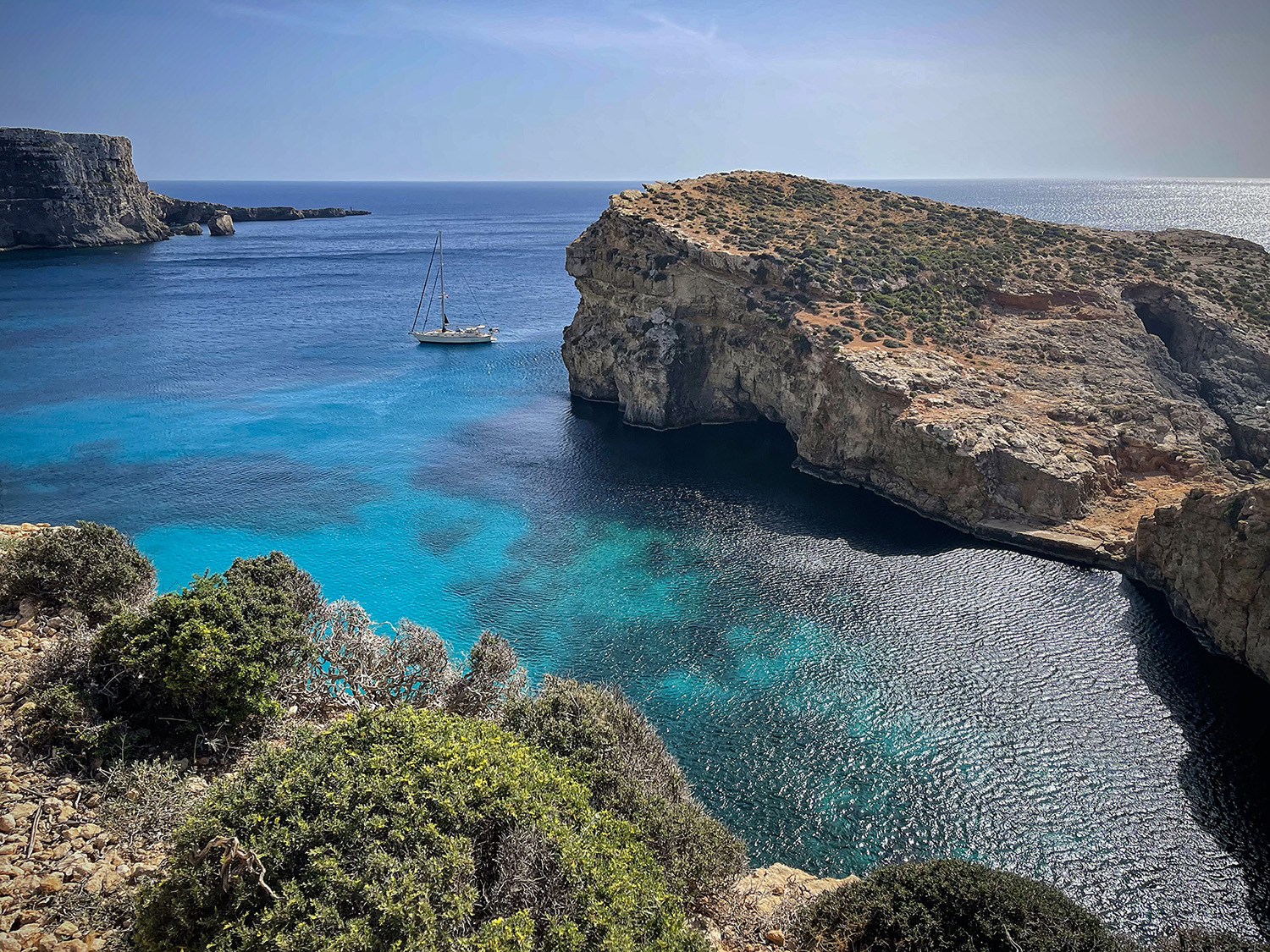
I continued to Sardinia from Malta, and welcomed my sailing mate Ginny Stones aboard Flying Fish. We savored the food and wine and the rugged anchorages from Cagliari to the Gulf of Orosei. Ginny’s visit was brief, and after a month, I sailed onward to the Balearic Islands, mainland Spain, Gibraltar, and finally to the Atlantic Ocean islands of the Canaries and Cape Verde.

Click a photo in the gallery below and scroll for captions and high-resolution images © Jeffrey Cardenas


Joyful People

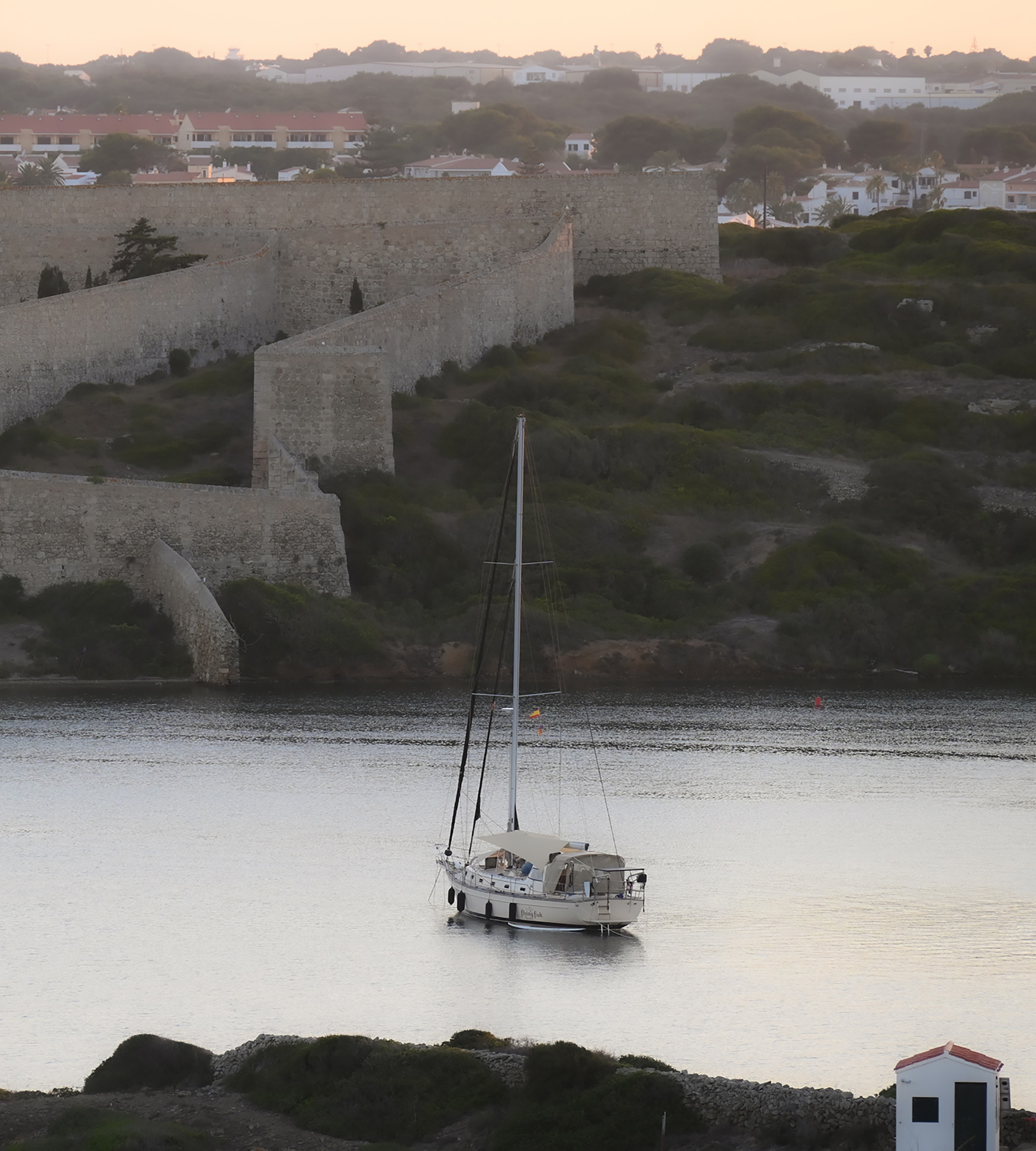
Charlie Vialle, age 6, takes the helm of Flying Fish at Cala Teulera in Menora

From Turkey to the Strait of Gibraltar, the people of the Mediterranean welcomed me as I journeyed into their towns and villages aboard Flying Fish. Despite my vaccination, I still needed COVID tests at every landfall. None was more enjoyable than in Sardinia, where a lovely Italian doctor came aboard Flying Fish and stuck a swab up my nose.

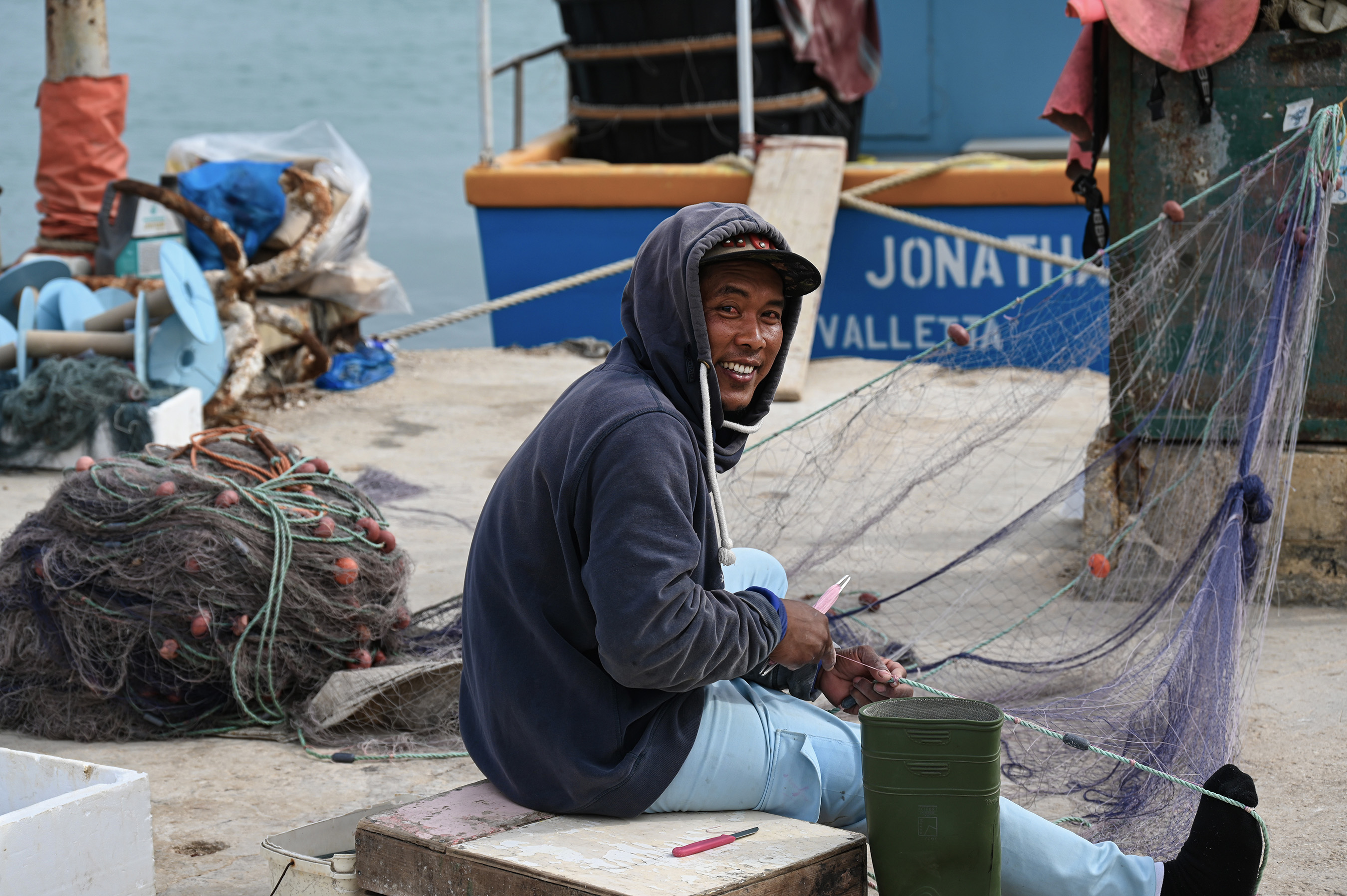
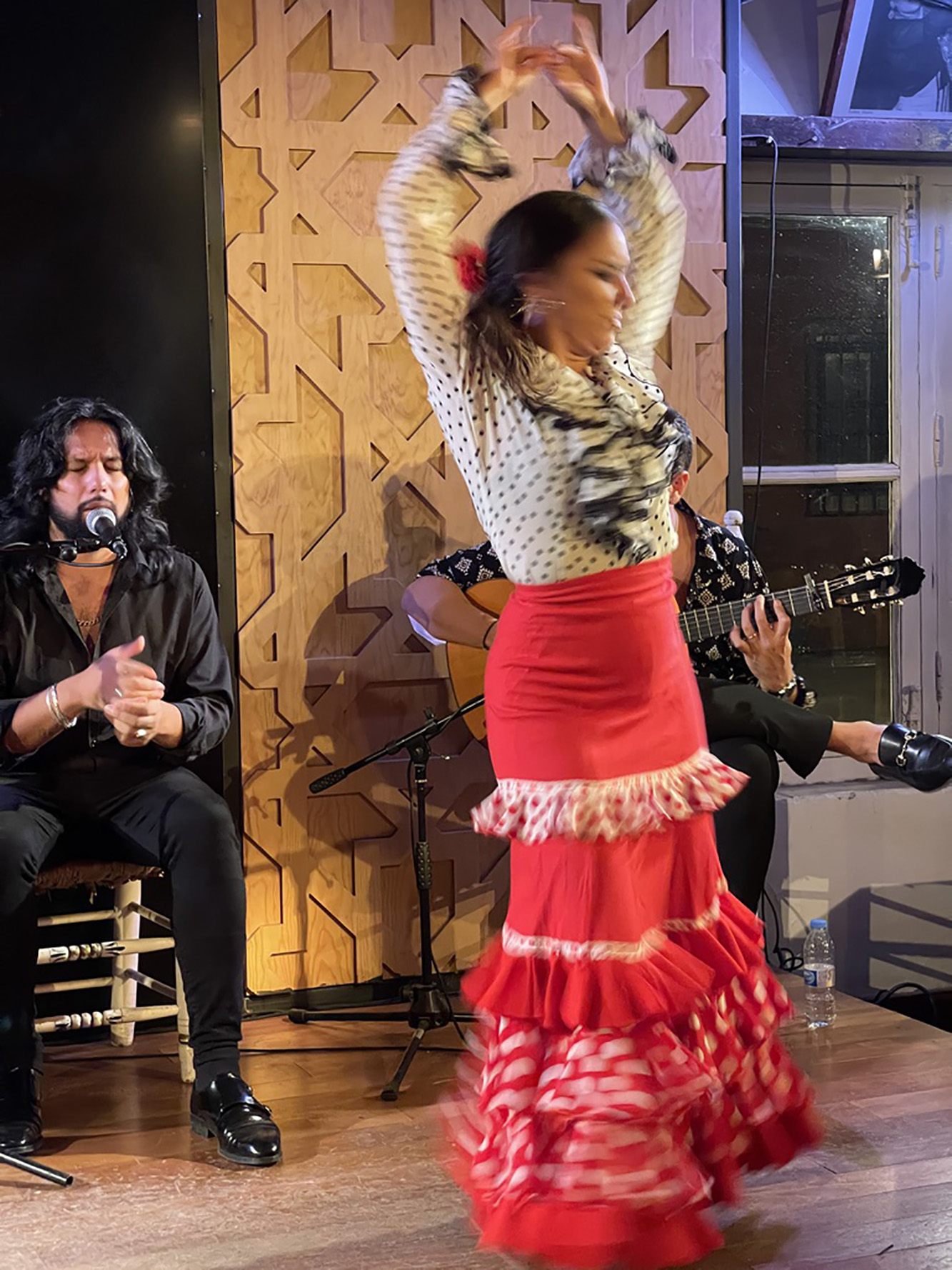
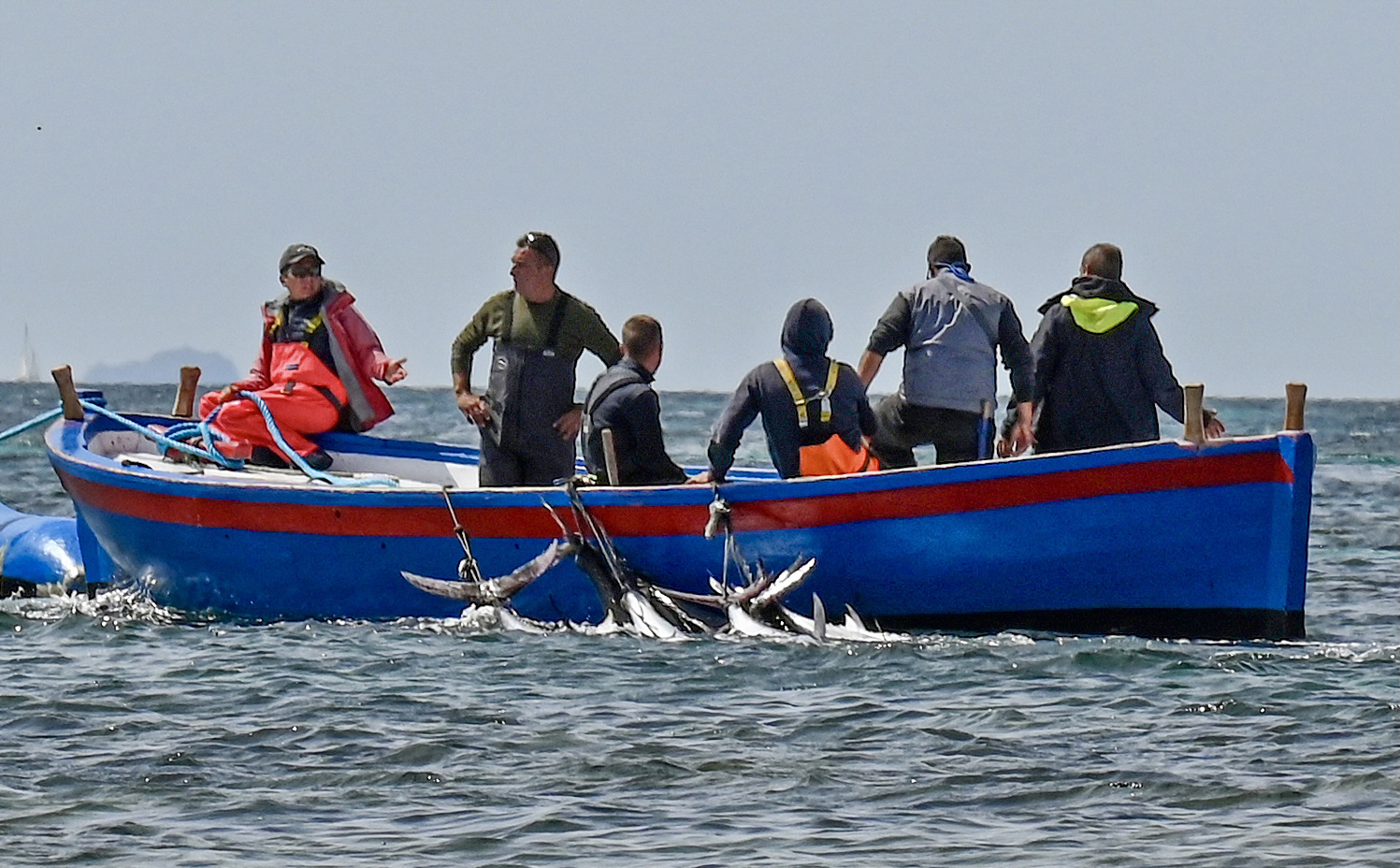
The cafes were full of life, and Ginny found herself surrounded by Italian schoolboys. Three men, all named Mehmet, helped make repairs to Flying Fish in Turkey. I swooned to Flamenco in Grenada, ate fresh tuna hand-caught by Italian fishermen, swayed to a drum circle on a dark beach in Ibiza, and watched a man exercise his swimming horse in the harbor of Marsaxlokk, Malta.

The world was still in the midst of a global pandemic, but you would never know it by the smile in the eyes of the people I met in the Mediterranean.

Click a photo in the gallery below and scroll for captions and high-resolution images © Jeffrey Cardenas


Bizarre Nature

The natural beauty of the Mediterranean is unique in the world.

There are no multicolored coral reefs as in Polynesia. The fish population in the Mediterranean has been feeding people for eons, and in many areas that resource is depleted. There are, however, plenty of two-legged animals (usually wearing thongs in the summertime), especially in the chichi beach resorts of the Mediterranean.

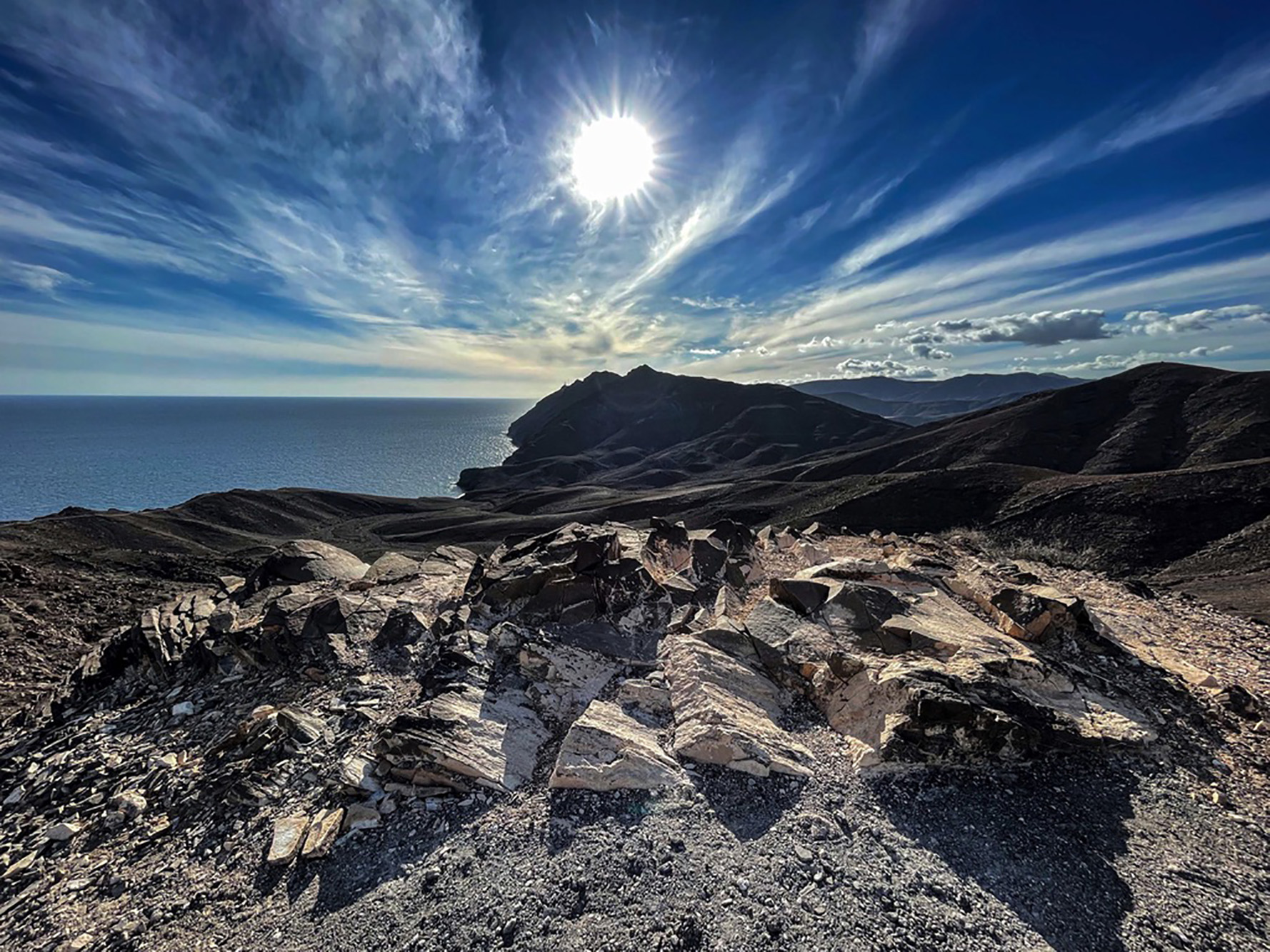
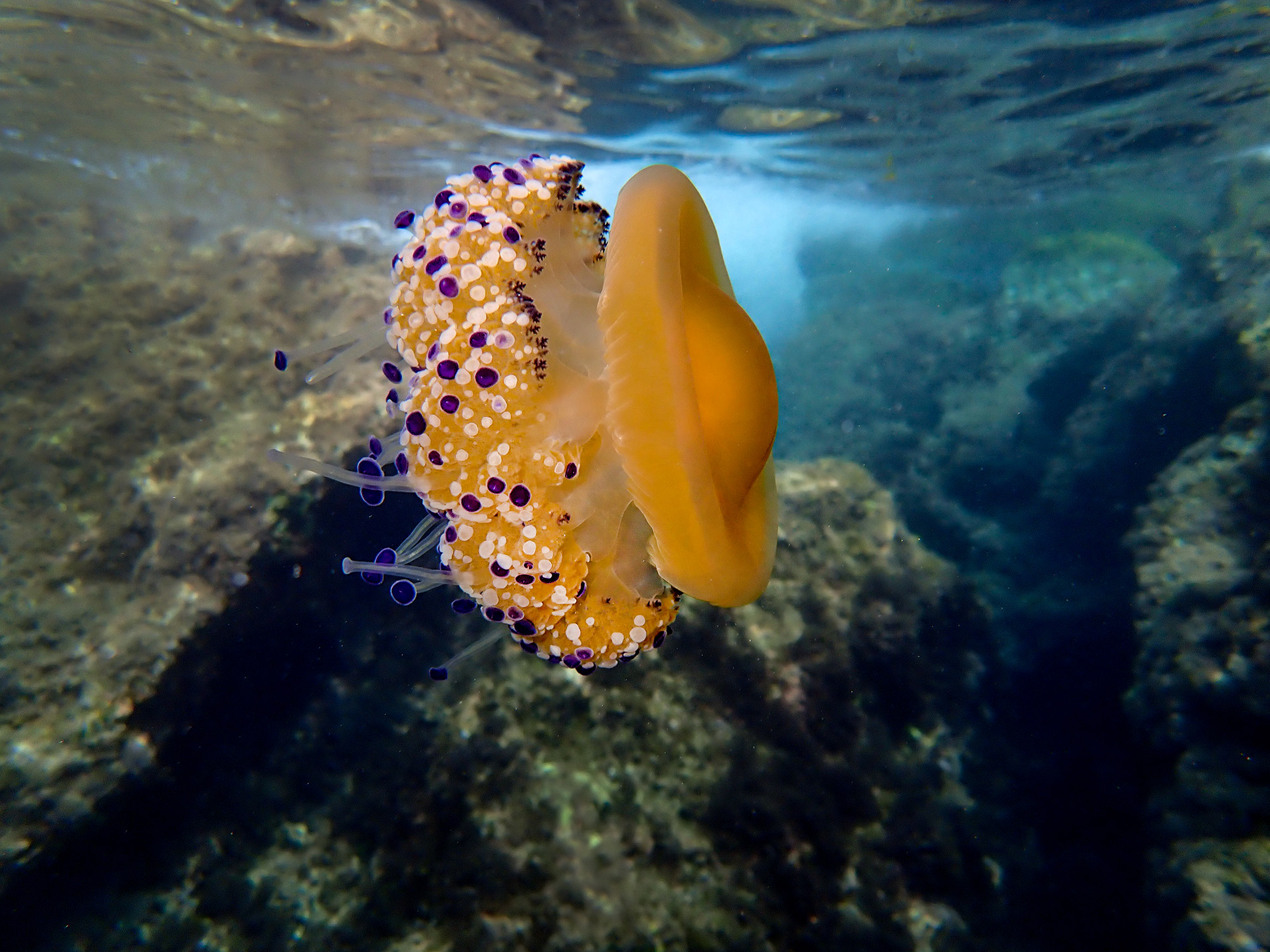
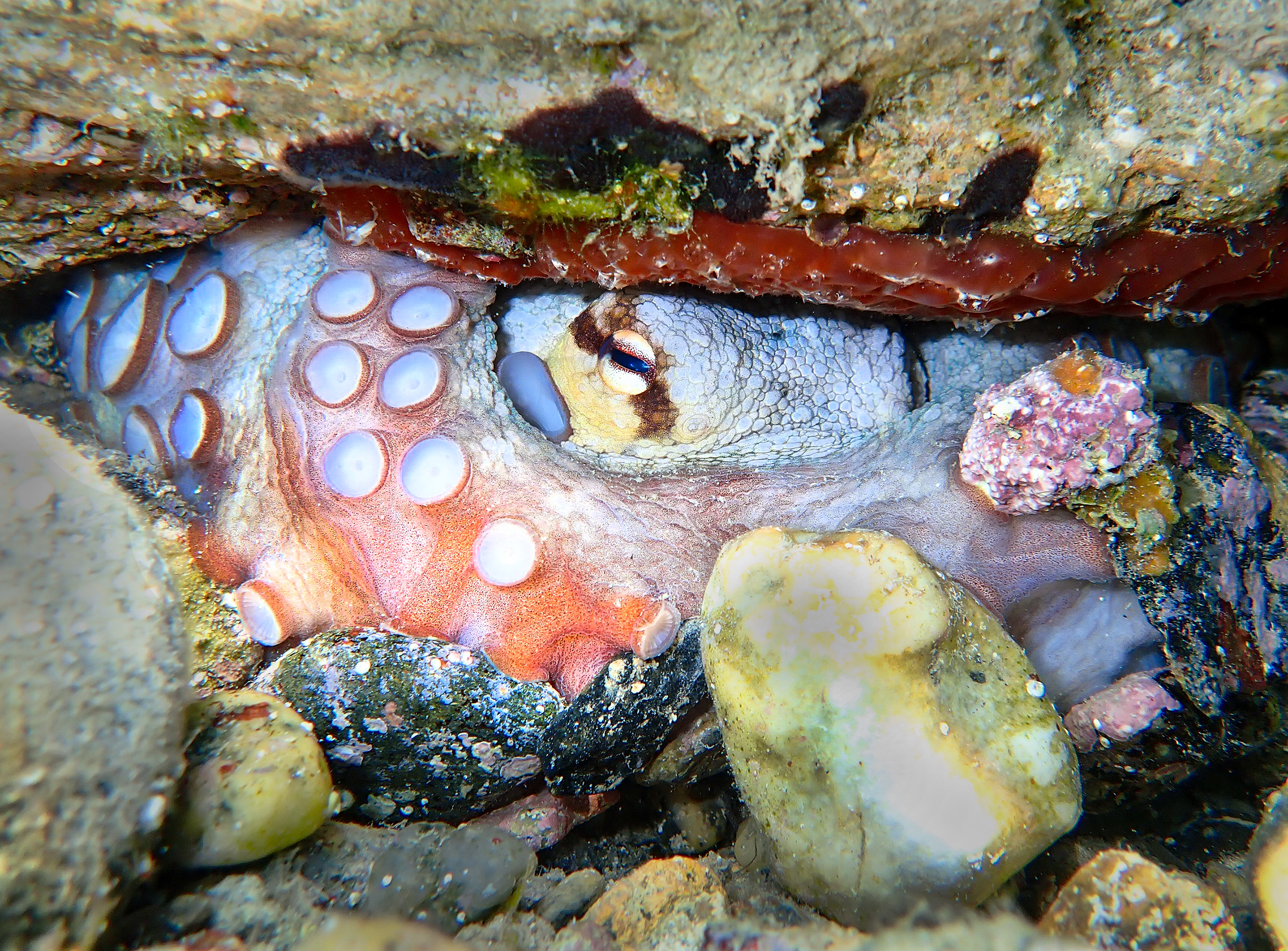
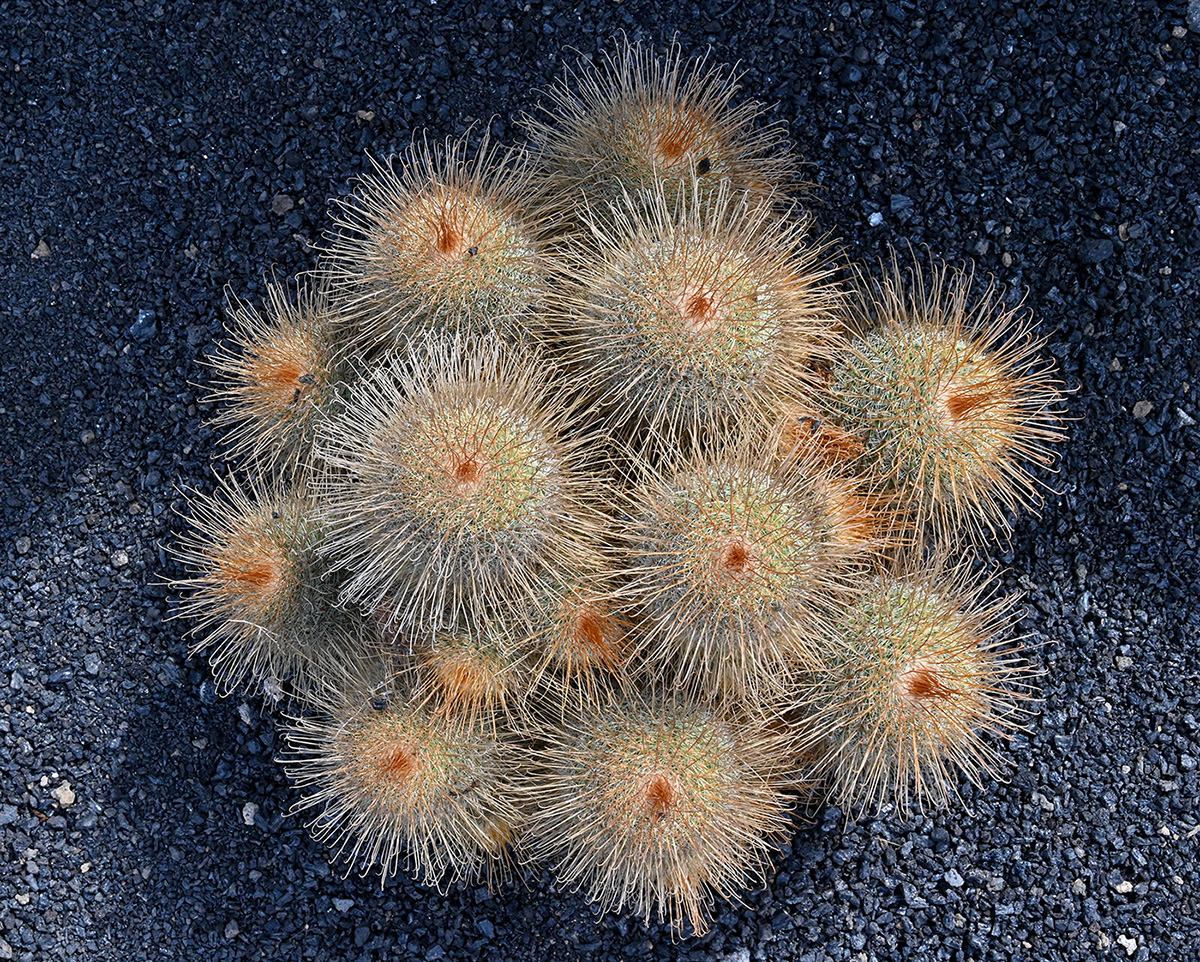
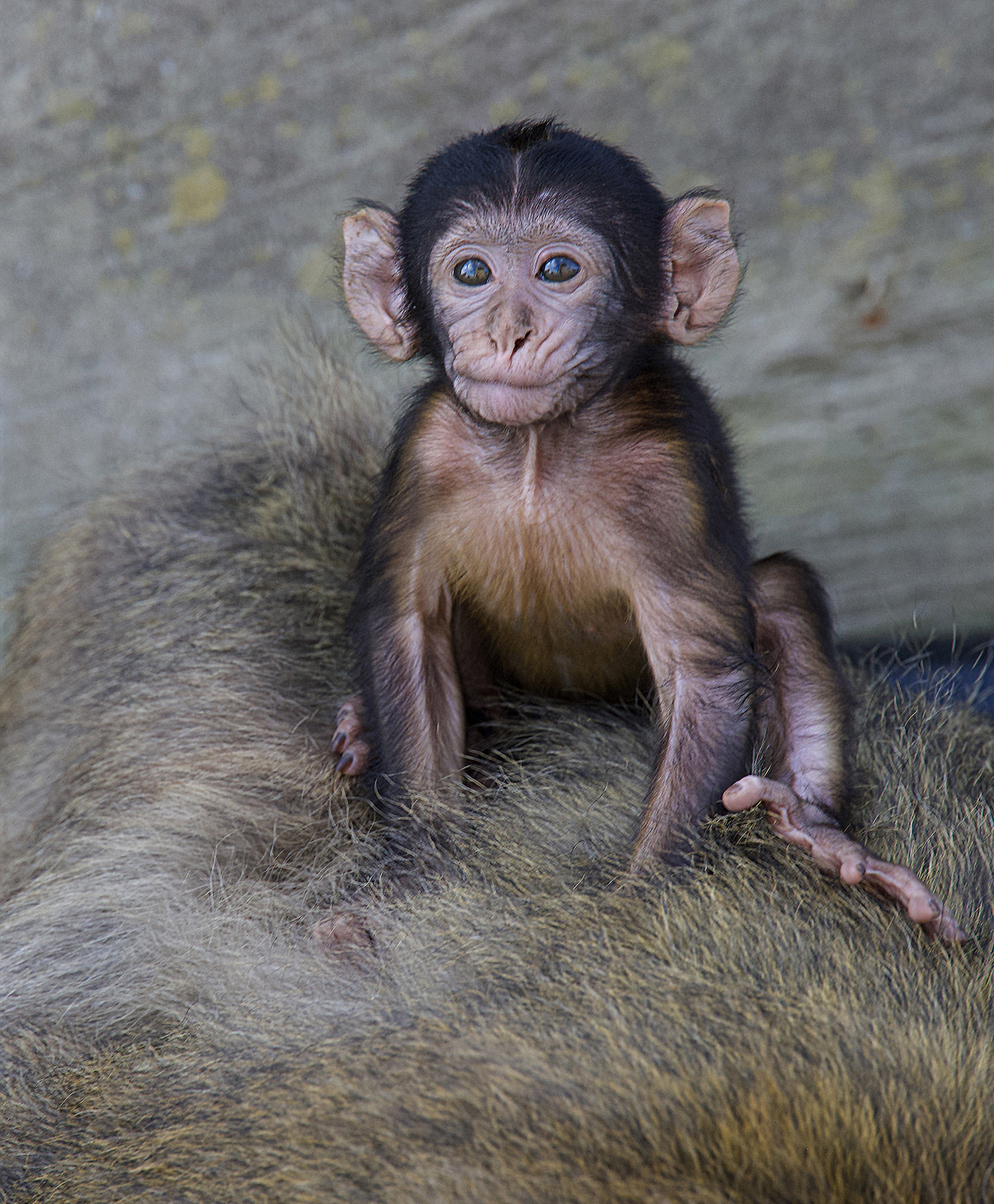
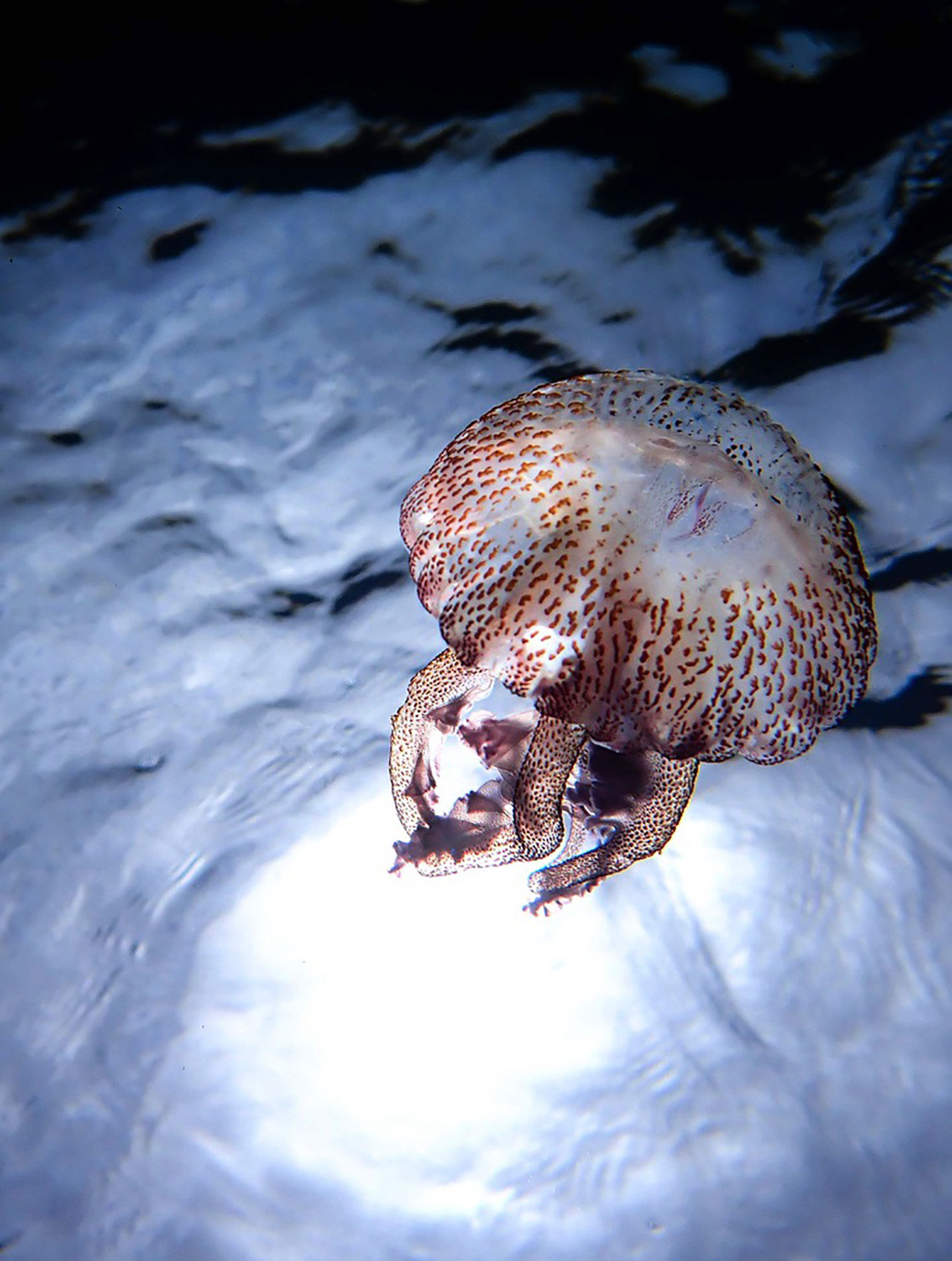
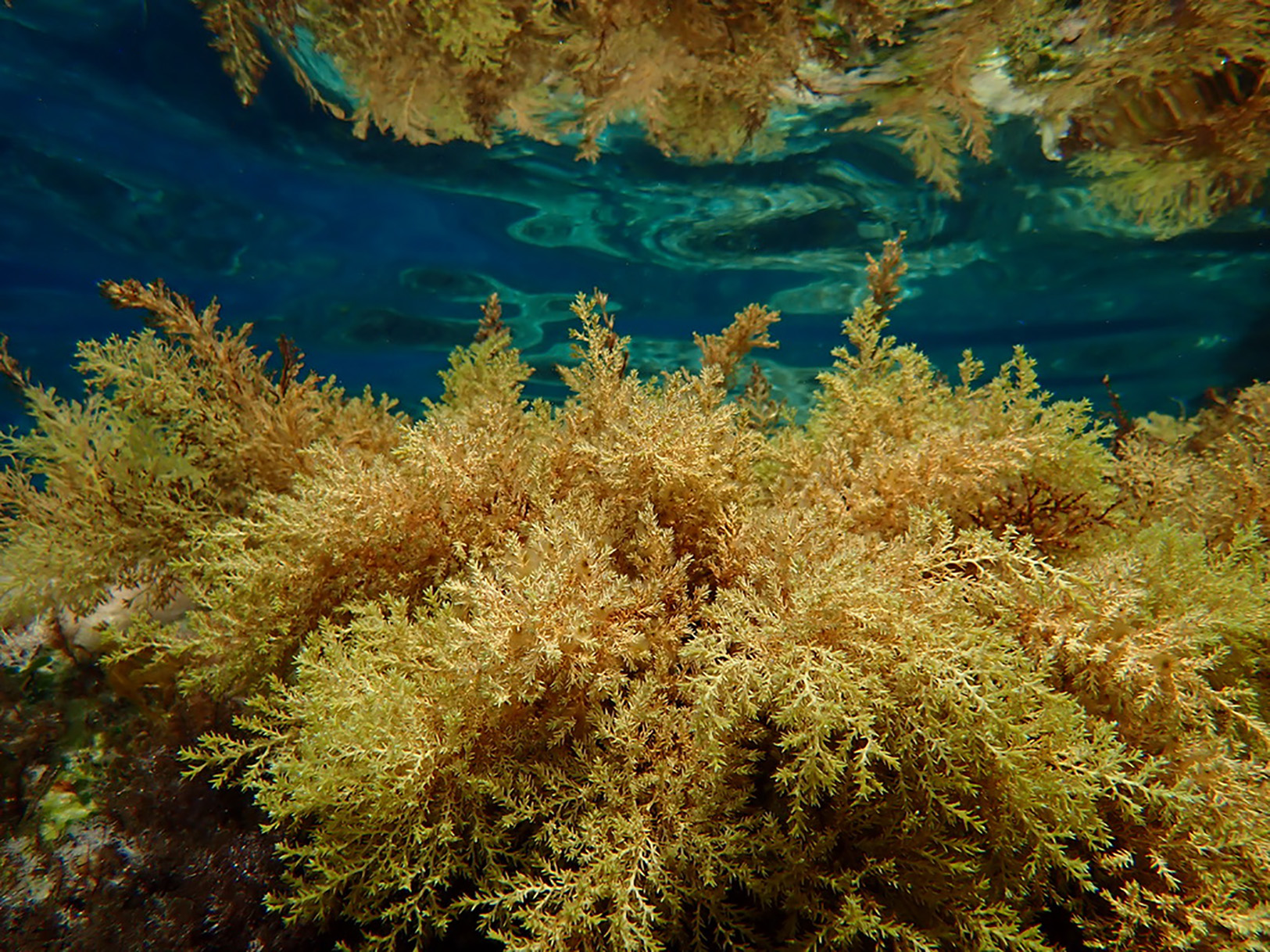
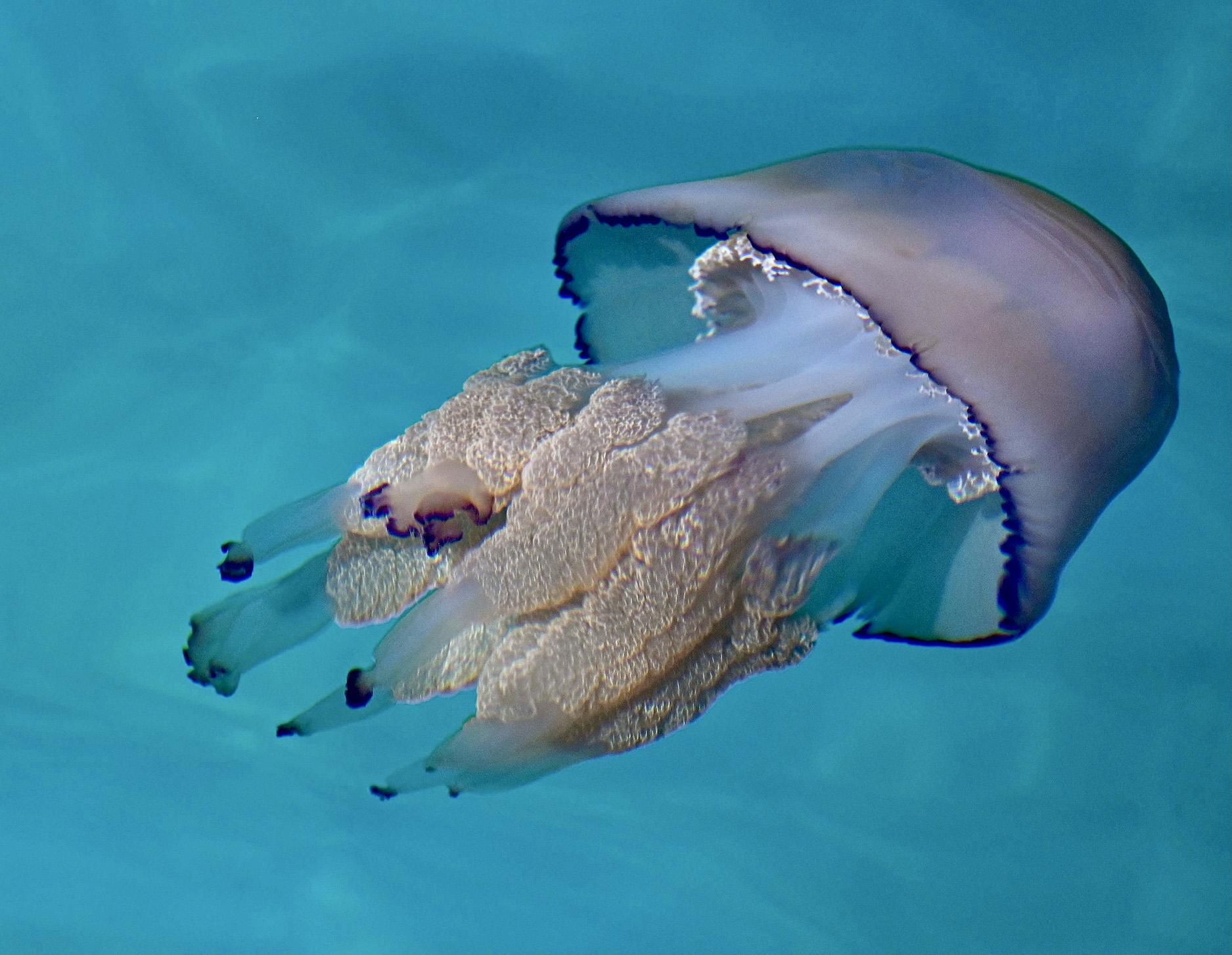
I was more fascinated in searching out the unusual lifeforms. Jellyfish intrigued me. The Fried Egg Jellyfish is being researched for properties to treat cancer patients. I had always loved eating octopus, until I became friendly with these hyper-intelligent creatures living in the Mediterranean. Octopus is no longer on my menu. In Gibraltar, I met the famous “Rock Apes,” macaque monkeys that suffered no fools among the thousands of tourists who visited there. Tease the monkeys with people food, and you are likely to get bitten. In Lanzarote, a volcanic island seemingly without shade, I spent days wandering among the exotic cacti that flourished there.

The basic tenet of nature is adapt or perish. It was a lesson that I would be reminded of during the final passage aboard Flying Fish this year.

Click a photo in the gallery below and scroll for captions and high-resolution images © Jeffrey Cardenas


A Memorable Passage

The year’s final passage aboard Flying Fish was the most memorable.

Ginny again joined me in Gran Canaria for the transatlantic passage to the Caribbean. We fueled and provisioned Flying Fish, and then waited for a perfect weather window to make the 3,000-mile crossing to the Caribbean. I had made this passage before. The Atlantic hurricane season had ended, and the forecast called for a 20-day downwind sleigh ride to Antigua.

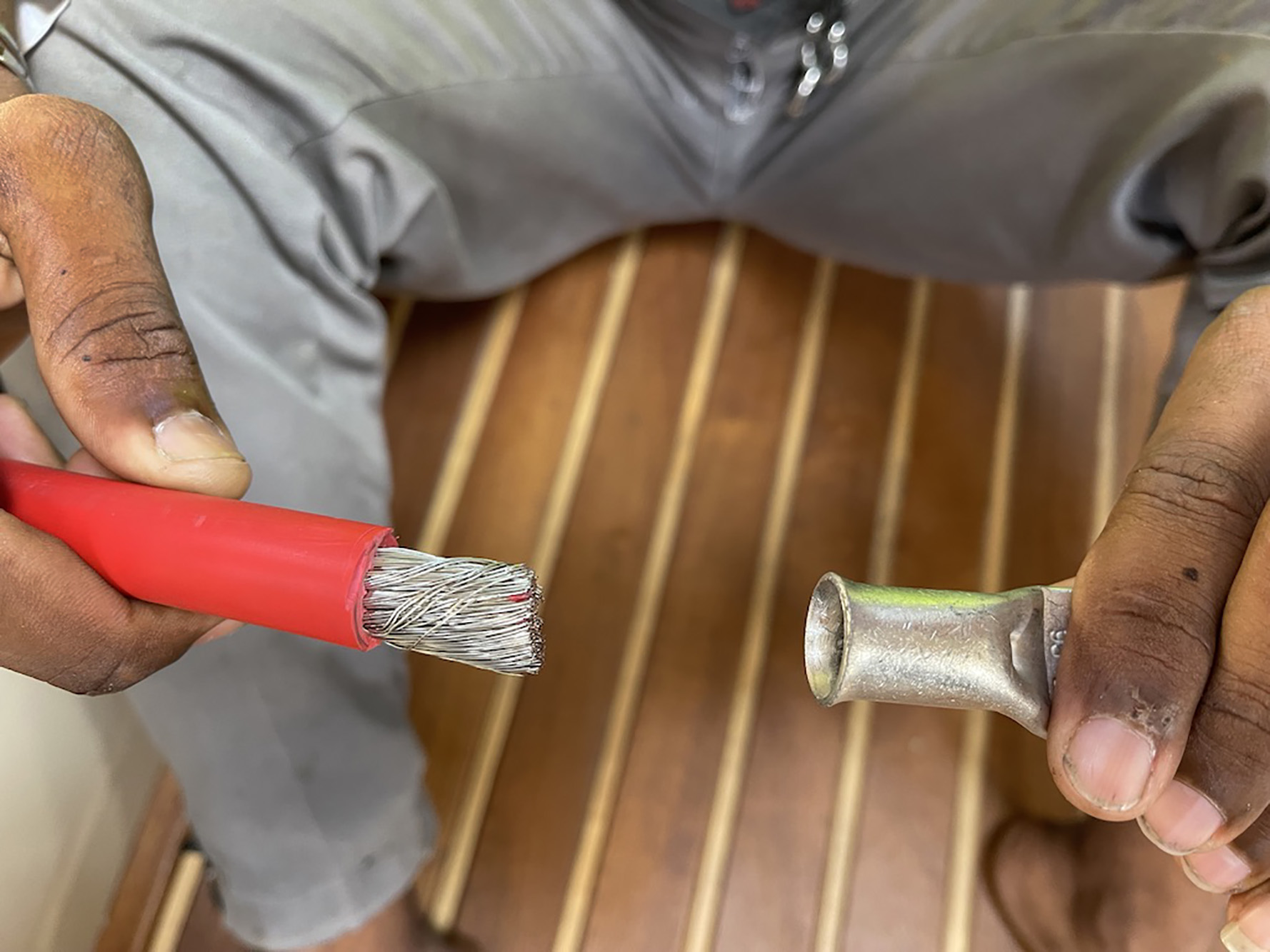
What we thought would be an idyllic sail became challenging in unexpected ways. Early on, the mainsail halyard parted, requiring a jury-rigged topping lift to get the sail back up. The weather intensified beyond its forecast, but the good ship Flying Fish is solid, and it handled 30-knot winds with ease. Suddenly, all DC electrical power quit (the result of an uncrimped battery cable, we found out later.) We were sailing traditionally with no autopilot, no navigation, no engine, no electric pumps, no lights, stove, or toilets. The wind increased to gale force near 40 knots. (A sailboat in the ARC Rally departing Gran Canaria at the same time suffered tragedy; a crew member was killed by a boom strike, another was injured, and the remaining crew member abandoned the boat at sea.) Our situation was not life threatening, but it was complicated to manage.

Rather than hand-steer our 22-ton cutter with no navigation except dead reckoning for the remaining three weeks to the Caribbean, Ginny and I decided instead to divert Flying Fish 500 miles to Cape Verde to sort things out. It was a difficult but correct decision.

Here’s the thing about undertaking and overcoming unexpected challenges at sea; the tough part is temporary, and when it is over the resulting feeling (endorphin rush, or whatever) is exhilarating–unlike anything ever experienced. Despite the hardship and disappointment, this memorable passage left me feeling vital, energetic, and present. It made me want more. Remembering the words of Oscar Wilde, I lived in 2021.

###

Click a photo in the gallery below and scroll for captions and high-resolution images © Jeffrey Cardenas

The 2021 route of Flying Fish from Didim, Turkey to Mindelo, Cape Verde

Flying Fish is being refitted in Cape Verde and will resume its passage toward Key West early in 2022.

As always, Sailing is not just about the wind and the sea; equally important are the places where Flying Fish carries me, and the flora, fauna, and people I encounter along the way.

Please click “Follow” at the bottom of this page so that you don’t miss a new update,- and please consider sharing this post with others who might enjoy following the voyage of Flying Fish. I welcome your commentsand I will always respond when I have an Internet connection. I will never share your personal information.

You can follow the daily progress of Flying Fish, boat speed (or lack thereof), and current weather as I sail into the Atlantic by clicking this satellite uplink: https://forecast.predictwind.com/tracking/display/Flyingfish. A Bonus: Click the “Legends and Blogs” box on the right side of the tracking page for passage notes while I am sailing offshore. 

To see where Flying Fish has sailed since leaving Key West in 2017, click here: https://cruisersat.net/track/Flying%20Fish.

Instagram: FlyingFishSail
Facebook: Jeffrey Cardenas

Text and Photography © Jeffrey Cardenas 2021

Let this be a time of grace and peace in our lives   – Fr. John Baker

The Green Lagoon

Charco de los Clicos, Lanzarote — If only I had been here 57 years ago… I might have seen Raquel Welch emerging from this green lagoon, her breasts spilling out of a fur bikini, only to be snatched from the beach by a carnivorous Pteranodon and flown to its nearby nest where the distraught “Loana the Fair One” was to be fed to the pterosaur’s offspring.

Ah, well, timing is everything.

Much of the 1966 cinematic fantasy, One Million Years B.C., was filmed in Lanzarote, including the epic green lagoon scene. The location director deserved an Oscar for choosing this island. If I blinked today and saw a 200-pound flying reptile swoop down out of the volcanic rocks to carry away a tourist climbing out of a tour bus, it would all seem perfectly normal. A million years and this place is still prehistoric.

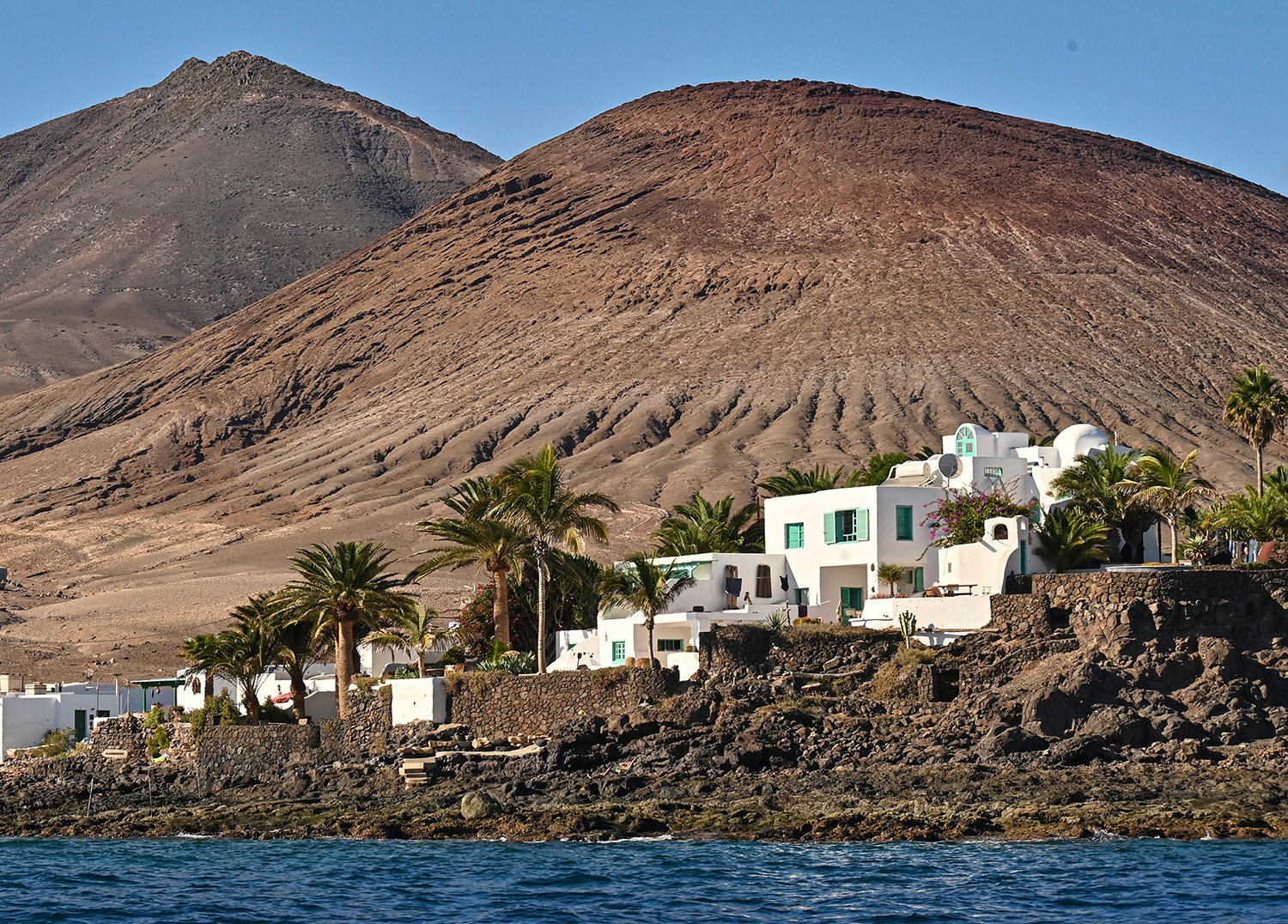
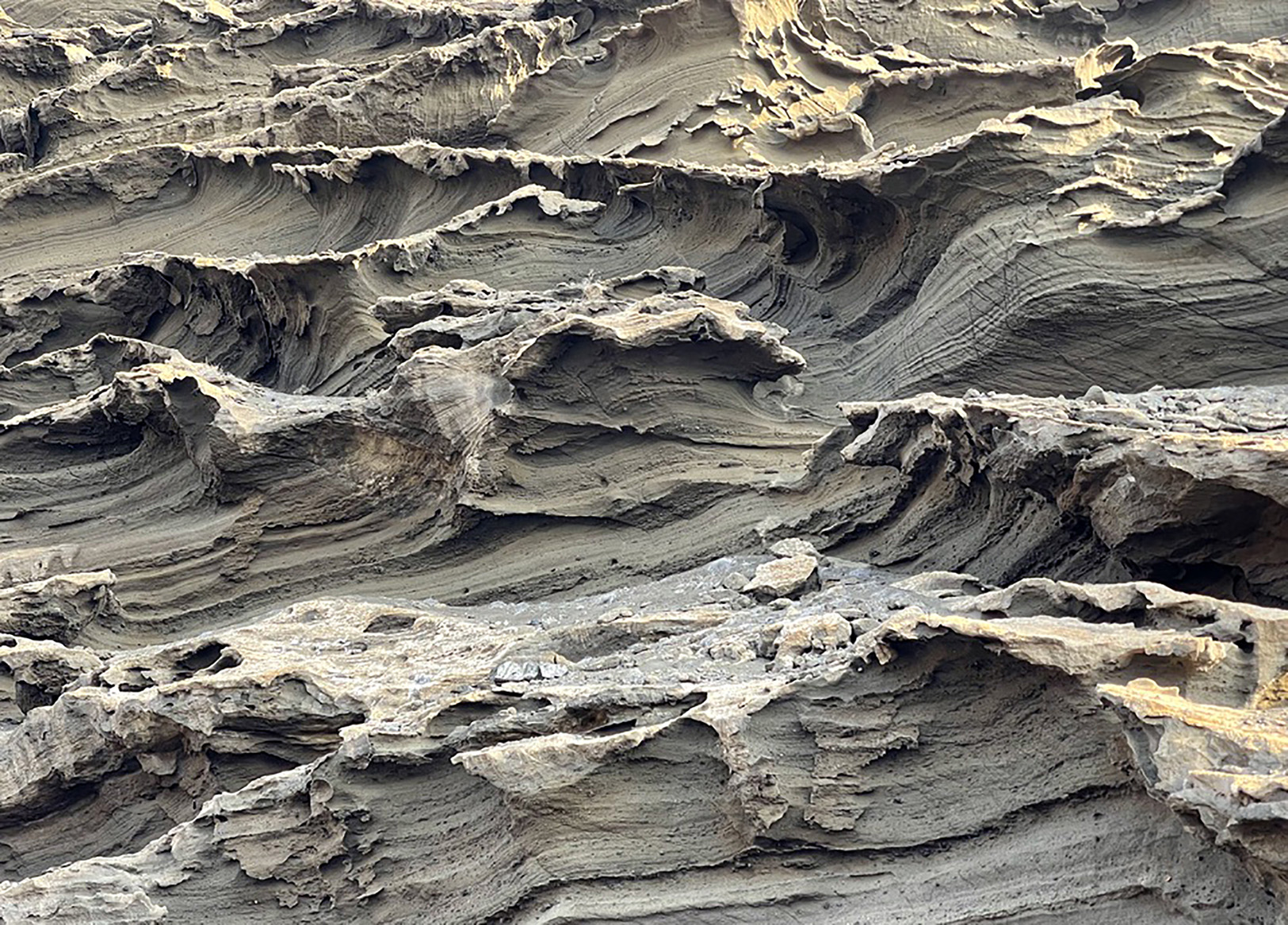
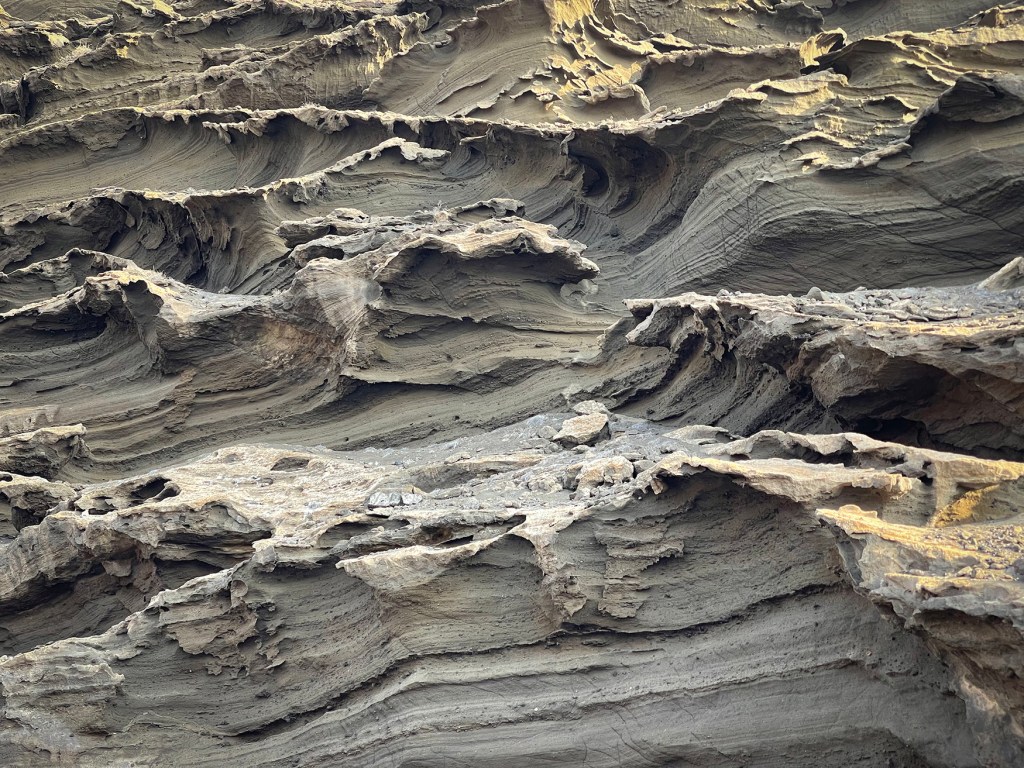
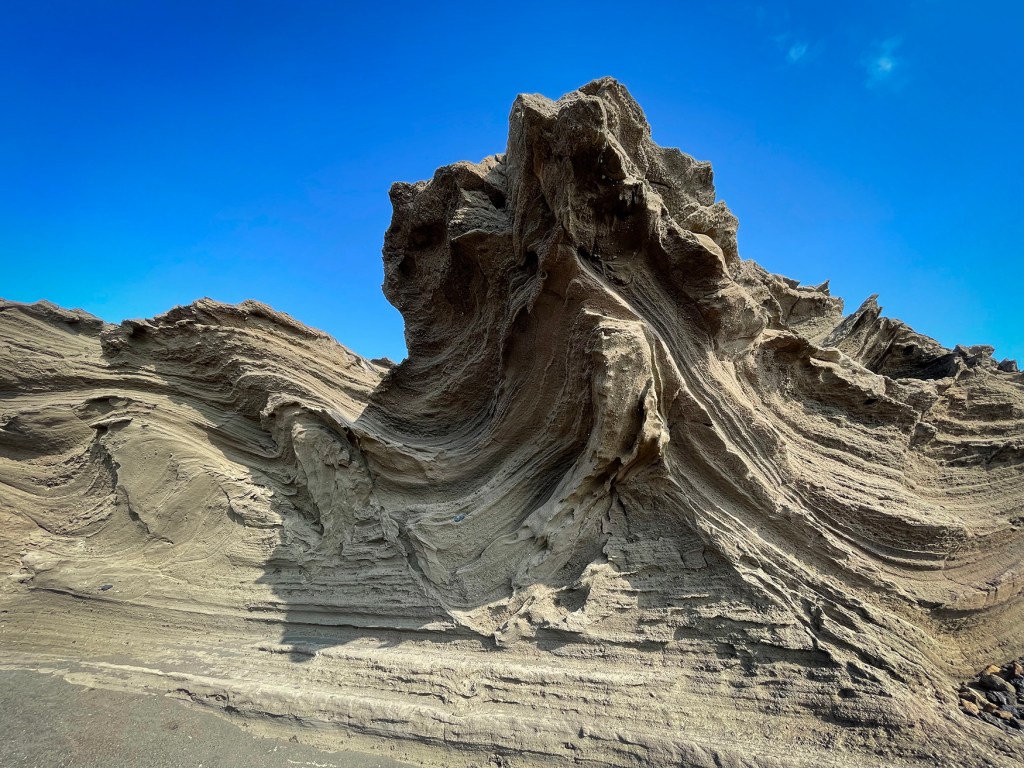
The island of Lanzarote bubbled up from a hot spot in the ocean 15 million years ago as plate tectonics transformed the earth. It has been nearly three centuries since the last major volcanic eruption and much of the island is unchanged. A dry climate and lack of erosion–and the protection of the spectacular Timanfaya National Park–have left the landscape pristine (translation: burnt to a crisp). NASA used this otherworldly topography to train the Apollo 17 crew.

Despite the current and severe volcanic activity on the Canary Island of La Palma 200 miles to the west, Lanzarote is known as the “Island of Volcanoes.” There are over 100 volcanic craters on this island that measures only 37 miles north to south. During the eruptions here in the 1730s, which lasted six years, the island grew by several square miles. Flames were visible 130 miles away and smoke hung in the air while lava and ash covered large areas of the island. Lives were lost, homes destroyed, and residents were plunged into years of darkness.[1]

All images © Jeffrey Cardenas

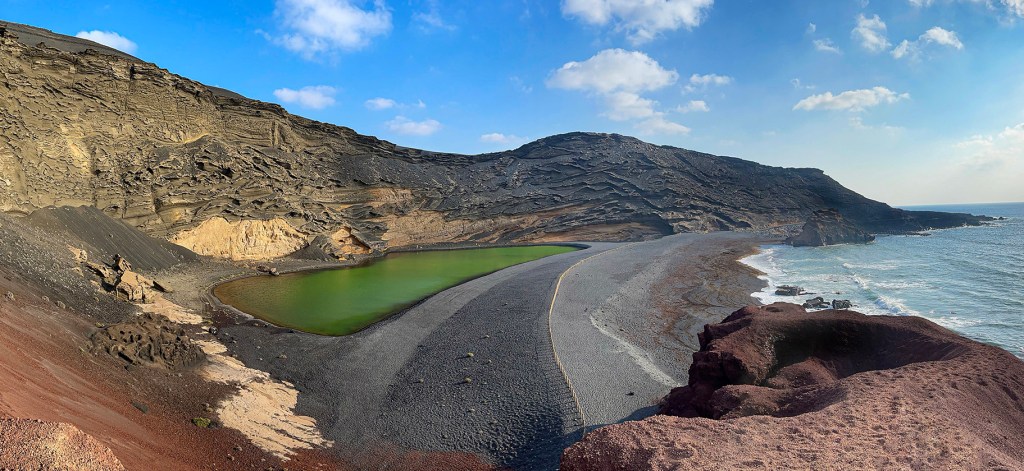
The Green Lagoon is one of the volcanic craters that formed during these powerful eruptions. The Atlantic Ocean eroded the western side of the cone flooding the crater with seawater. A berm of black volcanic rock and coarse sand now separates the lagoon from the ocean. Ancient lava tubes and underground fissures circulate the water. Charco de los Clicos was once home to a thriving colony of shellfish known locally as clicos (thus the name) until someone put a pair of turtles into the lagoon, and they devoured every last clico. Now the lagoon is inhabited by phytoplankton, microscopic marine algae, which gives the water its distinctive emerald green hue.

The Charco de los Clicos is a Natural Reserve bordering Timanfaya National Park. Regulations forbid swimming… unless, of course, you are Loana the Fair One and you come attired in a fur bikini.

The film production poster of Raquel Welch, in One Million Years B.C., an image that fueled the fantasies of 12-year-old boys everywhere. © 1966 Hammer Film Productions Ltd.

References:

[1] Alwyn Scarth, Volcanoes: An Introduction (Taylor & Francis, 2004)

[2] Hammer Film Productions Ltd. 1966

Official Trailer One Million Years B.C.: https://vimeo.com/125826115


Sailing is not just about the wind and the sea; equally important are the places where Flying Fish carries me.

Please click “Follow” at the bottom of this page so that you don’t miss a new update, and please consider sharing this post with others who might enjoy following the voyage of Flying Fish. I welcome your comments, and I will always respond when I have an Internet connection. I will never share your personal information.

You can follow the daily progress of Flying Fish, boat speed (or lack thereof), and current weather as I sail into the Atlantic by clicking this satellite uplink: https://forecast.predictwind.com/tracking/display/Flyingfish. A Bonus: Click the “Legends and Blogs” box on the right side of the tracking page for passage notes while I am sailing offshore. 

To see where Flying Fish has sailed since leaving Key West in 2017, click here: https://cruisersat.net/track/Flying%20Fish.

Instagram: FlyingFishSail
Facebook: Jeffrey Cardenas

Text and Photography © Jeffrey Cardenas 2021

Let this be a time of grace and peace in our lives   – Fr. John Baker

Volcanic Landfall

A new resort is built upon the lava plain of the inactive Caldera Riscada in Lanzarote, Canary Islands. Photograph: © Jeffrey Cardenas

Puerto Calero, Lanzarote, Canary Islands — The first impression of this landfall is at once welcoming and foreboding.

I am thankful for a safe passage, and I am in a secure place. Still, I cannot help but think of the volcanic disaster occurring on the island of La Palma, 200 miles to the west. Today, three weeks into the eruption of the Cumbre Vieja volcano in La Palma, portions of the cone collapsed and blocks of molten lava the size of three-story buildings rolled down the hillside into an industrial park.

I cannot imagine what it must be like to have the land under your feet tremble, and then watch the mountain above your village explode into molten rock.

On Lanzarote, the Las Montañas del Fuego erupted for six years beginning in 1730, and then again in 100 years later, resulting in the Parque Nacional de Timanfaya. From the deck of Flying Fish, I look at the Caldera Riscada looming over my landfall. All is quiet for now, gracias a Dios.

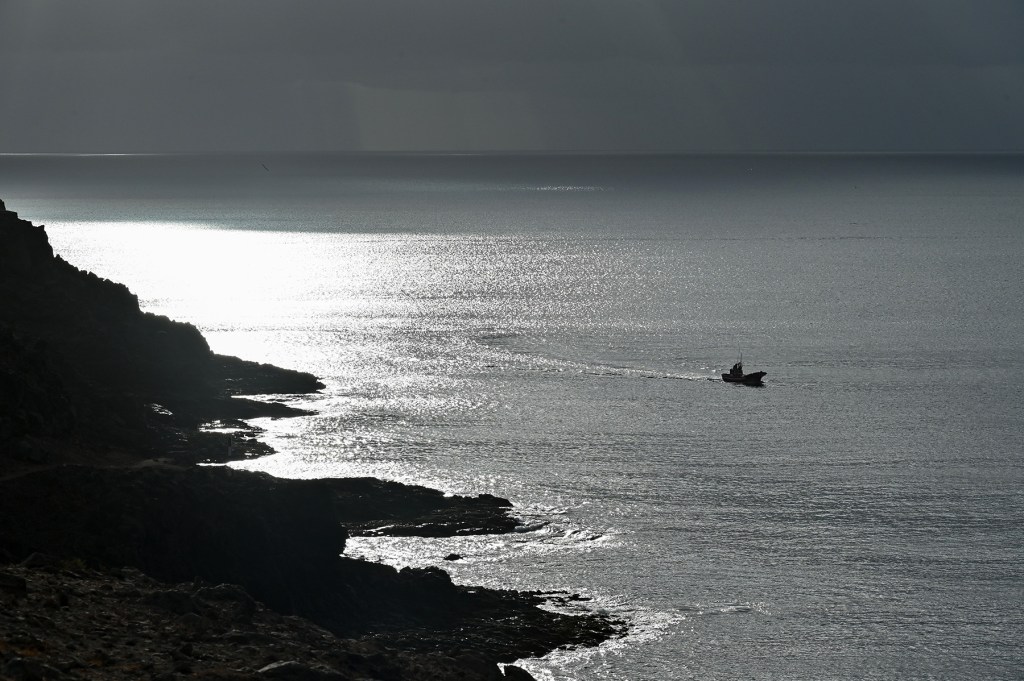
A solitary fisherman navigates his panga in the early morning light along the volcanic coastline of Lanzarote. Photograph: © Jeffrey Cardenas

Sailing is not just about the wind and the sea; equally important are the places where Flying Fish carries me.

Please click “Follow” at the bottom of this page so that you don’t miss a new update, and please consider sharing this post with others who might enjoy following the voyage of Flying Fish. I welcome your comments, and I will always respond when I have an Internet connection. I will never share your personal information.

You can follow the daily progress of Flying Fish, boat speed (or lack thereof), and current weather as I sail into the Atlantic by clicking this satellite uplink: https://forecast.predictwind.com/tracking/display/Flyingfish. A Bonus: Click the “Legends and Blogs” box on the right side of the tracking page for passage notes while I am sailing offshore. 

To see where Flying Fish has sailed since leaving Key West in 2017, click here: https://cruisersat.net/track/Flying%20Fish.

Instagram: FlyingFishSail
Facebook: Jeffrey Cardenas

Text and Photography © Jeffrey Cardenas 2021

Let this be a time of grace and peace in our lives   – Fr. John Baker

¡Vamos! Islas Canarias

Flying Fish charging into open water. The challenge, risk, and pure joy of being underway on another ocean passage. Photograph: © Jeffrey Cardenas

Into the blue again, into the silent water
Once in a Lifetime / David Byrne, Brian Eno

Thousands of sea miles have passed under the keel of Flying Fish since I set sail from Key West nearly four years ago. Still, the expectation of a new ocean passage remains as exhilarating as it was on the first day. The next leg of my journey begins soon, from Gibraltar to the Canary Islands, some 700 nautical miles southwest and five days en route.

There will be challenges; I will be 66 years old in a few months. I don’t move as quickly onboard, and I have lost some mobility and balance. These are ordinary issues associated with aging, but they are extraordinary when put into the context of a solo offshore passage.

There will also be risk; the passage along the West African coast is unforgiving and mostly without shelter. I will be traveling on a dark moon. Small Moroccan fishing boats setting nets must be avoided — as well as other boats emerging from the African coastline that may have more sinister intentions. And, in a bizarre twist of nature, there is an issue with aggressive killer whales intentionally colliding with sailing vessels just outside of the Straits of Gibraltar. Since March of this year, there have been more than 50 verified reports of orcas ramming sailboats. Biologists don’t understand why, but half of these encounters have been serious enough to disable boats and require towing to repair facilities ashore.[1]

Regardless of the risk, the pure and absolute joy of setting out on an open ocean passage cannot be overstated. In a world of rapidly diminishing nature, ocean voyaging allows access to one of the few unaltered places remaining on this planet. It is a world of silence and isolation. There can be long periods with no organic sound, generated light, or evidence of other human beings. The ocean provides a sense of timelessness. This is why I go.

I have been landbound for the past month in Gibraltar, but the time ashore has provided a much-needed health and wellness stop for both boat and captain. The sails went to a sailmaker in Tarifa for re-stitching. The captain went into a gym to address added kilos of body weight accumulated from epicurean excesses while cruising Sardinia, the Balearics, and the Costa del Sol. A Hungarian physical trainer in Gibraltar named Rita worked me back into shape.
The passage to the Canary Islands will be one of the final legs of this COVID-interrupted trip around the world aboard Flying Fish. The pandemic took hold of my itinerary two years ago. Now, I am slowly moving again as I anticipate the end of the Atlantic hurricane season. It is an above-average year for tropical cyclone activity. Rapidly warming sea temperatures are spawning stronger and more frequent storms.[2] Most late-season tropical cyclones form over Western Africa, south of the Canary Islands. I will monitor the weather (and the recent volcanic activity) carefully. My favorite sailing partner, Ginny, will join me on the passage from the Canaries to the Caribbean when the hurricane season ends in December. I hope to return home to Florida with Flying Fish in 2022.

Ironically, it is the return home that causes me the most uncertainty. As I sail toward the end of this journey, I wonder how difficult it will be to reckon with life after Flying Fish. In these four years, I floated in a bubble of unreality, immersed in the rarefied air of freedom and privilege while many others around the world could barely hold their heads above the water. I think of the anthem of entitlement, Once in a Lifetime, by songwriters David Byrne and Brian Eno:

“And you may ask yourself, ‘Well, how did I get here?‘”

While I may not fully understand “how I got here,” I am grateful for this time at sea. At the end of this journey, the transition from water to land will be my choice. There will be new challenges ashore during this time of uncertainty; re-socialization, commitment to faith, family, home, and community, and prioritizing my personal health. For me, a greater risk than any danger at sea would be spending the rest of my days in a chair in front of a TV with a cocktail in one hand and a bag of chips in the other. I will not succumb to that life of mediocrity.

I’m getting ahead of myself… For now, it is time to focus on the immediate passage forward. The boat is ready, and I am ready. The weather to Lanzarote looks good. I have route planning to avoid Moroccan nets, and contingencies in place for potential collision with whales. I will keep a sharp mind and maintain situational awareness. And I must stay onboard.

These are days that will sustain me.


Goodbye Gibraltar. The Rock is dissolving into the fog. Photography: © Jeffrey Cardenas

References:

[1] Iberian Orca, Atlantic Orca Working Group, www.orcaiberica.org

[2] NOAA National Hurricane Center

[3] Once in a Lifetime, David Byrne and Brian Eno, https://youtu.be/5IsSpAOD6K8


Sailing is not just about the wind and the sea; equally important are the places where Flying Fish carries me.

Please click “Follow” at the bottom of this page so that you don’t miss a new update, and please consider sharing this post with others who might enjoy following the voyage of Flying Fish. I welcome your comments, and I will always respond when I have an Internet connection. I will never share your personal information.

You can follow the daily progress of Flying Fish, boat speed (or lack thereof), and current weather as I sail into the Atlantic by clicking this satellite uplink: https://forecast.predictwind.com/tracking/display/Flyingfish. A Bonus: Click the “Legends and Blogs” box on the right side of the tracking page for Passage Notes once I am en route to the Canaries. 

To see where Flying Fish has sailed since leaving Key West in 2017, click here: https://cruisersat.net/track/Flying%20Fish.

Instagram: FlyingFishSail
Facebook: Jeffrey Cardenas

Text and Photography © Jeffrey Cardenas 2021

Let this be a time of grace and peace in our lives   – Fr. John Baker