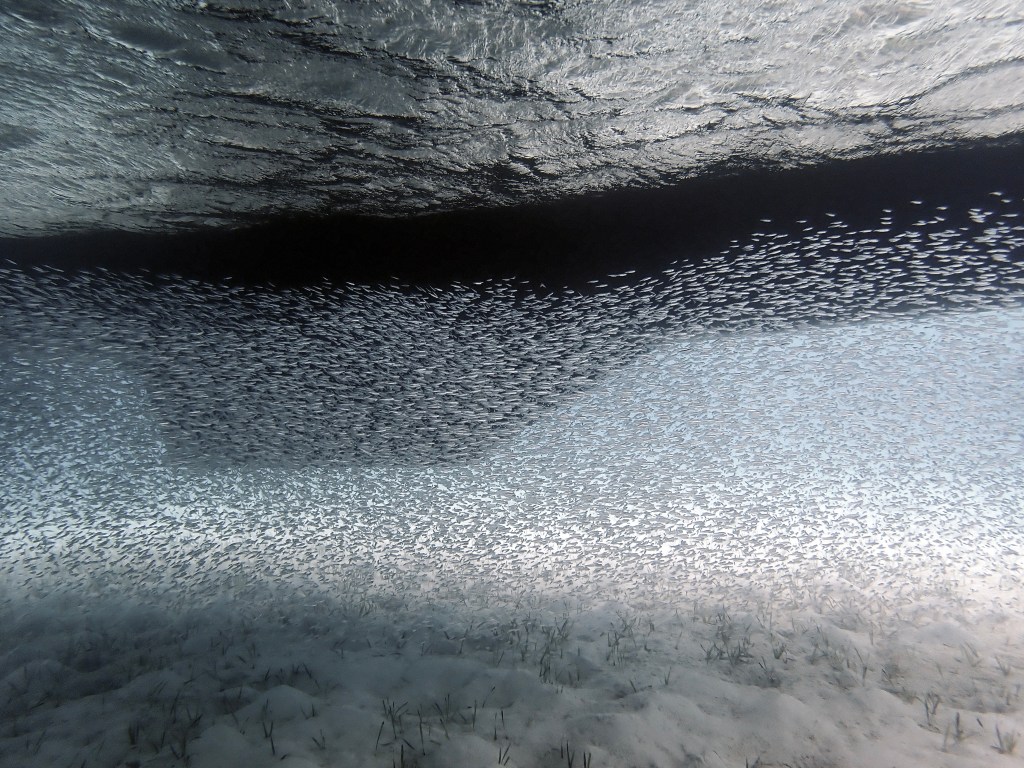
Glass minnows are shape shifters. It is possible to see through their translucent bodies.
Shroud Cay, Exuma—I expected that scraping barnacles and grass from the underside of my sailboat would involve hours of necessary but nasty work. Once, after a particularly messy hull cleaning, I came to the surface covered in algae, and my scalp was crawling with biting sea lice.
Today, however, my sealife encounter was ethereal.
As I worked underwater, a sphere of translucent glass minnows surrounded me in a sanctuary they found under the boat. Glass minnows are shape shifters. En masse, they form a defensive cocoon; a cloud of life that changes its appearance like smoke. It’s a fish version of starlings moving together in an underwater murmuration.
I posed no threat, they showed no fear.
It reminded me of the writings of naturalist John Burroughs: The best place to observe nature, he said, is where you are.
As always, sailing is not just about the wind and the sea; the places, the flora, fauna, and people encountered along the way are equally important.
Please click “Follow” so you don’t miss a new update, and please consider sharing this post with others who might enjoy connecting here. I welcome your commentsandwill always respond when I have an Internet connection. I will never share your personal information.
An additional website, www.JeffreyCardenas.com, features hundreds of fine art images—underwater, maritime landscapes, boats, and mid-ocean sailing photography–from exotic locations worldwide.
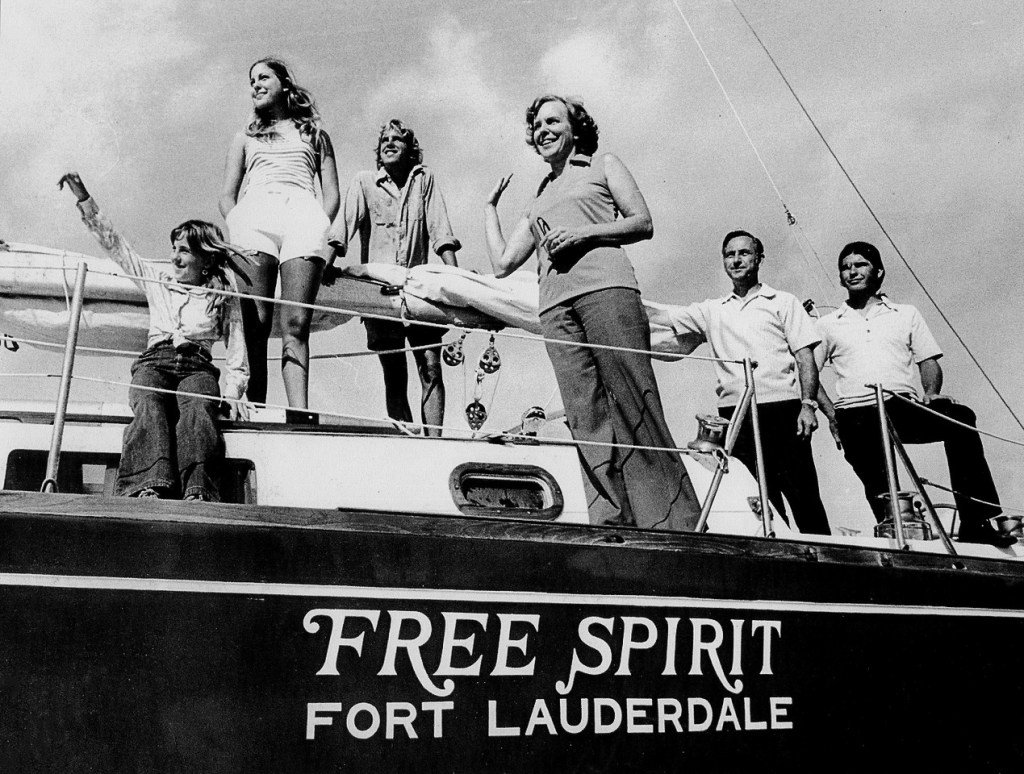
Mom inspired us to follow our dreams. She stands at the rail of our sloop, Free Spirit, as we prepare to sail across the Atlantic together in 1976.
Alvina Cardenas, mother, teacher, artist, and adventurer, died in Key West on February 11, 2025, at age 95. She was loved.
Mom was born in Chicago in 1929, as the country entered the Great Depression. She was the child of modest Lithuanian immigrants, immigrants who made this country great. Her father fought with American infantrymen in the trenches on the Western Front during World War 1.
For the first five years of her life, Mom spoke only Lithuanian. Despite initial resistance from her conservative parents, she became the first member of her family to attend college. Her mother believed that women belonged at home.
Alvie, as she would come to be known, often said that her world only really began when she met the love of her life, the rakishly handsome Bob Cardenas Sr., in front of the bronze lions at the Art Institute of Chicago. They married within months and honeymooned in Cuba in 1951.Dad’s family still owned property on the island. According to family lore, Mom and Dad conceived their first child, Bob Jr., on the beach at Varadero.
After experiencing the warmth of Cuba, they could no longer tolerate the ice and snow of Chicago so they moved to South Florida to begin their lives together and continue building a family. I was born in Ft. Lauderdale in 1955, and our sister, Susan, arrived three years later. Cathy was born in 1964. Mom liked to say that Cathy was the caboose of the family train
Mom tolerated a menagerie in her Florida home, including dogs, cats, birds, snakes, and a troupe of monkeys. The critters kept her busy, but her focus was always on her children. She gave each of her wild, barefoot kids a long leash and somehow kept us reasonably healthy. Mom believed we needed to learn from our mistakes. I learned to never again drink insect poison I found in the work shed. My brother learned not to spill molten lead on his skin when he was making fishing sinkers. Mom was always there for us when we seriously screwed up. She could have found her way to the emergency room with her eyes closed.
Mom’s energy overflowed outside of the household. She became a passionate teacher in several South Florida schools, including one that her children attended (possibly so that she could keep a closer eye on her wayward brood). Mom taught English and Drama. She taught us to use our words, although when we used certain words, our mouths were washed out with soap. I can still taste that bar of Dial soap on the back of my tongue. Discipline was different then.
There was never any shortage of drama as our family matured. One day, Mom and Dad made an announcement. They said, “We’re going to take all you kids out of school and sail around the world.” Each of us responded with a resounding YES!
They sold their possessions and bought a 43-foot sloop, a fixer-upper they named Free Spirit. Dad learned to navigate with a sextant, and Mom made sure that none of us fell into the ocean. We sailed 4,000 miles across the Atlantic.
For years, Mom talked about that trip and how it brought us closer together. She would get dreamy-eyed and say, “Do you remember those night watches near the Azores? The whales were so close to us that I could hear their tails slapping the water.” If only Mom’s Lithuanian parents could have seen her then…
Our family in Horta, Azore Islands, at the great harbor wall where voyagers like Sir Frances Chichester (top right) memorialized their passages.
As sometimes happens when dreams are larger than budgets, Mom and Dad ran out of money. Once Free Spirit made landfall in Spain, they returned to the United States to work while their children scattered into their individual lives.
Our sister, Cathy, died unexpectedly at age 34. Mom and Dad were empty nesters and relocated, finding peace in the mountains of North Carolina. Mom immersed herself in the arts. She built a small studio and installed a pottery kiln. She painted landscapes and portraits, interacting with the talented North Carolina arts community exhibiting in shows and galleries. She was also a grandparent now. One of her great joys was introducing this new generation of Florida kids to mountain country life. She raised goats and cultivated a garden. Mom became a master at crafting wildflower crowns for the little girls.
Mom and Dad returned to Florida because they missed the ocean. They lived in a condominium in Ft. Pierce where they could watch the Atlantic Ocean from the front windows and the Indian River from the back.
In his 70s, Dad joined a cadre of like-minded souls and sailed across the Pacific Ocean from Panama to Melanesia. Mom said, “I’m flying across the ocean this time.” She joined the boat in Vanuatu, and while in Tanna, our parents hiked to the fiery rim of the active volcano, Mount Yasur.
In their later travels, Mom and Dad sailed through the Mediterranean and Caribbean. They walked along the Great Wall of China. They rounded Cape Horn in a cruise ship. And, they were robbed of their passports in St.Petersburg, Russia—and then detained by the Russian government for a week because they didn’t have passports.
Time passed quickly. Mom and Dad aged gracefully. They spent the remainder of their lives in Key West with their children. Two years ago, Dad died. Our parents had been married for 71 years.
Mom, a widow in her mid-90s, relished the role of matriarch to an eclectic band of three children, eight grandchildren, and 12 great-grandchildren. She followed our adventures, cheered our successes, and commiserated with our sorrows.
A few days before Mom’s death, our parish priest came to her bedside and performed the sacrament Anointing of the Sick. Mom’s breathing was labored, and her eyes were closed. She was dying.
Later, with her family beside her, someone quietly said, “We are all here, Mom. We’re here to celebrate you.” Mom couldn’t speak, but she mouthed a question—”So where’s the Champagne?”
Of course, we happened to have a bottle of Chandon on ice. My brother poured a teaspoon of it and lifted it to her lips. Mom smiled her beautiful smile one final time.
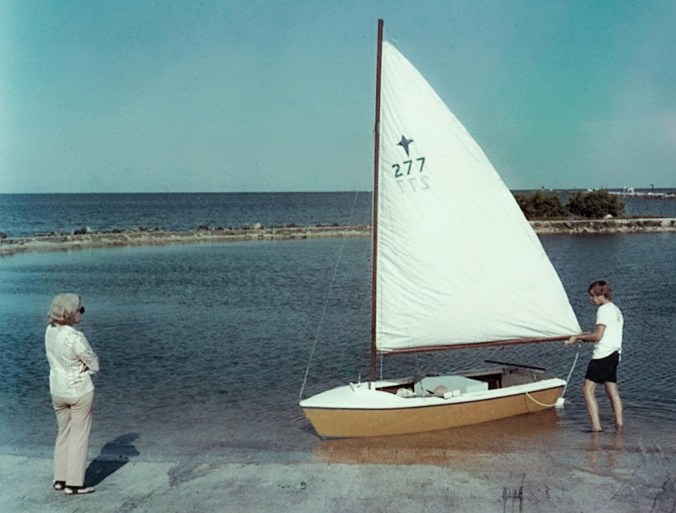
Mom is saying goodbye to her 14-year-old son as I rig my sailboat to “run away from home” and sail from Ft. Lauderdale to Key West.
As always, sailing is not just about the wind and the sea; the places, the flora, fauna, and people encountered along the way are equally important.
Please click “Follow” so you don’t miss a new update, and please consider sharing this post with others who might enjoy connecting here. I welcome your commentsandwill always respond when I have an Internet connection. I will never share your personal information.
An additional website, www.JeffreyCardenas.com, features hundreds of fine art images—underwater, maritime landscapes, boats, and mid-ocean sailing photography–from exotic locations worldwide.
Barnacles nearly drove Charles Darwin crazy while he was researching The Origin of the Species
Barnacles have no heart
Barnacles have the largest relative penis size in the natural world
All true.
Sailors throughout history have despised the lowly barnacle. They grow quickly on the bottom of a boat, causing hydrodynamic drag that can bring even racing sailboats to a near standstill. Several singlehanded sailors in the most recent Golden Globe race around the world had to dive overboard in the chilly Southern Ocean to remove masses of gooseneck barnacles. Racer Jeremy Bagshaw’s boat, Olleanna, could barely move because of an infestation of barnacles. He said, “I didn’t have enough food to go around the world at three knots.” He could have eaten the gooseneck barnacles. They are considered a delicacy in many parts of the world and sell for as much as $100 a pound. One reviewer said they taste like “eating the sea.” Jeremy Bagshaw didn’t want to eat the sea. He just wanted to sail home.
Barnacles have existed for at least 325 million years, which has a lot to do with the fact that they are really good at making baby barnacles. Described as, among other things, the “genitalia of the sea,” barnacles have had to evolve creatively to survive. They are sessile, meaning they are permanently attached to one place and cannot leave their shells to mate. Some barnacles evolved as hermaphrodites. Another way they facilitate genetic transfer between isolated individuals is with extraordinarily long penises. “Barnacles probably have the largest penis-to-body size ratio of the animal kingdom,” according to a report in New Scientist Magazine. “On exposed shores,” the report continues, “it’s better for barnacles to grow shorter, thicker penises” so that the sexual organ is not damaged in rough sea conditions. Regardless of diameter, the penis of a barnacle only lasts for one mating season, and it is then discarded. Fortunately, it will grow a new one the following year.
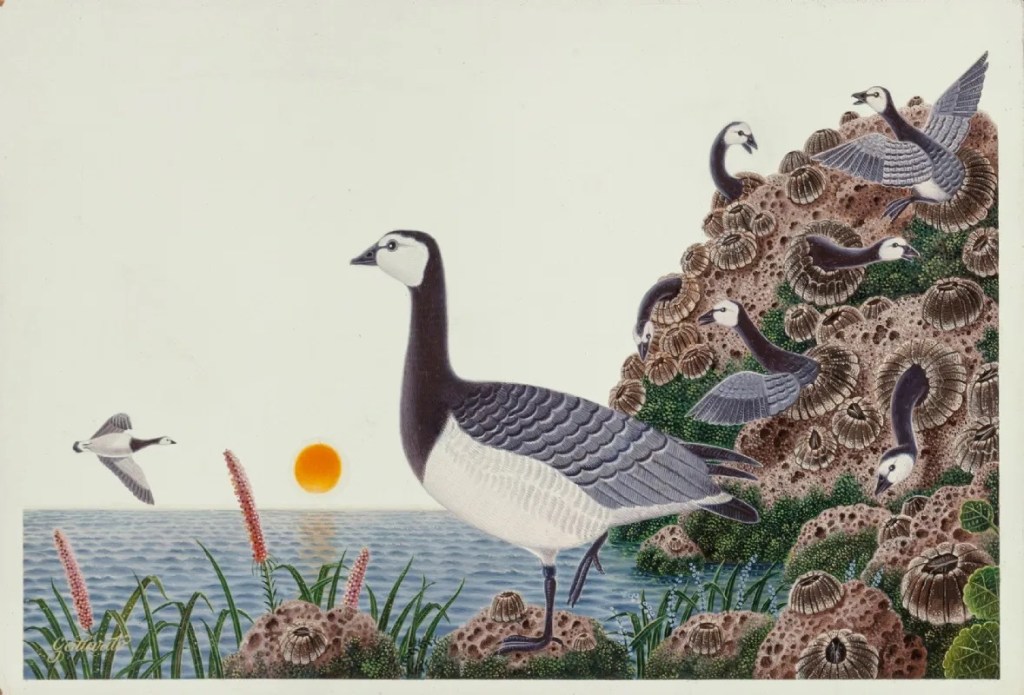
While the science of a barnacle’s sex life is strange, the medieval bestiary folklore about these creatures is downright bizarre. The 12th-century religious historian, Gerald of Wales, proclaimed that geese (yes, birds) hatched from barnacles attached to driftwood. He wrote: “They hang down by their beaks as if they were a seaweed attached to the timber. I have frequently seen, with my own eyes, more than a thousand of these small bodies of birds, hanging down on the sea-shore from one piece of timber, enclosed in their shells, and already formed.” For some reason, there is a statue honoring Gerald of Wales in Britain’s St Davids Cathedral.
In the 1600s, another disreputable English author and illustrator, John Gerard, perpetuated the myth by claiming to have seen geese emerging from the shells of barnacles. The legend persisted through the 1800s, when, even while the Industrial Revolution was occurring in Britain, some people apparently still believed that live birds emerged from the shells of marine invertebrates.
Famed naturalists Carl Linnaeus and Georges Cuvier were more rational in their observations, but they were convinced that barnacles were mollusks. In 1830, a lesser-known naturalist named William Thompson proved them wrong, and, in a radical reinterpretation of taxonomy, barnacles were reclassified as crustaceans.
Still another Englishman of letters—Charles Darwin, no less—became inspired by barnacles. Inspiration turned into obsession, and Darwin spent eight years trying to understand them. Darwin often worked through the night beneath an oil lamp, dissecting barnacles under the microscope in a room thick with the vapors of preserving spirits.He suffered migraines and intestinal distress, even nightmares. Doctors begged him to stop. Darwin refused. He had begun seeing variations in barnacles no one had ever noticed. His work resulted in a 4-volume monograph on barnacles, living and extinct, and it helped him refine his theory of evolution by natural selection.
Afterward, when asked by an old friend about his passion for barnacles, Darwin responded, “I hate a Barnacle as no man ever did before, not even a Sailor in a slow-sailing ship.”
Geese emerging from barnacles by Gervasio Gallardo
As always, sailing is not just about the wind and the sea; the places, the flora, fauna, and people encountered along the way are equally important.
Please click “Follow” so you don’t miss a new update, and please consider sharing this post with others who might enjoy connecting with the voyage. I welcome your commentsandwill always respond when I have an Internet connection. I will never share your personal information.
An additional website, www.JeffreyCardenas.com, features hundreds of fine art images—underwater, maritime landscapes, boats, and mid-ocean sailing photography–from exotic locations worldwide.
Upcoming Exhibition: “On the Reef” will be exhibited in The Studios of Key West’s Zabar Project Gallery, on view from January 2–30, 2025.
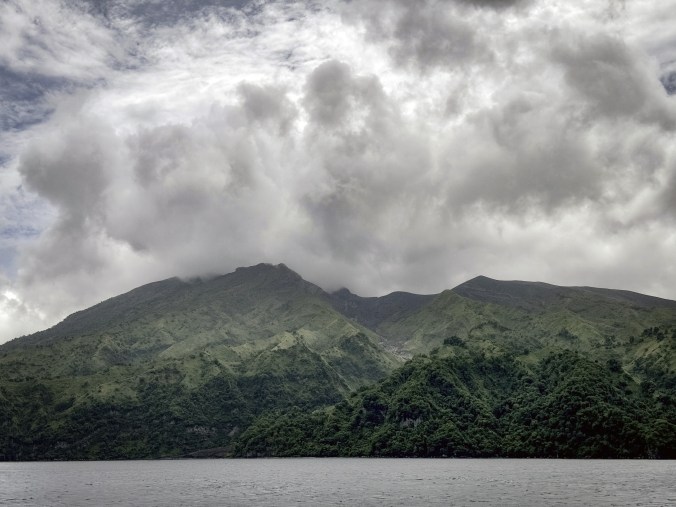
The crater of St. Vincent’s La Soufrière, which erupted in 2021
This lovely coastline of Wallibou, in northwest St. Vincent, has suffered greatly in recent years from both man and nature.
Three years ago, the still-active volcano La Soufrière erupted with a devastating blast that displaced 16,000 residents. Smoke and ash covered the island and closed airspace as far away as Barbados.
Then, only several months ago, the sailing catamaran Simplicity was discovered abandoned here with “copious amounts of blood” covering the interior. Police said the American-owned sailboat was hijacked in nearby Grenada by three West Indian assailants and brought to Wallibou. The bodies of Kathy Brandel, 71, and Ralph Hendry, 66, were never found.
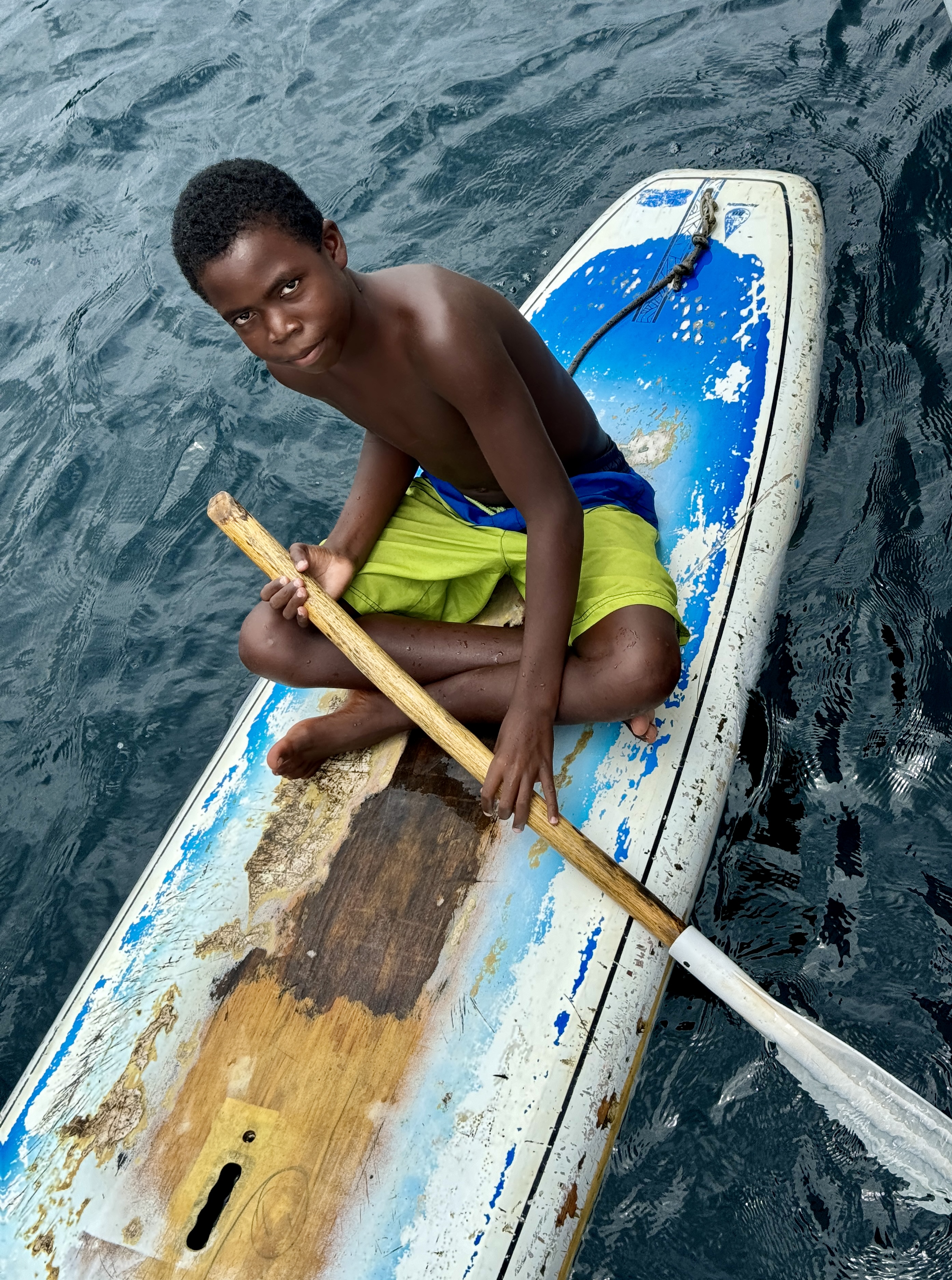
Life continues despite the tragedies here. When I arrived in the Chateaubeliar village yesterday, a fisherman in a rowboat dropped off three avocados as a welcoming gift. Ashore, boys fished with handlines for jack mackerel from the rebuilt village pier. And at midnight, I was awakened by the local church’s gospel singing.
I could have avoided this small fishing village along Wallibou’s coastline. Guidebooks recommend caution, and not many sailboats anchor here anymore. Instead, my visit to Chateaubeliar gave me a lesson in the power of perseverance and hope.
As always, sailing is not just about the wind and the sea; the places, the flora, fauna, and people encountered along the way are equally important.
Please click “Follow” so you don’t miss a new update, and please consider sharing this post with others who might enjoy connecting with the voyage. I welcome your commentsandwill always respond when I have an Internet connection. I will never share your personal information.
An additional website, www.JeffreyCardenas.com, features hundreds of fine art images—underwater, maritime landscapes, boats, and mid-ocean sailing photography–from exotic locations worldwide.
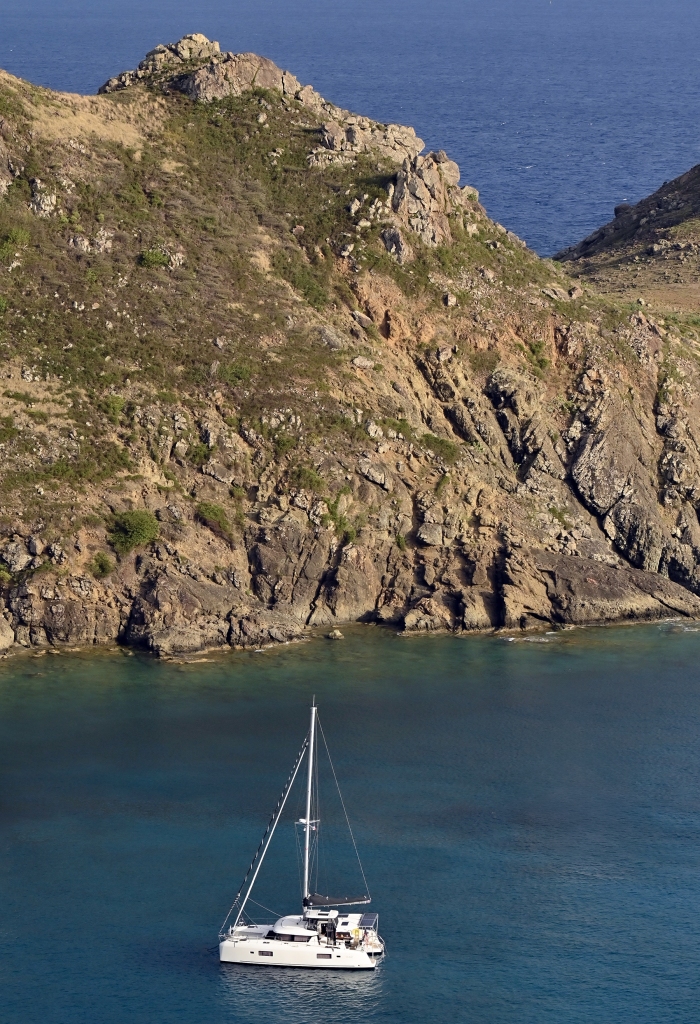
Stella Maris is anchored at Île Fourchue, an uninhabited rock near Saint-Barthélemy, and the only celebrity in sight is an elegant tropicbird flying in graceful pirouettes above the sailboat.
As a gentle swell rolls in from the Caribbean Sea, I reflect on disparity in nature, including human nature. Life is more polarized than I remember it being: wealth and poverty, feast and famine, politics, Israel, Palestine, Ukraine, Russia. Common sense tells me it has always been this way. It just feels different now. The nature of a place like Île Fourchue helps put these contrasts into perspective. It is also a balm in troubling times.
Île Fourchue can only be reached by boat. There are no airstrips, roads, homes, or hotels. I am spending a week at anchor in what was once the caldera of an ancient volcano. The island is now part of the Réserve Naturelle. The other St. Barth, the St Barth of the Kardashians, is just over the horizon. Île Fourchue is a world apart.
A few other boats, primarily day-trippers, come and go in this small bay. When they leave, during that magic time at the end of the day when the light becomes soft, I roam freely across the empty hillsides of Île Fourchue and it becomes a place of my own. I feel the nature around me. I am included.
Another man who sought the solitude of Île Fourchue was named Balthazar Biguard, an immigrant from Marseilles fleeing the French Revolution. Not much is known about Monsieur Biguard except that the island of Saint-Barthélemy was not the refuge he hoped it would be. He fled St. Barth to live with the birds and the cactus on Île Fourchue. Balthazar Biguard is the only human known to have lived on this island. After what must have been a hard-scrabble life here, he died in 1827 at the age of 85. His remains are unmarked.
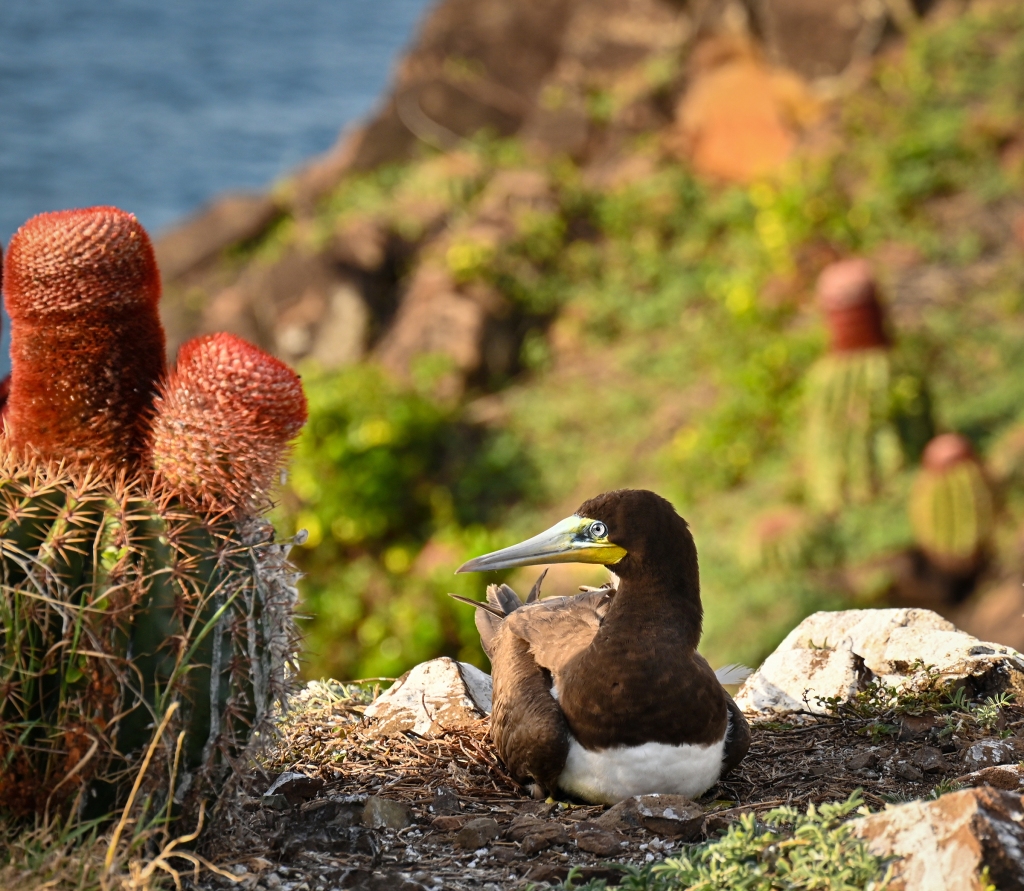
Today, the only inhabitants of Île Fourchue are its flora and fauna. Among those with feathers are the handsome ground-nesting brown boobies that oil and comb their plumage with a serrated toenail called a preen-claw. The boobies are spectacular divers, plunging into the ocean at high speed to capture swimming prey. They also pursue flying fish in the air. The brown boobies regurgitate what they catch into the mouths of their chicks, perpetuating the life cycle in what is one of the most important breeding sites of the Caribbean.
Glamorous red-billed tropicbirds share the cliffside roosts of Île Fourchue. They communicate with a melodious chitter as they spiral in the thermals above the rock. These tropicbirds mature to the size of a common gull, but most adults have tail streamers that are two times their body length. Some ornithologists describe the streamers as sexual ornaments. I get it. This beautiful flier spends most of its life in the air because it cannot stand on land. Tropicbirds require an unobstructed launching pad to take flight.
Taxonomy is usually too tedious to include in casual conversation. Still, the scientific name for the tropicbird—Phaethon aethereus—deserves mention: Phaethon is derived from the Ancient Greek meaning “sun,” while the species name comes from the Latin aetherius meaning “heavenly.”
Heavenly Sun. Who says there is no romanticism in science?
Goats once roamed Île Fourchue, but like their human neighbors in the cafes of St. Barth, they were conspicuous consumers. They devoured everything on the island, leaving it a wasteland. Conservationists finally took notice a couple of decades ago, and when the goats were “banished,” wild grasses returned. Île Fourchue was given new life.
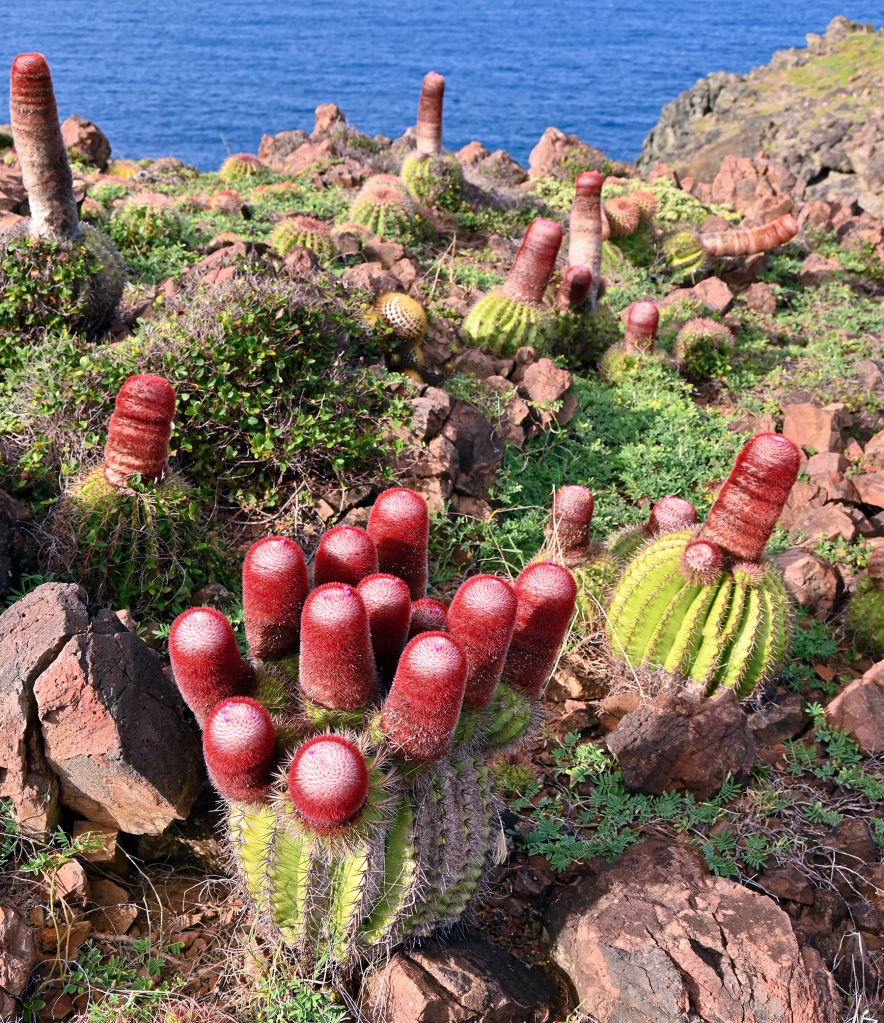
Once the fauna was under control on Île Fourchue, the indigenous flora rooted in volcanic rock flourished. Sweeping grass meadows provide fertile soil for the most stunning wild cactus gardens imaginable. Hundreds, possibly thousands, of cacti thrive on the island. This genus of Melocactus has over 30 species with fun common names such as Turks Cap, Pope’s Head, Devil’s Head, Mother-in-Law’s Pincushion, and Horse Crippler. The tourism website AntiguaNice.com calls it the most “grotesque cactus with the wickedest of spines,” but I think it is one of the most beautiful plants I have ever seen. Those “wickedest of spines” on the cactus barrel give way to a mass of areoles growing distinctive round caps resembling a Turkish fez. Tiny hot pink fruit that looks like spicy chili peppers adorn the cap like jewels.
But even in paradise, nothing is perfect (thanks to that guy and his girlfriend who snacked on an apple in the Garden). As I climb along the edge of a cliff, I watch a large iguana–the only one I have seen during a week here–stalking the nest of a brown booby. It will likely eat the hatchling when the parent leaves the nest to find food. On another cliff face, a frigatebird engaged in kleptoparasitism (food stealing) hassles an unfledged booby chick and forces it over the rocks and into the sea. Boobies, in turn, have been observed stealing prey from frigatebirds as they transfer food to their young.
I come to no life-changing conclusions during my week at Île Fourchue. There will always be beauty and conflict in nature, just as there is in human nature. Some things we can change, and other things like politics and war leave most of us powerless. Nature helps me understand that while we don’t have to acquiesce, we do need to adapt. While the beautiful people an island away dance to Nero’s fiddle, I will adapt to the song of nature on Île Fourchue.
As always, sailing is not just about the wind and the sea; the places, the flora, fauna, and people encountered along the way are equally important.
Please click “Follow” so that you don’t miss a new update,- and please consider sharing this post with others who might enjoy following the voyage. I welcome your commentsandwill always respond when I have an Internet connection. I will never share your personal information.
StellaMarisSail.com has spawned a new website: www.JeffreyCardenas.com. This site, Jeffrey Cardenas Photography, features hundreds of fine art images — Underwater, Maritime Landscapes, Boats, and Mid-Ocean Sailing photography from exotic locations worldwide.





 Stella Maris Sail