I am channeling Charles Darwin today as I step out of the thick Bahamian scrub and into a landlocked pool of anchialine water in Central Eleuthera known as Sweetings Pond.
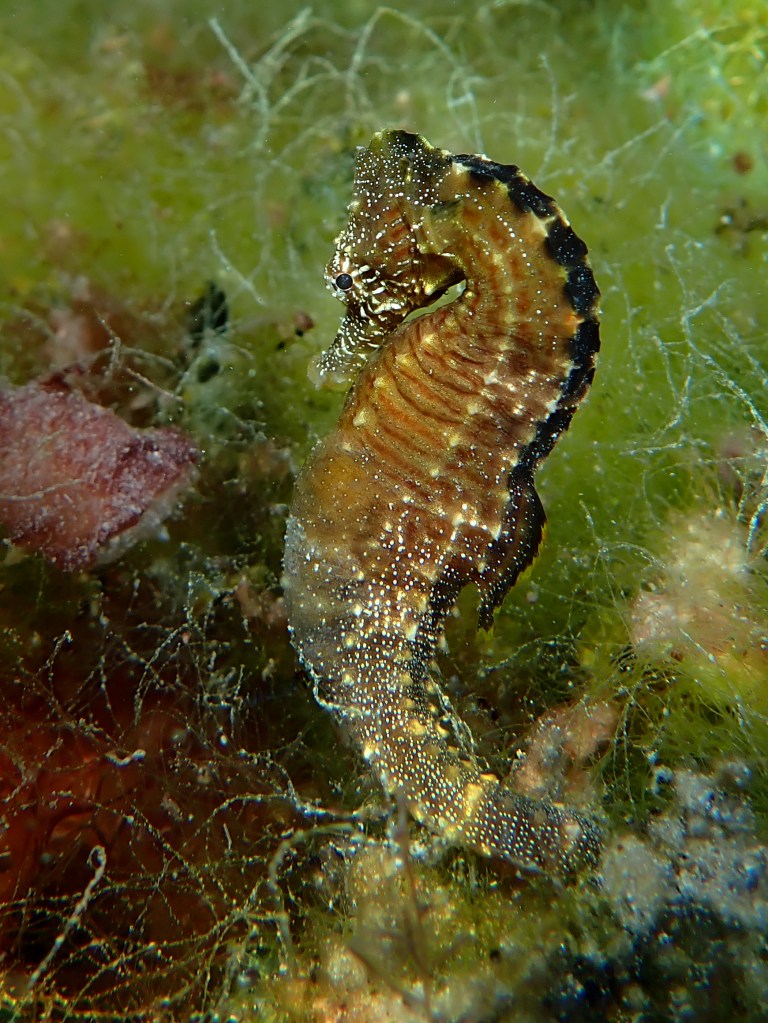
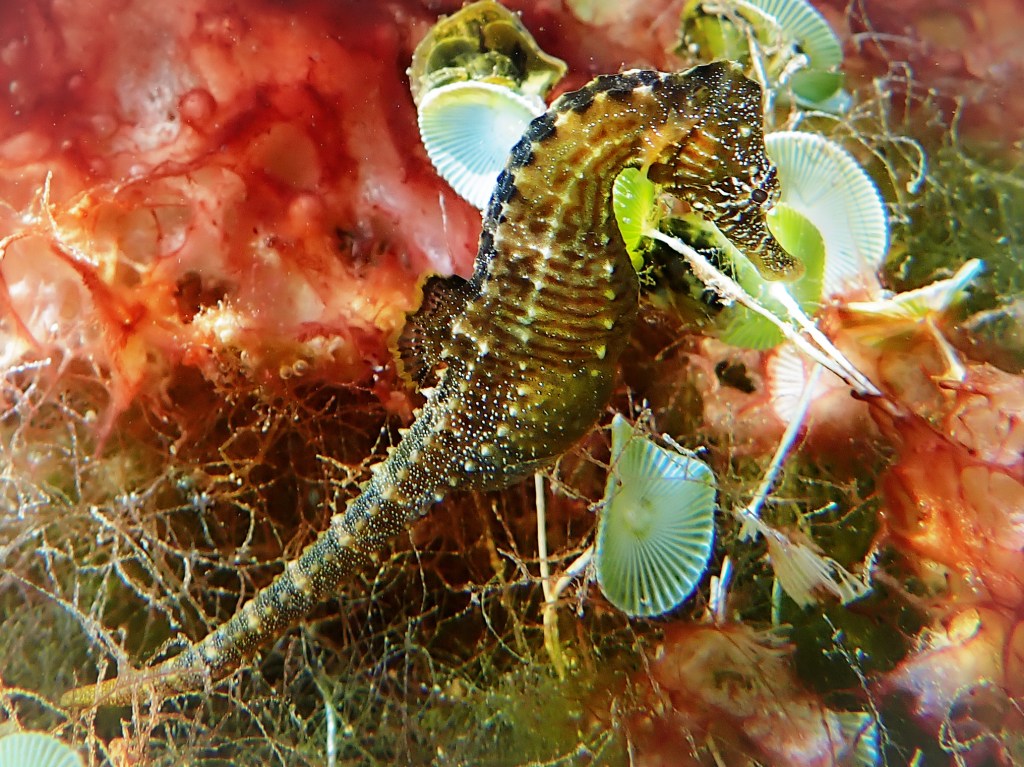
This body of water, fed from a maze of subterranean connections to the ocean, is teeming with bizarre life forms. They include the red flame scallop (which is actually a clam) that can dislodge itself from the seabed and “walk” away from predators by clapping its valves together. And then there is a gelatinous sea slug called a fringeback nudibranch with sharply serrated gill fingers and long tendrils that pulsate in shades of aquamarine. But the show-stopper is a mutated miniature lined seahorse with enough characteristics from two distinctly different types of seahorses that some marine biologists think we could be witnessing the evolution of an entirely new species.
Protecting the 500-acre Sweetings Pond with its unique biodiversity has been a quiet mission for conservationists. Until recently, researchers and locals managed to keep its location a secret. In its anonymity, the pond faced no immediate danger. However, the rampant development of resorts and marinas in the Bahamas, as well as other threats including agricultural runoff and poaching has encouraged marine researchers and governmental organizations like the Bahamas National Trust to push for the preservation of this rare habitat.
One of those researchers, Dr. Heather Masonjones from the University of Tampa, has been studying the seahorse population in Sweetings Pond for over five years. In an interview with BBC Wildlife magazine, she said that the pond may have one of the most densely populated seahorse communities anywhere on Earth. She hopes the protection of the pond brings sustainable tourism that will educate people about seahorses and contribute to improving their conservation worldwide. “If we don’t take action it could be lost forever.”
Several weeks ago, the Bahamian government formally designated Sweetings Pond as its newest National Park. “The declaration of Seahorse National Park is more than just a designation,” said Lakeshia Anderson-Rolle, Executive Director of Bahamas National Trust. “It is our shared promise to our community, to future generations, and to the world that we are committed to conserving our unique and diverse ecosystems.”
As always, sailing is not just about the wind and the sea; equally important are the places, the flora, fauna, and people encountered along the way.
Please click “Follow” so that you don’t miss a new update,- and please consider sharing this post with others who might enjoy following the voyage. I welcome your comments, andI will always respond when I have an Internet connection. I will never share your personal information.
At the ancient fish cleaning table on the dock in Alice Town, Elvis Rolle flashes his knife for emphasis as he eviscerates a catch of pan-sized triggerfish.
“This is old Bimini,” he says. “This is real Bimini.”
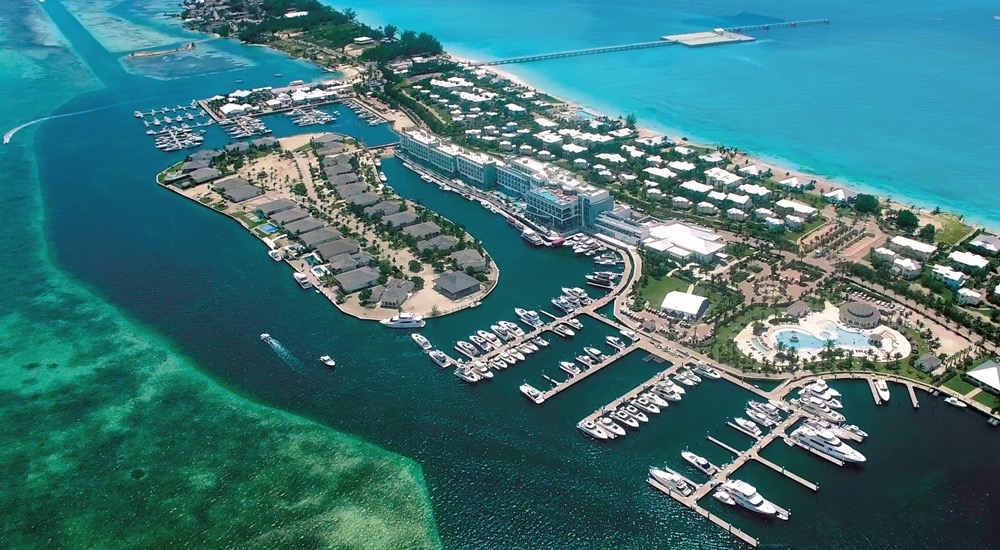
Elvis is worked up over the massive development known as Resorts World Bimini—operated by a Malaysian firm—that has consumed the entire northern half of his historic island. Draglines dig into the bonefish flats making canals, marinas, and waterfront lots for homes that sell upwards of $4 million. There is a massive 300-room Hilton resort hotel and casino. A cruise ship dock, designed for the largest Oasis Class ships of 6,000 passengers, extends more than a quarter-mile offshore, nearly to the edge of the Gulfstream.
“They want more and more,” Elvis says of the developers. “They give nothing back to Bimini. We’re living in shacks and they have bought up half of our island to build million-dollar homes for foreigners.”
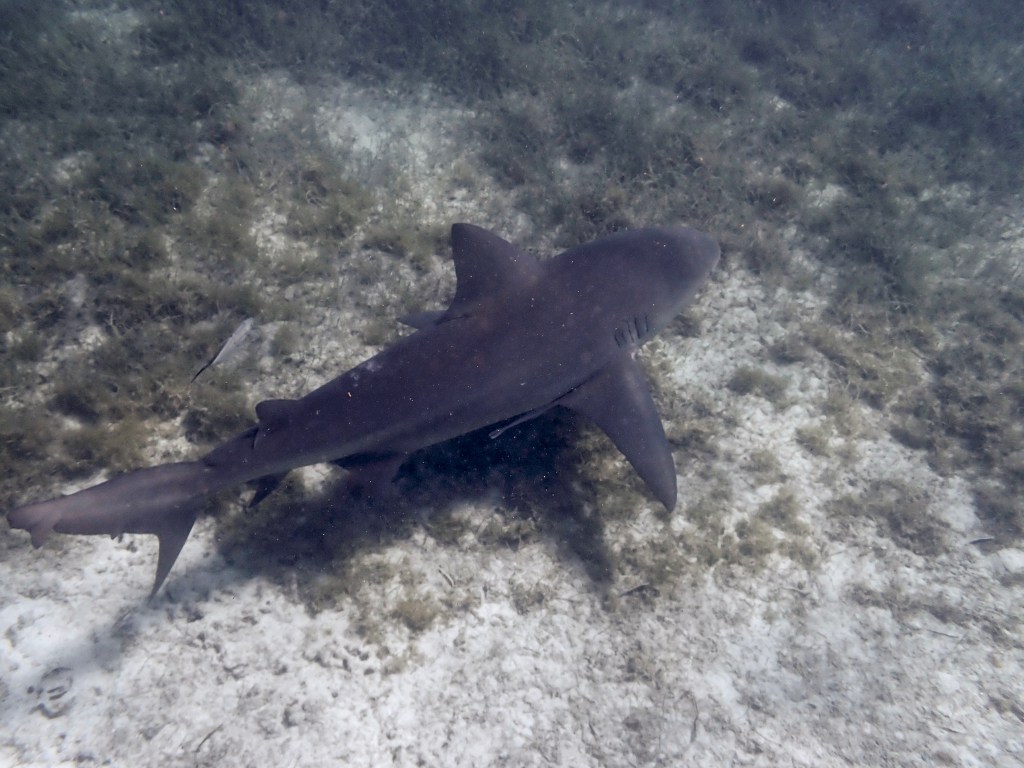
Elvis Rolle turns away and throws a handful of triggerfish entrails into the water. A pair of bull sharks finning on the surface just off the docks are waiting for the offal.
“Watch them sharks,” he says. “They won’t leave nothing.”
As always, sailing is not just about the wind and the sea; equally important are the places, the flora, fauna, and people encountered along the way.
Please click “Follow” so that you don’t miss a new update,- and please consider sharing this post with others who might enjoy following the voyage. I welcome your comments, andI will always respond when I have an Internet connection. I will never share your personal information.
Is this thing–this UFO–really even a sailboat? Tonight she is.
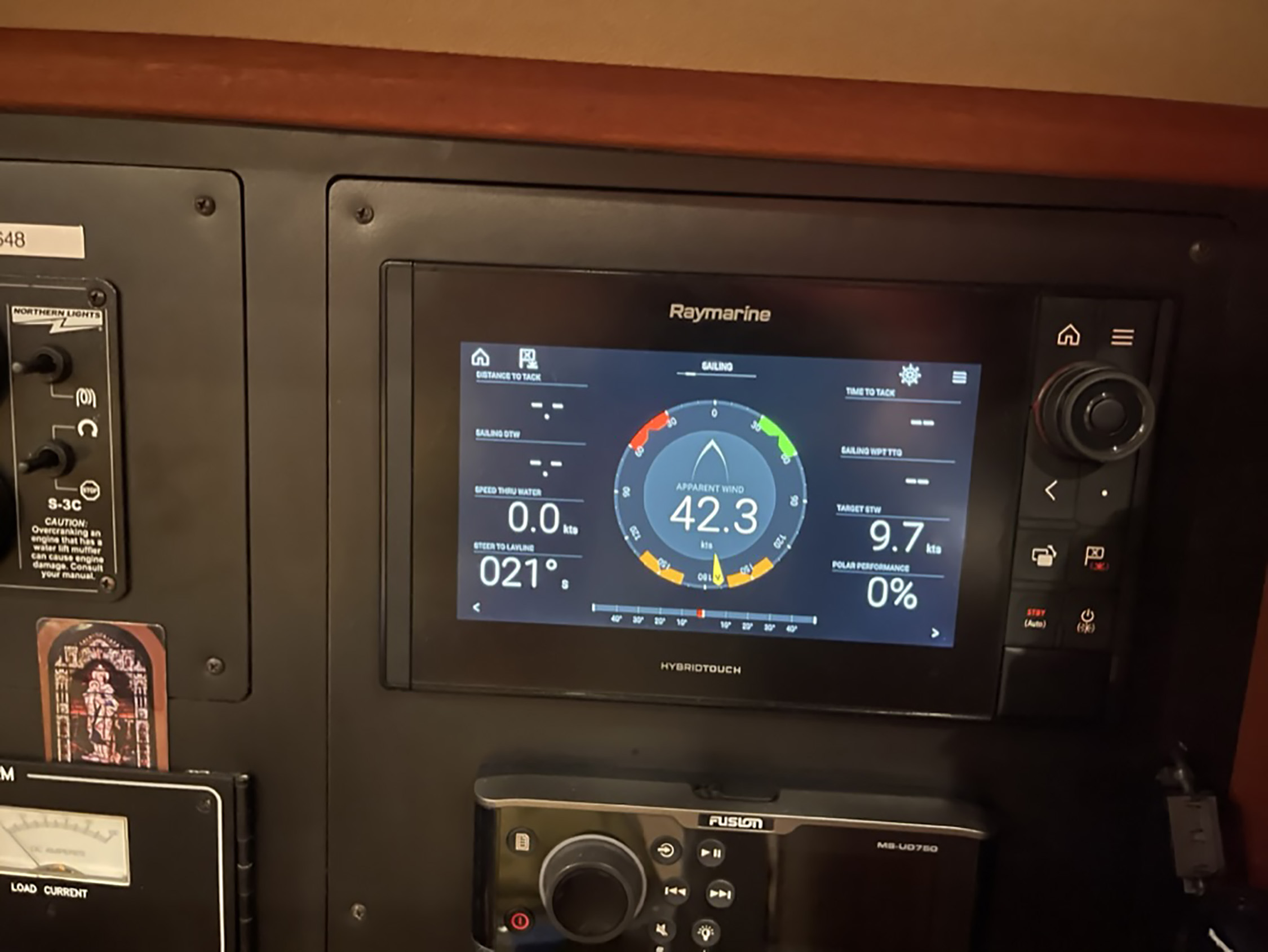
All weather forecasting models show that by morning we will have a strong northerly blast of 30-knot winds and 12-foot seas funneling into wedding-cake seas against a 2.5-knot current. They will be hellish conditions in which to cross the Gulfstream.
The good news is that morning is 12 hours away and we are on a fast broad reach. If Stella Maris continues to move like the scalded cat that she is, we will be in the safe harbor of Bimini for the duration of this blow.
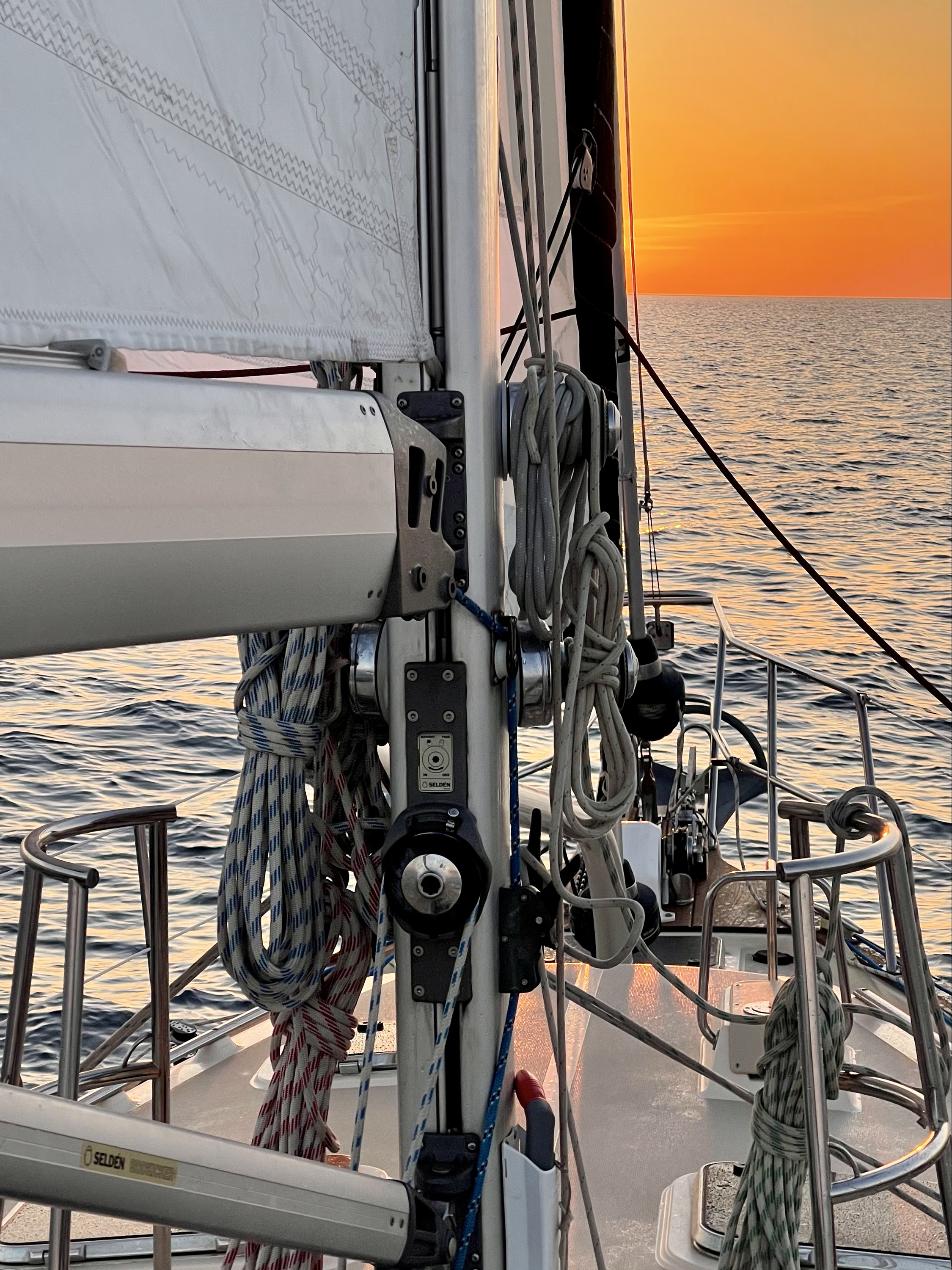
Stella Maris, a Lagoon 42 catamaran, is a different animal compared to Flying Fish, the Island Packet 46 monohull that I sailed around the world. If the Island Packet is a boat that can sail through any weather anywhere in the world, the Lagoon is more akin to a beach cabin with a stick and a sail. I sold the Island Packet because my world voyage had come to an end, and I bought the Lagoon because it is a far more family-friendly sailboat. Tonight I have family aboard; my brother Bob is sailing with me.
This is a sea change in my sailing life. I am learning that extreme adventure is not necessarily a requirement for a fulfilled life. Now at age 67, I don’t feel the need to cheat death to feel alive. The catamaran is perfect for that. It can take me to foreign places comfortably and still pump just the right amount of adrenaline into my bloodstream.
On the forecasting map tonight the heavy weather continues to rumble southward as we sail north and east toward the Bahama Bank. Sailing at eight knots, we reef the mainsail as the wind increases and Stella Maris skims across the building seas.
“It’s a good boat,” Bob says. I am also warming up to her. A full moon lights our passage. We will beat the weather into Bimini. I am grateful to be underway again, and who knows where this new boat will take me.
Night watch aboard Stella Maris as she crosses the Gulfsteam. Video credit: Bob Cardenas
Thanks for sailing along with Stella Maris.
As always, sailing is not just about the wind and the sea; equally important are the places, the flora, fauna, and people encountered along the way.
Please click “Follow” at the bottom of this page so that you don’t miss a new update,- and please consider sharing this post with others who might enjoy following the voyage. I welcome your comments, andI will always respond when I have an Internet connection. I will never share your personal information.
It is becoming more difficult these days to determine what is a truly wild experience. I am thinking about this after a day swimming among sea turtles in the Exuma Islands.
The Navionics charts aboard Flying Fish have a notation that indicates a nearby bay known for its population of green turtles. I love turtles, wild sea turtles. (I am unsettled when I see them on display in enclosures). So, without delay, I grab a mask and snorkel, my underwater cameras, and navigate up the Exuma island chain in my dinghy to find the green turtles.
They find me instead.
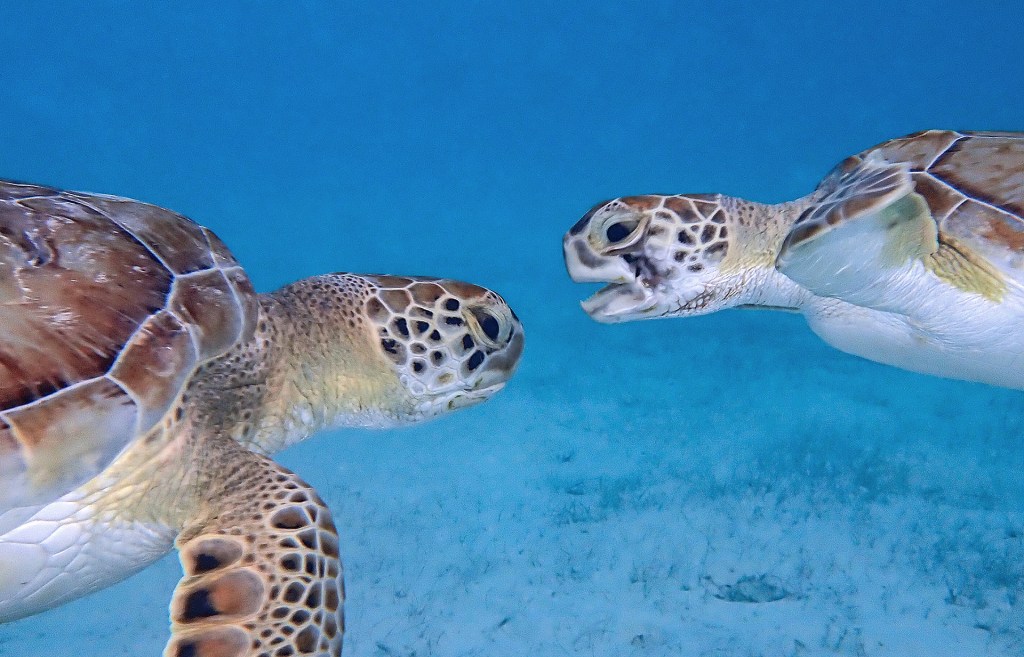
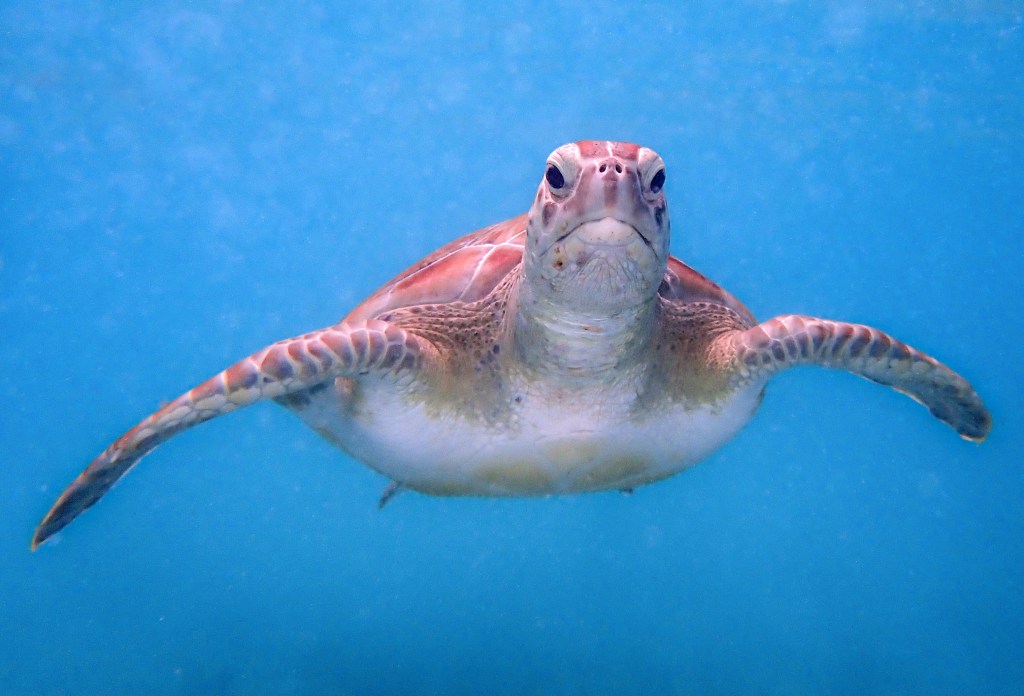
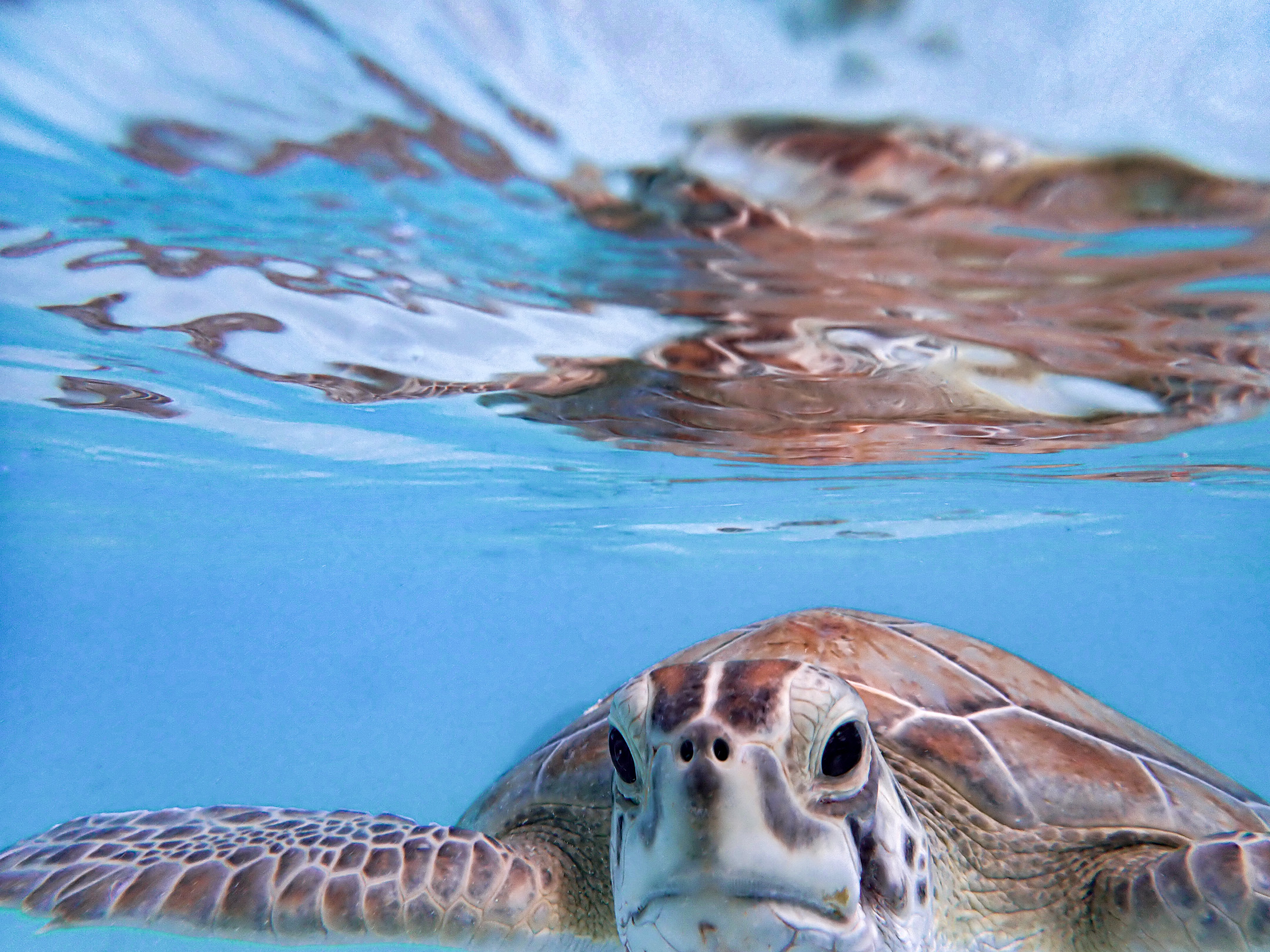
Moments after I flip over the side of my little rubber boat, I feel something close its mouth on my upper thigh. It’s nothing dramatic; just a little nip and it lets go. When my mask clears, I see that the nip came from a green turtle the size of a garbage can lid. Adult green turtles only eat grass. Perhaps this one thinks taking a little taste of my ham hock will get my attention. It does.
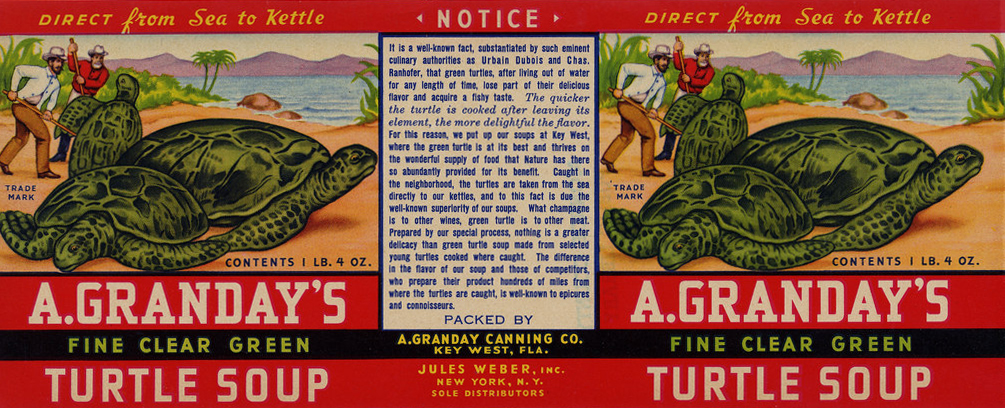
Unlike a mature green turtle, I’m not vegan. I love seafood. I have memories as a kid eating green turtle steaks in the old Compleat Angler Inn at Bimini (before it burned down during the drug years). Many years before that, Key West also had a thriving green turtle trade. The A. Granday Canning Co, manufactured Fine Clear Green Turtle Soup in Key West in 1930 and claimed that its turtle meat came from the waters around the Florida Keys. “Caught in the neighborhood,” the marketing said, but by the 1930s the green turtle population “in the neighborhood” was already diminished and the turtles arrived in Key West on schooners, captured primarily in the nets of turtle hunters from the Cayman Islands.1
Turtles were easy targets to net or spear, and their eggs–sometimes 100 in each clutch–were stripped from beachside nests. By the middle of the 20th century, the green turtle population worldwide had crashed.
With the passing of the 1973 Endangered Species Act, the US joined international conservation efforts to stop the trade in endangered species, including green turtles. (In the Bahamas, it took another 36 years before the harvesting of green turtles was finally outlawed.) The population of green turtles rebounded. There were fewer than 300 nests in 1989 at 27 of the main beaches in Florida where the animals come to lay eggs. In 2019, that number reached 41,000.2
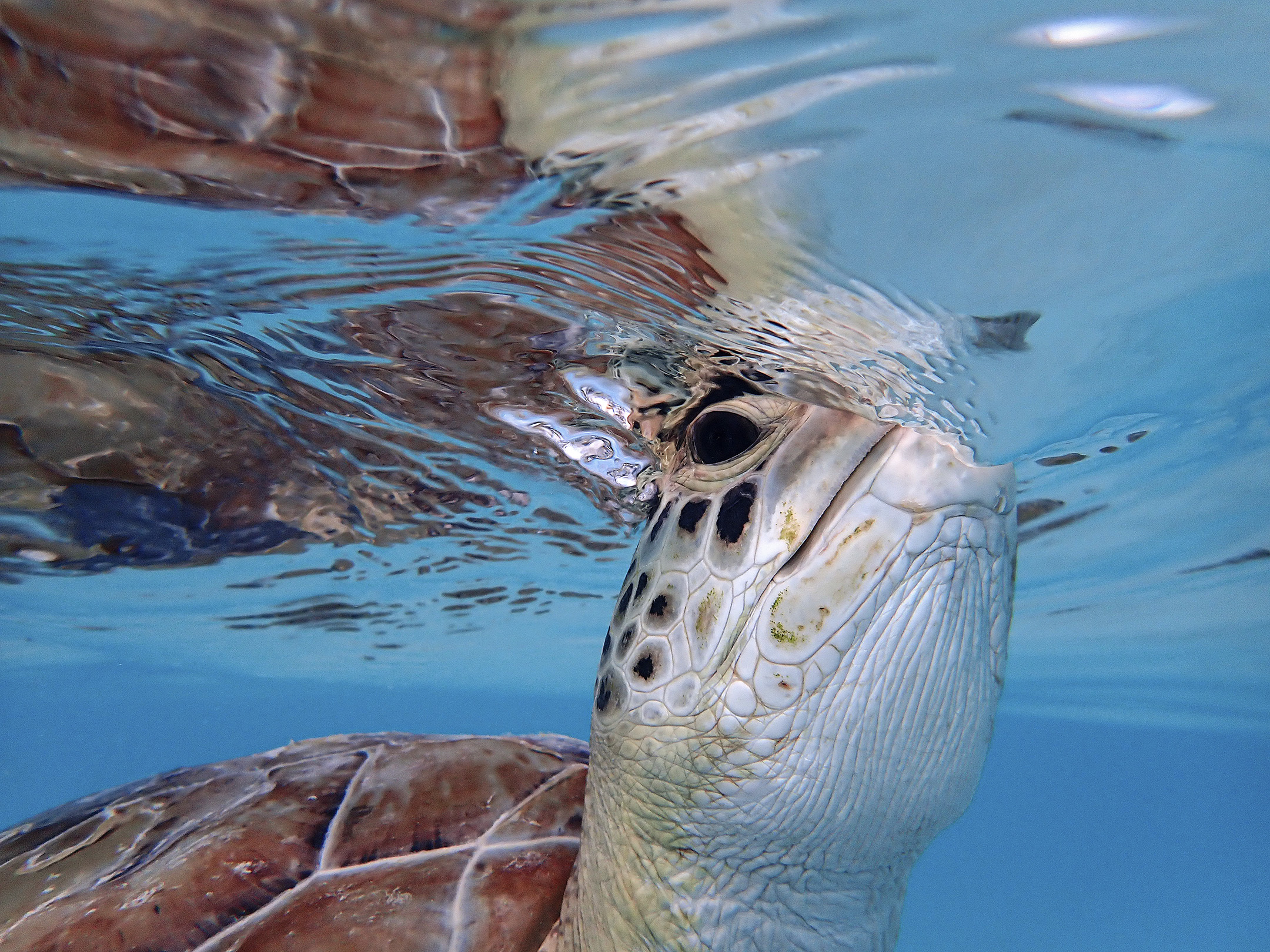
For a couple of hours, I snorkel alone with the green turtles. This particular bay is not a part of the Exuma Land and Sea Park. There are a few homes and docks here, but the water is clean and clear. Mature turtles spend most of their time in shallow, coastal waters like these with lush seagrass beds. The turtles here are unthreatened by my presence. In fact, they swim directly toward me and nudge my camera. They are fearless in their curiosity, making eye contact with me, occasionally rising to the surface for a breath, and then lowering their heads to see if I am still there. I hover motionless as at least 10 different individuals come calling. I resist an overwhelming temptation to reach out and touch them. Most of the turtles are in perfect physical condition, although some have scratches and wear marks on their carapaces, and one has a scalloped bite mark deforming its shell. Tiger sharks are the only creature, other than man, known to eat green turtles.
I am surrounded by turtles as I float in this wonderland. But what is it that makes them so tolerant of my presence? And why are they here and not in other places?
Then, the first tour boat arrives in the bay. Two more follow, and I have the answer to both questions. The boats are filled to capacity with tourists holding bottles of Kalik beer and gyrating to onboard hip hop music so loud that I can hear it underwater. The guides on these boats have plastic bags of lettuce and squid parts that they fling like confetti into the water. The green turtles suddenly leave me as if I am toxic. They swarm around the tour boats instead. It’s a party to which I suddenly feel uninvited.
I quickly realize that the turtles were not hovering around me because they thought I was interesting; they thought that I was going to feed them. What seemed to me to be a wild experience was nothing more than being in the presence of once-wild animals that have now been conditioned by human behavior to beg for food. It’s like seeing brown pelicans waiting for handouts at a fish cleaning table. Or, tarpon being fed processed food pellets at a marina dock. These creatures do not need to eat handouts… until, of course, the day comes when these creatures forget how to forage in the wild.
Unknown to me until now, there has been much published about feeding Exuma’s green turtles. And it doesn’t happen only in the Bahamas. Human interaction with sea turtles is big business wherever turtles thrive. In Exuma, the island industry bills itself as Eco-Tourism. “Come experience wild sea turtles in their natural environment,” one company advertises. The website Exuma Online writes: “The local sea turtles are a must see. Where else can you swim so close to these wildanimals? (my italics).
“Keep your fingers in check,” the tourist website continues, “bring some squid, and get ready to take some amazing photos! Just be sure that you respect these animals and the surrounding environment.”3
Could anything be less respectful of these “wild animals?” Green turtles don’t even eat squid in the wild4 –they’re herbivores–but these “Eco-Tourism” turtles have been conditioned to eat this bait like there’s no tomorrow. And for some of them, there may be no tomorrow.
Dutch scientists of Wageningen University & Research used Turtle Cams5 to see how ecotourism affects green turtles in the Bahamas. The cameras were mounted on the shells of five turtles and disconnected automatically after five hours. The footage shows people in the water feeding the turtles, and the frenzy that ensues. There is aggression and biting among the turtles (which may explain the turtle nip on my backside). Green turtles are seen in the video dodging the thrashing arms and legs of squealing tourists as they battle each other for squid and floating lettuce.
I understand that for some people this may be the only way they will ever have a close encounter with a sea turtle. But does that make it right to participate in changing the diet and behavior of these animals? There may not be any fences or walls in this bay, but these hand-fed green turtles are no different than those that are captive in zoos or aquariums.
As I drift away from the hip-hop Eco Tourism boats, I see a solo green turtle has also eased away from the melee. I keep my distance, and for 30 minutes I slowly follow it into the bay. This is odd, I think. Is this turtle healthy? Why isn’t it behaving like the other squid-and-lettuce junkies? It is clearly aware of my presence, but the turtle ignores me. Then it sinks down to the sea bottom. Oh God, I think, please don’t let it die right here!
Instead, the green turtle extends its neck, opens its finely serrated jaws, and takes in a mouthful of grass. Turtlegrass. This lone green turtle chews with what I interpret as a look of contemplation and satisfaction. Suddenly, all seems right in the natural world.
As always, Sailing is not just about the wind and the sea; equally important are the places, the flora, fauna, and people encountered along the way.
Please click “Follow” at the bottom of this page so that you don’t miss a new update,- and please consider sharing this post with others who might enjoy following the voyage of Flying Fish. I welcome your comments, andI will always respond when I have an Internet connection. I will never share your personal information.
“To live is the rarest thing in the world…” -Oscar Wilde
Life aboard Flying Fish in 2021 featured a year of obstacles, astonishment, and kindness.
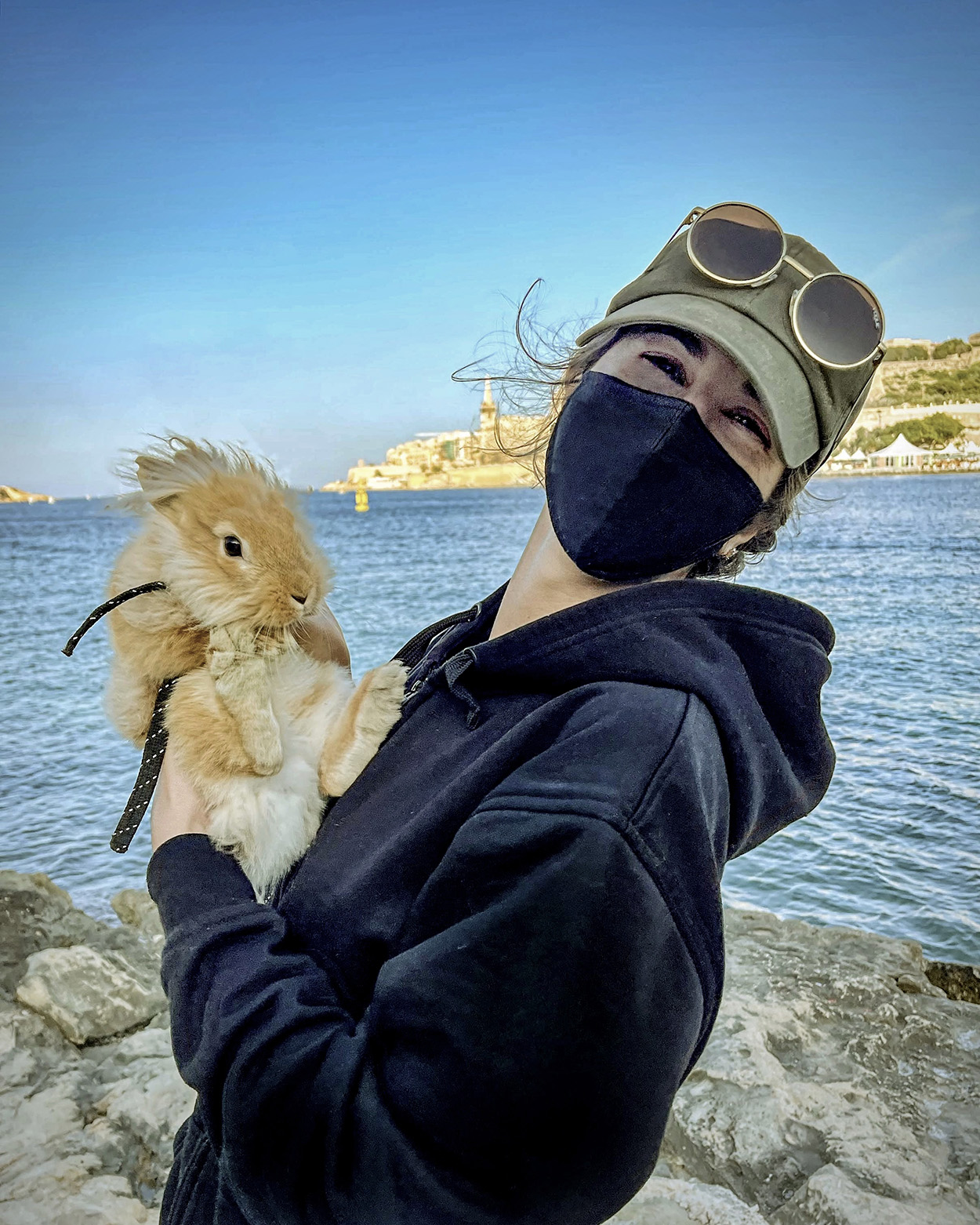
COVID still raged worldwide, but vaccines kept many people from dying. Generous souls in Malta found a way for me to receive a vaccination from one of the country’s thousands of unused doses, despite a bureaucratic edict prohibiting foreigners from receiving the jab.
As climate change accelerated, storms became more potent. Sahara Desert winds filled the sky with sand. Voyaging sailors banded together, helping one another with repairs and brainstorming solutions for staying safe in the changing conditions at sea.
On shore, despite another year of pandemic and political uncertainty, many people found solace in nature and creativity. On the salon bulkhead of Flying Fish, I kept a crayon drawing by Charlie Vialle, a spirited six-year-old French girl who was sailing the world with her parents. The drawing is of Flying Fish skipping across waves under a bright sun in the company of birds and porpoises. Charlie said, “Flying Fish is a good boat.”
Mid-Winter Departure
Mid-Winter sailing in the Mediterranean is for the (snow) birds
The 2021 sailing itinerary for Flying Fish was ambitious: I would depart the Turkish coastline in the eastern Mediterranean and sail to America. This was the beginning of my fourth year en route around the world, and it was time to think about closing the circle. To accomplish this, I would have to get started early.
The Eastern Mediterranean in January is cold. Temperatures dropped below freezing. On the first leg of the journey from Turkey to Malta, I encountered sleet onboard for the first time in my tropical life. I didn’t like it.
Shipping traffic in the Mediterranean backed up because the massive container ship Ever Given was stuck sideways in the Suez Canal, blocking the passage of 369 ships and causing billions of dollars of world supply chain delays that continue to affect global trade. Flying Fish dodged the traffic and bypassed the lovely Greek Islands, which remained closed to tourism because of COVID.
After 750 miles, Malta was a welcome landfall, but a series of storms known as gregales reminded me that it was still mid-winter in the Mediterranean.
The engineering feat of Porto Flavia, Sardinia, cut into the sheer rock, made it unique at the time of its construction in 1923
I was continually in a state of wonder at the history surrounding this leg of the passage around the world.
I sailed in the wakes of the ancient Egyptians, Julius Cesar, and Admiral Horatio Nelson. In the Middle Sea, the Hellenic ruins of the Eastern Mediterranean were gradually replaced by surviving relics of the Renaissance and the ascension of Europe. At Malta, 2021 Easter services in the stunning St John’s Cathedral were cancelled because of the pandemic, but a generous security guard opened a side door, allowing me a glimpse of the cathedral’s Baroque grandeur.
I continued to Sardinia from Malta, and welcomed my sailing mate Ginny Stones aboard Flying Fish. We savored the food and wine and the rugged anchorages from Cagliari to the Gulf of Orosei. Ginny’s visit was brief, and after a month, I sailed onward to the Balearic Islands, mainland Spain, Gibraltar, and finally to the Atlantic Ocean islands of the Canaries and Cape Verde.
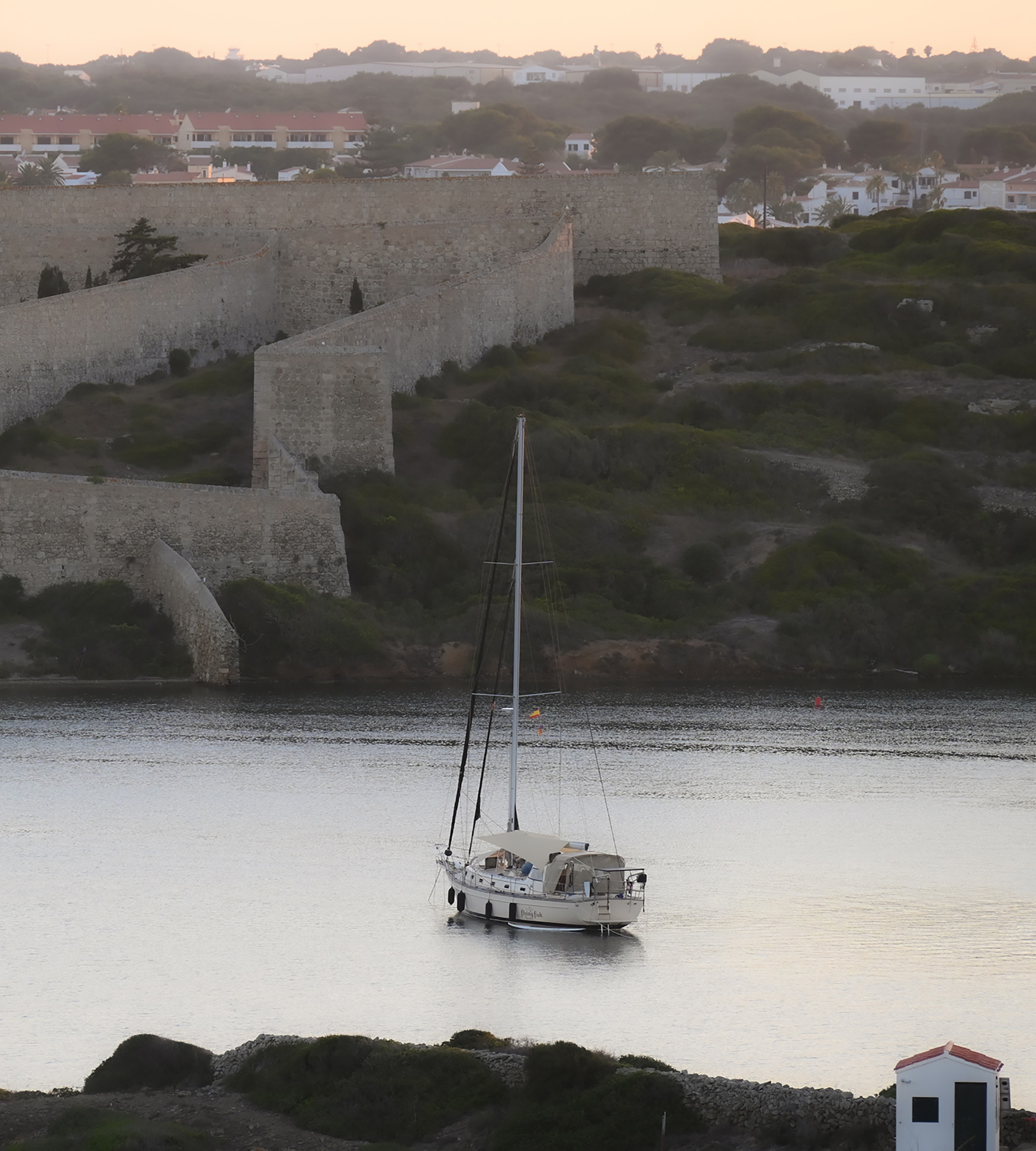
Charlie Vialle, age 6, takes the helm of Flying Fish at Cala Teulera in Menora
From Turkey to the Strait of Gibraltar, the people of the Mediterranean welcomed me as I journeyed into their towns and villages aboard Flying Fish. Despite my vaccination, I still needed COVID tests at every landfall. None was more enjoyable than in Sardinia, where a lovely Italian doctor came aboard Flying Fish and stuck a swab up my nose.
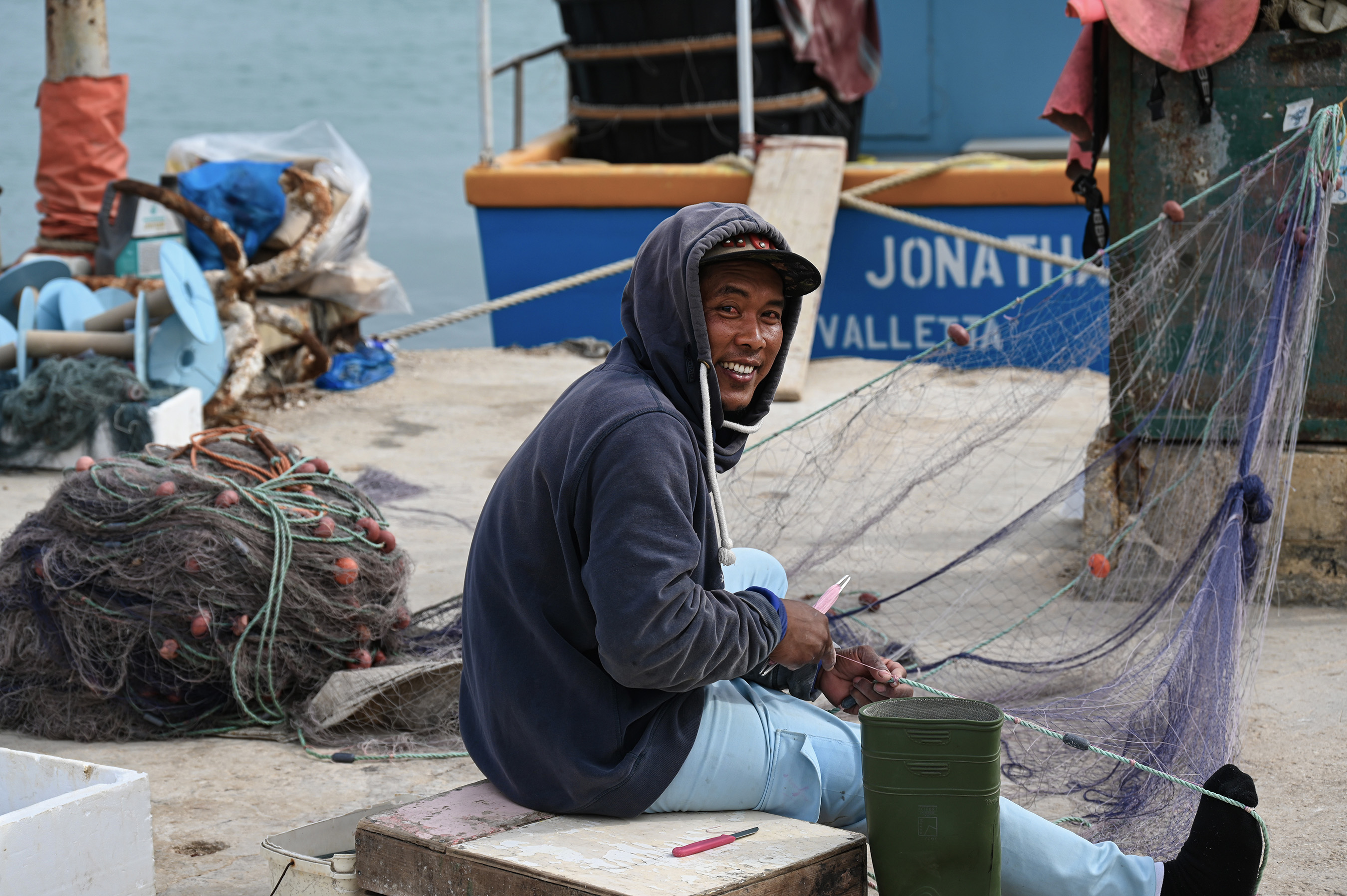
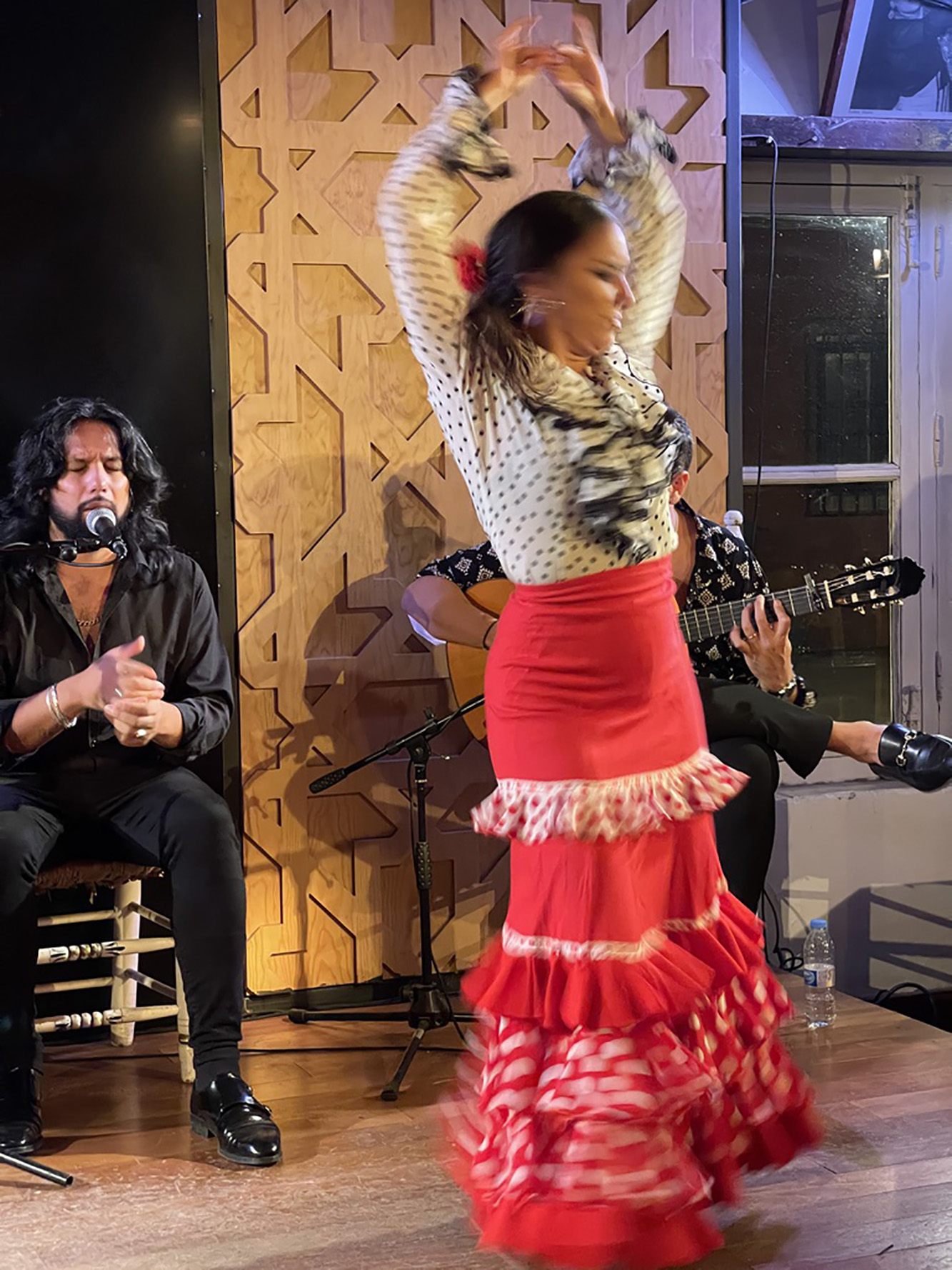
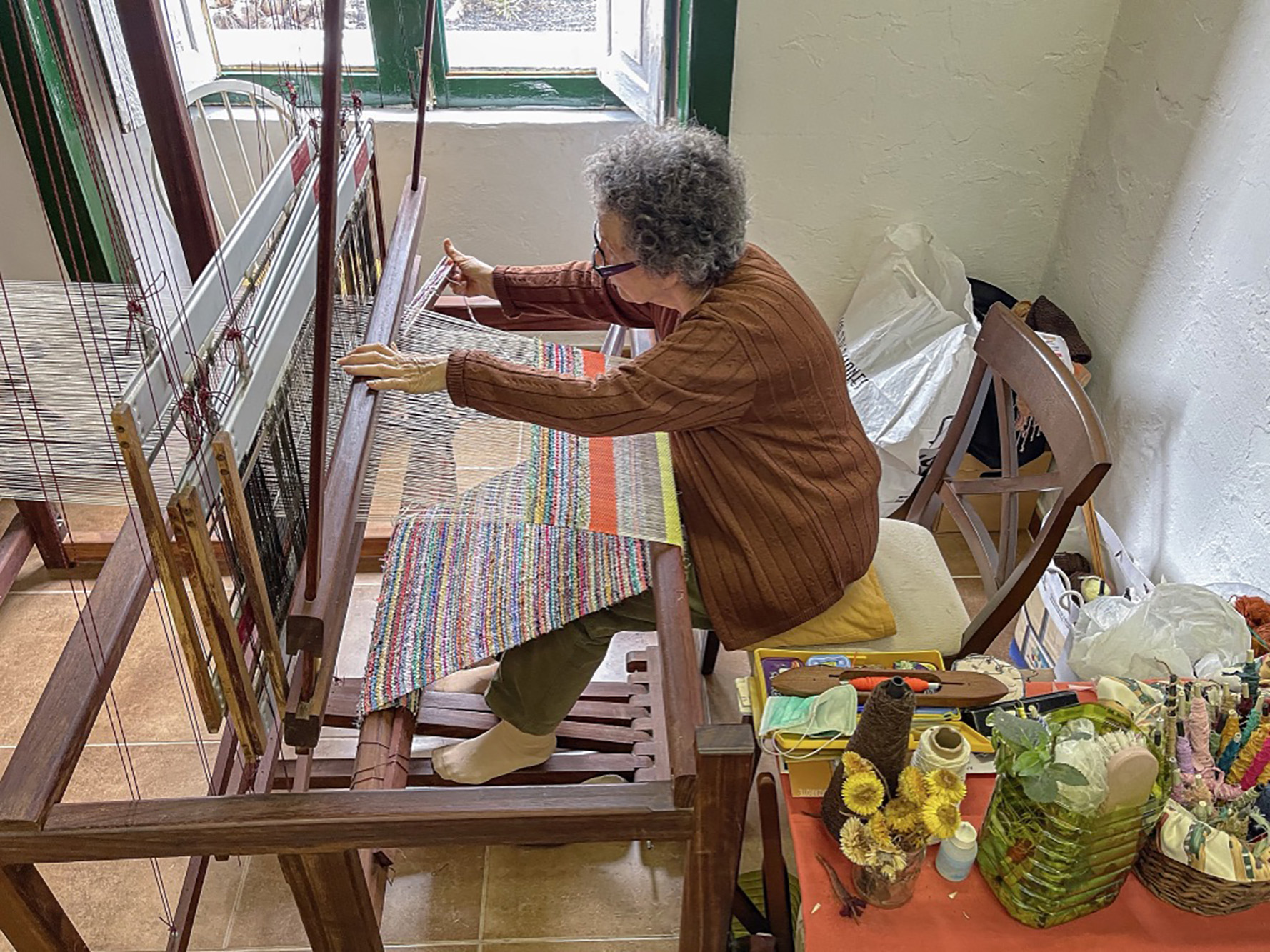
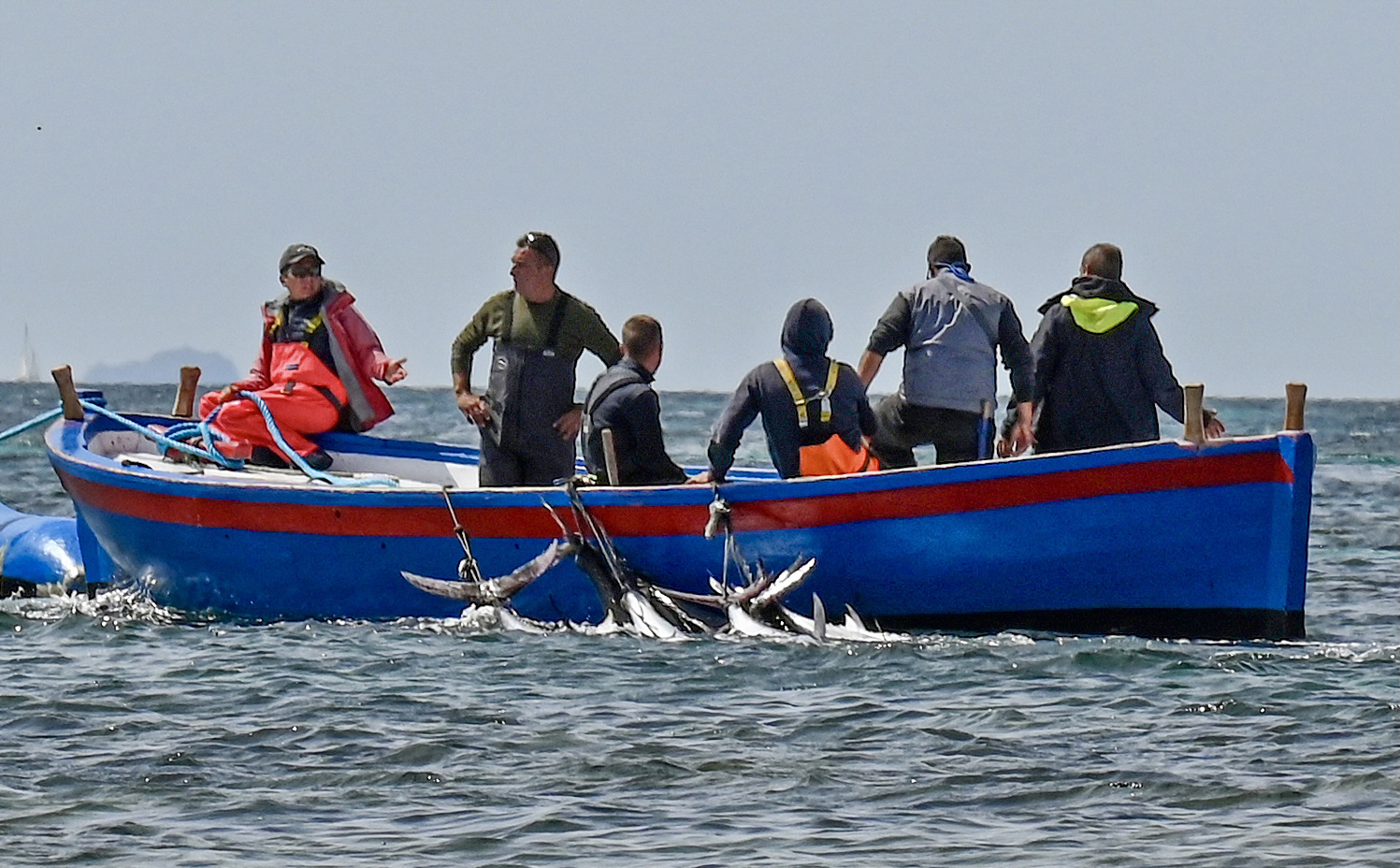
The cafes were full of life, and Ginny found herself surrounded by Italian schoolboys. Three men, all named Mehmet, helped make repairs to Flying Fish in Turkey. I swooned to Flamenco in Grenada, ate fresh tuna hand-caught by Italian fishermen, swayed to a drum circle on a dark beach in Ibiza, and watched a man exercise his swimming horse in the harbor of Marsaxlokk, Malta.
The world was still in the midst of a global pandemic, but you would never know it by the smile in the eyes of the people I met in the Mediterranean.
The natural beauty of the Mediterranean is unique in the world.
There are no multicolored coral reefs as in Polynesia. The fish population in the Mediterranean has been feeding people for eons, and in many areas that resource is depleted. There are, however, plenty of two-legged animals (usually wearing thongs in the summertime), especially in the chichi beach resorts of the Mediterranean.
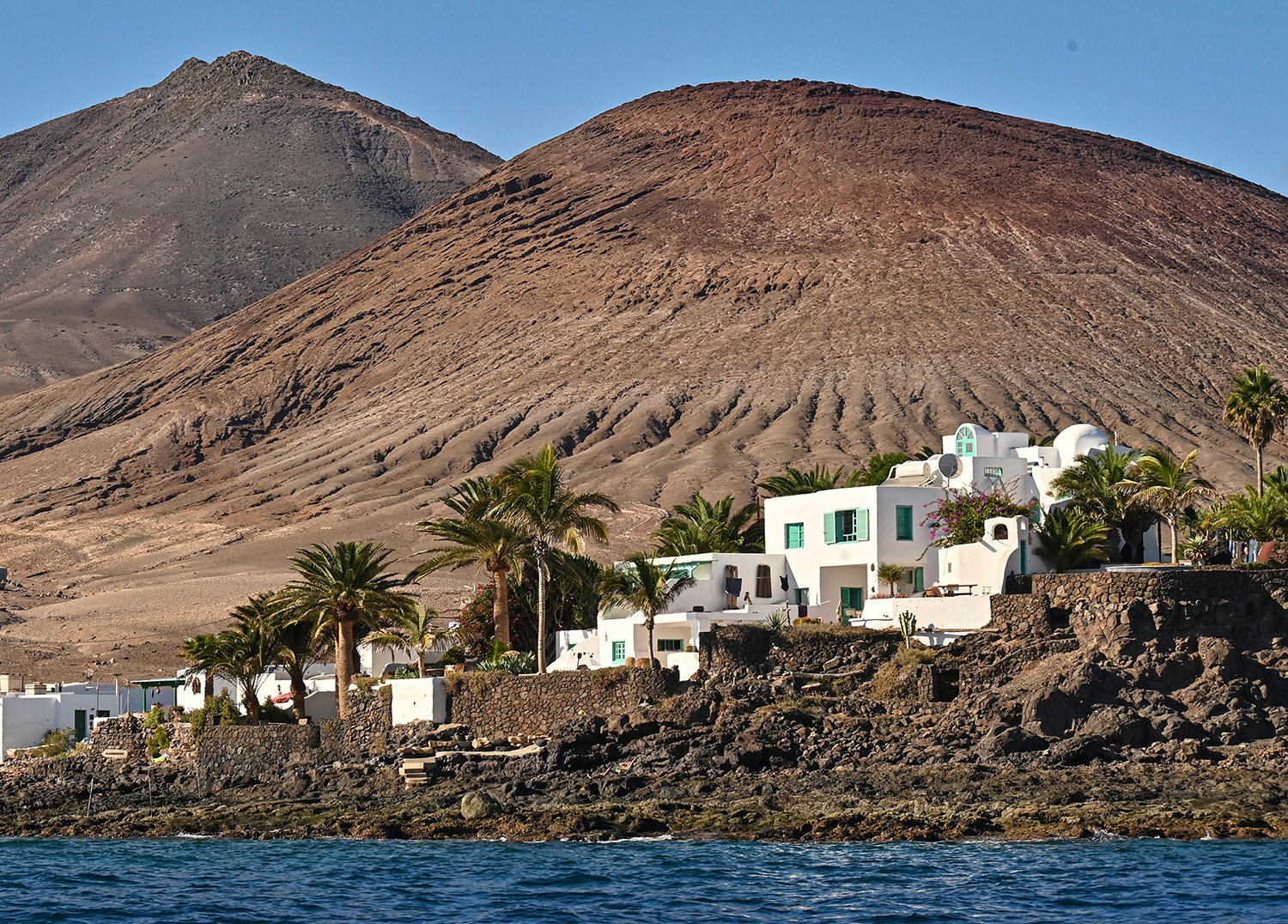
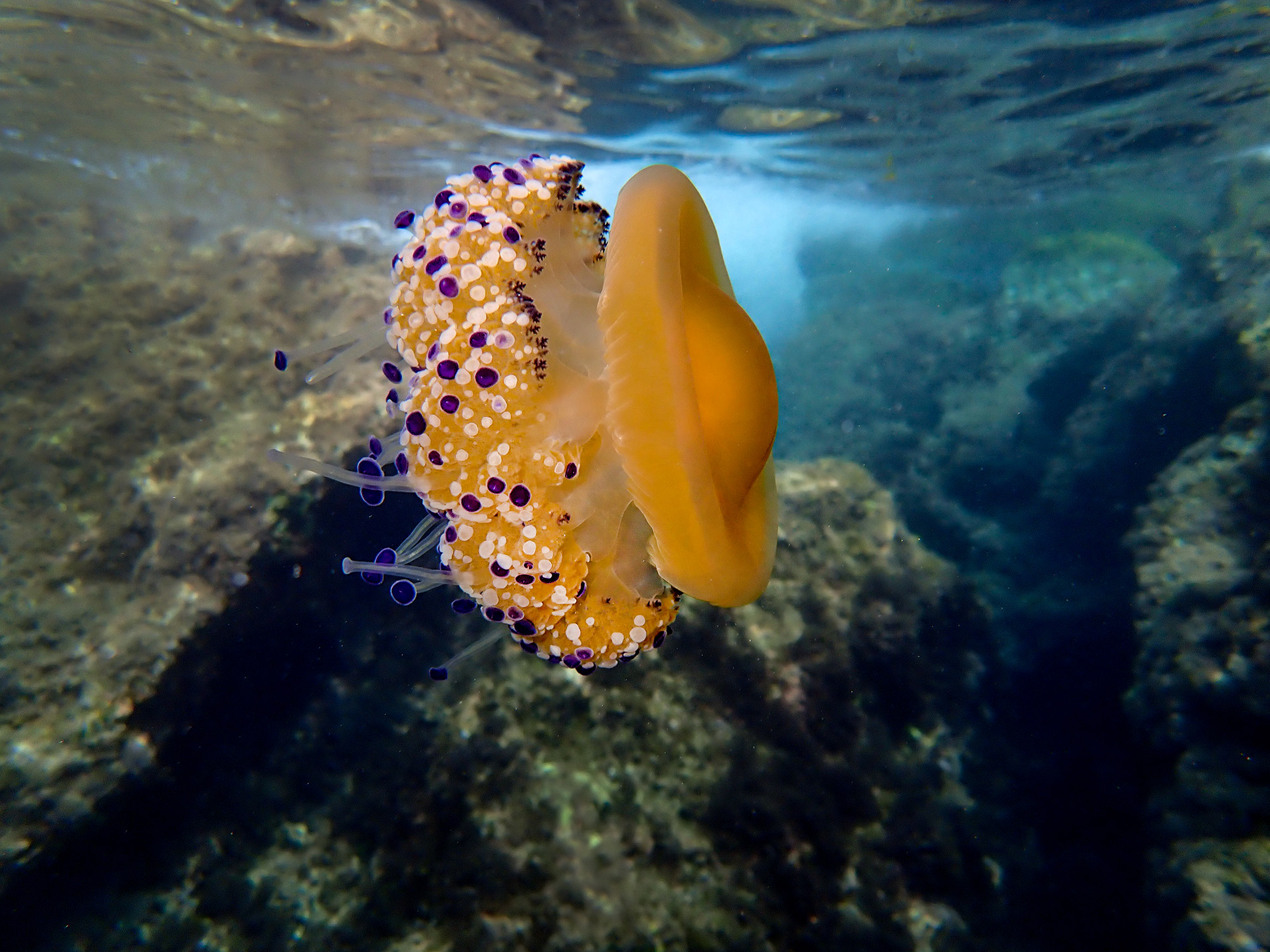
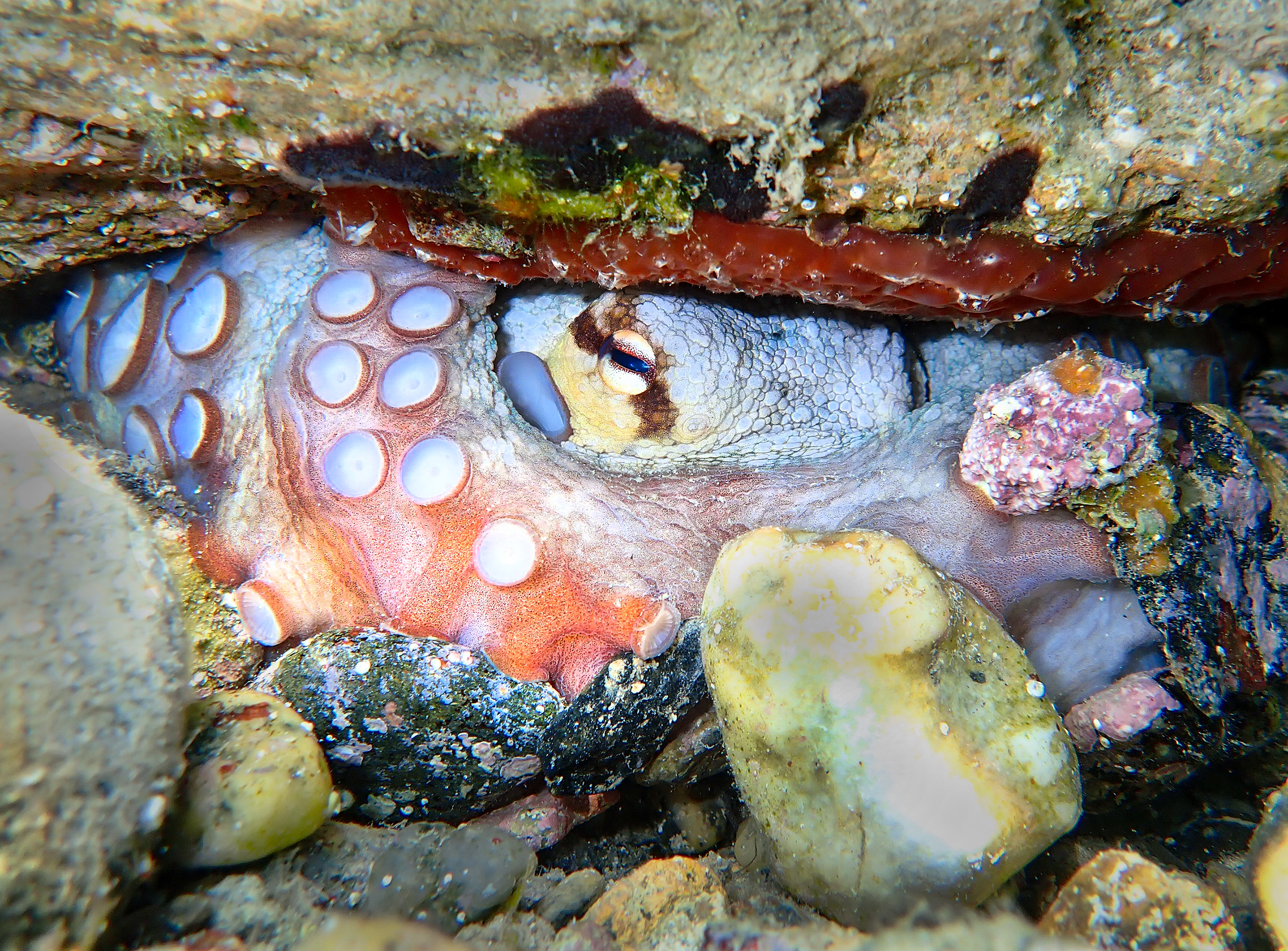
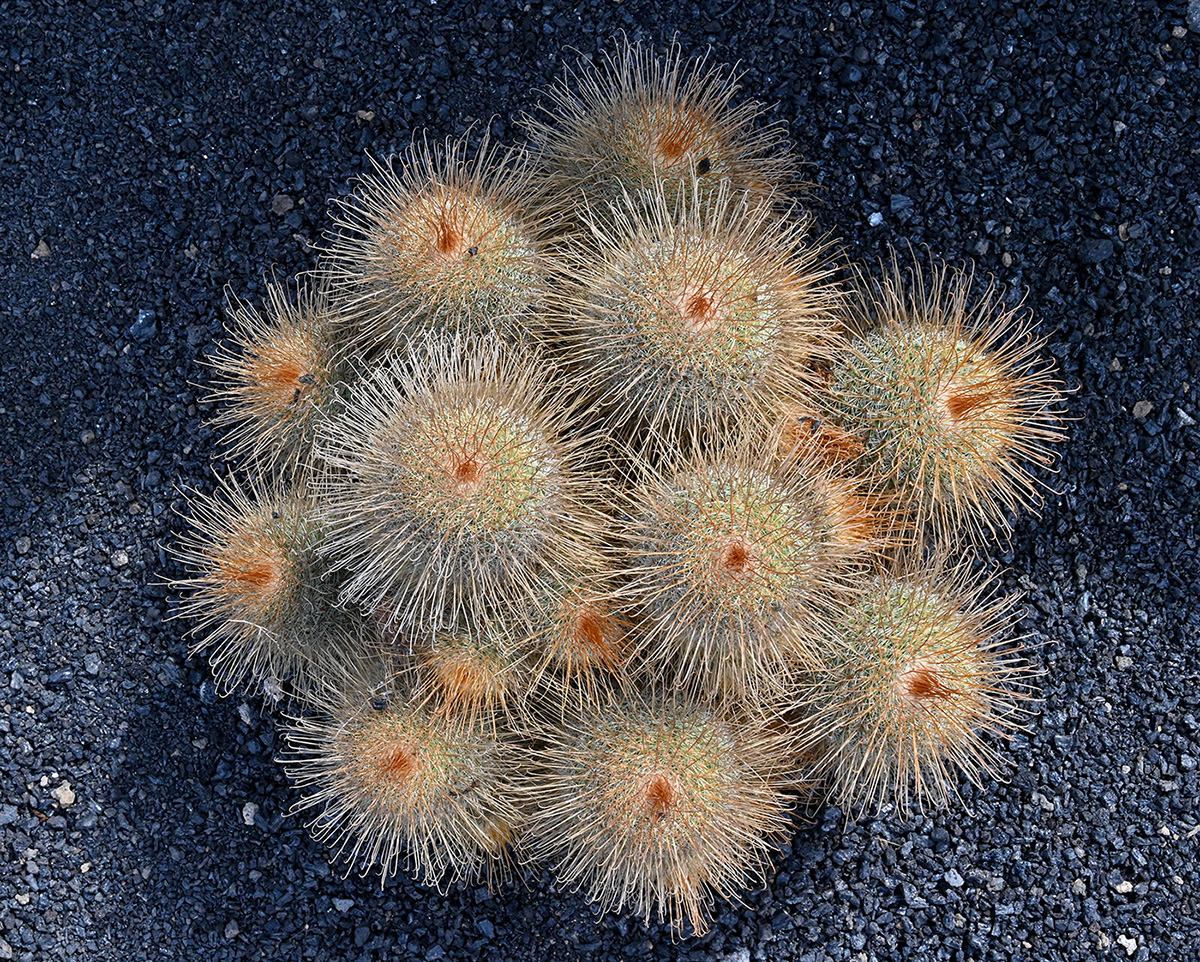
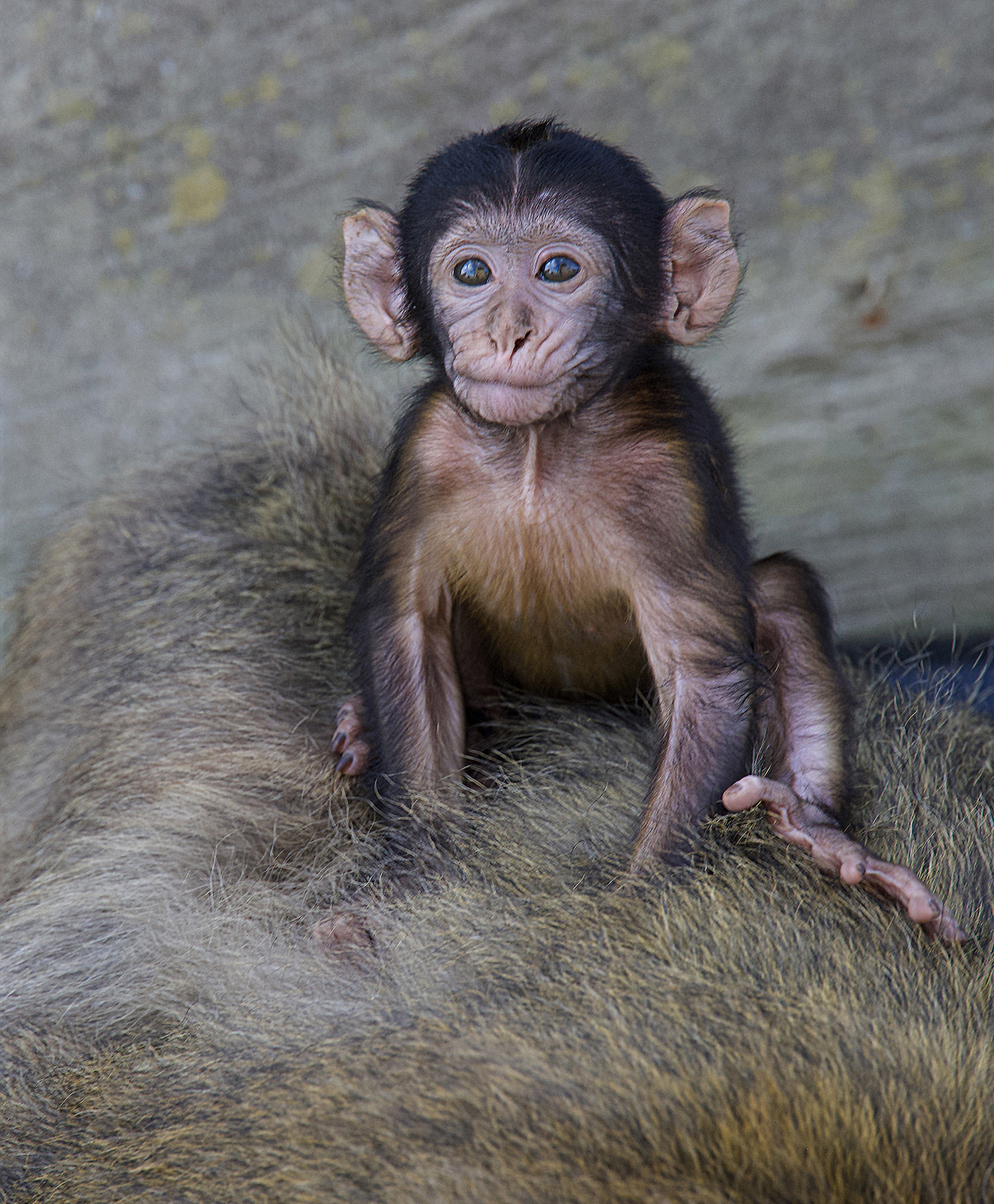
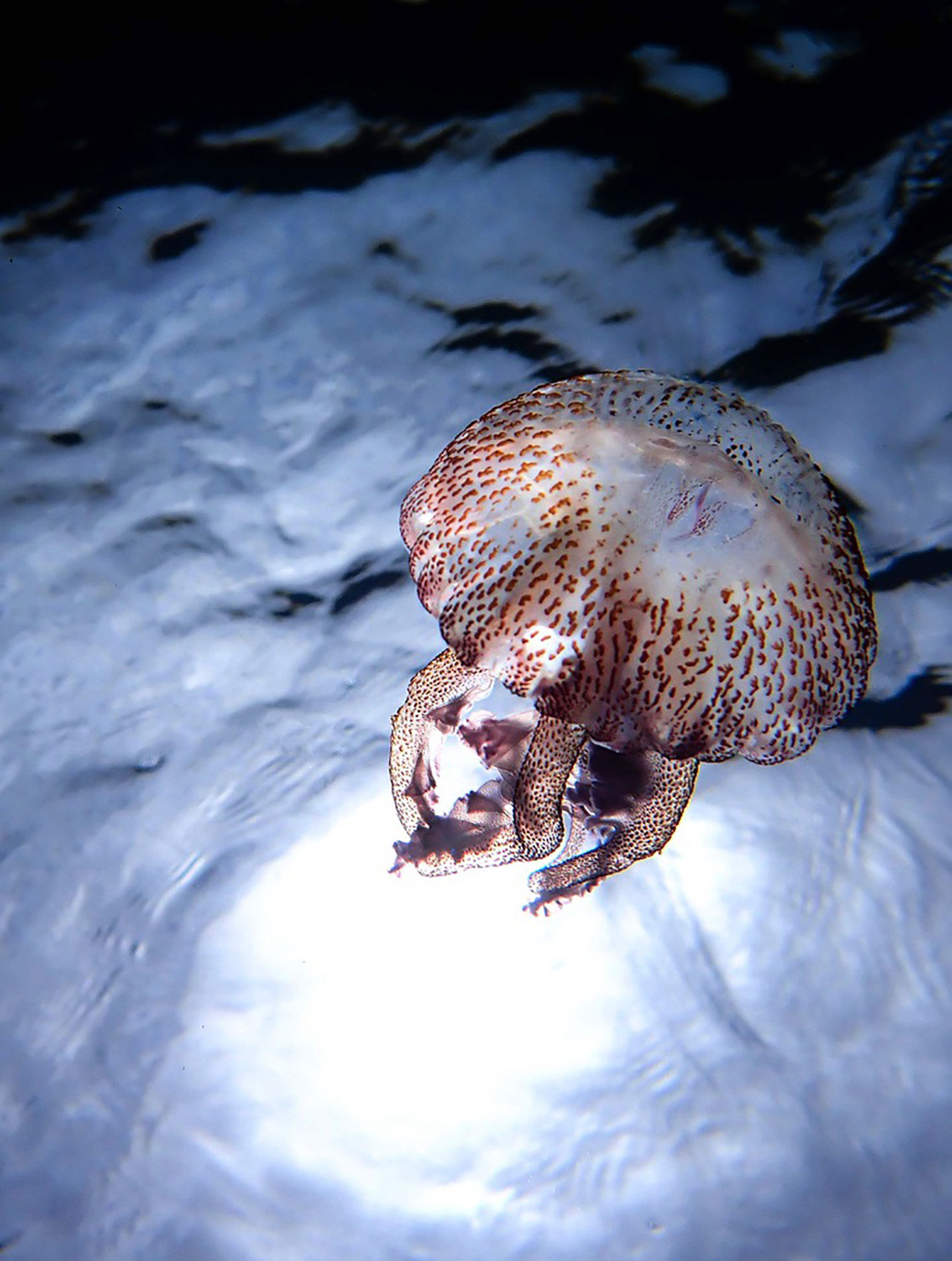
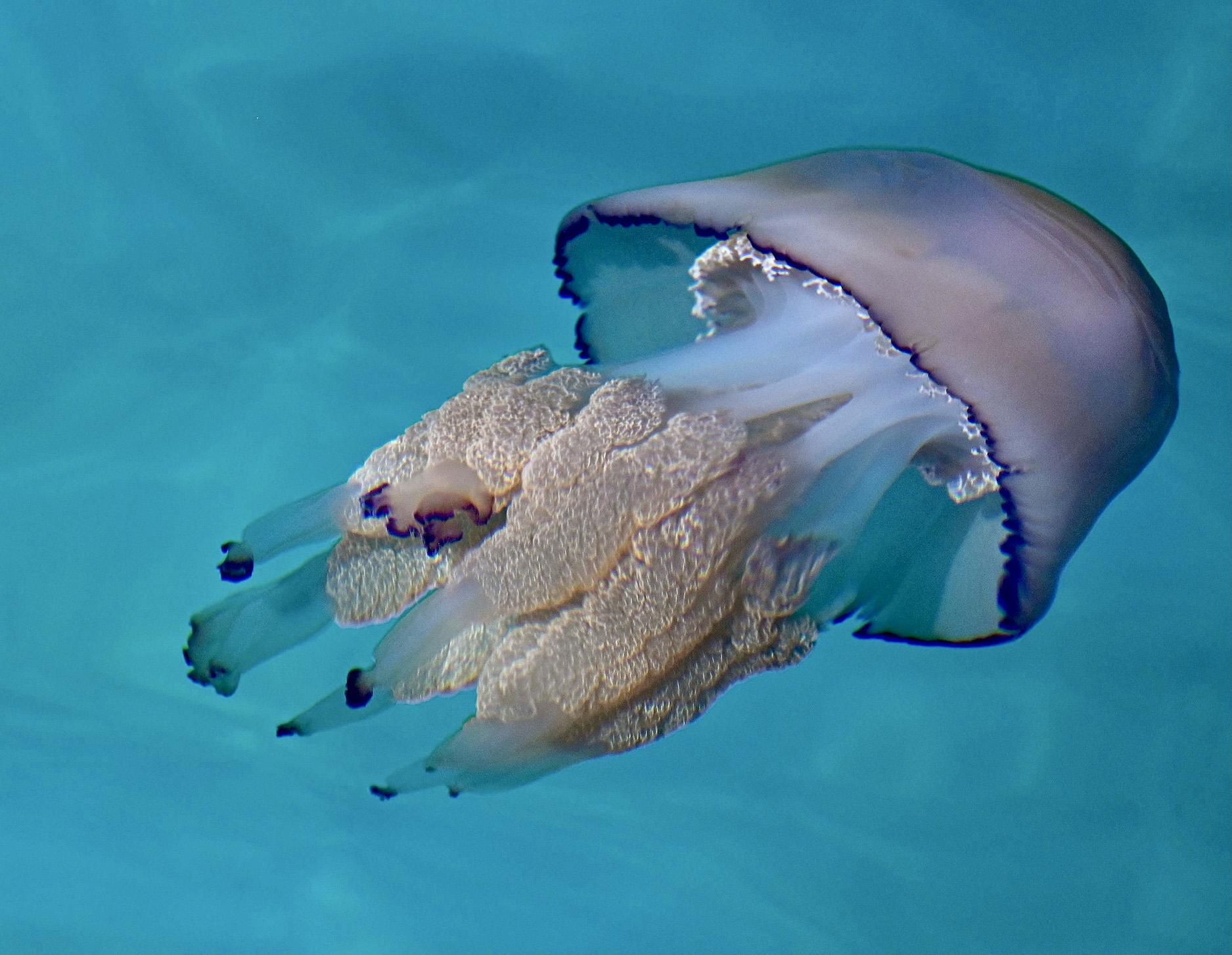
I was more fascinated in searching out the unusual lifeforms. Jellyfish intrigued me. The Fried Egg Jellyfish is being researched for properties to treat cancer patients. I had always loved eating octopus, until I became friendly with these hyper-intelligent creatures living in the Mediterranean. Octopus is no longer on my menu. In Gibraltar, I met the famous “Rock Apes,” macaque monkeys that suffered no fools among the thousands of tourists who visited there. Tease the monkeys with people food, and you are likely to get bitten. In Lanzarote, a volcanic island seemingly without shade, I spent days wandering among the exotic cacti that flourished there.
The basic tenet of nature is adapt or perish. It was a lesson that I would be reminded of during the final passage aboard Flying Fish this year.
The year’s final passage aboard Flying Fish was the most memorable.
Ginny again joined me in Gran Canaria for the transatlantic passage to the Caribbean. We fueled and provisioned Flying Fish, and then waited for a perfect weather window to make the 3,000-mile crossing to the Caribbean. I had made this passage before. The Atlantic hurricane season had ended, and the forecast called for a 20-day downwind sleigh ride to Antigua.
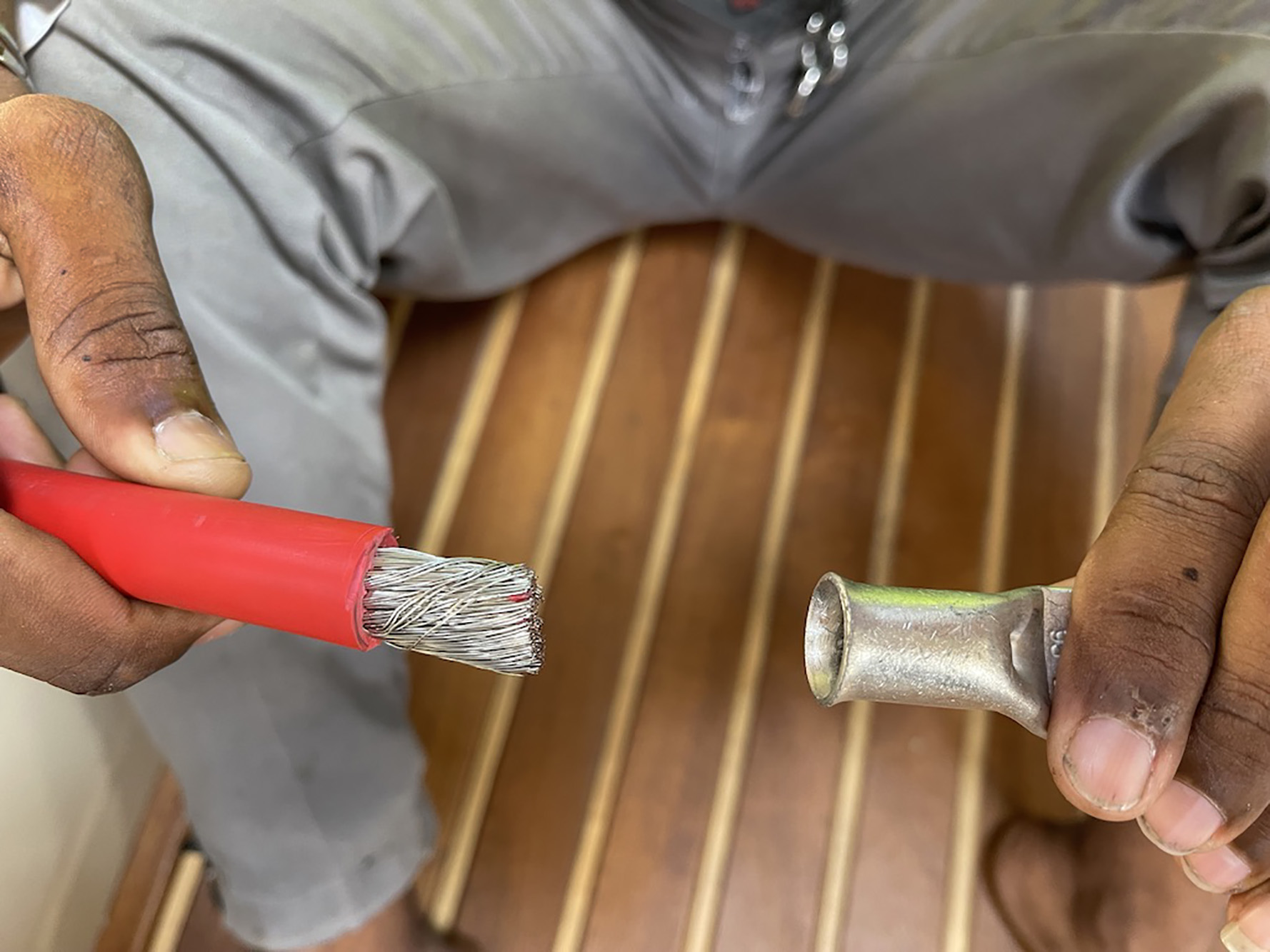
What we thought would be an idyllic sail became challenging in unexpected ways. Early on, the mainsail halyard parted, requiring a jury-rigged topping lift to get the sail back up. The weather intensified beyond its forecast, but the good ship Flying Fish is solid, and it handled 30-knot winds with ease. Suddenly, all DC electrical power quit (the result of an uncrimped battery cable, we found out later.) We were sailing traditionally with no autopilot, no navigation, no engine, no electric pumps, no lights, stove, or toilets. The wind increased to gale force near 40 knots. (A sailboat in the ARC Rally departing Gran Canaria at the same time suffered tragedy; a crew member was killed by a boom strike, another was injured, and the remaining crew member abandoned the boat at sea.) Our situation was not life threatening, but it was complicated to manage.
Rather than hand-steer our 22-ton cutter with no navigation except dead reckoning for the remaining three weeks to the Caribbean, Ginny and I decided instead to divert Flying Fish 500 miles to Cape Verde to sort things out. It was a difficult but correct decision.
Here’s the thing about undertaking and overcoming unexpected challenges at sea; the tough part is temporary, and when it is over the resulting feeling (endorphin rush, or whatever) is exhilarating–unlike anything ever experienced. Despite the hardship and disappointment, this memorable passage left me feeling vital, energetic, and present. It made me want more. Remembering the words of Oscar Wilde, I lived in 2021.
The 2021 route of Flying Fish from Didim, Turkey to Mindelo, Cape Verde
Flying Fish is being refitted in Cape Verde and will resume its passage toward Key West early in 2022.
As always, Sailing is not just about the wind and the sea; equally important are the places where Flying Fish carries me, and the flora, fauna, and people I encounter along the way.
Please click “Follow” at the bottom of this page so that you don’t miss a new update,- and please consider sharing this post with others who might enjoy following the voyage of Flying Fish. I welcome your comments, andI will always respond when I have an Internet connection. I will never share your personal information.
You can follow the daily progress of Flying Fish, boat speed (or lack thereof), and current weather as I sail into the Atlantic by clicking this satellite uplink: https://forecast.predictwind.com/tracking/display/Flyingfish. A Bonus: Click the “Legends and Blogs” box on the right side of the tracking pagefor passage notes while I am sailing offshore.



































 Stella Maris Sail